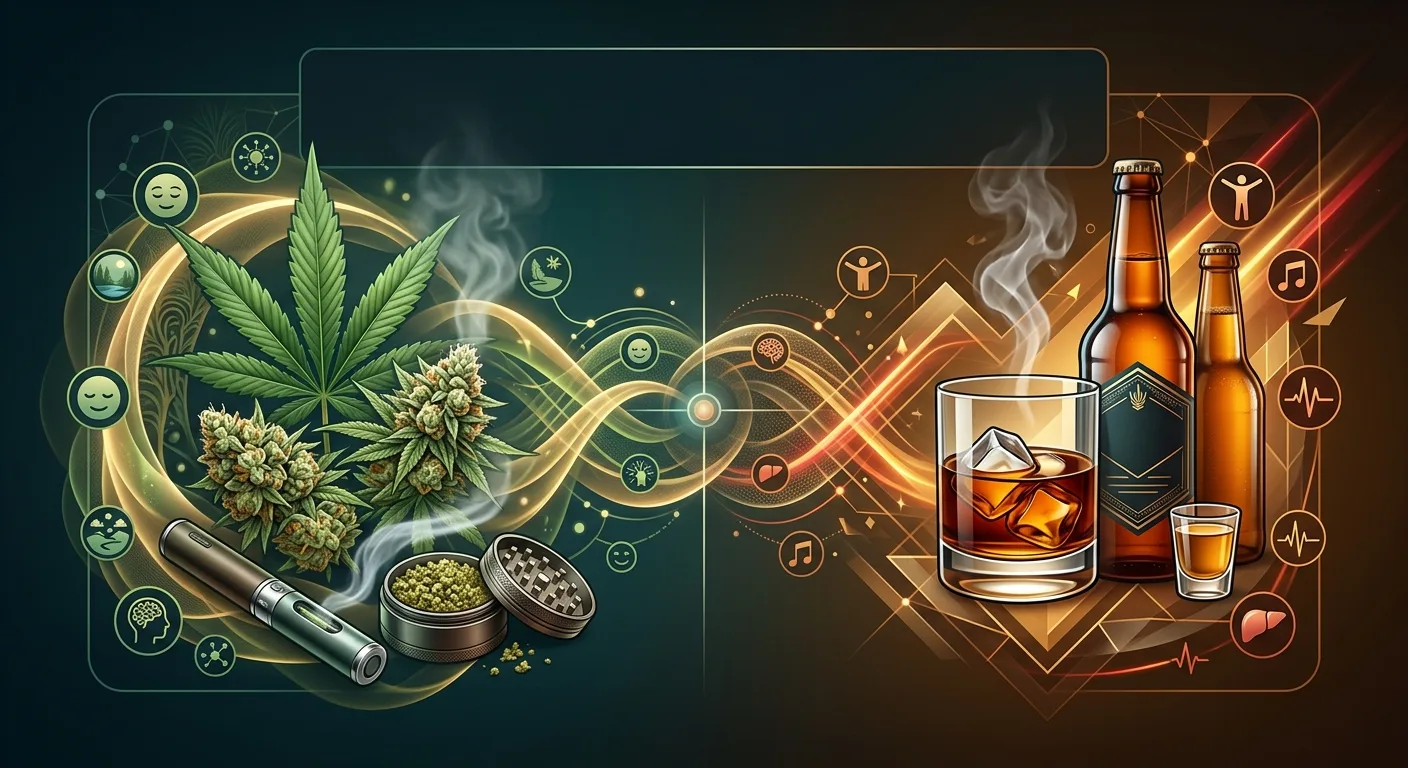
If you've ever combined cannabis and alcohol in the same session, you probably know the sensation is distinctly different from using either substance alone. That intensified, sometimes overwhelming feeling has a name in cannabis culture: cross-fading. And while mixing these two substances is common at social gatherings across Canada, the physiological interaction between THC and alcohol produces effects that catch many users off guard, even those experienced with both substances individually.
Understanding what happens in your body when you cross-fade isn't just academic curiosity. It's practical harm reduction. The combination affects your coordination, judgment, and physical comfort in ways that pure cannabis or pure alcohol don't replicate. This guide breaks down the science behind cross-fading, explains why it hits so much harder than either substance alone, and provides evidence-based strategies to minimize unwanted effects if you choose to mix the two.
The Pharmacology of Cross-Fading: Why Cannabis and Alcohol Amplify Each Other
When you mix weed and alcohol, you're not simply adding two intoxication levels together. The substances interact at multiple biological levels, creating effects that exceed what you'd expect from simple addition. The key mechanism involves how alcohol affects THC absorption and distribution throughout your body.
Alcohol acts as a vasodilator, meaning it widens your blood vessels and increases blood flow. When THC enters your system while alcohol is present, those dilated blood vessels allow cannabinoids to cross into your bloodstream more rapidly and in higher concentrations. A 2015 study published in Clinical Chemistry found that subjects who consumed alcohol before cannabis showed THC blood levels nearly double those of subjects who used cannabis alone, even with identical cannabis doses.
This enhanced absorption explains the sudden intensity many people experience when cross-fading. The THC that would normally enter your system gradually over 30-45 minutes when smoking hits your bloodstream in a compressed timeframe when alcohol is present. Your endocannabinoid system gets overwhelmed with cannabinoids faster than it can process them, leading to that characteristic "too high, too fast" feeling.
The Blood-Brain Barrier Factor
Beyond absorption rates, alcohol also affects how readily THC crosses the blood-brain barrier, the protective membrane that regulates what substances can enter your brain tissue. Alcohol temporarily increases the permeability of this barrier, allowing more THC to reach CB1 receptors in your brain. This doesn't just mean you feel higher; it means the psychoactive effects manifest more intensely and unpredictably.
The timing of consumption matters significantly. The phrase "beer before grass, you're on your ass; grass before beer, you're in the clear" contains actual physiological truth. When alcohol is already in your system before cannabis consumption, you've pre-set those absorption conditions. Your blood vessels are dilated and your blood-brain barrier permeability is increased before THC arrives, maximizing the amplification effect.
Neurotransmitter Interactions
Both substances affect your brain's neurotransmitter systems, but in different ways. Alcohol primarily impacts GABA (your brain's main inhibitory neurotransmitter) and glutamate, while THC works through the endocannabinoid system. When combined, these mechanisms don't operate independently. They influence each other's effectiveness.
Alcohol's GABA enhancement produces sedation and motor impairment, while THC's effects on the endocannabinoid system alter perception, mood, and cognition. Together, the sedating effects compound while cognitive impairment becomes more pronounced than either substance produces alone. This is why coordination tests show significantly worse performance in cross-faded individuals compared to those using only alcohol or only cannabis.
Why Cross-Fading Hits Harder: The Physical and Mental Experience
Users describe cross-fading as qualitatively different from being drunk or high separately. The sensation combines alcohol's physical sedation and balance impairment with cannabis's perceptual changes and mental effects. Understanding what creates this distinctive experience helps explain why it can become uncomfortable or dangerous.
Physically, cross-fading typically produces more intense dizziness than either substance alone. This results from conflicting signals your brain receives. Alcohol affects your vestibular system (inner ear balance sensors), while cannabis alters your proprioception (sense of body position in space). When both systems send altered information simultaneously, your brain struggles to construct a coherent sense of physical orientation. This is why the spins, that nauseating spinning sensation while lying down, occurs more frequently and intensely when mixing substances.
The mental experience compounds differently. Cannabis can produce introspective or anxious thought patterns in some users, particularly at higher doses. When combined with alcohol's cognitive impairment, which reduces your ability to reality-test or redirect anxious thoughts, those mental effects can spiral. You might find yourself stuck in uncomfortable thought loops without the mental clarity to recognize them as substance-induced and temporary.
The Nausea Factor
Cross-fading is notorious for causing nausea and vomiting more than either substance typically would alone. Multiple mechanisms contribute to this. Alcohol irritates your stomach lining and affects your inner ear balance, both of which can trigger nausea. Cannabis affects your digestive system through CB1 receptors in your gut, and while low doses often reduce nausea, higher doses, especially when combined with alcohol's gastric effects, can have the opposite effect.
The enhanced THC absorption when cross-fading means you might effectively be at a much higher cannabis dose than intended. For context on dosing, understanding your personal THC tolerance baseline becomes crucial when planning to mix substances, as your normal comfortable cannabis dose can feel overwhelming when alcohol is present.
Memory Impairment and Blackouts
Both alcohol and cannabis independently affect memory formation, but through different mechanisms. Alcohol interferes with the hippocampus's ability to form new long-term memories, which can lead to blackouts at high doses. Cannabis affects working memory and short-term recall. When combined, the memory impairment becomes more severe and occurs at lower doses of each substance than would typically cause problems individually.
This compounded memory effect means you might not accurately remember how much you consumed of either substance, making it difficult to learn from the experience or calibrate future use. Users sometimes report time seeming to skip or having fragmented memories of cross-faded evenings, even when they weren't at blackout-level alcohol consumption.
Harm Reduction Strategies: How to Cross-Fade More Safely
While abstaining from mixing substances is the only risk-free approach, many Canadian adults choose to combine cannabis and alcohol recreationally. If you're going to cross-fade, evidence-based harm reduction practices can minimize negative outcomes and serious risks.
The single most effective strategy is controlling your consumption order and pacing. Starting with cannabis and adding alcohol gradually allows you to gauge your baseline before introducing the amplification effect. You'll notice alcohol's effects more clearly and can moderate intake accordingly. If you start with alcohol, especially multiple drinks, you lose that calibration ability before THC enters the equation.
Dose Reduction Principle
If you plan to combine substances, reduce your usual dose of both. A good starting rule is cutting your normal alcohol consumption by 40-50% and your cannabis dose by at least 30% when cross-fading. This accounts for the amplification effect while leaving room to increase gradually if you're not feeling effects. Starting low is especially important because you can always consume more, but you can't undo overconsumption.
For cannabis, this often means choosing lower-THC products or consuming less of your usual strain. Understanding why higher THC isn't always better becomes particularly relevant here, as moderate-potency options give you more control when mixing with alcohol.
Hydration and Food
Both alcohol and cannabis can cause dehydration through different mechanisms. Alcohol is a diuretic, increasing urine production and fluid loss. Cannabis can cause dry mouth and reduce your awareness of thirst. When combined, dehydration happens faster and contributes to worsened hangover symptoms the next day.
Drinking water throughout your session, ideally one glass of water for every alcoholic drink, helps maintain hydration and slows alcohol consumption. Having substantial food in your stomach before and during cross-fading serves multiple purposes: it slows alcohol absorption, provides your body with glucose (which can help prevent nausea), and gives you something to focus on if effects become uncomfortable.
Environmental Safety
Cross-fading significantly impairs motor coordination and judgment, more so than either substance individually. Setting up your environment before consumption reduces risks. This means being in a safe, comfortable location where you don't need to drive, operate machinery, or navigate complex situations. Having trusted, relatively sober people around provides backup if effects become overwhelming.
Remove any risk of needing to get behind the wheel. In Canada, cannabis DUI laws are strict, and combining substances creates impairment that lasts longer than you might realize. The safest approach is planning to stay where you are for the entire evening and night.
What to Do If You've Over-Done It: Managing Bad Cross-Fade Experiences
Despite best intentions, sometimes cross-fading goes wrong. Recognizing the signs of excessive consumption and knowing how to respond can make the difference between an uncomfortable few hours and a dangerous situation requiring medical attention.
The hallmark signs of an uncomfortable but non-emergency cross-fade include intense dizziness, nausea without vomiting, anxiety or paranoia, difficulty focusing, and that overwhelming sensation of being "too high and too drunk." If you or someone you're with experiences these symptoms, the immediate response is to stop consuming both substances, find a safe place to sit or lie down, and start drinking water.
The position you choose matters. Lying completely flat often worsens the spins. Instead, recline at a 45-degree angle if possible, or lie on your side (recovery position) if nausea is present. This position prevents aspiration if vomiting occurs while also being more comfortable than lying flat. Keep one foot on the ground if the spins are intense; this proprioceptive feedback helps your brain reorient.
When to Seek Medical Help
Most cross-fade experiences, while uncomfortable, don't require emergency medical care. However, certain symptoms indicate potentially dangerous alcohol poisoning or severe adverse reactions that need professional attention. Seek immediate medical help if you or someone else experiences: unresponsiveness or inability to wake up, seizures, slow or irregular breathing (fewer than 8 breaths per minute), repeated vomiting that doesn't stop, severe confusion combined with inability to stand even with assistance, or skin turning blue or very pale.
Don't hesitate to call for help due to legal concerns about underage consumption or illegal cannabis use. Canadian Good Samaritan laws provide some protection for people seeking emergency help for themselves or others during overdose situations. Medical professionals' priority is treatment, not legal consequences.
The Recovery Period
The day after cross-fading typically involves a worse hangover than either substance produces alone. Cannabis alone rarely causes traditional hangover symptoms, but when combined with alcohol, the next day can be rough. Dehydration, disrupted sleep architecture, blood sugar fluctuations, and residual cannabinoids in your system all contribute.
Recovery focuses on rehydration, rest, and gentle nutrition. Water and electrolyte drinks help restore fluid balance. Light, easily digestible foods address blood sugar issues without upsetting a sensitive stomach. Avoid the temptation to use more cannabis to address hangover symptoms; your system needs time to clear both substances. Most people feel significantly better within 24 hours, though full recovery might take 48 hours depending on consumption levels.
The Science of Individual Variation: Why Some People Handle Cross-Fading Worse
If you've heard friends describe comfortable cross-fade experiences while yours have been miserable, you're not imagining the difference. Significant individual variation exists in how people respond to mixing cannabis and alcohol, based on genetics, tolerance, body composition, and other factors.
Genetic variations in alcohol metabolism enzymes (particularly aldehyde dehydrogenase and alcohol dehydrogenase) affect how quickly your body processes alcohol. People who metabolize alcohol slowly experience higher blood alcohol levels for longer periods, which means more time for alcohol to amplify THC absorption. Similarly, variations in CYP450 enzymes that metabolize THC affect how long cannabinoids stay active in your system.
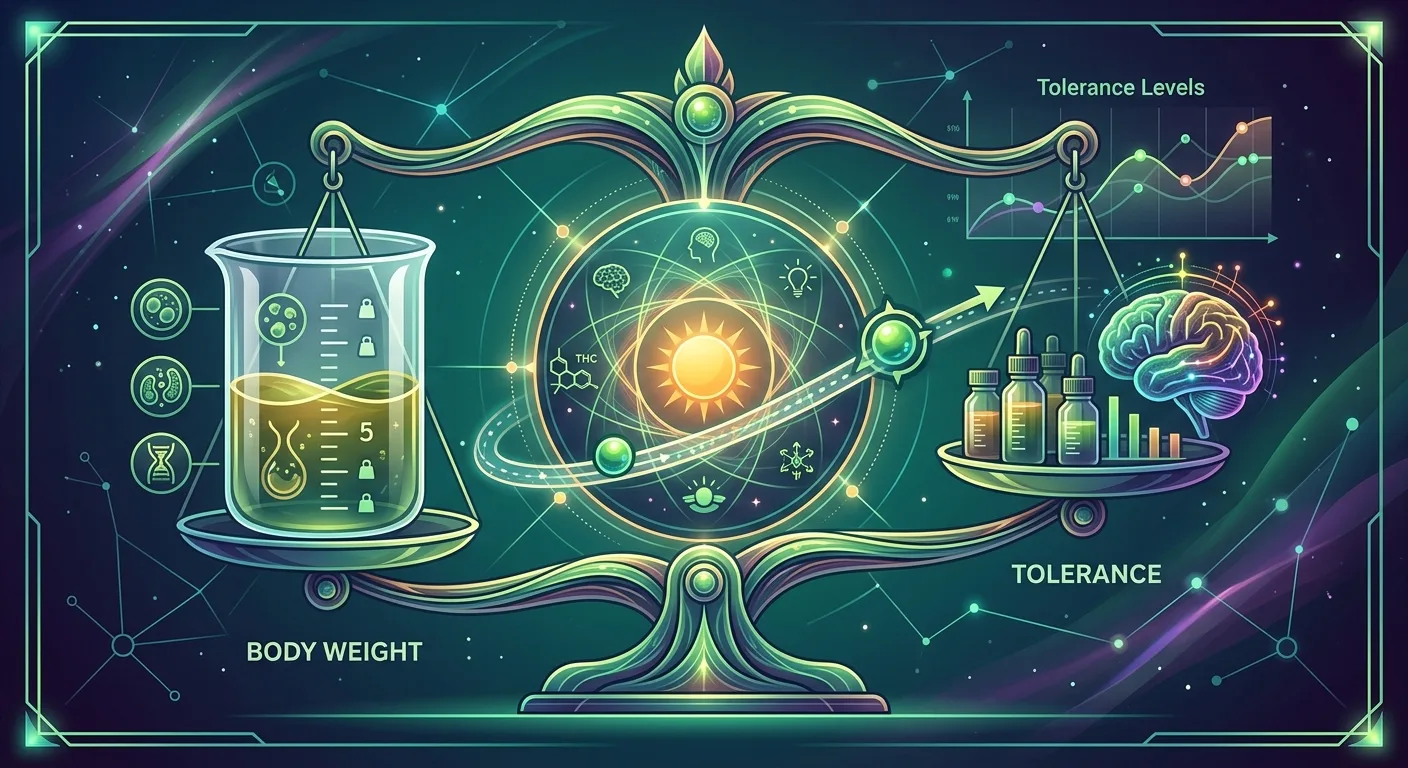
Body composition plays a measurable role. THC is lipophilic, meaning it stores in fat tissue, while alcohol distributes in body water. Two people of the same weight but different body fat percentages will experience different THC and alcohol concentrations from identical doses. Generally, higher body fat means more storage sites for THC, which can extend effects, while lower body water content (often correlating with higher fat percentage) means higher alcohol concentration from the same drink.
Tolerance Considerations
Tolerance to each substance develops independently and doesn't cross over. Heavy cannabis users with high THC tolerance still experience amplified effects when alcohol is present because the amplification comes from alcohol's effect on absorption and distribution, not from THC's direct effects. You might be able to handle 50mg edibles comfortably, but that same dose after three drinks can overwhelm you.
The same applies in reverse. Regular drinkers with alcohol tolerance still experience enhanced THC effects when mixing substances. This non-transferable tolerance catches many experienced users off guard. They consume their normal amount of one substance without accounting for the presence of the other, leading to unexpectedly intense effects. For more context on how tolerance affects cannabis specifically, understanding how tolerance breaks work can help you gauge your baseline THC sensitivity.
Sex Differences in Response
Research indicates biological sex affects both alcohol and cannabis metabolism, which influences cross-fading experiences. Women generally have lower body water percentages and different enzyme levels, leading to higher blood alcohol concentrations from equivalent drinks compared to men of similar weight. Women also show different THC metabolism patterns, with some studies suggesting higher sensitivity to cannabinoid effects at certain points in the menstrual cycle.
These differences mean dosing guidelines need individual adjustment. A consumption level that feels manageable for one person might be excessive for another, even controlling for tolerance and experience. Pay attention to your own response patterns rather than matching others' consumption.
Long-Term Considerations: Habitual Cross-Fading and Health Impacts
While occasional cross-fading at social events is common, regularly combining alcohol and cannabis carries distinct health implications beyond those of using either substance independently. Understanding these long-term effects matters for making informed decisions about consumption patterns.
Cardiovascular strain increases when substances are mixed. Both alcohol and cannabis affect heart rate and blood pressure, though in different ways. Cannabis typically increases heart rate, especially shortly after consumption, while alcohol's cardiovascular effects vary by dose and individual factors. The combined load on your cardiovascular system exceeds what either substance creates alone, which matters particularly for people with pre-existing heart conditions.
Cognitive effects compound over time with regular use of either substance, but the combination may accelerate certain changes. Long-term studies on cross-fading specifically are limited, but research on heavy alcohol use and heavy cannabis use independently shows impacts on memory, executive function, and brain structure. While moderate use of either substance appears relatively low-risk for most adults, regularly combining them hasn't been as thoroughly studied, leaving uncertainty about cumulative effects.
Dependency Risk
Using substances together can create psychological associations that affect dependency risk. If you habitually cross-fade, your brain may start associating alcohol consumption with cannabis use and vice versa, potentially making it harder to enjoy social situations or achieve desired mental states without combining them. This pattern can develop even in people who wouldn't develop dependency on either substance alone.
The reward pathways in your brain respond to the combined effect, not each substance separately. Over time, this can shift your baseline expectations, making single-substance use feel insufficient. This doesn't meet clinical criteria for addiction necessarily, but it represents a psychological dependency pattern worth recognizing if you notice it developing.
Functional Impairment
Regular cross-fading affects your ability to accurately assess your own impairment level. When you're accustomed to the combined effects, you might feel more functional than you actually are, particularly regarding tasks like driving. Studies consistently show that cross-faded individuals overestimate their capabilities more than people using either substance alone, which translates to increased risk-taking behavior.
This impairment carries over to productivity, work performance, and relationship functioning. If you find yourself regularly unable to recall evening conversations, missing commitments, or experiencing relationship friction related to cross-fading sessions, these are signals that your consumption pattern may be problematic regardless of the absolute quantity consumed.
Legal and Social Context: Cross-Fading in Canadian Cannabis Culture
In Canada's legal cannabis landscape, cross-fading occupies an interesting cultural space. Both substances are legal for adults, and mixing them isn't explicitly illegal, but the legal framework around impairment still applies in important ways.
Cannabis legalization hasn't changed impaired driving laws. Police can charge you with DUI whether you're impaired by alcohol, cannabis, or both, and penalties are severe. Roadside testing technology for cannabis continues to develop, but officers can charge based on observed impairment even without reaching specific blood THC thresholds. When substances are combined, impairment is more obvious and lasts longer than many users realize.
Workplace policies typically address alcohol and cannabis separately, but being impaired by either (or both) can violate employment rules and safety regulations. In safety-sensitive positions, even legal off-duty cannabis use can be restricted, and combining it with alcohol certainly offers no additional protection. Understanding how long cannabis remains detectable matters for employment contexts, especially when alcohol was also consumed.
Social Normalization and Peer Pressure
Cross-fading is common enough at Canadian social gatherings that peer pressure to participate can be significant. Friends might encourage you to smoke after you've been drinking, or drink more after consuming cannabis, without recognizing that they're pushing you toward the amplification effect. Being able to articulate why you're declining, based on harm reduction principles rather than moral judgment, helps navigate these situations.
The normalization of both substances can create an illusion of safety around combining them. Just because something is common doesn't mean it's risk-free. Cannabis culture increasingly emphasizes informed, intentional use rather than reckless consumption, and applying that mindset to cross-fading represents responsible participation in legal cannabis markets.
Alternative Approaches: Enjoying Both Substances Separately
The simplest harm reduction strategy is also the most effective: don't mix them. Using cannabis and alcohol on different occasions, rather than in the same session, eliminates the amplification effect while still allowing you to enjoy both substances.
If you enjoy the social aspects of drinking but also appreciate cannabis, consider designating some social occasions for alcohol and others for cannabis rather than combining them habitually. This approach lets you experience each substance's effects clearly, makes it easier to identify your comfortable dose ranges, and reduces overall intoxication intensity.
For social situations where both substances are present, having a personal rule helps. Maybe you have one or two drinks maximum if you're planning to consume cannabis, or you stick to cannabis if others are drinking heavily. These self-imposed guidelines, decided before you're already intoxicated, provide structure that's easier to follow than making decisions in the moment.
Some people find that CBD-dominant cannabis products provide the social and relaxing aspects they enjoy without the intense psychoactive effects that become problematic when mixed with alcohol. While CBD still interacts with alcohol, it doesn't produce the amplified intoxication that THC does. Exploring the differences between CBD and THC can help you identify whether CBD products might suit your needs for certain social situations.
Shop Responsibly
Browse our selection of carefully curated cannabis products for informed consumption. We prioritize quality and consistency to help you make educated choices.
View ProductsFrequently Asked Questions About Mixing Weed and Alcohol
The dizziness from cross-fading results from alcohol widening your blood vessels, which increases THC absorption into your bloodstream and across the blood-brain barrier. This creates higher effective THC concentrations than cannabis alone would produce. Additionally, alcohol affects your vestibular system (inner ear balance) while cannabis alters proprioception (body position sense), and these conflicting signals create intense spinning sensations.
Smoking cannabis before drinking alcohol is generally safer. The saying 'grass before beer, you're in the clear; beer before grass, you're on your ass' has physiological basis. When alcohol is already in your system, it has already dilated your blood vessels and increased blood-brain barrier permeability, maximizing THC's amplified effects. Starting with cannabis lets you establish a baseline before introducing alcohol's amplification effect, giving you better control.
The amplification effect occurs whenever both substances are active in your system simultaneously. Alcohol remains in your bloodstream for roughly one hour per standard drink on average, though this varies by individual factors. If you want to avoid cross-fading entirely, wait until you feel completely sober from one substance before consuming the other, generally 4-6 hours for moderate alcohol consumption or 2-4 hours after cannabis depending on consumption method.
You cannot build specific tolerance to the amplification effect itself because it results from how alcohol affects THC absorption and distribution, not from direct drug effects. You can develop tolerance to THC and to alcohol independently, which might reduce some symptoms, but the core mechanism of enhanced absorption remains constant. Regular cross-fading doesn't make you immune to its intensified effects.
Position them on their side in the recovery position to prevent choking if they vomit. Keep them hydrated with small sips of water between vomiting episodes. Monitor their breathing and consciousness level closely. Seek emergency medical help if vomiting doesn't stop after a few episodes, if they become unresponsive, if breathing becomes slow or irregular, or if they show signs of severe confusion or inability to stay conscious. These can indicate dangerous alcohol poisoning requiring immediate medical intervention.
No, drug tests detect the presence of specific substance metabolites, not whether substances were used together. A cannabis test looks for THC metabolites regardless of whether you also consumed alcohol. An alcohol test measures blood alcohol content or alcohol metabolites independently. Cross-fading doesn't create different metabolites or affect detection windows, though the higher THC absorption might result in slightly higher initial THC levels in your system.
Conclusion: Making Informed Decisions About Cross-Fading
Mixing weed and alcohol creates a fundamentally different experience than using either substance independently. The amplification effect, driven by alcohol's impact on THC absorption and blood-brain barrier permeability, produces intensified effects that exceed simple addition of two intoxication levels.