Whether you're facing an upcoming employment screening, curious about your body's natural clearance rate, or simply want to understand how cannabis metabolizes, the question of detection windows matters. The straightforward answer: THC metabolites can be detected anywhere from a few hours to 90 days after use, depending on the test type, your consumption frequency, body composition, and metabolism. But that massive range isn't particularly helpful when you need specific information for your situation.
This guide breaks down detection windows by test type and usage pattern, explains why individual variation is so significant, and provides the honest, research-backed information that searchers actually need. No myths about detox drinks or ways to "beat" a test,just accurate science about how long cannabis compounds remain detectable in urine, blood, saliva, and hair.
Understanding What Tests Actually Detect
Drug tests don't detect THC itself in most cases. They detect THC-COOH, a metabolite your liver produces when breaking down delta-9-tetrahydrocannabinol. This distinction matters because THC-COOH is fat-soluble and stores in adipose tissue, which is why it lingers far longer than the psychoactive effects of cannabis.
When you consume cannabis,whether through smoking flower or eating edibles,your body begins metabolizing THC almost immediately. The parent compound converts to 11-hydroxy-THC (particularly potent when consumed orally), then further breaks down into THC-COOH. This final metabolite has a half-life of approximately 1.3 days in infrequent users but extends to 5-13 days in chronic users.
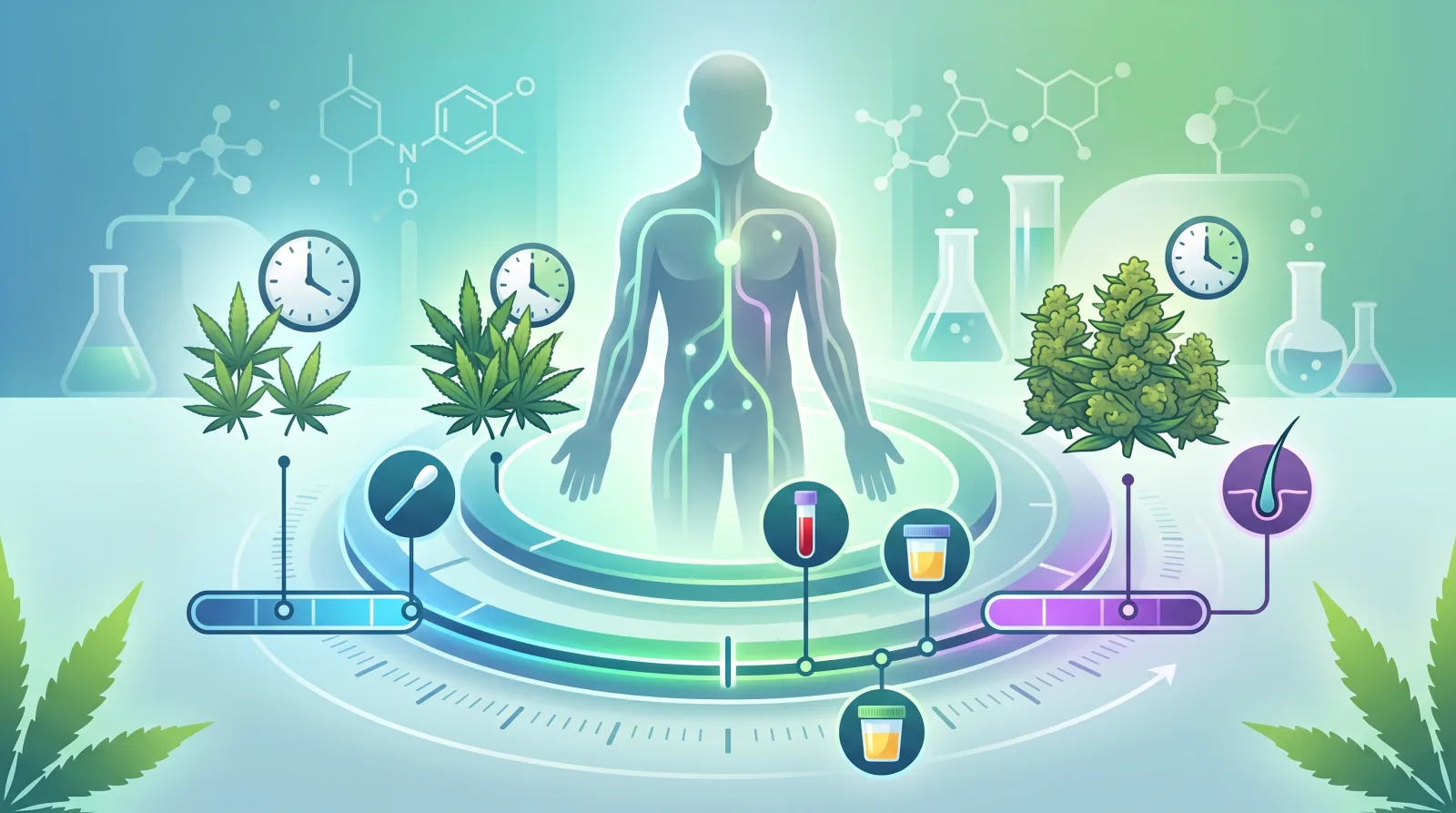
Blood tests measure active THC and are typically used to determine impairment at the time of testing. Urine tests detect the inactive THC-COOH metabolite and represent the most common screening method for employment and legal purposes. Saliva tests detect recent use, while hair follicle tests can reveal patterns over months. Each test type has dramatically different detection windows.
Detection Windows by Test Type
Urine Testing (Most Common)
Urine tests account for roughly 90% of workplace drug screenings in Canada. They're inexpensive, non-invasive, and have well-established cutoff thresholds (typically 50 ng/mL for initial screening, 15 ng/mL for confirmation). Detection windows vary dramatically based on consumption frequency:
Single use (one-time or occasional): 3-7 days. If you consumed cannabis once after abstaining for weeks or months, THC-COOH typically clears below detection thresholds within a week for most individuals.
Moderate use (2-4 times per week): 10-18 days. Regular but non-daily consumption creates some metabolite accumulation in fat tissue, extending clearance time into the two-week range.
Heavy use (daily or near-daily): 30-45 days. Daily consumers build significant THC-COOH reserves in adipose tissue. Even after stopping, metabolites release slowly as fat cells break down naturally.
Chronic heavy use (multiple times daily for months): 45-90 days. The most extreme detection windows occur in individuals with high body fat percentages who consumed high-potency cannabis multiple times daily for extended periods. Some cases have documented positive tests beyond 90 days.
Blood Testing (Impairment Detection)
Blood tests detect active THC rather than metabolites, making them useful for determining recent use or impairment. THC concentrations peak within minutes of inhalation and decline rapidly due to distribution into tissues. Detection windows are much shorter than urine tests:
Infrequent users: 6-24 hours. Active THC clears the bloodstream quickly in occasional consumers.
Regular users: 2-7 days. Chronic consumption can result in detectable THC levels for up to a week, though concentrations drop significantly after the first 24 hours.
Blood tests are most commonly used in roadside impairment testing or accident investigations where establishing recent use matters more than historical consumption patterns.
Saliva Testing (Recent Use)
Oral fluid testing has gained popularity for roadside screenings because it detects very recent consumption. THC enters saliva primarily through oral contamination during smoking or vaping rather than systemic excretion, which creates unique detection patterns:
After smoking or vaping: 24-72 hours. THC remains detectable in oral fluid for 1-3 days in most cases.
After edible consumption: 6-24 hours. Since edibles don't involve oral exposure, detection windows are much shorter and less predictable in saliva tests.
The shorter window makes saliva testing useful for detecting impairment rather than historical use. Several provinces use oral fluid screening devices during roadside stops, though controversy exists around accuracy and cutoff levels.
Hair Follicle Testing (Long-Term History)
Hair testing provides the longest detection window but is rarely used for employment screening due to cost. As hair grows (approximately 1.3 cm per month), it incorporates trace amounts of THC metabolites from the bloodstream. Standard tests analyze 3-4 cm of hair closest to the scalp:
Detection window: Up to 90 days for standard length testing, potentially longer if greater hair length is analyzed.
Hair tests can't determine exact timing of use within that window and may not detect single-use events. They're most useful for identifying consistent consumption patterns over months. Body hair grows more slowly than head hair and may retain evidence of use for even longer periods.
Factors That Affect Individual Clearance Rates
The ranges above represent averages, but individual variation is enormous. Two people with identical consumption patterns may clear THC metabolites at dramatically different rates due to these factors:
Body Fat Percentage
THC-COOH stores in fat cells and releases gradually over time. Individuals with higher body fat percentages retain metabolites longer than lean individuals. This isn't about weight alone,someone at a healthy weight but with higher body fat composition may show longer detection windows than someone heavier with more muscle mass. Exercise that burns fat can temporarily increase THC-COOH levels in urine as stored metabolites release.
Metabolism and Age
Metabolic rate affects how quickly your body processes and eliminates THC metabolites. Younger individuals generally metabolize substances faster than older adults. Genetic variations in liver enzyme activity (particularly CYP2C9 and CYP3A4) create significant person-to-person differences in clearance speed. Some people are simply "fast metabolizers" while others clear substances more slowly through no fault of their own.
THC Potency and Consumption Method
Higher-potency products create larger metabolite loads. Edibles made with distillate containing 90%+ THC produce different metabolite profiles than smoking mid-grade flower. Consumption method affects absorption rates: inhaled cannabis has 10-35% bioavailability while edibles range from 4-20% depending on numerous factors including stomach contents and individual digestive characteristics.
Hydration and Urine Concentration
Dilute urine can test below cutoff thresholds even when metabolites are present. This doesn't mean metabolites have cleared your system,it means the concentration in that particular sample fell below detection limits. Labs often test for dilution using creatinine levels and specific gravity. Extremely dilute samples may be rejected as invalid rather than reported as negative.
Frequency Creates Accumulation
The single most important factor is consumption frequency. Your body doesn't fully clear THC-COOH between uses when consuming daily or near-daily. Metabolites accumulate in fat tissue, creating a reservoir that takes weeks to fully deplete even after stopping completely. This accumulation effect is why chronic users face detection windows 10-15 times longer than one-time users despite similar metabolism and body composition.
What "Detox" Products Don't Tell You
The cannabis industry markets numerous detox drinks, pills, and programs claiming to accelerate THC clearance or mask its presence. The honest reality: no product can significantly speed up metabolite elimination from fat tissue. Your liver metabolizes at its own rate, and fat cells release stored compounds gradually regardless of what you consume.
Some products create temporary dilution by making you urinate frequently, potentially dropping metabolite concentration below cutoff thresholds for a brief window. This is fundamentally the same as drinking excessive water, not actual "detoxing." Labs test for this dilution and may invalidate suspiciously dilute samples.
The only reliable way to clear THC metabolites is time combined with abstinence. No supplement, exercise regimen, or dietary change can dramatically accelerate the process. Individuals claiming rapid clearance in days or weeks likely weren't chronic heavy users to begin with, or they're selling products based on anecdotes rather than controlled studies.
Detection Time Table: Quick Reference
This table summarizes typical detection windows based on usage frequency. Remember that individual variation means some people will fall outside these ranges:
Urine Testing:
- Single use: 3-7 days
- Moderate use (2-4x/week): 10-18 days
- Heavy use (daily): 30-45 days
- Chronic heavy use (multiple daily): 45-90+ days
Blood Testing:
- Infrequent users: 6-24 hours
- Regular users: 2-7 days
Saliva Testing:
- After inhalation: 24-72 hours
- After edibles: 6-24 hours
Hair Testing:
- All users: Up to 90 days (standard 3-4cm sample)
These ranges represent typical scenarios. Outliers exist in both directions,some chronic users clear faster than expected while some occasional users show longer windows.
Understanding Legal and Employment Context in Canada
Cannabis legalization in 2018 didn't eliminate drug testing in Canadian workplaces. Employers can still implement testing policies, particularly in safety-sensitive positions. However, testing practices face more legal scrutiny than in pre-legalization times.
Random testing without cause is generally not permitted except in safety-sensitive positions where impairment poses significant risk. Pre-employment testing exists but must be demonstrably necessary for the role. Post-incident testing is more widely accepted when investigating workplace accidents or safety violations.
The challenge with urine testing is that it detects historical use rather than current impairment. Someone who consumed cannabis three weeks ago may test positive while completely sober at work. Courts have recognized this limitation, and some testing policies have faced successful challenges on human rights grounds.
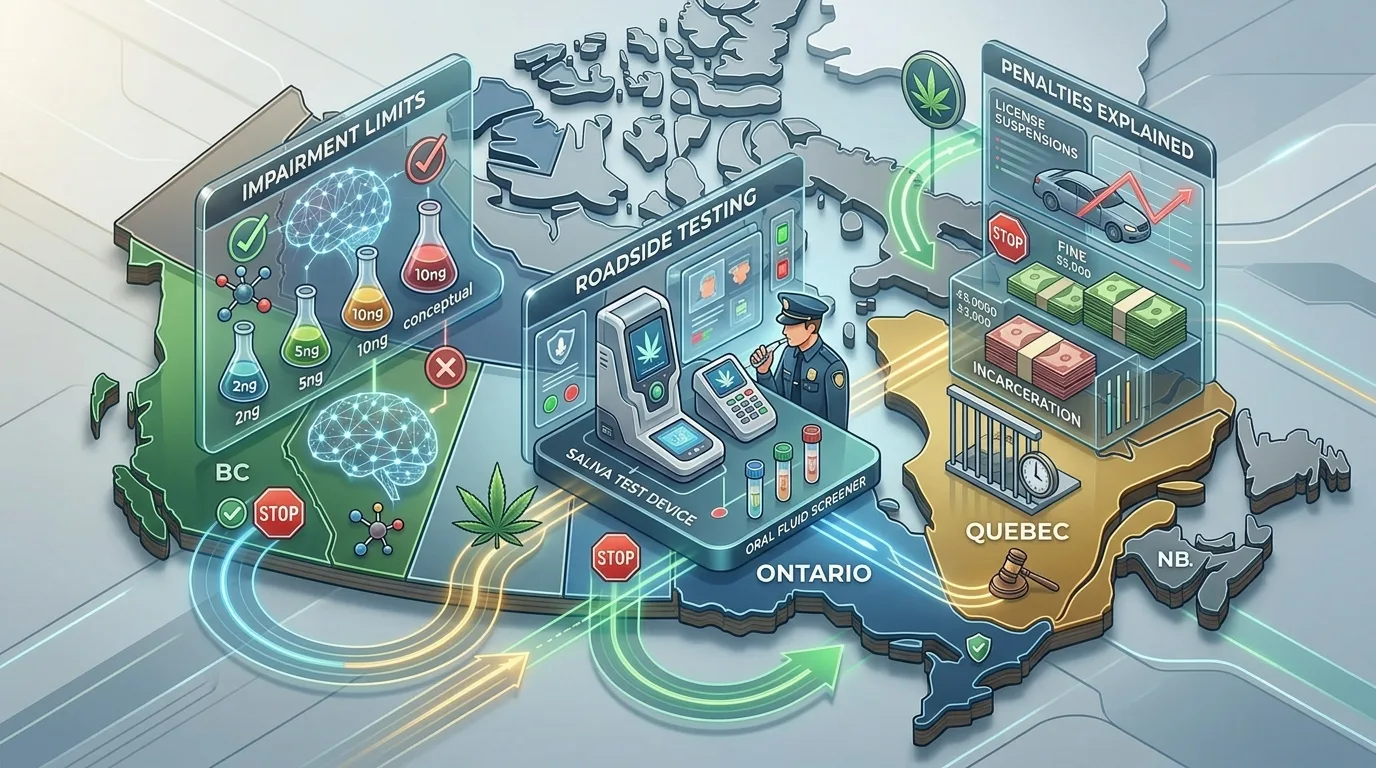
Roadside testing is a separate legal matter. Law enforcement can use approved screening devices to detect THC in oral fluid or blood. Exceeding legal limits (2-5 ng/mL blood THC depending on circumstances) results in impaired driving charges regardless of whether you feel impaired. These limits remain controversial because chronic users may exceed them while completely sober due to baseline THC levels.
What Actually Affects Test Results
Beyond the biological factors covered earlier, several practical considerations influence whether you'll pass a drug test:
Cutoff Thresholds Matter
Tests use specific cutoff concentrations to determine positive results. The standard urine screening cutoff is 50 ng/mL, with confirmation testing at 15 ng/mL. As metabolite levels decline during clearance, there's a period where you might test positive on a sensitive test but negative on a less sensitive one. This creates scenarios where someone passes an at-home test (often using higher cutoffs) but fails a lab test.
First Morning Urine vs. Dilute Samples
Your first urination of the day contains the highest concentration of metabolites because urine has accumulated in your bladder overnight. Samples collected later in the day after drinking fluids are typically more dilute with lower metabolite concentrations. This natural variation can affect results near cutoff thresholds.
Testing Technology Differences
Immunoassay screening tests (the initial screening) are less specific than GC-MS confirmation testing. Immunoassays can produce false positives from cross-reactivity with other compounds, though false positives from legitimate medications are rarer than commonly believed. Any positive immunoassay should be confirmed with the more accurate GC-MS method before consequences are imposed.
Second-Hand Exposure (Minimal Risk)
Passive exposure from being near cannabis smokers won't cause a positive test in realistic scenarios. You'd need to be in an unventilated room with heavy smoke for extended periods to absorb enough THC to approach detection thresholds. Normal environmental exposure,being near someone smoking outdoors, for example,poses essentially zero risk of testing positive.
Planning for Known Testing
If you know testing is approaching, understanding clearance times allows for informed planning. For employment testing with known timing, the only reliable strategy is abstinence for a duration appropriate to your usage history. Light users need 2-3 weeks minimum, while chronic users require 6-8 weeks or more to reliably test negative.
At-home testing kits using the same 50 ng/mL cutoff as lab screening tests can help monitor your status. These aren't perfectly accurate but provide a reasonable indication of whether you're approaching negative territory. Test with first-morning urine for the most stringent assessment.
For surprise testing without advance notice, there's simply no reliable short-term strategy. The metabolites in your system reflect your consumption history, and that can't be changed in hours or days. This reality is exactly why understanding detection windows matters for anyone who consumes cannabis and may face testing.
Anyone concerned about testing might consider exploring cannabis delivery options that help them make informed consumption decisions, or simply adjusting their usage patterns based on their employment or legal situation.
Water creates temporary dilution that might reduce metabolite concentration in a single sample below detection cutoffs, but labs test for dilution using creatinine and specific gravity. Extremely dilute samples are typically flagged as invalid rather than negative. Hydration doesn't speed up actual metabolite clearance from fat tissue,only time and abstinence accomplish that.
A single smoking session typically produces detectable THC-COOH metabolites in urine for 3-7 days in most individuals. Factors like body fat percentage, metabolism, and THC potency affect this window. Some people clear faster while others may test positive for up to 10 days. Blood and saliva tests have much shorter windows of 6-24 hours and 24-72 hours respectively for one-time use.
Daily cannabis use creates metabolite accumulation in fat tissue. THC-COOH stores in adipose cells and releases gradually over weeks. With frequent use, you're constantly adding more metabolites before previous amounts fully clear, building a reservoir that takes 30-90 days to deplete after stopping. This accumulation effect is why chronic users face detection windows 10-15 times longer than occasional users.
Exercise burns fat cells, which can temporarily release stored THC metabolites into your bloodstream and subsequently into urine. Some studies show modest short-term increases in urinary THC-COOH after exercise, particularly in chronic users with significant fat stores. For this reason, some experts suggest avoiding intense exercise in the 24 hours before testing, though the effect is relatively small.
Detection windows depend more on consumption frequency and dose than the method of consumption. However, edibles often contain higher THC doses than typical smoking sessions, which could create larger metabolite loads. The metabolite your body produces (THC-COOH) is the same regardless of consumption method. What matters is total THC consumed over time, not whether you smoked, vaped, or ate it.
Yes, absolutely. Chronic daily users commonly test positive for 30-45 days after cessation, with some cases extending to 60-90 days. This extended window reflects gradual metabolite release from fat tissue where THC-COOH accumulated during regular use. The detection window correlates strongly with usage frequency and duration,someone who consumed daily for years will test positive much longer than someone who used daily for a few weeks.
Conclusion: Time and Honesty About Individual Variation
THC detection windows span an enormous range from a few hours in blood to 90+ days in urine, depending on test type and consumption patterns. The honest answer to "how long does weed stay in your system" is frustratingly individual,two people with identical consumption might clear metabolites weeks apart due to metabolism, body composition, and genetic factors.
What's certain is that frequent use dramatically extends detection times compared to occasional consumption. Daily users should expect 30-60 day windows for urine testing, while someone who consumed once might clear in a week. No detox product or strategy can significantly accelerate this timeline,only abstinence combined with time allows natural metabolite clearance.
For Canadian consumers navigating employment screening or legal concerns, understanding these realities allows informed decision-making about consumption patterns. The detection windows outlined here represent typical ranges based on research, but individual results will vary. When testing matters, build in extra time beyond minimum estimates to account for personal variation.
If you're making consumption decisions with testing concerns in mind, consider how your usage frequency today affects your clearance timeline tomorrow. Whether you're exploring different consumption methods or adjusting your patterns based on employment requirements, accurate information about detection windows helps you make choices aligned with your circumstances.
Discreet Cannabis Delivery Across Canada
Shop premium cannabis products with discreet packaging and reliable delivery. Same-day service available in Ottawa and Gatineau, with Canada-wide shipping.
Browse Products