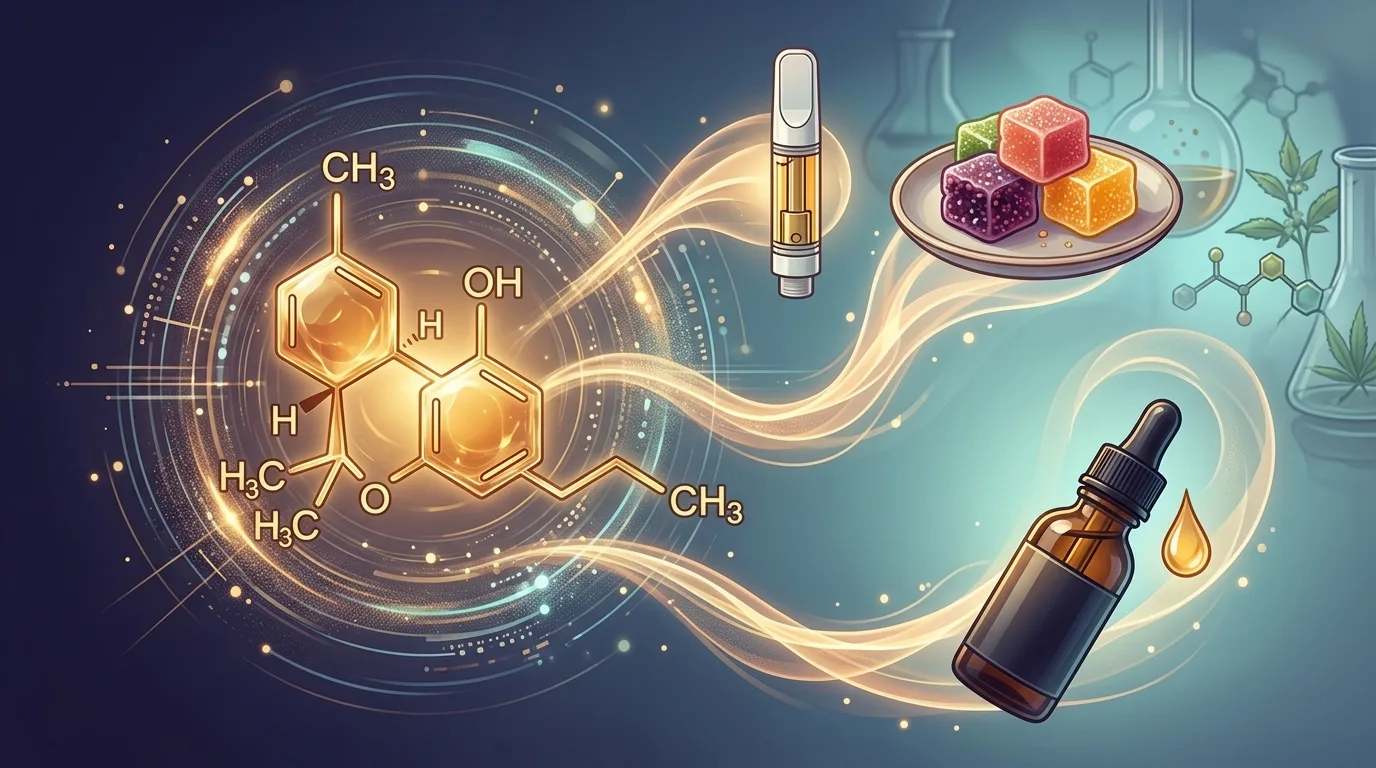
THC distillate doesn't arrive in your mailbox as a finished product ready to consume. It lands as a thick, translucent oil that looks more like honey than cannabis , because it's an ingredient, not an endpoint. Unlike flower you grind and smoke or edibles you unwrap and eat, distillate requires you to do something with it. That flexibility makes it one of the most versatile cannabis formats available, but it also means understanding what distillate actually is and how to use it properly.
The golden-amber concentrate contains 85-95% pure THC, stripped of all terpenes, flavonoids, and plant matter through a multi-stage refinement process. More importantly for practical use, it arrives already decarboxylated , the heating process that converts inactive THCA into active THC has already happened during production. This single characteristic unlocks the ingredient's most valuable application: no-heat edibles with precise, predictable dosing. But dabbing and vape cartridge refills remain popular uses, each serving different consumption preferences and budgets. This guide breaks down all three applications, with particular attention to the edibles mathematics that make distillate the most cost-effective way to create your own cannabis-infused products at home.
What Makes Distillate Different from Other Concentrates
Before diving into applications, understanding what sets distillate apart from shatter, wax, or live resin clarifies why certain uses work better than others. The distillation process removes everything except cannabinoids , no terpenes, no flavonoids, no residual plant compounds. What remains is a nearly pure THC oil with virtually no flavour or aroma.
This molecular isolation happens through short-path distillation, where crude cannabis oil gets heated under vacuum pressure. Different compounds vapourize at different temperatures, allowing technicians to separate THC from everything else. The result sits in stark contrast to full-spectrum concentrates that preserve the plant's complete chemical profile.
The lack of terpenes means distillate contributes no cannabis taste to whatever you add it to , a feature, not a bug, when making edibles. It also means the entourage effect gets completely eliminated, leaving you with a THC-only experience that some users find one-dimensional but others appreciate for its clean, predictable effects. The purity produces a clear-headed high without the sedative terpenes found in indica flower or the energizing compounds in sativa strains.
The Decarboxylation Advantage
The production process heats distillate to temperatures that complete decarboxylation automatically. Raw cannabis contains THCA, an acid form that doesn't produce psychoactive effects. Heat converts THCA to THC by removing a carboxyl group , a process that normally requires baking flower at 240°F for 40 minutes before making edibles.
Distillate skips this entire step. The moment you receive it, the THC is already activated and ready for oral consumption. You can stir it directly into melted chocolate, blend it into smoothies, or mix it with olive oil without any additional heating. This characteristic alone makes distillate the simplest route to homemade edibles, eliminating the most error-prone step in traditional cannabutter or oil infusions.
Dabbing Distillate: The Flavourless High-Potency Option
Loading distillate onto a heated nail or banger delivers immediate, intense effects , but without the terpene-rich flavour profile that makes live resin or full-spectrum concentrates more appealing to concentrate connoisseurs. The experience proves purely functional: maximum THC delivery with minimal sensory engagement.
The viscosity creates practical challenges. Room-temperature distillate flows like cold honey, making it difficult to work with using standard dab tools. Warming the syringe under hot water for 30 seconds increases flow enough to dispense controlled amounts onto your dab tool. Some users keep their distillate syringe in a pocket for a few minutes before use, letting body heat reduce viscosity naturally.
Dosing and Effects When Dabbing
A rice-grain-sized dab of 90% distillate contains roughly 22-25mg THC , a substantial dose for most users. The effects arrive within 60-90 seconds, peak around 15-20 minutes, and taper over 2-3 hours. This timeline mirrors other concentrate inhalation methods but differs dramatically from edible consumption, where onset takes 45-90 minutes and duration extends to 6-8 hours.
The flavour absence bothers some users. If you've grown accustomed to the piney, citrus, or diesel notes from strain-specific concentrates, distillate tastes like warm vegetable oil with a faint cannabis aftertaste. Manufacturers sometimes reintroduce cannabis-derived or botanical terpenes to create flavoured distillates, but pure THC distillate offers no sensory complexity beyond the psychoactive effects.
Refilling Vape Cartridges: The DIY Cost Reduction Method
Empty 510-thread cartridges cost $3-8 each. A gram of quality distillate runs $20-35. The mathematics favours refilling your own carts over buying pre-filled ones at $35-50 per gram, especially for regular vape users who go through multiple cartridges monthly. The process requires minimal equipment and takes about five minutes once you've done it twice.
You'll need empty ceramic or glass cartridges (not plastic, which certain cutting agents can degrade), a hair dryer or heating mat to reduce distillate viscosity, and a small syringe if your distillate didn't arrive in one. The actual filling process involves warming both the distillate and the empty cartridge, then slowly dispensing the oil into the cart's fill holes or through the mouthpiece opening, depending on cartridge design.
The Cutting Agent Decision
Pure distillate often runs too thick for standard vape cartridge wicking systems, particularly in cold environments. The viscosity prevents proper absorption into ceramic heating elements, causing dry hits and wasted product. This drives the common practice of cutting distillate with thinning agents , a topic that requires careful consideration given recent vaping health concerns.
Safe cutting agents include cannabis-derived terpenes (5-15% by volume), MCT oil (medium-chain triglycerides), or vegetable glycerin. Each option reduces viscosity while introducing different characteristics. Terpenes add flavour and potentially restore some entourage effect. MCT oil thins without flavour but shouldn't exceed 10% concentration. Vegetable glycerin creates more vapour but dilutes potency more significantly than other options. The controversial vitamin E acetate that appeared in black-market carts during the 2019 vaping crisis should never be used , it causes severe lung damage when inhaled.
Many users skip cutting agents entirely by warming the cartridge slightly before each use. A hair dryer on low setting for 10-15 seconds reduces viscosity enough for proper wicking in most cases. Understanding the complete cartridge filling process prevents the common mistakes that lead to leaking or clogged carts.
Battery Voltage Considerations
Distillate cartridges perform best at lower voltage settings than flower-derived concentrates. Most 510-thread batteries offer 2.4-4.0V ranges. Start at 2.6V and increase gradually if vapour production seems insufficient. Higher voltages burn distillate faster and can create harsh hits, particularly with pure distillate that lacks terpenes to modulate the experience. The proper voltage settings and battery maintenance extend both cartridge life and flavour quality.
Making Edibles: Where Distillate Delivers Maximum Value
This application showcases why distillate exists as a standalone product category. The decarboxylated THC, neutral flavour, and precise concentration create the perfect edibles ingredient , one that eliminates the biggest obstacles in traditional cannabis cooking. No grinding flower, no hour-long decarb cycles, no straining plant matter from butter or oil, no weed taste overwhelming your brownies. You're working with a measured, activated ingredient that behaves like any cooking oil.
The mathematics prove straightforward. A gram of 90% distillate contains 900mg active THC. If you want 10mg servings (a common recreational dose), that single gram produces 90 portions. If you prefer 25mg servings, you'll create 36 portions. The precision removes all guesswork from dosing , the challenge that makes homemade edibles unpredictable and occasionally overwhelming when made with flower-infused butter or oil.
Direct Mixing vs Carrier Oil Infusion
Two methods dominate distillate edibles preparation. Direct mixing involves warming the distillate slightly and stirring it directly into the fat component of your recipe , melted chocolate, peanut butter, coconut oil in smoothies. This works for small batches where precision matters more than even distribution. The limitation: distillate's viscosity can create hot spots in baked goods if not thoroughly incorporated.
Carrier oil infusion solves the distribution problem. Warm a measured amount of coconut oil, MCT oil, or olive oil to 200°F, add your distillate, and stir until completely dissolved. This creates an evenly-concentrated cannabis oil you can measure by the tablespoon or teaspoon, making it simple to portion into multiple servings. A gram of distillate in 90ml of carrier oil creates a mixture where each 1ml contains 10mg THC , easy math for recipe scaling.
Recipe Applications and Dosing Calculations
The flavourless profile opens applications impossible with traditional cannabutter. Energy bars, protein shakes, salad dressings, pasta sauce , anything containing fat can carry distillate without introducing cannabis taste. This proves particularly valuable for medical users who need consistent daily dosing but find the flavour of cannabis products unpleasant or for anyone making edibles for others who might resist obvious weed taste.
The calculation formula: (Distillate amount in mg × THC percentage) ÷ Number of servings = mg per serving. For example, if you're making 24 cookies and want 15mg per cookie, you need 360mg total THC. With 90% distillate, that's 400mg of distillate (0.4g). Most distillate syringes include measurement markings, but a milligram scale removes all ambiguity for precise dosing.
Storage matters for long-term edibles preparation. Distillate remains stable for months when kept in a cool, dark place, but light and heat degrade THC over time. Some users portion a gram into smaller syringes for single-use applications, preventing repeated exposure to air and temperature fluctuations that occur when opening the same container multiple times. Understanding proper dosing principles prevents the common mistake of creating edibles too strong for comfortable use.
Cost Analysis Across All Three Uses
The per-milligram THC cost reveals where distillate delivers genuine savings versus where convenience drives the purchase. Breaking down realistic numbers based on current Canadian market pricing shows which application makes financial sense for your consumption patterns.
A gram of quality distillate at $30 containing 90% THC costs $0.033 per milligram of THC. Compare this to pre-filled vape cartridges at $45 per gram of similar potency ($0.05/mg), or commercial edibles at $25 for a 300mg package ($0.083/mg). The savings compound dramatically for frequent users or anyone making larger batches of homemade edibles.
Usage Pattern Breakeven Points
For occasional vape users consuming one cartridge monthly, buying pre-filled carts makes sense , the convenience outweighs the modest $15 monthly premium over DIY refilling. But users going through two or more carts monthly save $30-40 by refilling, and the time investment drops to negligible once you've refined your technique.
Edibles users see immediate savings. A single gram of distillate creates 90 servings at 10mg each, costing $0.33 per dose. Comparable commercial edibles run $2-3 per 10mg serving. Even accounting for carrier oil and recipe ingredients, homemade distillate edibles cost 80-85% less than retail products. The breakeven happens on your first batch.
Dabbing distillate makes less financial sense unless you specifically want the flavourless, ultra-pure experience. Shatter or wax typically costs less per gram while offering more complex effects and better flavour from preserved terpenes. Distillate dabbers pay a premium for purity they could get more affordably from other concentrate formats, unless the neutral flavour serves a specific purpose in their consumption routine.
Storage, Handling, and Shelf Life
Proper storage extends distillate viability from months to over a year. The main degradation factors , light, heat, and oxygen exposure , all accelerate THC conversion to CBN, a less psychoactive cannabinoid that produces sedative effects. This degradation doesn't make the product unsafe, but it reduces potency and alters effects over time.
Keep unopened distillate syringes in a cool, dark drawer or cabinet. Temperatures below 70°F slow degradation significantly, though refrigeration can make the product too thick to dispense without warming. Once opened, minimize air exposure by capping the syringe immediately after each use. Some users transfer distillate into smaller amber glass containers to reduce the air volume in contact with the product.
Crystallization and How to Reverse It
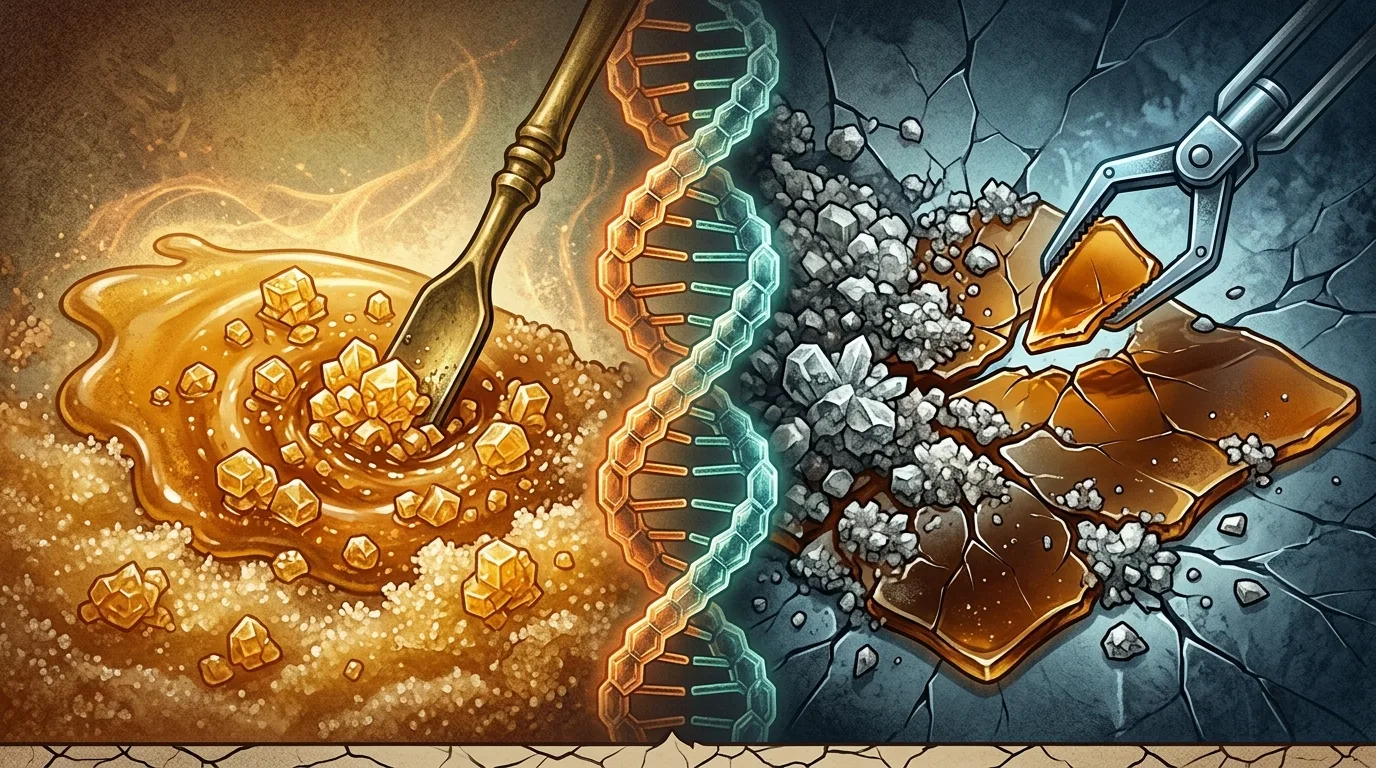
High-purity distillate sometimes crystallizes over time, forming sugar-like granules that clog syringes and prevent smooth dispensing. This happens when minor cannabinoids or residual compounds create nucleation sites where THC molecules aggregate. The crystallization doesn't indicate spoilage , it's a natural consequence of ultra-pure concentrates.
Gentle heat reverses crystallization completely. Place the syringe in hot (not boiling) water for 5-10 minutes, or use a hair dryer on low setting. The crystals dissolve back into liquid form without any potency loss. Some users experiencing repeated crystallization transfer their distillate into wider containers where crystal formation matters less, since the product remains usable even in semi-solid form , you just can't easily dispense it from a narrow syringe tip.
Quality Indicators and What to Avoid
Not all distillate performs equally across these three applications. Visual inspection and basic testing reveal quality differences that significantly impact your experience, particularly in edibles where precision matters most.
Colour provides the first quality indicator. Light golden to amber distillate suggests minimal contamination and proper refinement. Dark brown or murky product often indicates incomplete distillation or oxidized cannabinoids. The clarity matters too , quality distillate appears translucent when held to light, while cloudy or opaque product may contain residual fats, waxes, or other compounds that survived the distillation process.
Testing and Verification
Reputable distillate comes with lab testing certificates showing cannabinoid percentages and contaminant screening. The THC percentage should exceed 85% for products marketed as distillate , anything lower suggests either cutting agents or incomplete refinement. The certificate should also show testing for pesticides, heavy metals, and residual solvents, since distillation concentrates any contaminants present in the source material.
The absence of terpenes in pure distillate creates one verification advantage: it shouldn't smell strongly of cannabis. A faint, generic cannabis aroma is normal, but if your distillate smells intensely of pine, citrus, or diesel, it likely contains added terpenes or wasn't fully refined. This isn't necessarily negative , many users prefer terpene-enhanced distillate , but you should know whether you're buying pure THC or a modified product.
Combining Methods for Flexible Consumption
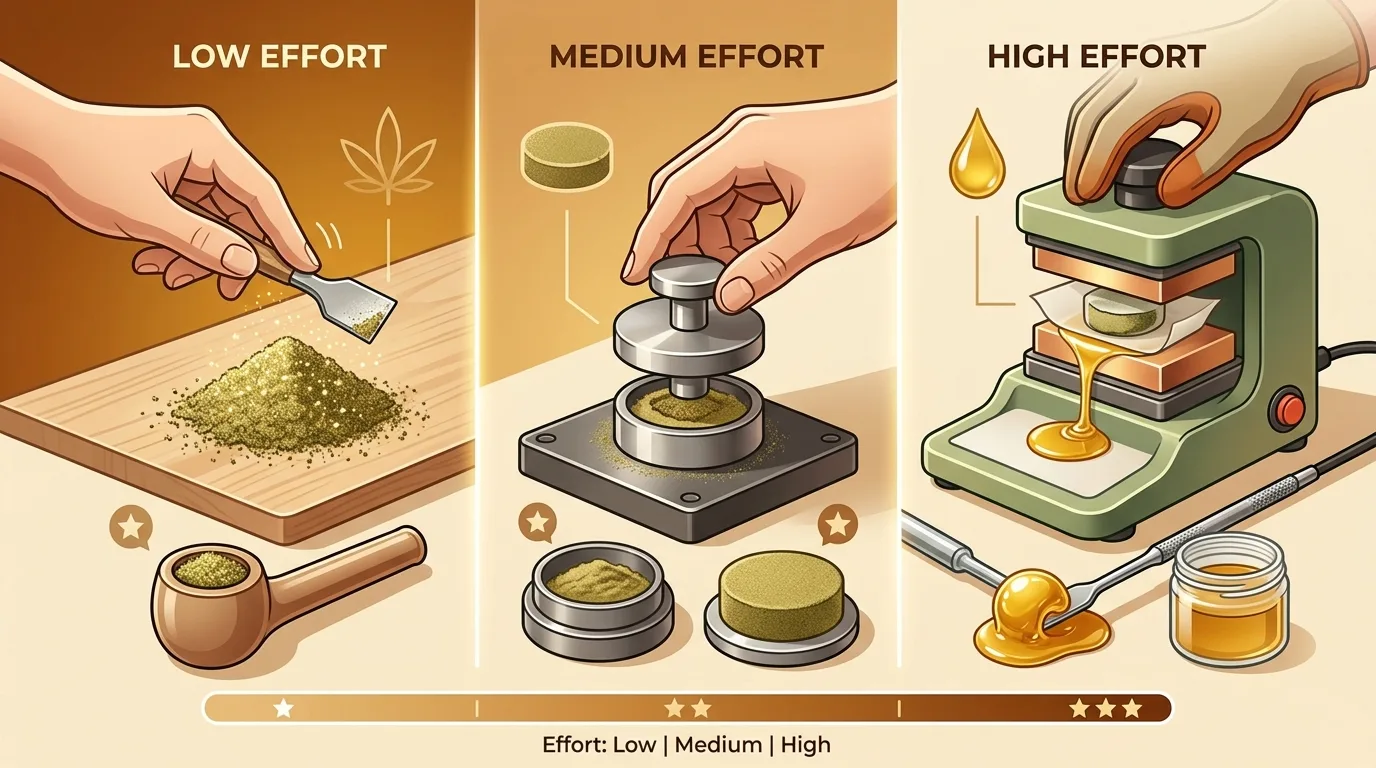
Most regular distillate users don't commit to a single application. The same gram serves multiple purposes across different consumption contexts , a few dabs for immediate effects when needed, some transferred to a vape cart for portable use, and the remainder infused into coconut oil for controlled daily edible dosing. This flexibility makes distillate uniquely versatile among cannabis formats.
A practical split for versatile users: dedicate 0.3g to a refillable cart for out-of-home consumption, reserve 0.2g for occasional dabbing, and infuse the remaining 0.5g into carrier oil for edibles. This creates three consumption options from a single purchase, adapting to different situations throughout the week. The vape cart provides discreet, portable access without combustion smell. Dabs deliver rapid onset for acute needs. Edibles offer long-duration effects with precise dosing control.
The cost efficiency of this approach compounds when buying distillate in larger quantities. Three grams typically cost $20-25 per gram versus $30-35 for single grams, and splitting that purchase across vaping, dabbing, and edibles replaces $150-200 worth of category-specific products. For heavy cannabis users, distillate becomes a central ingredient that stocks their entire consumption toolkit.
Frequently Asked Questions About THC Distillate Uses
Yes, because distillate is already decarboxylated. You can squeeze it directly onto a spoon or under your tongue, though the texture is unpleasant and dosing becomes imprecise. The THC absorbs during digestion the same way it does from edibles mixed with food. Most users prefer mixing distillate into something fatty (peanut butter, yogurt, chocolate) both for better taste and improved THC bioavailability, since cannabinoids absorb more efficiently when consumed with fats.
No. Dry herb vapourizers use convection or conduction heating optimized for plant material, not liquids. Distillate's viscosity would leak into the device's chamber and heating element, causing damage and creating a mess that's nearly impossible to clean. Distillate requires dedicated concentrate vapourizers, dab rigs, or 510-thread cartridge batteries designed for oils. Never attempt to use distillate in a device made for flower.
Start with 100-200mg total THC (0.1-0.2g of 90% distillate) and divide it into at least 10 servings, creating 10-20mg portions. This conservative approach prevents the common beginner mistake of making edibles too strong. You can always eat two cookies if the first one proves too mild, but you cannot reverse eating a 50mg cookie if you're uncomfortable. Scale up once you've established your tolerance and confirmed your dosing calculations work correctly.
Pure distillate adds virtually no cannabis flavour to edibles , just a faint, slightly earthy aftertaste most users don't notice in recipes with other strong flavours. This neutrality distinguishes distillate from cannabutter or flower-infused oils, which carry pronounced weed taste. If you want edibles that don't taste like cannabis, distillate is the optimal ingredient. Some terpene-enhanced distillates add slight flavour, but even those remain far subtler than traditional infusion methods.
Yes, though it requires proper technique. THC distillate dissolves in high-proof alcohol (151 proof or higher), creating a concentrated tincture you can dose by the drop. Warm the alcohol slightly (not over open flame), add your measured distillate, and stir until completely dissolved. The advantage over traditional tinctures made by soaking flower in alcohol: precise dosing and immediate availability, since you're not waiting weeks for cannabinoid extraction.
Refrigeration slows THC degradation by reducing temperature-driven molecular breakdown, potentially extending shelf life from 6-8 months to 12-14 months. However, cold storage makes distillate extremely thick and difficult to dispense without warming. Most users find room-temperature storage in a dark, cool cabinet provides adequate preservation without the inconvenience of having to warm the product before each use. Refrigeration makes most sense for large quantities you're storing long-term.
Making Your Distillate Purchase Decision
THC distillate serves you best when you think of it as a raw ingredient rather than a finished product. The question isn't whether distillate makes sense for cannabis consumption generally , it's whether you want to actively engage with your cannabis in a format that requires some preparation and basic technique. Users who prefer grab-and-go convenience will find pre-filled vape carts and commercial edibles more appealing, despite higher per-milligram costs.
But for cannabis consumers who value flexibility, cost efficiency, and precise control over their intake, distillate opens possibilities no other format matches. The same product that fills your vape cart also doses your morning coffee through infused coconut oil, and provides emergency dabs when faster onset matters. This versatility, combined with the edibles cost savings that reach 80-85% compared to retail products, makes distillate particularly attractive for regular users who've moved past the exploration phase into routine consumption patterns.
The learning curve remains gentle. Your first cartridge refill might take fifteen minutes and feel uncertain. Your fifth takes five minutes and feels routine. Your first edibles batch requires careful calculation and measurement. Your tenth batch happens automatically because you've memorized the ratios. The initial investment of attention pays dividends in expanded options and reduced long-term costs.
Shop THC Distillate and Concentrates
Browse our selection of premium THC distillate and cannabis concentrates, all lab-tested and available for same-day delivery across Canada.
View ConcentratesUnderstanding these uses transforms distillate from an intimidating concentrate into a practical tool that serves multiple consumption needs from a single purchase. Whether you prioritize the edibles savings, value the vaping cost reduction, or simply want the flexibility to choose your consumption method based on situation and preference, distillate delivers performance that justifies the minimal learning investment required to use it effectively.