If you've been grinding cannabis for a while, you've probably noticed that fine, powdery layer of golden crystals collecting at the bottom of your grinder. That's kief,the concentrated trichomes that fell off your flower during grinding,and it's significantly more potent than the bud it came from. Most cannabis users accumulate kief without really planning to, then stare at their collection wondering what to do with it. The answer depends entirely on how much effort you want to invest and what kind of experience you're after.
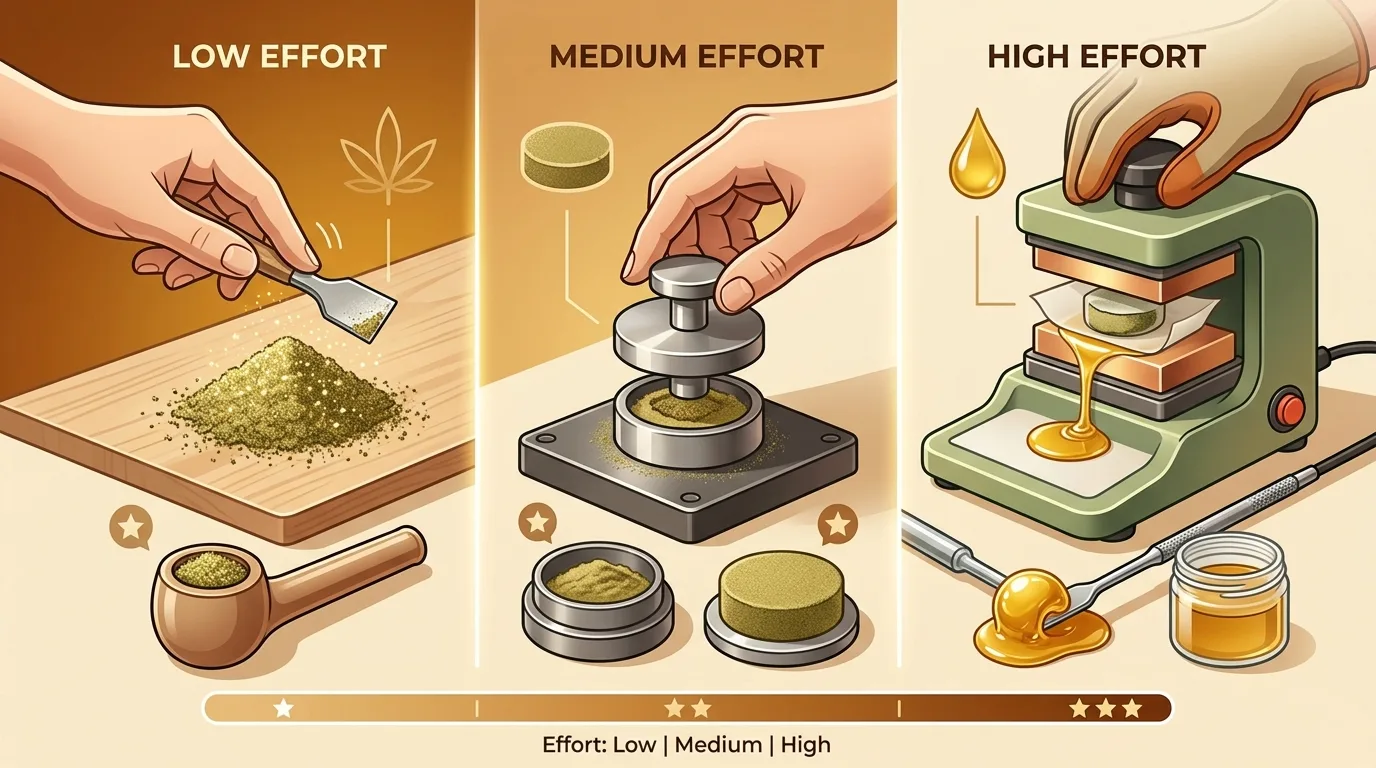
This guide ranks three kief uses from simplest to most involved: sprinkling it on top of a bowl for an instant potency boost, rolling it into a joint for enhanced smoking sessions, and pressing it into hash,a traditional concentrate that transforms loose powder into a workable, aromatic product you can smoke multiple ways. That third method is where things get genuinely interesting, especially if you've been curious about hash but intimidated by the price point of imported varieties.
Method #1: Top a Bowl (Easiest, Instant Results)
The simplest use for kief requires zero preparation and works with any smoking device that holds flower. Once you've packed your bowl, bong, or pipe with ground cannabis, sprinkle a thin layer of kief across the top. The kief layer should be visible but not so thick that it overwhelms the cherry or creates airflow problems.
This method works because kief burns slower and hotter than regular flower. When you light the bowl, the kief layer acts as a concentrated topper that gradually melts into the cannabis below, increasing the overall THC content of each hit without dramatically changing the smoking experience. You're essentially upgrading mid-grade flower to premium potency with material you already collected passively.
How Much Kief to Use on a Bowl
For regular cannabis users, start with a pinch roughly the size of a match head. That's approximately 0.05-0.1 grams of kief, which might contain 30-50mg of additional THC depending on the source flower's potency. If you're adding kief to flower that's already 20% THC, you're potentially doubling the cannabinoid load of that bowl.
The effect difference is noticeable but not overwhelming. You'll feel a stronger onset and slightly longer duration compared to flower alone, but you won't experience the intensity leap that comes from dabbing concentrates or taking high-dose edibles. This makes bowl-topping the ideal method for casual enhancement rather than transformative experiences.
The Airflow Consideration
Pack kief too densely and you'll create a seal that makes the bowl difficult to light and harder to pull. The fine particle size means kief can compact into a nearly solid layer if you're not careful. Apply it loosely and avoid tamping it down. If you're using a screen in your bowl, the kief layer becomes even more forgiving since the screen prevents pull-through.
Method #2: Roll It Into a Joint (Moderate Effort, Enhanced Sessions)
Incorporating kief into a joint requires slightly more technique than topping a bowl, but the payoff is a slower-burning, more potent smoke that maintains consistency throughout the session. You have two main approaches: mixing kief directly into your ground flower before rolling, or layering it along the length of the joint after you've shaped the roll.
The mixing method produces more even distribution. Combine your ground cannabis with kief in a 10:1 or 8:1 ratio,roughly a pinch of kief per gram of flower. Mix thoroughly so the kief coats the flower particles rather than clumping. This creates a joint that smokes predictably from start to finish, with slightly elevated potency in every puff.
The Layering Technique
Layering kief produces a more dramatic effect but requires careful execution. Roll your joint normally, then untwist the tip slightly to expose the length of cannabis inside. Using a kief scraper or small tool, create a thin line of kief running down the centre of the exposed flower. Re-twist the tip and light as usual.
This method concentrates the kief in the core of the joint, creating what some users call a "kief highway" that runs through the middle. As you smoke, the kief line heats and melts slightly, infusing the surrounding flower. The effect builds as you progress through the joint, with the middle and end portions delivering noticeably stronger hits than the beginning.
Why Joints Burn Differently With Kief
Kief changes combustion dynamics. The high trichome concentration means more resinous material that burns slower and hotter than plant matter alone. Joints with significant kief content often develop thicker smoke and more pronounced resin rings at the cherry. They also tend to canoe less frequently because the kief layer helps regulate burn rate across the rolling paper's width.
If you're already comfortable with rolling techniques for specialty wraps, adding kief to your joints is a natural next step that doesn't require learning entirely new skills,just minor adjustments to your existing process.
Method #3: Press It Into Hash (Most Effort, Most Rewarding)
This is where kief collection becomes genuinely interesting. Hash is simply compressed kief that's been subjected to heat and pressure until the trichome heads rupture and their sticky contents bind the powder into a solid or semi-solid mass. The process transforms loose, difficult-to-handle kief into a stable concentrate that's easier to store, portion, and smoke.
Pressing hash at home doesn't require expensive equipment or specialized skills. The most basic method,hand-pressing,uses only body heat and pressure. More involved techniques use household items like hair straighteners or parchment paper to create products that rival imported hash in quality and appearance.
Hand-Pressing: The Zero-Equipment Method
Collect at least one gram of kief for hand-pressing to be worthwhile. Place the kief in a small square of parchment paper and fold it into a tight packet. Hold the packet between your palms and apply firm, consistent pressure while rolling your hands in circular motions. Your body heat gradually warms the kief while the pressure forces the trichome heads to rupture and stick together.
Continue for 10-15 minutes, periodically checking the kief's consistency. You're looking for it to darken slightly and begin clumping into a cohesive mass. Once it holds together when pinched, unwrap the parchment and shape the hash into a small ball or puck. This produces what's sometimes called "finger hash",a basic pressed product that's significantly easier to handle than loose kief and slightly more potent due to the concentration process.
The Hair Straightener Method
For better results with less manual effort, use a hair straightener or flat iron. This technique is essentially low-temperature rosin pressing adapted for kief. Place one gram of kief in a folded parchment paper packet, ensuring the kief forms a thin, even layer no more than 2-3mm thick.
Set your straightener to its lowest heat setting (usually 250-300°F). Place the parchment packet between the plates and apply firm pressure for 5-7 seconds. You should hear a slight sizzle as moisture evaporates and trichomes melt. Remove the packet, let it cool for 30 seconds, then carefully open it. The kief will have transformed into a darker, more compact hash that may show slight oil rings on the parchment.
This method produces hash with a consistency ranging from crumbly and dry to pliable and sticky, depending on the source kief's age and cannabinoid profile. The heat activates and partially decarboxylates the THC, potentially making the resulting hash feel slightly stronger than the raw kief would if smoked at the same dosage.
Traditional Press Methods
For larger quantities or more traditional results, consider the bottle-rolling method used in Moroccan and Afghan hash-making traditions. Fill a glass bottle with hot water, seal it tightly, and wrap your kief in several layers of cellophane or parchment. Roll the hot bottle back and forth over the wrapped kief on a hard surface, applying bodyweight pressure through the bottle.
This technique mimics the heated compression used in traditional hash production, creating a denser product with the characteristic sheen and flexibility of imported hash. The process takes 20-30 minutes of sustained effort but produces hash that can be sliced with a knife, holds its shape at room temperature, and develops complex aromatic profiles as it cures.
Why Pressing Beats Other Methods
Beyond the practical benefits of easier handling and storage, pressed hash offers something loose kief can't: improved flavour and aroma. The compression process ruptures trichome heads and blends their contents, creating new terpene combinations that weren't present in the separated form. Hash pressed from the same kief that tasted harsh when sprinkled on a bowl often smokes smoother and develops nutty, earthy notes that weren't apparent before.
Pressing also concentrates potency without requiring solvents or expensive extraction equipment. While you won't reach the 80-90% THC levels of professionally extracted concentrates, homemade pressed hash typically tests between 40-60% THC,double or triple the potency of average flower. For users interested in cannabis concentrates but intimidated by dabbing's learning curve, pressed hash offers a middle ground that works with familiar smoking methods.
How to Smoke Your Pressed Hash
Once you've pressed kief into hash, you have multiple consumption options that weren't practical with loose powder. The simplest method is breaking off small pieces and mixing them into joints or bowls, exactly as you would with purchased hash. The compressed form means you can portion accurately and handle the material without losing half of it to static cling and spills.
For a more traditional experience, use the hot-knife method: heat two butter knives on a stove element until they're nearly red-hot, sandwich a small piece of hash between the blades, and inhale the resulting smoke through a bottle or tube. This technique delivers intense, immediate effects but requires practice to avoid burns and wasted material.
Hash in Vapourizers
Some dry herb vapourizers include concentrate pads or sandwiching techniques that allow hash consumption without combustion. Place a small amount of crumbled hash between layers of flower or in a designated concentrate pad, then vapourize at 375-400°F. The hash will melt and vapourize over several draws, producing clean, flavourful hits without the harshness of smoking.
This method preserves terpenes better than combustion and produces less odour, making it ideal for discreet consumption. The main limitation is that not all vapourizers handle sticky concentrates well,check your device's manual before experimenting with hash to avoid gunking up your heating chamber.
Linking to Traditional Hash Products
If pressing your own hash sounds appealing but you want to compare your results against professionally made products, exploring traditional imported hash varieties provides a useful benchmark. The flavour profiles, textures, and effects you create at home should share characteristics with commercial hash from the same general production method,hand-pressed kief produces hash similar to basic imported varieties, while heated compression yields products closer to premium Moroccan or Afghan styles.
Maximizing Your Kief Collection
The quality of your pressed hash depends entirely on the kief you start with. Most grinders with kief catchers produce a mix of actual trichome heads and plant material that passed through the screen. The ratio between these components determines your kief's colour (golden is pure, green indicates plant matter) and potency.
To collect cleaner kief, place your loaded grinder in the freezer for 15-20 minutes before grinding. The cold makes trichomes brittle and more likely to separate cleanly. After grinding, tap the grinder firmly against your palm multiple times to encourage trichome separation, then return it to the freezer for another 10 minutes. This freeze-tap-freeze cycle produces noticeably purer kief than room-temperature grinding alone.
When to Harvest Your Kief Catcher
Most grinders accumulate usable kief quantities after processing 7-14 grams of flower, though this varies based on flower quality and grinding frequency. Resist the urge to harvest too early,small amounts of kief are difficult to press effectively and more likely to be lost during handling.
Wait until you have at least one gram of kief before attempting any pressing method. For hand-pressing, 2-3 grams produces better results because the larger mass retains heat more effectively and provides more material for the binding process to work with. If you're using a hair straightener, one gram is sufficient, but 2-3 grams allows you to create a thicker packet that won't blow out under pressure.
Common Kief Mistakes and How to Avoid Them
The most frequent error is contaminating kief with plant material by using overly coarse grinder screens or aggressive grinding techniques. If your kief looks more green than golden, you're collecting chlorophyll and plant matter along with trichomes. This produces harsh, less potent hash that tastes vegetal rather than resinous.
Another common mistake is storing kief in warm or humid conditions. Trichomes degrade quickly when exposed to heat and moisture, losing potency and developing stale flavours. Store your grinder in a cool, dark place and avoid leaving it in hot cars or direct sunlight. If you've accumulated a large kief collection you're not ready to use, transfer it to an airtight container and refrigerate it.
Over-Pressing and Heat Damage
When pressing hash, more heat and pressure don't automatically produce better results. Excessive heat (above 350°F) begins degrading THC and evaporating terpenes, creating hash that's less potent and aromatic than the source kief. Similarly, too much pressure can rupture trichomes so completely that their contents leak out and stick to your parchment paper rather than binding the hash together.
Start with lower heat and moderate pressure, then increase gradually if your first attempt produces hash that's too crumbly or dry. The goal is the minimum heat and pressure needed to achieve binding,anything beyond that point reduces quality rather than improving it.
Ready to Explore Hash?
Browse our selection of traditional imported hash and premium flower,the foundation for building your own kief collection.
Shop Hash & FlowerFrequently Asked Questions
Kief typically contains 40-60% THC compared to 15-25% THC in most flower. This makes kief roughly 2-3 times more potent by weight. However, the exact potency depends entirely on the quality of the source flower,kief from premium cannabis will be significantly stronger than kief from low-grade material.
Yes, traditional hand-pressing uses only body heat and pressure, though the process takes longer and produces less cohesive hash than heated methods. Cold-pressing with a mechanical press is also possible but requires significantly more pressure than manual methods can generate. Heat accelerates trichome rupture and binding, but it's not strictly necessary if you're patient.
Properly pressed hash stored in airtight containers away from light and heat remains viable for 1-2 years with minimal potency loss. The compression process actually helps preserve cannabinoids by reducing surface area exposed to oxygen. Hash that's been cured for several months often develops more complex flavours than freshly pressed material.
Kief collected from grinders is a form of dry sift, but traditional dry sift hash uses finer screening techniques that remove more plant material. Grinder kief is typically 70-120 micron purity (a mix of trichomes and contaminants), while premium dry sift uses multiple screens to isolate 70-90 micron trichome heads specifically. Both are unpressed trichome collections, but dry sift is usually purer.
The ideal range is 250-300°F for 5-10 seconds of contact time. This temperature is hot enough to make trichomes sticky and pliable without degrading cannabinoids or evaporating terpenes. Hair straighteners on their lowest setting usually fall within this range. If your hash comes out oily or loses significant weight during pressing, reduce heat by 25-50 degrees.
Absolutely. Mixing kief from multiple strains creates a unique cannabinoid and terpene profile that combines characteristics from all sources. Many users intentionally blend kief from indica and sativa strains to create hybrid hash with balanced effects. The pressing process will homogenize the mixture, though some users report being able to detect individual strain notes in well-cured blended hash.
Conclusion: Three Methods, One Collection
What you do with kief ultimately depends on how much effort you want to invest in the experience. Topping a bowl takes seconds and delivers instant potency boosts with zero learning curve. Rolling kief into joints requires slightly more technique but produces enhanced sessions that maintain their strength from first puff to last. Pressing kief into hash demands the most time and attention but rewards you with a versatile concentrate that's easier to store, portion, and consume than loose powder.
The pressing method also connects you to a hash-making tradition that predates modern extraction techniques by centuries. Learning to press your own hash from accumulated kief transforms what was previously grinding waste into a premium product you created yourself. Start simple,a gram of hand-pressed hash teaches you the fundamentals,then experiment with heated methods as your collection grows and your technique improves.
Whether you're sprinkling it, rolling it, or pressing it, that golden powder sitting in your grinder's bottom chamber represents concentrated potency you've already paid for. The only question is how you want to use it.