
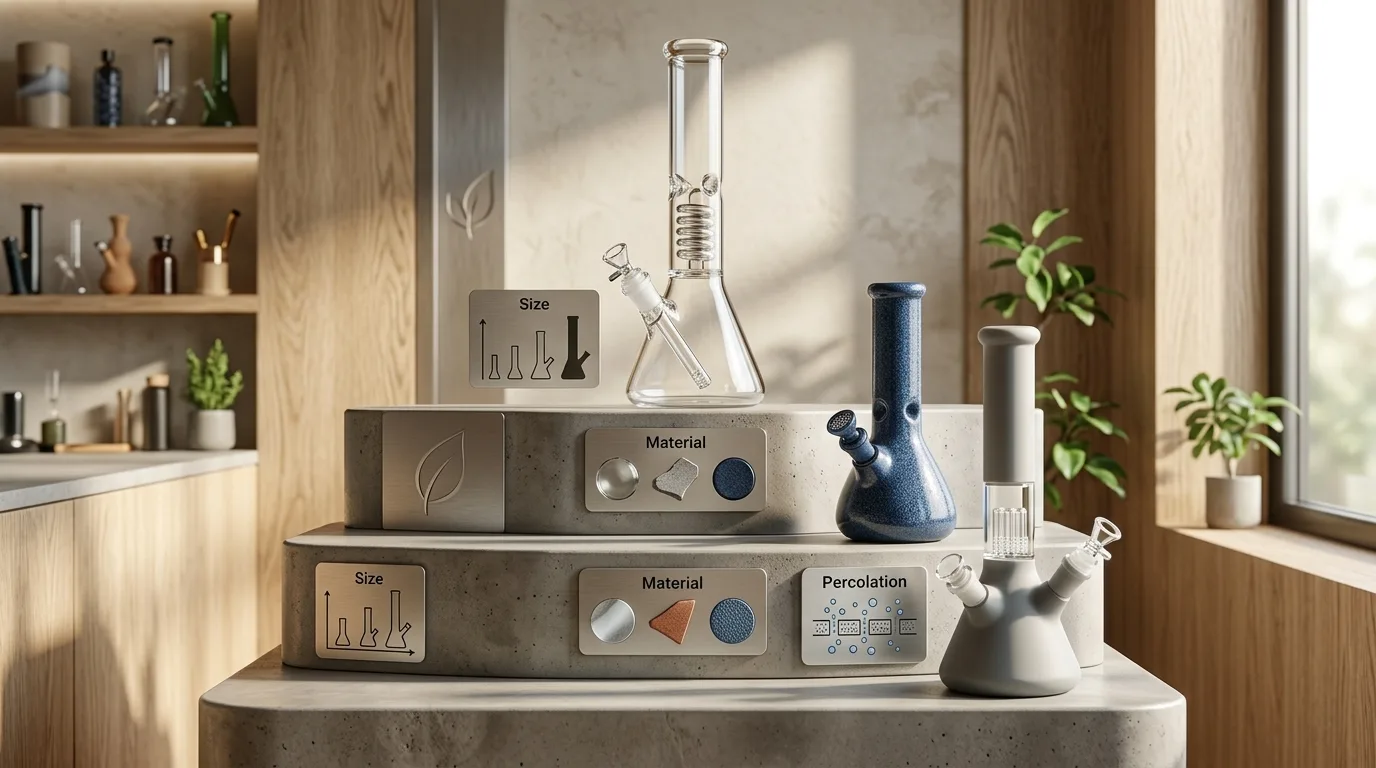
If you've been eyeing that friend's bong at parties and thinking it's time to get your own, you're probably realizing there are way more options than you expected. Walk into any headshop or browse online, and you'll face a wall of glass towers, colourful silicone pieces, and technical terms like "tree perc" or "inline diffuser" that might as well be a foreign language. Choosing your first bong doesn't need to feel overwhelming. This guide breaks down the three factors that matter most: percolator types (the filtration system that cools your smoke), material (glass versus silicone, and why it matters), and size versus portability (because your living situation and smoking habits should drive this decision). By the end, you'll know exactly what to look for when buying your first water pipe.
The right bong becomes a daily companion. The wrong one sits in a closet after two uses because it's too harsh, too fragile, or too awkward to clean. We're cutting through the marketing hype and focusing on practical differences that affect your actual smoking experience.
Understanding Percolators: The Filtration System That Defines Your Hit
A percolator is the internal structure that forces smoke through water, creating bubbles that cool and filter the smoke before it reaches your lungs. This is the single most important feature affecting smoothness and flavour. First-time bong buyers often ignore this component entirely, then wonder why their hits feel harsh or stale.
How Percolation Actually Works
When you pull on a bong, smoke travels from the bowl down the downstem and into the water chamber. Without a percolator, smoke just bubbles up in large, inefficient pockets. A perc breaks that smoke into dozens or hundreds of smaller bubbles, dramatically increasing the surface area touching water. More surface contact means better cooling and filtration. Think of it like this: dumping ice cubes into a drink cools it faster than one giant ice block because of increased surface area. Same principle.
The tradeoff is drag (resistance when you inhale). More percolation generally means smoother hits but requires stronger lungs. Beginners often prefer moderate percolation because it balances smoothness with easy airflow.
Common Percolator Types (And Which Suits Beginners)
No Percolator (Simple Beaker or Straight Tube): Just a downstem dumping smoke into water. This is the classic "first bong" setup. It offers minimal filtration but maximum airflow and the easiest cleaning. If you're coming from joints or pipes, this provides a noticeable upgrade without complexity. Drawback: harsher hits compared to advanced percs.
Tree Percolator: Looks like an upside-down tree with multiple arms (usually 4-8), each with slits at the bottom. Smoke splits through all arms simultaneously, creating good diffusion. This was the gold standard for years and remains popular. However, tree percs are fragile with all those thin glass arms, and they're annoying to clean because resin builds up in the slits.
Showerhead Percolator: A vertical tube that flares into a dome shape with slits or holes around the bottom edge, resembling a showerhead. Excellent diffusion with less fragility than tree percs. Moderate drag. This is often recommended for first-time buyers because it offers smooth hits without excessive resistance or difficult cleaning.
Honeycomb Percolator: A flat disc with dozens of tiny holes, creating a dense cloud of micro-bubbles. Extremely smooth hits with relatively low drag because the holes are evenly distributed. Easier to clean than tree percs since there are no complex branches. If you can afford it (honeycomb bongs often cost more), this is an excellent beginner choice.
Inline Percolator: A horizontal tube with slits along its length, usually positioned at the base. Creates a smooth, even diffusion with minimal drag. Often paired with a second perc above it for dual filtration. Good for beginners who want smoothness but don't want excessive resistance.
Matrix or Stereo Matrix Percolator: A cylinder with vertical and horizontal slits creating a grid pattern. Provides exceptional diffusion with balanced airflow. High-end option, but delivers restaurant-quality smoothness if you're willing to invest.
Single Perc vs Dual Perc: Is More Always Better?
Bongs with two or more percolators (often called "multi-chamber" or "recycler" designs) offer incredibly smooth hits. Smoke passes through one perc, rises into a second chamber, filters through another perc, then reaches your lungs. The result feels almost cold and velvety.
The downsides: significantly more drag (you need stronger lungs), much harder to clean (two percs means twice the resin buildup), and higher cost. For your first bong, stick with a single percolator unless you have lung capacity from swimming or playing wind instruments. You can always upgrade later once you understand your preferences.
Glass vs Silicone: Material Matters More Than You Think
Material affects flavour, durability, cleaning, and price. This choice should align with your lifestyle, not just aesthetics. Many beginners buy a gorgeous glass piece, then break it within weeks because their living situation doesn't suit fragile glassware.
Borosilicate Glass: The Traditional Choice
High-quality bongs use borosilicate glass (often labelled "boro"), the same material in labouratory beakers. It resists thermal shock, meaning you can add ice or hot water without cracking. Glass is the gold standard for flavour because it's chemically inert and doesn't leach any taste into your smoke. If you care about tasting terpenes and strain differences, glass is non-negotiable.
Glass also looks beautiful. Clear borosilicate lets you watch smoke swirl through percolators, and coloured glass pieces become conversation starters. Thick glass (5mm or more) feels premium and is less likely to break from minor knocks.
The obvious drawback is fragility. Drop a glass bong on tile or concrete, and you're buying a new one. Even setting it down too hard on a table edge can chip the base. If you live with roommates, have pets, or tend to be clumsy, budget for replacement or consider alternatives. Glass is also the most expensive option, with decent beginner pieces starting around $80-150 CAD.
Silicone: The Indestructible Alternative
Silicone bongs exploded in popularity over the past few years because they solve glass's biggest problem: they're virtually indestructible. You can drop, fold, or step on a silicone bong without damage. They're dishwasher-safe, often come apart for deep cleaning, and cost significantly less (quality silicone pieces start around $30-50 CAD).
For certain lifestyles, silicone makes perfect sense. If you travel frequently, camp, or want a bong for outdoor concerts, silicone is the obvious pick. If you're accident-prone or have small children or pets, silicone removes the anxiety of breakage.
The tradeoffs are flavour and aesthetics. Food-grade silicone is safe, but it does impart a slight taste, especially when new. Some users never notice; others find it off-putting. Silicone also can't incorporate complex percolators like glass can because the material doesn't allow for intricate internal structures. You'll typically get basic diffusion at best. Finally, silicone bongs look and feel like toys compared to elegant glassware. If presentation matters to you, silicone won't deliver that "adult glass art" vibe.
Hybrid Options: Glass Downstems in Silicone Bodies
Some manufacturers offer hybrids: silicone body with a removable glass downstem and bowl. This combines durability with better flavour since smoke passes through glass before touching silicone. It's a smart compromise if you want portability but care about taste. Just know the glass components can still break, and mixing materials sometimes complicates cleaning.
Acrylic and Ceramic: Why We Don't Recommend Them for First-Timers
Acrylic bongs are cheap (often under $30) but notorious for harsh hits and chemical taste. The plastic degrades over time, and cleaning is difficult without scratching the interior. Ceramic bongs look artistic but are as fragile as glass without the same clarity or cleaning ease. Neither material makes sense as a first bong when silicone and budget glass are available at similar prices. If you're serious about using a bong regularly, skip these materials entirely.
Size and Portability: Matching Your Bong to Your Life
Bong size dramatically affects your experience. A 24-inch beaker hits differently than an 8-inch mini bong, and neither is objectively "better." The right size depends on where you'll use it, how you'll store it, and your lung capacity.
Small Bongs (6-10 inches): Maximum Portability
Small bongs fit in a backpack, hide in a drawer, and travel easily. They're perfect for apartment dwellers with limited storage or anyone who wants discretion. Smaller water chambers mean less water to change and faster cleaning. They're also budget-friendly, since less material equals lower cost.
The tradeoff is harshness. With less water and shorter distance for smoke to travel, hits feel hotter and less filtered than larger pieces. Small bongs work best with ice catchers (pinched neck that holds ice cubes above the water) to compensate for the reduced cooling. They also tip over easily if you're not careful with placement.
Consider a small bong if you primarily smoke alone, move frequently, or need something you can quickly put away when guests arrive. They're also excellent as a secondary piece once you have a larger daily driver.
Medium Bongs (10-16 inches): The Versatile Middle Ground
This is the sweet spot for most first-time buyers. Medium bongs provide substantially smoother hits than mini pieces while remaining manageable for storage and transport. You get enough water volume for proper filtration, room for a decent percolator, and the option to add ice. Yet they still fit in most cabinets and aren't unwieldy to handle.
A 12-14 inch bong with a showerhead or honeycomb perc delivers an excellent smoking experience without the commitment of a massive piece. This size works whether you're smoking solo or passing it in a small group. It's also easier to learn proper technique on a medium bong because you can control your breath without feeling overwhelmed by a giant chamber.
If you're unsure which size to choose, start here. You can always get a smaller travel piece or larger centrepiece later once you know your preferences.
Large Bongs (16+ inches): Smoothness and Statement Pieces
Large bongs are the smoothest smoking experience you'll get from a water pipe. The extended distance allows maximum cooling, and bigger bases hold more water for better filtration. They also look impressive - a 20-inch glass bong with coloured accents becomes room decor when not in use.
But they come with serious drawbacks for beginners. Lung capacity requirements increase dramatically with size. Clearing a large chamber takes practice and strong lungs; many first-timers can't finish a full hit without coughing. Large bongs are also expensive (often $200+ CAD for quality pieces), fragile (more height means easier tipping), and impossible to hide or transport. Cleaning requires more solution and effort since you're dealing with greater surface area.
Only consider a large bong as your first piece if you have a dedicated smoking space, strong lungs, and budget flexibility. Otherwise, work up to this size after gaining experience with something more manageable.
Beaker Base vs Straight Tube: Shape Affects Stability and Hits
Beyond height, base shape matters. Beaker-style bongs have a wide, flask-shaped bottom that holds more water and provides excellent stability. They're harder to knock over and deliver slightly smoother hits due to increased water volume. The wide base also makes cleaning easier since you can get a brush in there. Drawback: they take up more shelf space.
Straight tube bongs have a uniform diameter from base to mouthpiece. They're more portable, use less water (which some prefer for flavour concentration), and clear faster since there's less volume to inhale. They also look sleeker and modern. Drawback: they tip over more easily and provide slightly less filtration than beakers of the same height.
For a first bong, beaker bases offer more forgiveness. They're stable enough to set on a couch armrest without panic, and the extra water compensates for beginner technique errors. Once you're comfortable with bong mechanics, you might prefer the streamlined experience of a straight tube.
Additional Features That Actually Matter for Beginners
Beyond the big three (perc, material, size), several smaller features can make or break your experience. Not all are necessary, but understanding them helps you make an informed choice.
Ice Catchers: The Cheap Upgrade That Works
Ice catchers are pinched notches in the neck that hold ice cubes above the water chamber. Smoke passes through ice before reaching your mouth, cooling it dramatically. This feature adds maybe $5-10 to a bong's cost but delivers noticeable smoothness improvement. If you're choosing between two similar bongs, pick the one with an ice catcher. Just remember to dump the water before ice melts and overfills the chamber.
Splash Guards: Preventing Bong Water in Your Mouth
Nothing ruins a session faster than inhaling bong water. Splash guards (also called "ice pinches" when they serve dual duty) prevent water from reaching the mouthpiece during hard pulls. Some bongs incorporate a bulbous chamber shape that naturally catches splashes. This matters more on smaller bongs where water is closer to your mouth. Check reviews to see if a particular model has splash issues before buying.
Removable Downstems: Cleaning and Replacement Ease
Some bongs have fixed downstems (permanently attached), while others use removable downstems that slide into a ground glass joint. Removable is almost always better for beginners. When your downstem clogs with resin, you can pull it out and soak it separately. If it breaks, you buy a $15 replacement instead of a whole new bong. Fixed downstems create a more stable, leak-proof design, but the cleaning and repair limitations outweigh that benefit.
Bowl Size: 14mm vs 18mm Joints
The female joint where your bowl sits comes in two standard sizes: 14mm and 18mm diameter. Smaller bongs typically use 14mm; larger pieces use 18mm. This matters because bowls and downstems must match. 18mm is slightly better for beginners because the larger opening is easier to pack and clean, and replacement parts are more common. However, 14mm isn't a dealbreaker, especially if the rest of the bong suits your needs. Just note which size you have so you buy compatible accessories.
While we're discussing bowls, consider getting a bong with a handle on the bowl piece. It gets hot during use, and a handle lets you pull the bowl to clear the chamber without burning your fingers. Small detail, but it matters after your third consecutive hit.
Practical Buying Advice: Budget, Brands, and Where to Shop
You've decided on perc type, material, and size. Now comes the actual purchase. Here's what to consider beyond the piece itself.
Budget Guidelines for First-Time Buyers
Quality silicone bongs: $30-60 CAD. You're paying for food-grade silicone and decent construction. Cheaper options exist but may use questionable materials.
Entry-level glass bongs: $60-120 CAD. This gets you basic borosilicate with a simple perc (or no perc) and thin glass (3-4mm). Fine for testing the waters but expect limited durability.
Mid-range glass bongs: $120-250 CAD. This is the recommended range for serious first-timers. You get thicker glass (5mm+), a quality percolator, and reputable brand construction. These bongs last years with proper care.
High-end glass bongs: $250-1000+ CAD. Artistic pieces, complex multi-perc systems, extra-thick glass, or designer brands. Unnecessary for learning but potentially worthwhile once you know exactly what you want.
Start in the mid-range if you're committed to bong smoking. Saving $30 on a cheap piece that breaks or disappoints you just means buying twice. That said, if you're genuinely unsure whether you'll use a bong regularly, buy a budget option first. Better to waste $50 than $200 on something that collects dust.
Online vs In-Store: Where to Buy Your First Bong
Online shopping offers better selection and pricing. You can compare dozens of models, read reviews, and find exactly the perc style and size you want. Shipping within Canada is straightforward since water pipes are legal paraphernalia. Look for Canadian retailers to avoid customs delays and duties. Many online dispensaries, including services that specialize in mail order cannabis delivery, also carry quality glass and accessories with discreet shipping.
Physical headshops let you hold pieces, check glass thickness, and ask questions. Staff can demonstrate how different percs function and help you find the right size. The selection is usually limited compared to online, and prices run higher due to overhead. But there's value in seeing your first bong in person, especially if you're choosing between similar models.
A smart approach: visit a local shop to get hands-on experience with different sizes and styles, take notes on what you like, then search online for the same features at better prices. Or buy from the shop if they're competitive and you value supporting local businesses.
What to Check Before Buying (Especially Online)
Glass thickness: Look for listings that specify 5mm or thicker for the base and tube. Anything under 3mm is fragile.
Joint type: Confirm whether the downstem and bowl are glass-on-glass (better seal, easier cleaning) or rubber grommet (cheaper, more prone to leaks).
Measurements: Check actual dimensions, not just what "looks big" in photos. Many online images use forced perspective. Read the specs.
Included accessories: Some bongs come with a bowl and downstem; others sell separately. Factor this into total cost.
Return policy: Reputable sellers accept returns on unused bongs (though you typically can't return it after use for hygiene reasons). This protects you if the piece arrives damaged or isn't what you expected.
Common First-Time Buyer Mistakes to Avoid
Buying too large: The most common mistake. New users see massive 20-inch bongs and think bigger equals better, then realize they can't clear the chamber. Start medium.
Ignoring cleaning requirements: Complex percs look cool but become resin traps. If you hate cleaning, stick with simple designs.
Choosing aesthetics over function: A beautiful colour-changing glass bong with five percs is useless if you can't inhale through it or keep it clean. Prioritize usability.
Forgetting about storage: Measure your storage space before buying. A 16-inch bong won't fit in a standard bathroom cabinet.
Skipping on glass quality: If you're buying glass, invest in quality borosilicate. Cheap glass breaks within weeks and costs more long-term than buying decent glass upfront.
Using and Maintaining Your First Bong
Buying the right bong is half the battle. Using it correctly and keeping it clean determines whether it becomes your daily driver or a regretted purchase.
Proper Water Levels and First-Time Setup
Fill water until it covers the percolator (or downstem if there's no perc) by about half an inch to one inch. Too little water means no filtration; too much creates excessive drag and splash risk. Test by pulling air through the empty bowl - you should hear active bubbling without water shooting up the tube.
If your bong has an ice catcher, add 2-4 ice cubes after filling water. Don't overstuff ice or it restricts airflow. Use fresh ice for each session since melting ice affects water levels.
Use cool or room-temperature water for your first few sessions until you understand how the bong hits. Some people prefer warm water (counterintuitively, it creates smoother vapour), but experiment with that later once you have baseline experience.
Cleaning Schedule: Don't Let Resin Build Up
Change water after every session (or daily if you use it multiple times). Stale bong water is disgusting and affects flavour. This five-second task prevents 90% of gross bong problems.
Deep clean weekly with isopropyl alcohol and coarse salt. Pour alcohol and salt into the bong, cover openings with your hands or plugs, shake vigourously for 2-3 minutes, then rinse thoroughly with hot water. This removes resin before it hardens into permanent stains. For detailed techniques on maintaining cannabis equipment, check guides similar to maintaining quality grinders, where regular cleaning preserves function.
Clean percolators monthly with dedicated brushes or pipe cleaners. Resin buildup in perc slits kills diffusion performance. Removable downstems should soak in alcohol between deep cleans.
Silicone bongs are dishwasher-safe but benefit from occasional alcohol soaks too. The material can absorb odours over time, and alcohol cuts through that better than soap.
Common Beginner Usage Mistakes
Lighting the entire bowl at once: Corner the bowl by lighting just one edge. This preserves green hits for the next person and controls smoke volume.
Not clearing the chamber: After inhaling smoke, pull the bowl out (or release the carb hole on older designs) and inhale again to clear remaining smoke from the chamber. Stale smoke tastes terrible.
Overpacking the bowl: Pack loosely enough for airflow. Tight packing restricts draw and wastes cannabis by incomplete combustion.
Pulling too hard: Gentle, steady inhales work better than aggressive rips. Let the percolator do its job; you're not trying to create a vacuum.