You're about to complete your first online cannabis order when the checkout page asks for an Interac e-Transfer. Your finger hovers over the confirm button. Is this legitimate? Could this be a scam? Should you really be sending money directly from your bank account to buy weed online?
If you've had this moment of hesitation, you're not alone. E-Transfer is actually the most common payment method for legal cannabis purchases in Canada, used by thousands of consumers daily to order from licenced mail-order dispensaries. But not all e-Transfer requests are created equal, and knowing the difference between a secure transaction and a potential scam could save you hundreds of dollars and a lot of frustration.
Why Canadian Cannabis Sites Use E-Transfer Instead of Credit Cards
Before we dive into security protocols, it's worth understanding why virtually every online cannabis retailer in Canada relies on e-Transfer rather than traditional payment processing. The answer comes down to banking restrictions that affect the entire cannabis industry.
Most major credit card processors including Visa, Mastercard, and American Express refuse to process cannabis transactions, even in countries where cannabis is federally legal. This isn't a Canadian-specific problem. It's a global banking compliance issue tied to international financial regulations and the conservative risk profiles of payment networks.
Banks and credit unions, meanwhile, face their own regulatory pressures. While cannabis is legal under Canadian federal law, financial institutions remain cautious about potential complications with cross-border transactions, anti-money laundering requirements, and the administrative burden of cannabis-specific compliance protocols.
This leaves e-Transfer as the most practical solution for both retailers and consumers. Interac e-Transfer operates within Canada's established banking infrastructure, processes instantly through your existing bank account, and doesn't require the merchant to maintain relationships with skittish payment processors.
The E-Transfer Advantage for Cannabis Consumers
From a buyer's perspective, e-Transfer offers several genuine advantages beyond just being available. You're sending money directly from your bank account, which means there's no third-party processor storing your payment information. The transaction shows up on your bank statement as a simple Interac transfer, not a cannabis purchase. And because the payment happens through your bank's own security infrastructure, you benefit from whatever fraud protection and encryption your financial institution already provides.
The system also creates a natural paper trail. Every e-Transfer generates a confirmation email, a bank record, and typically includes a security question and answer that both parties must reference. This documentation becomes valuable if you ever need to prove you paid for an order or resolve a dispute.
How Secure E-Transfer Actually Is: The Technical Breakdown
Let's address the core question directly: Interac e-Transfer itself is extremely secure. The technology uses 256-bit encryption, the same standard employed by major financial institutions for online banking. Every transaction requires authentication through your bank's existing login credentials, and the money moves through Canada's established banking networks rather than through any third-party payment gateway.
When you send an e-Transfer, several security layers activate automatically. Your bank verifies your identity through your login. The recipient's bank verifies their identity when they deposit the funds. The transaction is encrypted end-to-end. And because Interac is a Canadian institution that operates under strict financial regulations, there's oversight and accountability baked into the system.
The security question adds another verification layer. While this seems like an antiquated system compared to modern two-factor authentication, it serves a specific purpose: ensuring the money reaches the intended recipient even if someone gains access to the recipient's email. For a scammer to intercept your funds, they would need your recipient's email address and the correct answer to your security question.
Where E-Transfer Security Can Break Down
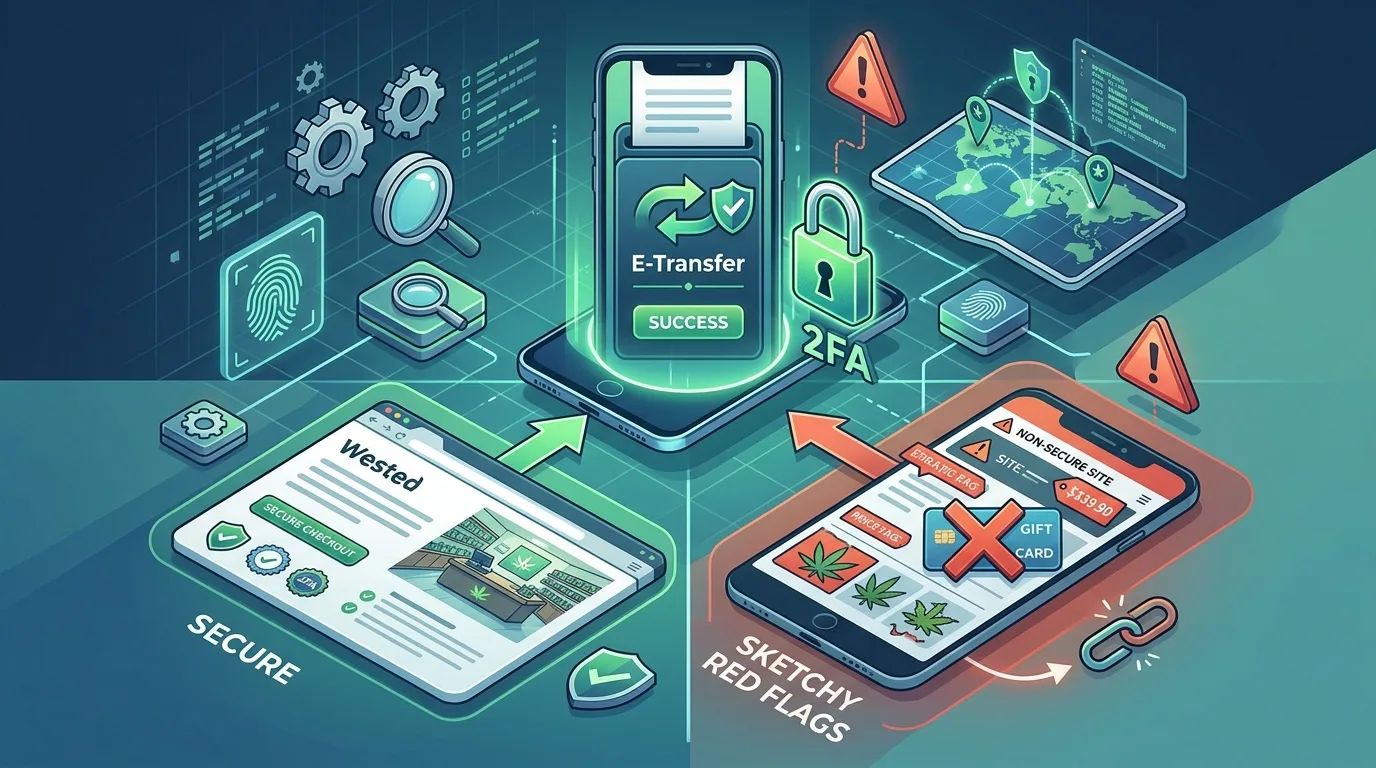
Here's the critical distinction that many first-time cannabis buyers miss: e-Transfer as a payment method is secure, but that doesn't mean every website asking for an e-Transfer is legitimate. The security of the technology doesn't protect you from sending money to a scam site that never intended to ship your order.
Think of it this way: certified mail is a secure shipping method, but that security doesn't prevent you from mailing cash to a fake address. The delivery system works perfectly, but you've still lost your money because you sent it to the wrong place. The same principle applies to e-Transfer and online cannabis purchases.
This is why understanding red flags and verification steps matters more than analyzing the payment technology itself. The real question isn't "Is e-Transfer safe?" but rather "Is this particular website safe to send an e-Transfer to?"
Red Flags That Signal a Sketchy Cannabis Site
Recognizing suspicious websites before you commit to payment separates savvy cannabis consumers from those who become cautionary tales. While no single red flag guarantees a site is fraudulent, multiple warning signs appearing together should make you think twice before sending money.
Unrealistic Pricing That Seems Too Good to Be True
If a website advertises AAA+ flower at $80 per ounce or premium concentrates at half the market rate, you're looking at either a bait-and-switch operation or an outright scam. Legitimate cannabis pricing in Canada follows relatively consistent market rates across the country. Quality flower typically ranges from $120 to $280 per ounce depending on grade and volume discounts.
Scam sites exploit consumer desire for bargains by advertising prices that no legitimate operation could sustain. The business model relies on collecting payments from dozens of customers, never shipping products, then disappearing and relaunching under a new domain name. By the time buyers realize they've been scammed, the site is gone.
Missing or Vague Contact Information
A legitimate cannabis retailer wants you to be able to reach them. They'll prominently display multiple contact methods including email addresses, phone numbers, and often live chat support. The email addresses will match the domain name (support@theirdomain.com rather than a generic Gmail address). Phone numbers will connect to actual humans during posted business hours.
Sketchy operations, by contrast, hide their contact information or provide only a generic email address that may never receive a response. Some will list a phone number that goes to a disconnected line or a voicemail box that's perpetually full. If you can't easily find multiple ways to contact a company before you send money, that's a significant warning sign.
No Physical Address or Verifiable Business Registration
While mail-order cannabis businesses don't necessarily operate storefronts, they should still have a physical business address they're willing to share. This might be a warehouse, an office, or a commercial space, but it should exist and be verifiable. Some provinces require cannabis retailers to display their licence numbers and registration information directly on their websites.
Search for the company name along with terms like "scam," "review," or "legit" to see what other consumers have experienced. Check cannabis forums and subreddit discussions. A legitimate operation will have a digital footprint beyond their own website, including customer reviews on independent platforms, mentions in cannabis community discussions, and a history that extends back more than a few weeks.
Website Design and Technical Red Flags
Professional cannabis retailers invest in professional websites because their site is their storefront. Look for SSL certification (the padlock icon in your browser's address bar and "https" rather than "http" in the URL). The site should load quickly, work properly on mobile devices, and contain detailed product descriptions rather than generic placeholder text.
Grammar and spelling errors throughout the site suggest either extreme carelessness or a hastily constructed scam site. Stock photos that appear on dozens of other cannabis websites indicate the operator didn't photograph their actual products. Broken links, missing images, or pages that don't load properly all suggest a site that was thrown together quickly with no intention of long-term operation.
Best Practices for Safe E-Transfer Cannabis Purchases
Once you've verified a website appears legitimate, following smart payment practices adds additional protection layers that minimize your risk even further. These habits separate experienced online cannabis consumers from those who learn expensive lessons.
Start With a Small Test Order
Even when a site checks all the legitimacy boxes, your first order should be modest. Order one product or a small quantity to verify the seller ships what they advertise, communicates professionally, and delivers within the promised timeframe. This test run costs you less if something goes wrong, and it confirms the seller's reliability before you commit to larger purchases.
Many consumers make the mistake of placing a large bulk order to maximize perceived savings, only to discover the company ships inferior products or nothing at all. A $50 test order that goes smoothly opens the door to future bulk purchases with confidence. A $50 test order that fails saves you from losing $300 on a larger transaction.
Document Everything
Screenshot the product pages you ordered from, save your order confirmation email, and keep your e-Transfer confirmation. If you provided a security question, write down both the question and answer. Note the date you placed your order and any promised delivery timeframes. Take photos of whatever arrives, including the packaging, shipping label, and actual products.
This documentation serves two purposes. First, it gives you leverage if you need to dispute the transaction with your bank or file a complaint with consumer protection authorities. Second, it creates accountability that discourages sketchy sellers from sending inferior products, since they know you have evidence of what was promised versus what arrived.
Use Security Questions That Only You and the Seller Would Know
Most legitimate cannabis sites will provide you with a specific security answer to use with your e-Transfer. Don't create your own unless instructed, and never use obvious answers like "cannabis" or "weed" that anyone could guess. When sites do ask you to create the question and answer, choose something unmemorable to others but easy for you to reference later. The order number itself often makes an effective answer.
Some consumers mistakenly believe making the security question deliberately hard protects them better. The opposite is true. If you forget the answer or mistype it, your payment gets delayed and requires manual intervention. Keep it simple but not obvious, and store it somewhere secure where you can reference it if needed.
Send Payment Only After Order Confirmation
The typical legitimate process works like this: you add items to your cart, proceed to checkout, provide your email and delivery information, and receive an order confirmation with specific e-Transfer instructions. Never send an e-Transfer before receiving these instructions directly from the retailer. The confirmation email will specify the exact recipient email address and any security question details.
This sequence matters because it creates an official order record before money changes hands. If a website asks you to send payment first and then place your order, or if the e-Transfer instructions arrive from a different email address than your order confirmation, both are significant warning signs that something isn't right.
What to Do If Something Goes Wrong
Despite best efforts, problems occasionally occur even with legitimate retailers. Packages get lost, products arrive damaged, or what ships doesn't match what you ordered. Understanding your options when e-Transfer transactions go sideways helps you resolve issues quickly and maximize your chances of a favourable outcome.
Contact the Retailer First
Before escalating to banks or authorities, reach out to the seller through every contact method they provide. Email their support address, call their phone number, and try live chat if available. Explain the issue clearly, provide your order number and documentation, and give them a reasonable timeframe to respond (24-48 hours for email, immediate for phone or chat during business hours).
Most legitimate cannabis retailers want to resolve issues because their reputation depends on customer satisfaction. Mail-order cannabis operations understand that some problems will inevitably occur with shipping, product inventory, or fulfillment errors. They would rather make things right than lose a customer or risk negative reviews.
When and How to Dispute an E-Transfer
Here's the hard truth about e-Transfer disputes: once the recipient deposits your money, Interac and your bank consider the transaction complete. Unlike credit card purchases, where chargebacks offer consumer protection, e-Transfers are designed as irrevocable person-to-person payments. This is precisely why scammers prefer this payment method.
However, you're not completely without recourse. If you can prove the transaction was fraudulent (not just that you're unhappy with what arrived), your bank may investigate. Contact your financial institution immediately if you believe you've been scammed. Provide all documentation: screenshots of the website, order confirmations, e-Transfer receipts, and any communication with the seller. File a police report if the amount is significant, as this creates an official record that supports your fraud claim.
Some banks offer limited buyer protection programs for e-Transfer fraud, though terms vary by institution. You'll likely need to demonstrate you took reasonable precautions and weren't negligent in sending the payment. The success rate for recovering funds is unfortunately low, which is why prevention through careful site selection matters far more than remediation after the fact.
Provincial and Federal Complaint Options
If a cannabis retailer operates illegally or engages in fraudulent practices, you can report them to relevant authorities. Each province has a consumer protection office that handles complaints about businesses operating within their jurisdiction. At the federal level, the Canadian Anti-Fraud Centre collects information about fraud and scams, including those involving cannabis purchases.
While filing complaints may not recover your specific funds, it contributes to larger enforcement actions and helps protect other consumers. Authorities track patterns across multiple complaints to identify operation hubs and take down scam networks. Your report adds to that pattern recognition, even if it doesn't result in immediate personal resolution.
How Legitimate Sites Build Trust Beyond Just Accepting E-Transfer
Reputable cannabis retailers understand consumer hesitation about e-Transfer payments, so they implement additional trust signals that separate them from sketchy operations. Recognizing these positive indicators helps you identify trustworthy sites with confidence.
Transparent Policies and Guarantees
Look for clearly stated shipping policies, return and exchange conditions, and quality guarantees posted prominently on the website. Legitimate retailers specify exactly when orders ship, how long delivery takes to various regions, and what happens if products arrive damaged or don't meet expectations. They'll explain their privacy practices and how they handle customer information.
Established dispensaries often guarantee satisfaction with specific remedies: reships for lost packages, replacements for damaged products, or refunds under certain conditions. While these policies may include reasonable limitations (no returns on opened products, for example), their existence and specificity signal a company that plans to be around long enough for those policies to matter.
Active Customer Service and Communication
Notice how quickly and professionally a site responds to pre-purchase questions. Send an email asking about product details or shipping times before you order. Call their phone number during business hours. Try their live chat feature. The quality and speed of these responses tell you what to expect if you encounter problems after paying.
Legitimate operations staff their customer service channels adequately because they understand communication builds customer loyalty. They answer questions thoroughly rather than with generic responses. They follow up on issues proactively rather than making you chase them down. This level of engagement requires resources that scam operations won't invest in temporary websites.
Community Presence and Reviews
Trustworthy cannabis retailers cultivate relationships beyond transactional sales. They participate in cannabis community discussions, maintain active social media profiles, and accumulate verified customer reviews across multiple platforms. Search for the company name on Reddit's Canadian cannabis subreddits, on cannabis review sites, and in Google searches including terms like "review" or "experience."
Pay attention to review patterns. A mix of positive and occasionally critical reviews from real users looks more credible than universally five-star reviews that read like marketing copy. Real reviews include specific product details, mention shipping experiences, and sometimes note minor issues that were resolved. Fake reviews tend toward vague enthusiasm and perfect scores.
Alternative Payment Methods and Their Trade-Offs
While e-Transfer dominates Canadian online cannabis purchases, some retailers offer alternative payment options. Understanding these alternatives helps you evaluate whether they provide better protection or just different risk profiles.
Cryptocurrency Payments
Some online dispensaries accept Bitcoin, Ethereum, or other cryptocurrencies. These payments offer anonymity and bypass traditional banking systems entirely, which appeals to privacy-conscious consumers. However, cryptocurrency transactions provide even less recourse than e-Transfer if something goes wrong. Once you send crypto, it's gone. There's no bank to dispute with, no intermediary to appeal to, and no paper trail that traditional financial systems recognize.
Crypto payments also introduce exchange rate volatility and transaction fees that can make them more expensive than e-Transfer. Unless you already hold cryptocurrency and specifically want the privacy benefits, e-Transfer remains the more practical choice for most Canadian cannabis consumers.
Cash on Delivery
A handful of local same-day delivery services accept cash payment upon delivery, though this option is geographically limited. Cash on delivery eliminates payment fraud risk since you don't pay until you receive and inspect the product. However, it requires you to be home for delivery and may limit access to deals or bulk pricing that require prepayment.
For consumers particularly worried about payment security, cash on delivery with a local service offers maximum protection. You trade convenience and potentially price for the certainty of product-in-hand before payment. It's worth considering for your first purchase with any new service, even if you switch to e-Transfer once you've verified their reliability.
Money Orders and Bank Drafts
Some consumers ask about sending money orders or bank drafts for cannabis purchases, perhaps because these methods feel more official than e-Transfer. While occasionally accepted by retailers, these payment methods actually provide less security and protection than e-Transfer while taking longer to process. You lose the speed and digital record-keeping advantages of e-Transfer without gaining meaningful fraud protection.
Money orders can be counterfeited, lost in mail, or stolen. Bank drafts take days to clear. Both require physical mailing and manual processing, which delays your order. Unless you specifically lack access to online banking required for e-Transfer, these traditional payment methods offer no advantages for cannabis purchases.
Building Your Own Vetting Checklist
Rather than memorizing individual red flags, create a systematic evaluation process you can apply to any cannabis website before sending payment. This checklist approach reduces decision fatigue and ensures you don't overlook critical verification steps when you're excited about a new retailer or product.
Start with the basics: Does the site use HTTPS? Can you find a physical address? Are multiple contact methods listed prominently? Do product descriptions seem detailed and specific, or generic and vague? Note your answers and move forward only if these fundamentals pass inspection.
Next, verify the company's presence beyond their own site. Search for reviews, check cannabis community discussions, and look for social media profiles with genuine engagement. A legitimate operation leaves digital footprints across multiple platforms because they're actually conducting ongoing business, not just collecting payments before disappearing.
Finally, test responsiveness before committing to payment. Send a pre-purchase question via email and note how quickly you receive a substantive response. If they offer phone or chat support, use it. The quality of these interactions predicts what you'll experience if you need help after payment.
By systematizing your evaluation, you transform subjective gut feelings into objective criteria. You can explain to friends why you trust certain sites over others. And you build pattern recognition that gets faster and more accurate with each new retailer you evaluate.
E-Transfer transactions are difficult to reverse once the recipient deposits the funds, as they're designed as irrevocable person-to-person payments. However, if you can prove fraud (not just dissatisfaction), your bank may investigate your claim. Contact your financial institution immediately with all documentation, including screenshots, emails, and e-Transfer confirmations. File a police report for significant amounts. Recovery success rates are unfortunately low, which is why carefully vetting sites before sending payment is crucial.
Legitimate e-Transfer instructions arrive in your order confirmation email from the same domain address as the website. The recipient email should match the company's business name or domain. Instructions specify the exact security question and answer to use. Be suspicious if instructions come from a personal Gmail address, if the recipient name doesn't match the company, or if you're asked to send payment before receiving an official order confirmation.
E-Transfer provides better consumer protection than cryptocurrency for most Canadian cannabis purchases. While both methods lack the chargeback rights of credit cards, e-Transfer creates a banking paper trail, works through regulated financial institutions, and offers limited dispute options. Cryptocurrency transactions are completely irreversible with no intermediary to appeal to if something goes wrong. Unless you specifically need the privacy benefits of crypto, e-Transfer is the safer choice.
Most legitimate cannabis retailers confirm e-Transfer receipt within 4-6 business hours during their operating hours, though some process payments faster. After confirmation, expect a shipping notification within 24-48 hours. If you've sent an e-Transfer and received no acknowledgment after 12 business hours, or no shipping notification after 48 hours, contact the seller through every available channel. Longer delays without communication are red flags.
Send the full payment amount as specified in your order confirmation unless the retailer specifically requests otherwise. Splitting payments creates processing complications, may delay your order, and can trigger security flags on both your account and the merchant's. Some banks and Interac accounts have daily or per-transaction limits; if your order exceeds these limits, contact the retailer before ordering to arrange an alternative payment structure.
E-Transfer transactions show up on your bank statement as generic Interac transfers with the recipient's name. The transaction record doesn't specify what you purchased. However, if the recipient's business name clearly indicates cannabis (like 'Cannabis Dispensary'), that will appear on your statement. Many retailers use neutral business names partly for customer privacy. Your bank knows you sent an e-Transfer but not what you bought unless the recipient name is obviously cannabis-related.
Making Your First E-Transfer Cannabis Purchase With Confidence
After understanding payment security fundamentals, recognizing red flags, and learning best practices, you're equipped to make informed decisions about online cannabis purchases. The question isn't whether e-Transfer itself is safe (it is, technically), but whether you can identify legitimate retailers who deserve your trust and payment.
Remember that the vast majority of Canadian cannabis consumers buy online successfully using e-Transfer without issues. The stories that circulate about scams and lost money typically involve customers who ignored multiple warning signs or took shortcuts in their research. When you systematically verify a retailer's legitimacy before sending payment, maintain documentation, and start with modest test orders, you stack the odds dramatically in your favour.