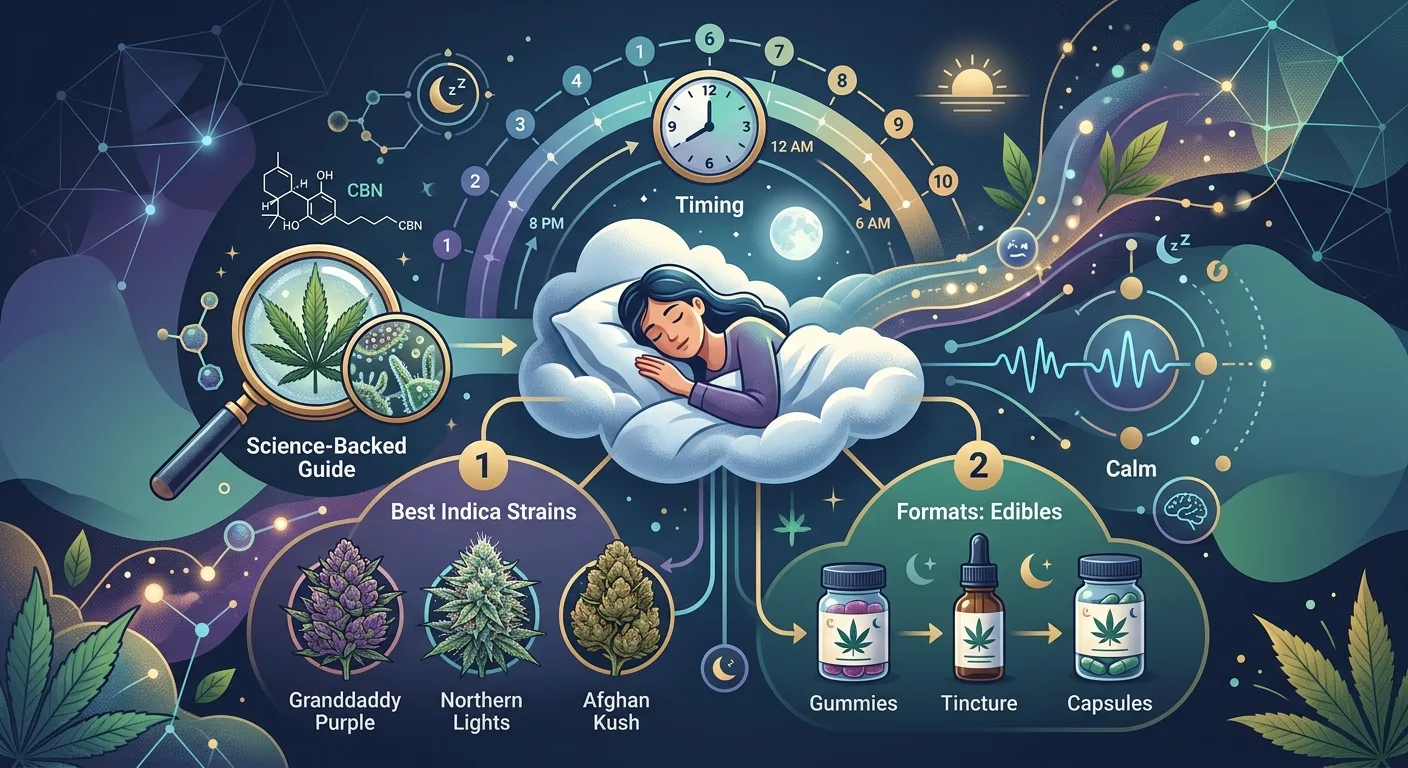
If you've spent another night staring at the ceiling, you're not alone. Nearly 40% of Canadians report struggling with sleep quality, and many are turning to cannabis as an alternative to prescription sleep aids. But here's the truth most dispensaries won't tell you: not all weed helps you sleep, and some strains can actually make insomnia worse. The difference between a restful eight hours and a restless, anxious night often comes down to choosing the right strain, format, and timing.
This guide breaks down the best cannabis options for sleep based on cannabinoid profiles, consumption methods, and evidence-backed timing strategies. Whether you're new to cannabis or a seasoned consumer looking to optimize your nighttime routine, understanding how indica strains, edibles, and flower interact with your sleep cycle can transform your rest quality. Let's explore what actually works for insomnia and why the old "just smoke indica" advice is only half the story.
Why Indica Strains Work Better for Sleep Than Sativa
The indica versus sativa distinction isn't just marketing hype when it comes to sleep. Indica-dominant strains typically contain higher concentrations of myrcene, a sedating terpene that promotes muscle relaxation and drowsiness. These strains also tend to have cannabinoid profiles that favour body-focused effects over cerebral stimulation, making them naturally better suited for winding down before bed.
Sativa strains, by contrast, often contain energizing terpenes like limonene and pinene, along with cannabinoid ratios that promote alertness and mental activity. For most people struggling with insomnia, sativa consumption in the evening can lead to racing thoughts and increased wakefulness, the exact opposite of what you're trying to achieve. That said, the strain taxonomy is complex, and some hybrids with indica-leaning profiles can also deliver excellent sleep support.
Key Terpenes to Look for in Sleep Strains
Beyond the indica classification, specific terpenes play crucial roles in promoting sleep. Myrcene is the most important sedating terpene, found in high concentrations in strains like Platinum Bubba Kush and Pink Death Star. This terpene enhances THC's ability to cross the blood-brain barrier and produces noticeably relaxing effects that make falling asleep easier.
Linalool, the same terpene found in lavender, offers anti-anxiety properties that calm racing thoughts. Caryophyllene provides anti-inflammatory benefits that can reduce physical discomfort keeping you awake. When shopping for sleep strains, ask about terpene profiles or look for lab reports that detail these compounds. The combination of high myrcene with moderate THC levels typically produces the most consistent sleep benefits.
Top Indica Strains for Insomnia
Based on cannabinoid profiles and user experiences, several indica strains consistently deliver strong sleep support. Pink Death Star combines sedating genetics with a terpene profile rich in myrcene and caryophyllene, making it ideal for users who struggle with both falling asleep and staying asleep throughout the night.
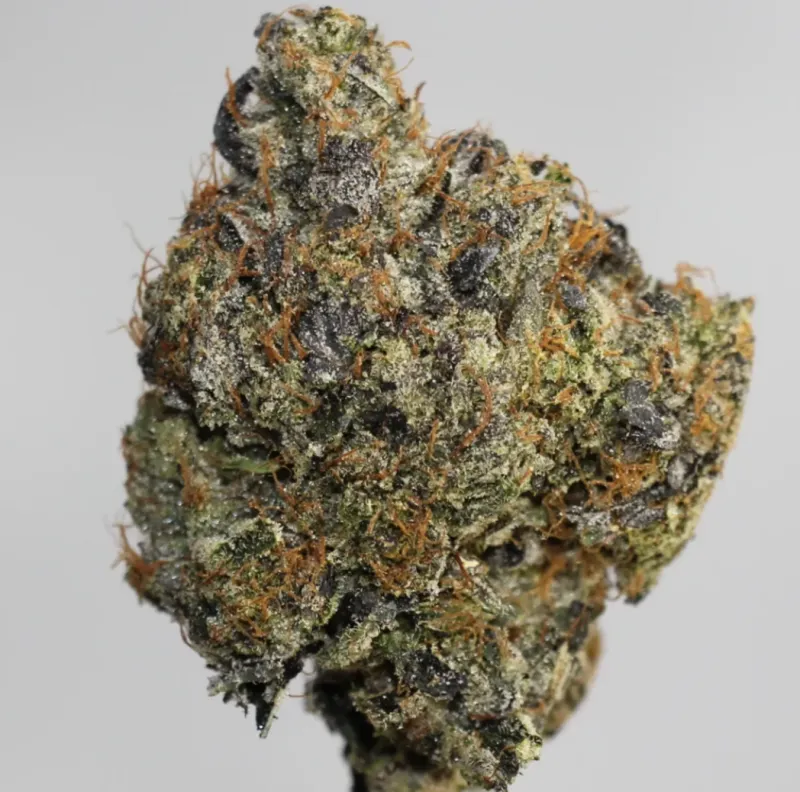
Pink Death Star
43.20% THC compressed indica flower with pink-frosted buds and forceful spicy diesel, e...
Godfather OG lives up to its reputation as one of the most potent indica strains available, with THC levels that promote deep, uninterrupted sleep. Its heavy body effects make it particularly useful for people whose insomnia stems from chronic pain or physical discomfort. King Louis XIII offers similar knockout power with a slightly more gradual onset, giving you time to complete your bedtime routine before the sedation fully kicks in.
For those seeking something less intense, Bubba Goo and Black Truffle provide moderate sedation without the overwhelming couch-lock that can make morning grogginess an issue. These strains work well for people new to using cannabis for sleep or those who need to maintain some functionality before bed.
Edibles vs. Flower for Sleep: Onset, Duration, and Effectiveness
The format you choose matters as much as the strain when using cannabis for sleep. Smoking or vaping flower provides fast relief, with effects hitting within 5-15 minutes, but the duration is relatively short, typically lasting 2-4 hours. This makes flower ideal for people who struggle to fall asleep initially but don't necessarily have trouble staying asleep once they drift off.
Edibles operate on a completely different timeline. Because THC must be metabolized through your liver, onset takes 45-90 minutes, but the effects last significantly longer, often 6-8 hours or more. When THC converts to 11-hydroxy-THC in your liver, it becomes more potent and produces stronger sedating effects than smoked cannabis. For chronic insomnia sufferers who wake frequently throughout the night, edibles can provide continuous sleep support that keeps you resting until morning.
Why Edibles Hit Differently for Sleep
The pharmacokinetics of edible cannabis make it uniquely suited for sleep support. The slower onset and longer duration mean you can time consumption to align perfectly with your sleep cycle. Taking an edible 60-90 minutes before your target bedtime allows the peak effects to coincide with when you want to fall asleep, and the extended duration prevents middle-of-the-night waking that often plagues light sleepers.
However, edibles require more careful dosing than flower. Start with 5-10mg of THC if you're new to cannabis or have a low tolerance. Experienced users might benefit from 10-20mg, while those with significant tolerance or severe insomnia may need 20mg or higher. The key is finding your minimum effective dose, since excessive amounts can lead to morning grogginess or tolerance buildup over time. Products like edibles require different considerations than smoking when it comes to both dosing and effects.
Combining Formats for Maximum Sleep Benefit
Some experienced cannabis users employ a two-format strategy for optimal sleep. They'll vape or smoke a small amount of indica flower about 30 minutes before bed for immediate relaxation, then take a low-dose edible at the same time to provide sleep maintenance through the night. This combination addresses both the "falling asleep" and "staying asleep" components of insomnia.
This approach requires careful calibration. The combined dose shouldn't exceed what you'd normally consume, just split between formats. For example, if 15mg edible is your typical sleep dose, you might instead vape enough for a mild effect (equivalent to about 5mg) and take a 10mg edible simultaneously. The flower effects help you fall asleep while the edible metabolizes, then the edible effects sustain sleep through the night as the flower wears off.
Timing Cannabis Consumption for Optimal Sleep Architecture
When you consume cannabis before bed matters enormously for sleep quality. While THC helps you fall asleep faster and increases time spent in deep sleep during the first part of the night, it also suppresses REM sleep, the stage associated with dreaming and memory consolidation. Understanding these effects helps you time consumption to maximize benefits while minimizing potential downsides.
For smoking or vaping flower, consume 15-30 minutes before your target bedtime. This allows enough time for effects to peak just as you're getting into bed, maximizing the sleep-promoting window. Going to bed too soon after consumption can mean you're still experiencing the more stimulating "come-up" phase, while waiting too long means you might miss the optimal sedation window.
Edible Timing for Different Sleep Issues
Edible timing requires more advance planning due to the delayed onset. If you struggle primarily with falling asleep, consume your edible 60-90 minutes before bedtime. This ensures peak effects arrive right when you want to drift off. Users often make the mistake of taking edibles too close to bedtime, then lying awake waiting for effects that arrive too late to be useful.
For middle-of-the-night waking issues, timing becomes even more strategic. Take your edible 90-120 minutes before bed, allowing it to kick in after you've already fallen asleep naturally. The sustained effects then provide sleep maintenance through traditional "problem hours" between 2-5 AM when insomniacs often wake. This approach preserves some natural sleep onset while providing chemical support for sleep continuity.
Avoiding Morning Grogginess
The "weed hangover" many users experience stems from poor timing more than anything else. Because edibles can last 8+ hours, taking them too late means you're still processing THC when your alarm goes off. Calculate backward from your wake time: if you need to be up at 7 AM and your edibles typically last 8 hours, consuming after 11 PM risks morning impairment.
Flower creates less morning grogginess since effects dissipate faster, but very high doses consumed late at night can still cause residual effects. The solution is consistent timing: consume at the same time each night, ideally at least 8-9 hours before you need full cognitive function. Your body's metabolism remains fairly consistent, so regular timing helps you predict exactly when effects will wear off. If you're learning about how long cannabis stays in your system, remember that subjective effects wear off long before THC is fully eliminated from your body.
Dosing Guidelines for Sleep-Specific Cannabis Use
Dosing cannabis for sleep differs significantly from recreational use. The goal isn't to get dramatically high but to find the minimum effective dose that promotes sleep without creating tolerance issues or next-day impairment. This therapeutic approach requires patience and careful titration, especially when starting a cannabis sleep routine.
For flower, start with one or two small puffs of a high-quality indica strain. Wait 15 minutes to assess effects before consuming more. Many sleep issues respond well to surprisingly small amounts of cannabis, particularly if you have low tolerance or haven't used cannabis regularly before. Experienced consumers might need the equivalent of 0.25-0.5g of flower, but starting lower prevents overshooting your optimal dose.
Edible Dosing Progression
Edible dosing follows a different protocol due to the delayed onset and stronger effects. First-time users or those with low tolerance should start with 2.5-5mg THC, taken 90 minutes before bed. Even if effects feel minimal the first night, resist the urge to increase dosage immediately. Give your body 2-3 nights at the same dose to establish a baseline before adjusting.
If 5mg proves insufficient, increase by 2.5-5mg increments every few nights until you find your effective dose. Most people land between 5-15mg for sleep support, though tolerance, body weight, and metabolism all influence individual needs. High-tolerance users might require 20-30mg or more, but these doses increase the risk of next-day grogginess and accelerated tolerance buildup. Products like edible guides help you understand dosing precision across different product formats.
Managing Tolerance to Maintain Effectiveness
Nightly cannabis use for sleep inevitably builds tolerance over time. To maintain effectiveness without continuously increasing doses, implement strategic tolerance management. Take 1-2 nights off per week where you don't use cannabis for sleep, even if it means a less restful night. These breaks slow tolerance development and help reset your cannabinoid receptors.
Another strategy involves rotating between different strains or formats. Your body builds tolerance to specific cannabinoid and terpene profiles, so switching from a THC-dominant strain to a balanced THC:CBD strain a few nights per week can slow tolerance to either profile. Similarly, alternating between edibles and flower prevents your system from adapting too completely to either consumption method.
If you find yourself needing progressively higher doses to achieve the same sleep benefits, consider a planned tolerance break to reset your system. Even a 3-5 day break can significantly reduce tolerance, though longer breaks of 2-4 weeks provide more complete resets. During breaks, focus on sleep hygiene improvements that can partially compensate for the absence of cannabis.
Sleep Hygiene Practices That Amplify Cannabis Effects
Cannabis works best for sleep when combined with solid sleep hygiene practices. Relying solely on THC without addressing environmental and behavioral factors means you'll need progressively higher doses and still might not achieve optimal sleep quality. Integrating cannabis into a comprehensive sleep routine maximizes benefits while minimizing the amount of cannabis needed.
Start with your sleep environment. Your bedroom should be dark, cool (around 65-68°F), and quiet. Blackout curtains, white noise machines, and comfortable bedding aren't luxuries, they're essentials that work synergistically with cannabis to promote deeper sleep. When your environment supports sleep, you'll need less cannabis to achieve the same rest quality.
Screen Time and Cannabis Metabolism
Blue light from screens suppresses melatonin production and can counteract cannabis's sedating effects. Implement a strict screen-off time at least 30-60 minutes before bed, ideally when you consume your cannabis. This timing allows both the absence of stimulating light and the presence of sedating cannabinoids to work together on your sleep-wake cycle.
If you must use screens in the evening, enable night mode settings that reduce blue light exposure, or wear blue-light-blocking glasses. Some users find that this simple change allows them to reduce their cannabis dose by 20-30% while maintaining the same sleep quality. The interaction between light exposure and cannabinoid reception is well-documented, and managing both variables produces better results than focusing on cannabis alone.
Exercise Timing and Cannabis Sleep Effects
Regular exercise improves sleep quality independently of cannabis, but timing matters when combining physical activity with cannabis use. Intense exercise within 3-4 hours of bedtime can interfere with sleep onset, even when using cannabis. However, moderate exercise earlier in the day enhances cannabis's sleep-promoting effects by creating healthy physical fatigue that complements chemical sedation.
Some users find that light stretching or gentle yoga 30-60 minutes before bed, paired with cannabis consumption, creates an ideal pre-sleep routine. The combination of physical relaxation and cannabinoid effects produces deeper rest than either intervention alone. This is particularly true for indica strains high in myrcene, which enhances the muscle-relaxing effects of stretching.
CBD-Enhanced Sleep Formulations vs. THC-Only Products
While this guide focuses primarily on THC-dominant products, CBD plays an important supporting role in sleep formulations. Pure CBD typically doesn't produce direct sedation in the same way THC does, but it reduces anxiety and promotes calmness that indirectly supports sleep. The combination of CBD and THC often produces better sleep outcomes than either cannabinoid alone.
Products with a 1:1 or 2:1 THC:CBD ratio can provide sleep benefits with less mental impairment than pure THC products. CBD moderates THC's psychoactive effects while preserving its sleep-promoting properties, making these formulations particularly useful for people who find high-THC products too intoxicating or who experience anxiety with THC. The entourage effect, where multiple cannabinoids work synergistically, often means you'll need lower total doses to achieve desired sleep effects.
When to Choose Balanced Formulations
Balanced THC:CBD products work particularly well for people whose insomnia stems from anxiety or racing thoughts rather than physical discomfort. CBD's anxiolytic properties calm the mental chatter that keeps many people awake, while THC provides the sedation needed to actually fall asleep. This combination addresses both the psychological and physiological components of insomnia.
However, some people find CBD slightly energizing rather than calming, particularly at higher doses. If you're new to CBD, test it during the day first before incorporating it into your nighttime routine. Start with a low-CBD formulation (perhaps 10mg THC with 5mg CBD) and adjust the ratio based on your response. If CBD seems to interfere with sleep, stick with THC-dominant products instead.
Minor Cannabinoids for Sleep Enhancement
Emerging research on minor cannabinoids like CBN suggests these compounds may offer unique sleep benefits. CBN, which forms as THC degrades, appears to have sedating properties independent of THC. Some specialty sleep products now include CBN extracts or use aged cannabis high in CBN content specifically for enhanced sedation.
Similarly, CBG shows promise for reducing anxiety without sedation, potentially making it useful in daytime formulations that support better sleep later. While research remains limited, products incorporating minor cannabinoids alongside THC may provide more complete sleep support than THC alone. As with any new addition to your sleep routine, introduce these products gradually and track their effects over several nights before committing to regular use.
Frequently Asked Questions About Cannabis for Sleep
Yes, nightly cannabis use typically builds tolerance within 2-4 weeks, requiring higher doses for the same effects. To slow tolerance development, take 1-2 nights off per week, rotate between different strains or formats, or implement periodic tolerance breaks of 3-7 days. Combining cannabis with strong sleep hygiene practices also reduces the amount needed, slowing tolerance buildup while maintaining effectiveness.
First-time users should start with low-dose edibles (2.5-5mg THC) rather than smoking or vaping. Edibles provide longer-lasting sleep support with more predictable dosing, though you'll need to account for the 60-90 minute onset time. Take your first dose on a night when you can sleep in the next morning, in case effects last longer than expected. Alternatively, a single puff of indica flower 20 minutes before bed offers faster onset with shorter duration, allowing you to assess tolerance with less commitment.
Morning grogginess typically indicates your dose was too high, your timing was too late, or you're using long-lasting formats too close to your wake time. Edibles can last 8+ hours, so consuming them less than 8 hours before you need to wake up often causes residual effects. Try reducing your dose by 25-30%, taking your cannabis earlier in the evening, or switching to faster-acting formats like vapourized flower that clear your system more quickly.
Cannabis interacts with numerous medications, including blood thinners, anti-anxiety drugs, and sleep medications. THC potentiates the effects of sedatives and CNS depressants, potentially causing excessive sedation or respiratory depression. Always consult your doctor before combining cannabis with prescription medications, particularly if you're taking anything that affects your central nervous system or liver metabolism. Your physician can help you assess interaction risks specific to your medication regimen.
Edibles provide longer-lasting effects that better support sleep maintenance through the full night. While indica flower helps you fall asleep quickly, its 2-4 hour duration often wears off before morning, potentially allowing middle-of-the-night waking. Edibles last 6-8 hours or more, providing continuous sleep support. For best results, take edibles 60-90 minutes before your target bedtime so peak effects coincide with when you want to be asleep, and they sustain through typical wake-vulnerable hours.
Look for moderate-potency indica strains (15-20% THC) with high myrcene content, and consume them at least 8-9 hours before you need full alertness. Strains like Bubba Goo or Black Truffle provide solid sleep support without the knockout intensity that creates morning impairment. Avoid very high-THC strains (25%+) on work nights, and consider using flower instead of edibles since it clears your system faster. Consistent timing helps your body metabolize cannabis predictably, reducing morning grogginess.
Building Your Personalized Cannabis Sleep Routine
The most effective cannabis sleep strategy is highly individual, requiring experimentation to find your optimal combination of strain, format, dose, and timing. Start by identifying your specific sleep issue: Do you struggle to fall asleep initially, wake frequently through the night, or wake too early in the morning? Each pattern responds best to different cannabis approaches.
For falling-asleep issues, prioritize fast-acting formats like vapourized indica flower consumed 15-20 minutes before bed. For sleep maintenance problems, lean toward longer-lasting edibles taken 60-90 minutes before your target bedtime. For early-morning waking, consider a two-format approach with immediate flower effects and sustained edible support. Keep a simple sleep journal tracking what you consume, when you take it, and how you sleep, noting any morning grogginess or next-day effects.
Remember that cannabis is a sleep aid, not a cure for underlying sleep disorders. If you've been using cannabis for sleep for more than a few weeks without addressing root causes like stress, poor sleep environment, or irregular schedules, you're building a dependency rather than solving the problem. Use cannabis as a bridge while implementing sustainable sleep hygiene improvements. Over time, you may find you need less cannabis, or can use it intermittently rather than nightly, as your overall sleep quality improves through lifestyle changes.
Shop Sleep-Supporting Cannabis Strains
UperWeed offers a curated selection of indica-dominant strains and sleep-optimized products with same-day delivery in Ottawa and Gatineau. Browse our sleep collection and find your perfect nighttime strain.
View Sleep StrainsFinding the right cannabis for sleep transforms not just your nights, but your entire day. Better sleep means improved mood, cognitive function, and physical recovery, benefits that compound over weeks and months of consistent, quality rest. By understanding the science behind strain selection, choosing appropriate formats, timing consumption strategically, and integrating cannabis into a comprehensive sleep routine, you can harness cannabis's sleep-promoting potential while avoiding common pitfalls like tolerance and morning grogginess. Whether you're dealing with occasional sleeplessness or chronic insomnia, the right cannabis approach combined with solid sleep practices offers a natural path to better rest. For help selecting the ideal strain for your needs or questions about how our delivery service works, our knowledgeable team is ready to guide you toward better sleep.