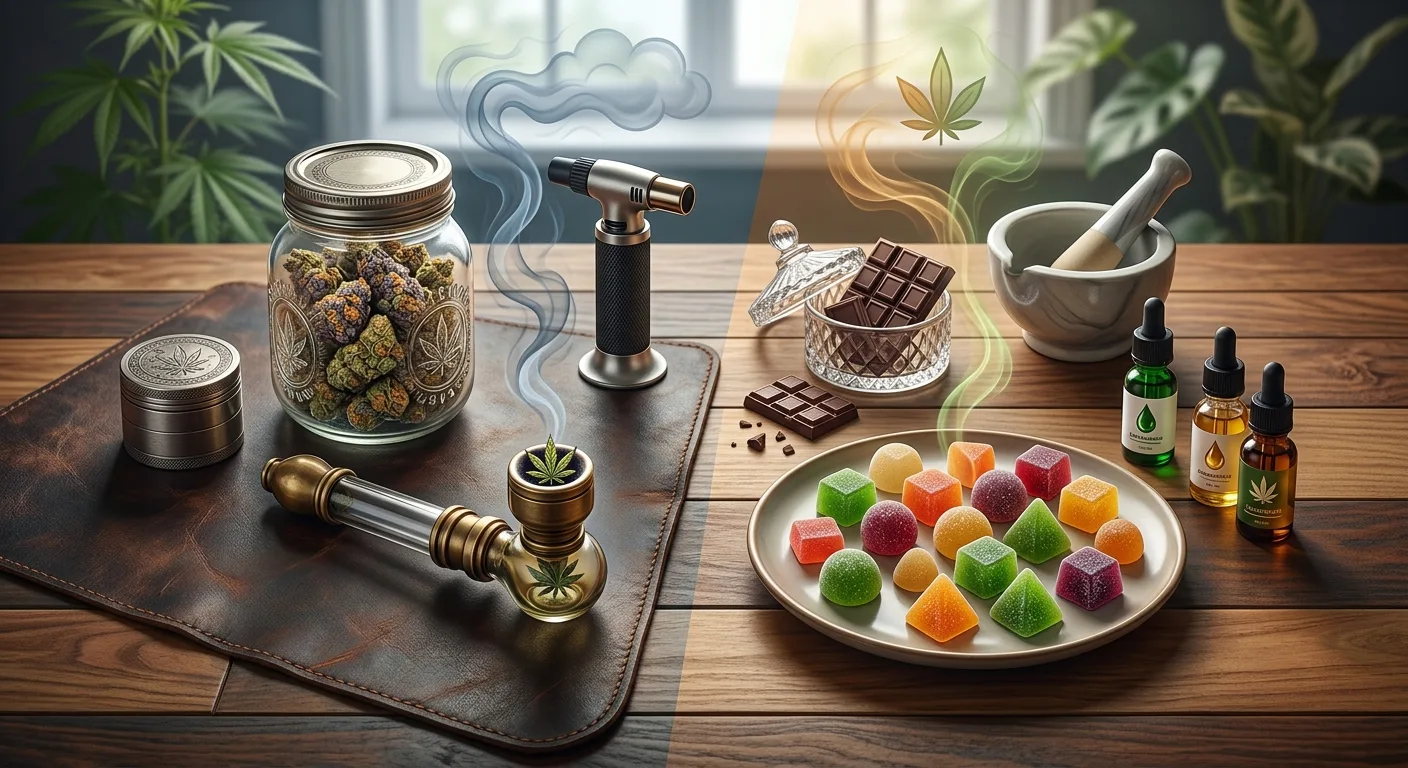
When you're deciding how to consume cannabis, the choice between edibles and smoking isn't just about preference,it's about matching the consumption method to your specific needs, lifestyle, and tolerance level. These two delivery systems create fundamentally different experiences in your body, with distinct timelines, intensities, and practical considerations that can make one clearly superior to the other depending on your situation.
This comprehensive comparison breaks down every meaningful difference between eating and smoking cannabis, from the science of how each method processes THC in your body to the practical realities of cost, convenience, and discretion. Whether you're a beginner trying to choose your first consumption method or an experienced user reconsidering your routine, understanding these differences will help you make the right choice for your circumstances.
How Your Body Processes THC: The Fundamental Difference
The most important distinction between edibles and smoking happens at the molecular level, inside your body. When you smoke cannabis, THC enters your bloodstream through the lungs and travels directly to your brain. This creates the familiar "high" within minutes because the cannabinoids bypass your digestive system entirely and cross the blood-brain barrier almost immediately.
Edibles take a completely different metabolic pathway. When you eat cannabis, the THC travels through your digestive system to your liver, where enzymes convert delta-9-THC into 11-hydroxy-THC,a metabolite that's significantly more potent and crosses the blood-brain barrier more efficiently than the original compound. This biochemical transformation is why edibles feel qualitatively different from smoking, not just longer-lasting but often more intense and body-focused.
This metabolic difference explains why timing, intensity, and duration vary so dramatically between the two methods. Your liver essentially amplifies the psychoactive effects while simultaneously slowing down the onset, creating an experience that many users describe as more immersive and physical compared to the cerebral, uplifting high associated with smoking.
First-Pass Metabolism and Bioavailability
When you smoke cannabis, the bioavailability of THC ranges from 10% to 35%, meaning that percentage of the total THC actually reaches your bloodstream. Edibles have lower bioavailability,typically between 4% and 12%,because the digestive process and liver metabolism break down more of the cannabinoids before they can take effect. This is why a 10mg edible doesn't feel equivalent to smoking 10mg of THC flower, even though the dosage appears identical on paper.
The first-pass effect through the liver means you need higher doses with edibles to achieve comparable effects to smoking, but the tradeoff comes in duration. What edibles lack in immediate bioavailability, they compensate for with sustained release over many hours as your digestive system continues processing the cannabinoids.
Onset Time, Duration, and Intensity Compared
Timing is where edibles and smoking diverge most dramatically in practical terms. These differences have significant implications for how you plan your day, manage your dose, and respond if you've consumed too much.
| Factor | Smoking | Edibles |
|---|---|---|
| Onset Time | 2-10 minutes | 30 minutes to 2 hours |
| Peak Effects | 30 minutes after consumption | 2-3 hours after consumption |
| Total Duration | 1-3 hours | 4-8 hours (sometimes longer) |
| Intensity Control | Easy to titrate (add more as needed) | Difficult (effects delayed, can't reduce dose) |
| Effect Profile | Cerebral, energetic, clear-headed | Body-focused, sedating, immersive |
| Dose Predictability | Immediate feedback | Delayed feedback (90+ min wait to assess) |
| Typical Beginner Dose | 1-2 small puffs | 2.5-5mg THC |
The delayed onset with edibles is responsible for the most common mistake new users make: taking a second dose before the first has kicked in. This leads to consuming far more THC than intended, resulting in an uncomfortably intense experience that can last six hours or more.
Why Edibles Take So Long
Several factors influence how quickly edibles take effect beyond just liver metabolism. Whether you've eaten recently matters significantly,consuming edibles on an empty stomach can accelerate onset to 30-45 minutes, while eating them after a large meal might delay effects for two hours or longer. The type of edible also plays a role: beverages and tinctures absorb faster than baked goods, and products with nano-emulsified THC can begin working in 15-20 minutes.
Your individual metabolism, body composition, and tolerance level create additional variability. Some people consistently feel edibles within 45 minutes while others always wait 90 minutes, even with identical products and conditions. This personal variation makes it essential to establish your own baseline through careful experimentation with low doses.
Discretion, Convenience, and Social Considerations
Beyond the physiological differences, practical lifestyle factors often determine which consumption method fits your circumstances better. Discretion is one of the most significant practical advantages edibles offer over smoking.
Smoking cannabis produces an unmistakable odour that permeates clothing, hair, and indoor spaces. Even with proper ventilation, the smell lingers and announces your consumption to anyone nearby. This makes smoking impractical in shared living situations, at work, in public spaces, or anywhere you need to maintain discretion. The visible act of smoking also draws attention,it's simply not subtle.
Edibles eliminate both problems entirely. A gummy or chocolate looks indistinguishable from regular candy. There's no smell, no smoke, no paraphernalia, and no visible consumption ritual. You can dose discretely in virtually any setting without anyone noticing. For medical patients who need consistent dosing throughout the day or recreational users who value privacy, this discretion is often the deciding factor.
Storage and Portability
Edibles win decisively on portability and storage. A package of gummies fits in a pocket or purse, requires no accessories, and remains shelf-stable for months. Smoking requires flower storage, rolling papers or a device, a lighter, and often a grinder,multiple components that take up space and require organization.
For travel within Canada, edibles are simpler to transport between provinces following cannabis regulations. They're sealed, labelled, and clearly dosed. Flower can dry out, lose potency, or create odour issues during transport. If you're flying domestically or taking a road trip, edibles offer less hassle and more certainty.
The one portability advantage smoking maintains is immediate access. If you decide you want to consume, you can do so within minutes. Edibles require advance planning,if you're going to an evening event and want to be feeling the effects when you arrive, you need to calculate backwards from your onset time and dose before leaving home.
Health Considerations: Respiratory Impact vs Liver Processing
The health implications of each consumption method differ fundamentally because they stress different body systems. Smoking introduces combustion byproducts directly into your lungs. Even though cannabis smoke contains different compounds than tobacco smoke, inhaling any burned plant material creates respiratory irritation, coughing, and phlegm production in many users.
Regular smoking can lead to chronic bronchitis symptoms, reduced lung capacity, and airway inflammation. While research hasn't established the same cancer risk profile as tobacco, the mechanical damage to respiratory tissues is well-documented. For people with asthma, COPD, or other lung conditions, smoking cannabis may exacerbate symptoms and isn't medically advisable.
Edibles bypass the respiratory system entirely, making them the safer choice for lung health. However, they place metabolic demands on your liver as it processes the THC. For most healthy adults, this isn't a concern,your liver handles numerous substances daily as part of normal function. But for individuals with liver disease, compromised liver function, or those taking medications that stress the liver, edibles may not be the better option.
Drug Interactions and Medication Considerations
Edibles carry more potential for drug interactions than smoking because they go through the same liver enzymes (particularly CYP450 enzymes) that metabolize many common medications. THC can interfere with blood thinners, antidepressants, and other prescriptions that depend on precise metabolic rates. If you take regular medications, consult with a healthcare provider familiar with cannabis interactions before choosing edibles as your primary consumption method.
Smoking produces faster clearance from your system, which means less prolonged interaction with medications. The shorter duration and different metabolic pathway reduce the window for interference with other substances you're taking. For people on complex medication regimens, smoking may present fewer complications, though individual medical advice should always take precedence over general guidance.
Cost Analysis: Which Method Delivers Better Value?
Cost efficiency depends on your usage patterns, tolerance level, and how you define value. The math isn't straightforward because you're comparing different experiences, not equivalent doses.
Flower for smoking typically costs $5-$12 per gram in Canada, with bulk purchases bringing the per-gram price down significantly. A gram provides roughly 150-200mg of THC depending on potency. For a moderate user consuming 10-15mg per session, a single gram might provide 10-15 sessions, working out to roughly $0.40-$1.20 per use.
Edibles appear more expensive at first glance. A 10mg gummy might cost $3-$6, seemingly higher per dose. However, edibles last 4-6 hours compared to 1-3 hours for smoking, effectively delivering more hours of effect per dollar. A single 10mg edible provides an extended experience, while achieving the same duration through smoking requires multiple sessions and more total product.
| Cost Factor | Smoking | Edibles |
|---|---|---|
| Initial Investment | $20-$100 (papers/device + flower) | $10-$30 (just the edibles) |
| Accessories Needed | Papers, grinder, lighter (ongoing) | None |
| Shelf Life | 3-6 months (degrades with air exposure) | 6-12 months (stable when sealed) |
| Waste | Some THC lost to combustion/side-stream smoke | Nearly 100% consumed (no waste) |
| Price Per Hour of Effect | $0.30-$0.80 | $0.50-$1.00 |
| Tolerance Impact | Faster tolerance buildup (requires more over time) | Slower tolerance buildup (more stable dosing) |
Accessories add hidden costs to smoking. Rolling papers, cones, blunt wraps, and replacement parts for devices create ongoing expenses. Blunt wraps like Backwoods cost $2-$5 per cigar, and if you smoke multiple times daily, these costs accumulate quickly. Edibles require no accessories whatsoever,what you purchase is all you need.
Tolerance Development and Long-Term Economics
Tolerance to THC develops differently between smoking and edibles, with economic implications. Many regular smokers find they need progressively larger amounts to achieve the same effects, sometimes doubling or tripling their consumption over months. This tolerance buildup directly increases costs over time.
Edibles tend to produce slower tolerance development, possibly because the 11-hydroxy-THC metabolite interacts with cannabinoid receptors differently. Users often maintain consistent dosing for longer periods without needing to escalate. This stability makes long-term budgeting more predictable with edibles, though individual variation applies,some people do develop significant edible tolerance.
If cost efficiency is your primary concern, buying flower in bulk and using a dry herb vapourizer (rather than combustion) typically offers the best long-term value. Vapourizers have higher upfront costs ($80-$300) but maximize efficiency by extracting cannabinoids without combustion waste. Edibles fall in the middle,more expensive than budget smoking but more cost-effective than premium pre-rolls or concentrates.
Safety, Dosing Control, and Risk Management
The safety profile of each method centres on different risks. Smoking presents immediate, short-term control with lower risk of consuming too much. Edibles offer no respiratory harm but carry higher risk of overconsumption due to delayed feedback.
With smoking, you feel effects within minutes. This instant feedback allows you to titrate your dose in real-time,take a puff, wait five minutes, assess how you feel, then decide whether to continue. If you've consumed too much, the effects peak quickly and dissipate within a few hours. While an uncomfortable high from smoking is unpleasant, it's manageable and temporary.
Edibles remove this control mechanism. Once you've swallowed the dose, there's no way to reduce it. If you've taken too much, you won't realize it until 60-90 minutes later, when the effects are ramping toward their peak. Greening out from edibles can last six to eight hours, creating an extended period of discomfort that simply has to be endured. No intervention can stop or reverse the process once the THC is in your system.
Recommended Approach for New Users
For first-time cannabis users, smoking (or vaping) is generally the safer introduction. The immediate feedback teaches you what cannabis effects feel like in your body without committing to a multi-hour experience. You can stop after one or two puffs and wait to see how you respond. This low-risk exploration isn't possible with edibles.
When you do try edibles, start with 2.5-5mg THC and wait a full two hours before considering a second dose. This conservative approach feels tedious, but it prevents the single most common edible mistake: impatience leading to overconsumption. Mark the time you dosed, set a timer for 90 minutes, and commit to waiting regardless of whether you feel anything.
Experienced users with established tolerance can make informed choices between methods based on their specific needs for any given situation. But even with experience, treating edibles with respect and patience remains essential,everyone has a story about the time they underestimated an edible and regretted it.
When to Choose Edibles vs When to Choose Smoking
Rather than declaring one method superior, the practical approach recognizes that each excels in different contexts. Your choice should align with your specific situation, goals, and circumstances.
Choose smoking when you need:
- Immediate effects for acute symptom relief
- Precise dose control with real-time adjustment
- A shorter duration that fits into a specific time window
- The ritual and social aspects of the consumption process
- Lower financial investment to get started
- More cerebral, energetic effects
Choose edibles when you need:
- Extended duration for chronic pain or sleep
- Complete discretion in consumption
- No respiratory irritation or odour
- Portability without accessories
- Strong body effects and sedation
- Stable, measured dosing over time
Many experienced users maintain both options in their routine, selecting the appropriate method for each situation. You might smoke during the day when you need to remain functional and switch to edibles in the evening when you want sustained relaxation before bed. Or use smoking socially and edibles when travelling. The methods complement rather than compete with each other once you understand their distinct characteristics.
Medical Patient Considerations
Medical cannabis patients often favour edibles for several practical reasons. Dosing consistency matters more when treating medical conditions, and edibles provide reliable, measured doses that smoking can't match. The extended duration better serves chronic conditions that require sustained cannabinoid levels throughout the day. Taking a morning and evening edible maintains more consistent symptom control than smoking multiple times.
However, patients needing immediate symptom relief,such as for acute nausea or breakthrough pain,require the fast onset smoking provides. Many medical users combine both methods: edibles for baseline symptom management and smoking for acute flare-ups. This hybrid approach leverages the strengths of each method within a comprehensive treatment plan.
Find Your Preferred Method
Whether you prefer the convenience of edibles or the control of smoking, UperWeed carries premium options for both. Browse our selection of precisely-dosed edibles and craft flower.
Shop Cannabis ProductsProduct Quality and How to Identify It
Quality varies significantly in both categories, and knowing how to evaluate products protects you from wasting money on inferior options. The markers of quality differ between flower and edibles, requiring different assessment criteria.
For flower, visual inspection reveals significant information. Quality cannabis displays vibrant colours, prominent trichomes that shimmer with resin, and tight bud structure. The aroma should be strong and complex,fruity, skunky, piney, or earthy depending on strain, but never hay-like or moldy. Dry, crumbly flower that produces harsh smoke indicates poor curing or old stock.
Edibles require scrutiny of lab testing and ingredients. Reputable brands provide clear THC content per serving, batch testing for potency and contaminants, and ingredients lists free of unnecessary fillers. The packaging should be professional with safety features and complete product information. Homemade or unlabeled edibles carry significant risk because dosing is unreliable and quality is unknown.
Understanding Lab Reports and Potency Claims
Both smoked flower and edibles should come with lab testing verification in the Canadian legal market. These certificates of analysis (COAs) confirm the THC content matches what's advertised and screen for contaminants like pesticides, heavy metals, and microbials. Reputable retailers provide this information transparently.