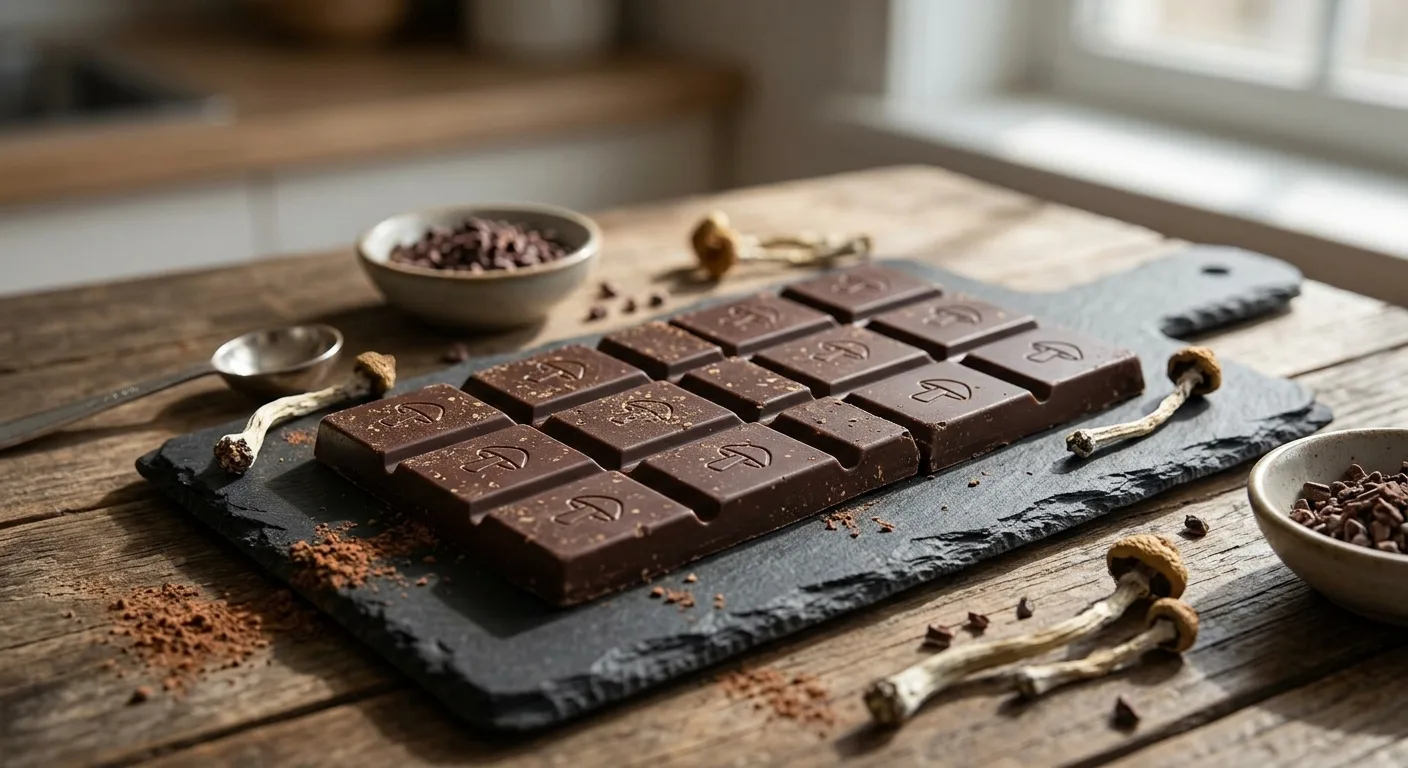
Psilocybin chocolate squares have become the most popular format for measured mushroom dosing in Canada, but the single most common question from first-time users isn't "which brand should I buy?" , it's "how many milligrams should I actually eat?" Unlike smoking cannabis where you can gauge effects in minutes, psilocybin edibles demand precise dosing upfront because there's no way to dial back once you've swallowed that square. This guide breaks down psilocybin chocolate dosage by experience level, provides milligram-per-square charts for the most common Canadian products, and walks you through the "start low, go slow" protocol that experienced psychonauts use to avoid overwhelming trips.
The stakes with psilocybin dosing are higher than THC edibles. While an excessive cannabis dose might leave you uncomfortable on the couch for a few hours, too much psilocybin can trigger anxiety, confusion, or a psychologically challenging experience lasting six to eight hours. That's why understanding the milligram breakdown of your specific chocolate bar , and matching it to your experience level , isn't just helpful advice, it's essential harm reduction.
Understanding Psilocybin Chocolate Potency: The Milligram Standard
Canadian psilocybin chocolates typically range from 1,000mg to 4,000mg of total psilocybin per bar, divided into 10 to 20 squares. The math matters because a 3,000mg bar split into 15 pieces delivers 200mg per square, while a 4,000mg bar with 20 pieces gives you exactly the same 200mg dose. You can't judge potency by looking at the chocolate , you need to read the packaging and do the division.
Most reputable Canadian producers clearly label total psilocybin content and the number of servings. If you see "3000mg Psilocybin Mushroom Chocolate , 15 Pieces," you're looking at 200mg per square. If the label says "contains psilocybin mushrooms" without specific milligram amounts, you're dealing with either an unlabeled legacy product or inconsistent production, both of which make precise dosing impossible.
The Beginner Range: 50-200mg
First-time users should target the 50-150mg range for their initial experience. At 50-100mg, most people report subtle perceptual changes , colours appear slightly more vivid, music sounds richer, and there may be a gentle mood lift without significant visual distortions or loss of control. This microdose-plus range lets you test your individual sensitivity to psilocybin without committing to a full psychedelic experience.
At 100-200mg, you enter what experienced users call a "museum dose" , noticeable psychedelic effects including mild visual patterns, enhanced sensory perception, and altered thought patterns, but you remain functional enough to navigate social situations if needed. This is the upper limit for beginners, and even at this level, you should plan to be in a safe, comfortable environment for 4-6 hours.
The Intermediate Range: 200-500mg
Once you've tried psilocybin at least 2-3 times at lower doses and understand how your body responds, the 200-350mg range offers a moderate psychedelic experience. Visual distortions become more pronounced, closed-eye visuals emerge, and you'll likely experience significant shifts in perception of time and space. Most users find this range produces meaningful introspective experiences without the intensity of heroic doses.
The 350-500mg range represents a strong trip for most people. Expect pronounced visual hallucinations, deep emotional experiences, potential ego dissolution, and significant alterations in consciousness. This isn't a social dose , you'll want a trusted trip sitter, a cleared schedule, and a prepared set and setting. Anyone exploring this range should have multiple positive experiences at lower doses first.
The Advanced Range: 500mg and Above
Doses above 500mg fall into the category of "heroic doses" and should only be attempted by experienced users with established protocols. At 500-1000mg, expect complete immersion in the psychedelic experience, potential mystical or transcendent states, and temporary loss of conventional reality perception. These doses are used intentionally for deep therapeutic work or spiritual exploration, not recreational purposes.
Doses exceeding 1000mg venture into territory that even experienced psychonauts approach with caution and preparation. The intensity at this level can be overwhelming, producing experiences that range from profoundly transformative to psychologically challenging. If you're reading a beginner's dosage guide, this range is not for you , full stop.
The "Start Low, Go Slow" Protocol for First-Time Users
The safest approach to psilocybin chocolate follows the same harm reduction principle as cannabis edibles: start with a minimal dose, wait for full effects, and only increase dosage in future sessions based on your response. Unlike cannabis where you might redose after two hours, psilocybin's 6-8 hour duration means your first dose is your committed dose for that entire experience.
For absolute beginners, the protocol looks like this: Start with 50-100mg (typically half a square or less from most chocolates). Set aside 6-8 hours where you have no obligations. Wait a full 90 minutes before considering whether effects are too subtle , psilocybin chocolate typically peaks at 1-2 hours, but onset varies by metabolism and stomach contents. Do not redose on your first session even if you feel underwhelmed at the 90-minute mark.
Why You Can't Redose Psilocybin Like Cannabis
Cannabis users familiar with edibles sometimes mistakenly apply the "wait and add more" approach to psilocybin, but the two substances have fundamentally different pharmacology. THC builds gradually and can be titrated with additional doses. Psilocybin works differently , your serotonin receptors develop immediate tolerance after the initial dose, meaning a second dose taken 2-3 hours later will have significantly diminished effects while extending the duration of an underwhelming experience.
If your first dose feels too subtle, the correct response is to note that information and increase your starting dose in your next session (ideally 5-7 days later, after tolerance resets). Taking more psilocybin mid-trip typically results in a longer experience without proportionally stronger effects, plus the psychological discomfort of being in limbo longer than planned.
Dosage Adjustments for Your Second and Third Sessions
After a baseline experience at 50-100mg, you have data to guide your next session. If you felt almost nothing, double your dose to 100-200mg. If you had subtle effects but wanted more depth, add 50-100mg to your original dose. If your first experience was uncomfortable or overwhelming, reduce your next dose by 25-50% or stay at maintenance doses for therapeutic purposes rather than pushing into stronger territory.
The third session is where most people find their preferred range. By this point, you understand your sensitivity level, you've experienced psilocybin's effects enough to navigate them confidently, and you can make informed decisions about whether you want microdose effects, moderate psychedelic experiences, or deeper explorations.
Reading Your Chocolate Bar: Converting Packaging to Per-Square Dosage
The most practical skill for psilocybin chocolate users is converting total bar milligrams into per-square dosing. Here's the quick math: divide total milligrams by number of pieces. A 3000mg bar with 15 squares = 200mg per square. A 4000mg bar with 20 squares = 200mg per square. A 2000mg bar with 10 squares = 200mg per square. Notice the pattern? Most Canadian chocolates standardize around 200mg per piece because it's a convenient intermediate dose.
To create a 50mg beginner dose from a 200mg square, you'll need to cut it into quarters. Most psilocybin chocolates have score marks that make this division straightforward. Use a clean, sharp knife and make your cuts on a clean surface. Some users pre-cut their entire bar into measured doses and store each portion in labelled plastic wrap, making future dosing simple and removing the need to eyeball portions while in an altered state.
What To Do When Your Bar Doesn't List Milligrams
Older or legacy-market psilocybin chocolates sometimes list mushroom content in grams of dried mushrooms rather than psilocybin milligrams. A bar labelled "contains 3.5g dried mushrooms" is using the traditional "eighth" measurement. Since dried psilocybe cubensis mushrooms average 0.5-1% psilocybin content, 3.5g of mushrooms contains roughly 175-350mg of actual psilocybin, but this varies significantly by mushroom strain and growing conditions.
This variability is precisely why milligram labelling is superior , it accounts for mushroom potency and gives you precise psilocybin content. If you encounter a bar with only gram-weight labelling, assume moderate potency (0.75% psilocybin) and calculate conservatively. A 3.5g bar likely contains 260mg total psilocybin. Divided into 10 squares, that's 26mg per square , very light dosing. Divided into 5 squares, that's 52mg per square , beginner range.
Dealing with Inconsistent Distribution
Even professionally produced psilocybin chocolates can have uneven distribution of active compounds. The manufacturing process involves mixing ground mushrooms or psilocybin extract into melted chocolate, and if the mixture isn't thoroughly blended, some squares might be stronger than others. This is why starting low matters , your first square from a new bar is a test of both your sensitivity and that specific bar's consistency.
If you notice significant variation between squares from the same bar (one square produces mild effects, the next is noticeably stronger), treat each dosing session as independent and adjust accordingly. This is more common with smaller-batch legacy products than professional extractions. Users report more consistent experiences with chocolates made from psilocybin extract rather than ground mushroom powder, though both formats exist in the Canadian market.
Factors That Change Your Effective Dose
Your optimal psilocybin chocolate dosage isn't fixed , several variables alter how strongly you'll feel a given milligram amount. Understanding these factors helps you adjust dosing for consistent experiences rather than wildly varying trip intensities from the same nominal dose.
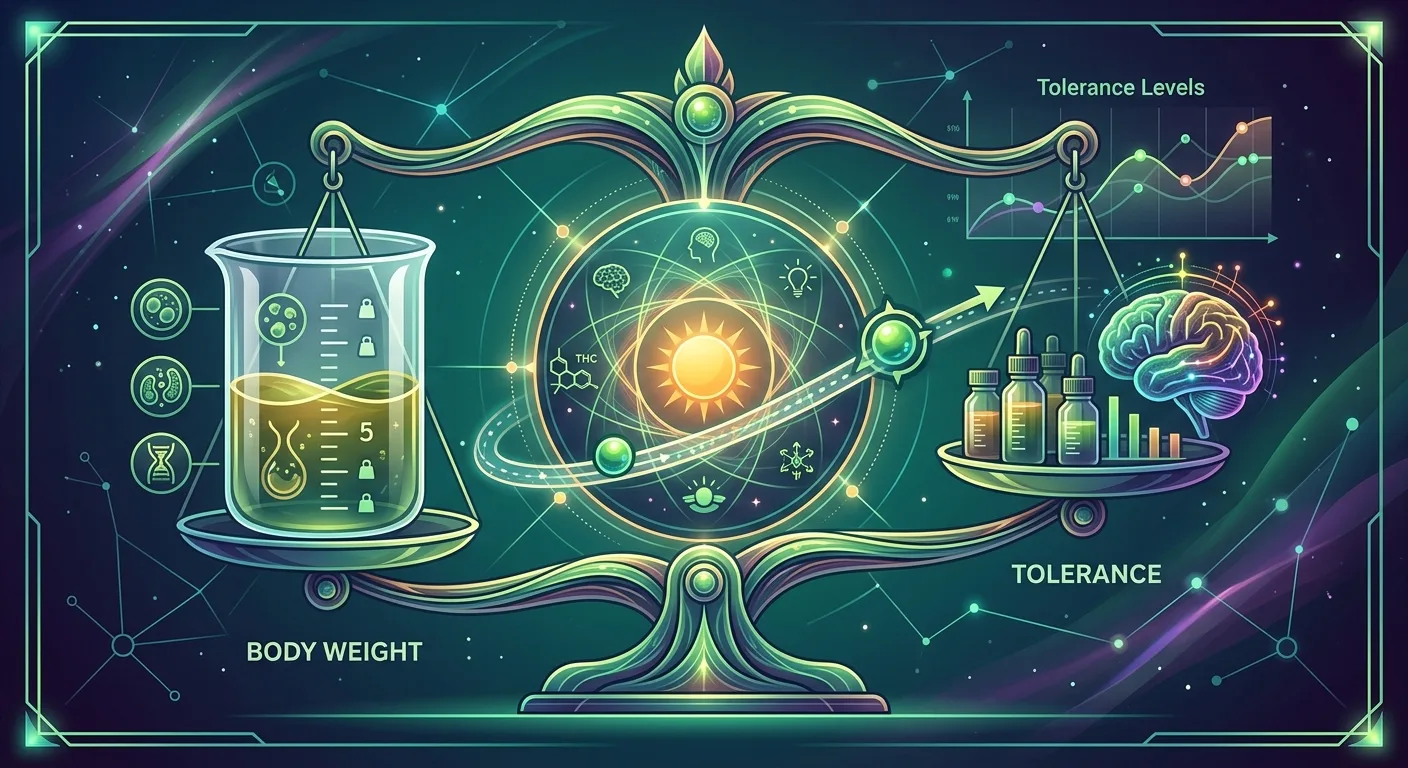
Body weight influences dosing to some degree, though less dramatically than with substances like alcohol. A 120-pound person will generally feel effects more intensely than a 200-pound person at the same milligram dose, but the difference is typically 15-25% variation, not a doubling of intensity. More important than weight is individual neurochemistry , some people have naturally higher sensitivity to serotonergic psychedelics regardless of size.
Stomach Contents and Timing
Taking psilocybin chocolate on an empty stomach produces faster onset (30-45 minutes) and more intense peak effects. Taking it after a full meal delays onset (90-120 minutes) and slightly reduces peak intensity but often extends the duration. Most experienced users prefer a light meal 2-3 hours before dosing , enough that you're not hungry during the experience, but your stomach isn't actively digesting a heavy meal while processing psilocybin.
Foods high in fat or protein further slow absorption, while simple carbohydrates or acidic foods may speed it slightly. Some users report that citrus juice intensifies psilocybin effects, though scientific evidence for this is limited. The practical takeaway: keep your pre-dose meal consistent between sessions so you can accurately compare dosage effects.
Medication Interactions and Contraindications
SSRIs (selective serotonin reuptake inhibitors) and other antidepressants significantly reduce psilocybin's effects. Users taking daily SSRIs often report requiring 50-100% higher doses to achieve the same experience as someone not on these medications. More concerning, combining psilocybin with certain medications can trigger serotonin syndrome, a potentially dangerous condition. MAOIs (monoamine oxidase inhibitors) create particularly risky interactions.
If you take any daily psychiatric medication, research potential interactions before using psilocybin, and consider consulting a healthcare provider familiar with psychedelic medicine. This isn't just about intensity , it's about safety. The "start low" protocol becomes even more critical when you're navigating medication interactions, because your first dose is genuinely experimental.
Tolerance Build-Up and Reset Periods
Psilocybin creates rapid tolerance , if you take a dose on Monday, the same dose on Tuesday will produce significantly weaker effects. Full tolerance develops within hours of your initial dose and takes 5-7 days to completely reset. Some users report residual tolerance up to 14 days after high doses. This built-in spacing is actually a safety feature that prevents compulsive use patterns.
For consistent dosing, wait at least one week between psilocybin sessions. If you're microdosing (sub-100mg doses taken for therapeutic purposes), common protocols use 1-day-on, 2-days-off schedules or 4-days-on, 3-days-off schedules to prevent tolerance while maintaining therapeutic effects. Full psychedelic experiences (200mg+) should be spaced 2-4 weeks apart minimum.
Set, Setting, and Dosage: How Context Affects Experience
The same 200mg dose of psilocybin chocolate can produce vastly different experiences depending on set (your mindset and intentions) and setting (your physical and social environment). This isn't placebo , context directly influences how your brain processes psychedelic experiences. A dose that feels manageable in a comfortable home with a trusted friend might feel overwhelming at a crowded party or in an unfamiliar location.
Beginners should dose in controlled environments: a familiar space where you feel safe, with 6-8 hours of uninterrupted time, ideally with one sober person present who knows you've taken psilocybin. Natural light, comfortable temperature, access to water and a bathroom, and the ability to control noise levels all contribute to positive experiences. Save experimental settings for after you're thoroughly familiar with psilocybin's effects.
Why "Same Dose, Different Experience" Happens
Experienced users report that identical doses can produce noticeably different experiences based on factors like recent stress levels, sleep quality, emotional state, and even time of year. Someone who responds well to 300mg during a calm weekend might find the same dose overwhelming during a stressful work period. This isn't inconsistency in the chocolate , it's the reality of set and setting.
The practical implication for dosing: when in doubt, dose lower. If you're tired, stressed, emotionally volatile, or dealing with life challenges, this isn't the time to explore higher doses. Reduce your normal dose by 25-50% or skip the session entirely. Psilocybin experiences amplify your existing mental state, so starting from a stable baseline produces more positive outcomes.
The Trip Sitter Factor
Having a trusted sober person present doesn't just provide safety backup , it often allows users to explore slightly higher doses than they'd feel comfortable taking alone. A good trip sitter creates psychological safety that reduces anxiety and helps navigate challenging moments, effectively making the same milligram dose feel more manageable. First-time users taking 150mg+ should always have a sitter present.
A trip sitter's role is simple: stay sober, stay present, stay calm. They don't need to actively guide your experience unless you ask for help. Their presence alone provides grounding. If you're dosing without a sitter because none is available, reduce your planned dose by 50mg and ensure you have 24/7 access to crisis support resources like the Fireside Project (a free peer support line specifically for psychedelic experiences).
Common Dosing Mistakes and How to Avoid Them
The most frequent dosing error is impatience-driven redosing. You take 100mg, feel underwhelmed at the 60-minute mark, and eat another square. By 90 minutes, your original dose fully kicks in while the second dose adds duration without proportional intensity. Now you're committed to 8+ hours of a medium-strength experience when you wanted either a strong 6-hour trip or a light 4-hour introduction. This is why the single-dose protocol exists.
The second common mistake is dosing without calendar awareness. Taking psilocybin on Tuesday because you have Wednesday off, forgetting that Thursday morning you have early work obligations. Even a modest 150mg dose can produce subtle lingering effects the next day , not intoxication, but altered sleep architecture, mood changes, or mild fatigue. Always clear 24 hours after your planned trip duration before scheduling commitments.
Mixing Psilocybin with Other Substances
Combining psilocybin chocolate with cannabis is common but unpredictable. Cannabis can intensify psilocybin's effects significantly, sometimes producing overwhelming experiences at doses that would otherwise feel comfortable. If you choose to mix them, treat the combination as an entirely new dosing experiment , reduce your psilocybin dose by at least 25% and use only familiar cannabis strains. Many users report that smoking cannabis during the comedown (4-5 hours post-dose) helps with re-grounding without intensifying peak effects.
Alcohol and psilocybin is generally discouraged. Alcohol dulls psilocybin's psychedelic effects while potentially increasing nausea and confusion. More importantly, alcohol removes some of the introspective clarity that makes psilocybin experiences valuable. If you feel you need alcohol to manage psilocybin anxiety, your dose is likely too high , reduce milligrams rather than adding depressants.
Ignoring Personal Sensitivity Signals
Some people are naturally high-responders to psilocybin , they experience strong effects at doses that others find moderate. If your first 75mg experience produces effects that other reports describe for 150mg, you're a high-responder. This isn't a problem; it's valuable information. High-responders should progress slowly through dose increases (add 25-50mg per session rather than 100mg jumps) and may find their optimal range 50-100mg lower than average.
Conversely, low-responders need higher doses for equivalent experiences. If 200mg feels like what others describe at 100mg, you likely need to increase doses to reach your intended experience level. This is more common in people with higher body weight, faster metabolisms, or those taking medications that interact with serotonin systems. Low-responders still benefit from gradual dose increases , just expect to land in higher milligram ranges than standard recommendations.
Microdosing vs. Macrodosing: Different Protocols for Different Goals
Microdosing psilocybin (typically 25-100mg) follows different rules than macrodosing (200mg+). Microdoses are sub-perceptual or barely perceptual amounts taken on regular schedules for therapeutic purposes , improved mood, enhanced creativity, better focus, or anxiety reduction. You should not experience obvious psychedelic effects from a proper microdose. If you're seeing visuals or feeling altered consciousness, your "microdose" is actually a low macrodose, and you need to reduce milligrams.
Common microdosing protocols include the Fadiman Protocol (1 day on, 2 days off), the Stamets Stack (4 days on, 3 days off), and intuitive dosing (taking microdoses as needed rather than on fixed schedules). Microdosing chocolates make this convenient , a 200mg square quartered into 50mg pieces provides four microdoses. Some users prefer splitting into even smaller amounts (25mg) for ultra-low therapeutic doses.
When to Choose Microdosing Over Full Doses
Microdosing works better for ongoing therapeutic goals , managing depression, improving creativity, or enhancing daily functioning. It requires no trip time, no altered consciousness, and no special set and setting. You can microdose before work (though testing this on a day off first is wise). Macrodosing works better for specific intensive experiences , processing trauma, gaining new perspectives, or deep introspective work.
Many users combine both approaches: microdosing for 4-8 weeks to stabilize mood or work through ongoing challenges, followed by a macrodose session for deeper processing, then returning to microdosing or taking an extended break. There's no requirement to choose one approach permanently. Match your dosing protocol to your current goals, and adjust as those goals change.
Tracking Your Doses for Pattern Recognition
Keeping a simple dosing log dramatically improves your ability to find optimal doses. Record date, milligram amount, time of day, stomach contents, setting, and subjective effects. After 5-10 sessions, patterns emerge: you'll notice that 150mg with an empty stomach on weekend mornings produces consistent positive experiences, while 200mg after dinner on weeknights feels too intense. This data guides future dosing better than general recommendations.
Your log also helps you identify tolerance issues, track spacing between sessions, and remember which brands or bars produced which experiences. Since psilocybin chocolate products vary in quality and consistency, knowing that a specific brand at a specific dose worked well gives you reliable reorder information. Digital notes apps work fine, but some users prefer physical journals that become records of their psychedelic journey.
Explore Premium Cannabis Products
While psilocybin chocolates offer unique experiences, Uper Weed specializes in top-quality cannabis delivery across Canada with same-day service in Ottawa and Gatineau.
Browse Cannabis ProductsFor most first-time users, 50-100mg represents the minimum effective dose that produces noticeable but manageable effects. Start at 50mg if you want to test sensitivity with minimal risk, or 75-100mg if you want a clear introductory experience. Doses below 50mg typically function as microdoses with subtle or sub-perceptual effects rather than obvious psychedelic experiences.
Divide the total psilocybin milligrams by the number of pieces. For example, a 3000mg bar with 15 squares contains 200mg per square (3000 ÷ 15 = 200). A 4000mg bar with 20 squares also contains 200mg per square (4000 ÷ 20 = 200). This simple division tells you your per-piece dose, which you can then divide further by cutting squares into halves or quarters for lower doses.
No , redosing psilocybin mid-experience is ineffective and extends trip duration without proportionally increasing intensity.