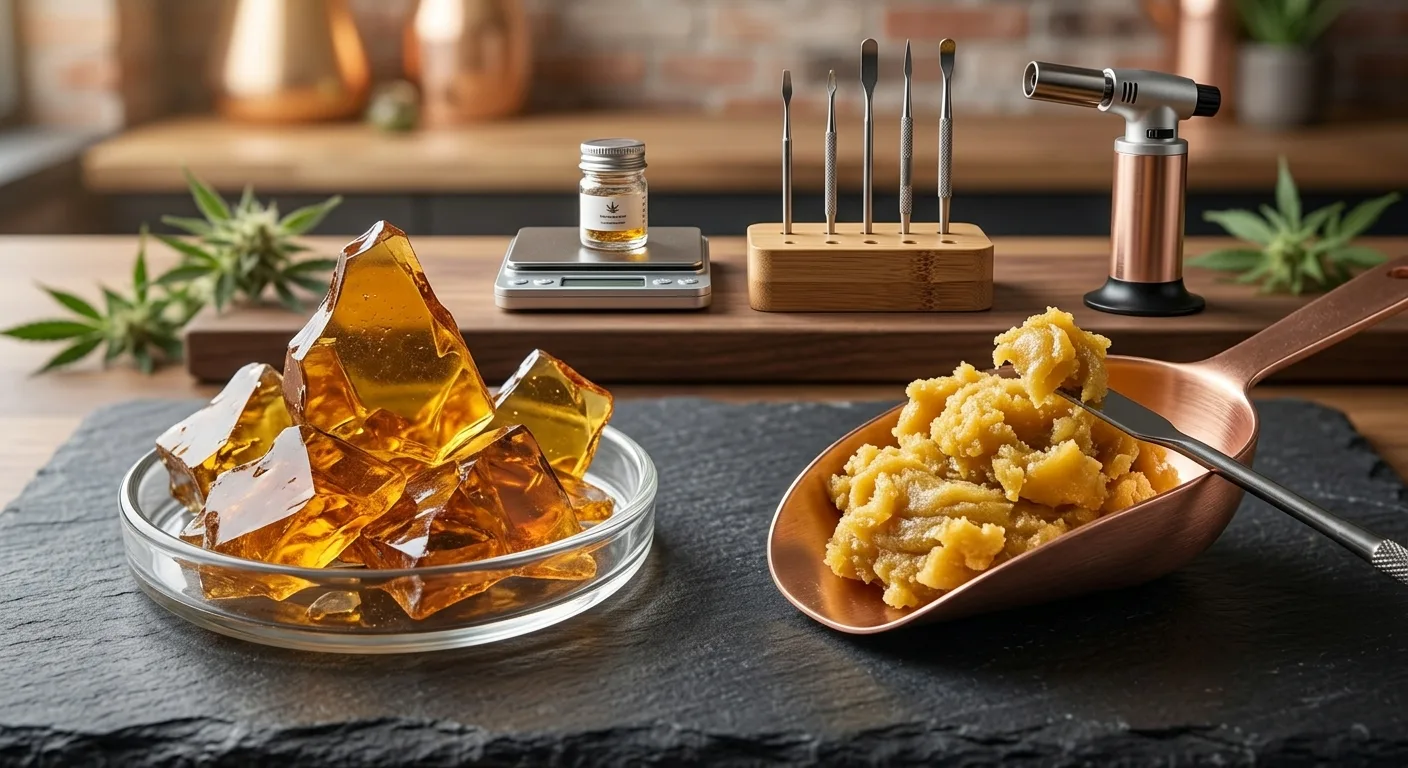
Walk into a concentrate aisle and you'll face a bewildering lineup of amber slabs, creamy tubs, and crystalline jars , all containing high-potency THC extracts, yet each looking entirely different. Shatter vs wax isn't just an aesthetic debate; these textures signal different production methods, terpene retention strategies, and user experiences. If you've ever wondered why one concentrate snaps like glass while another scoops like butter, you're asking the right question.
This guide unpacks the four cornerstone concentrate textures , shatter, wax, budder, and live resin , in one comparative framework. You'll learn why consistency changes, which texture suits your consumption method, and how potency and flavour stack up across the spectrum. By the end, you'll navigate the concentrates menu with the confidence of a seasoned dabber.
What Makes Cannabis Concentrates Different From Flower?
Before diving into texture specifics, let's establish what all concentrates share. Unlike cannabis flower, which contains 15-30% THC by dry weight, concentrates push potency into the 60-90% range by stripping away plant matter and isolating cannabinoid-rich resin. The production process , whether solvent-based (using butane, propane, or CO₂) or solventless (using heat and pressure) , determines the final texture.
Terpenes play a dual role here. These aromatic compounds not only deliver the strain's flavour profile but also influence viscosity. High terpene content creates softer, waxier textures; lower terpene counts yield harder, glassier forms. That's why a fresh-frozen live resin (bursting with terps) feels like wet sugar, while a dewaxed shatter (terps partially removed) snaps cleanly at room temperature.
The extraction solvent also matters. Butane hash oil (BHO) can be whipped into wax, left undisturbed to form shatter, or cold-cured into budder , all from the same starting material. The post-extraction process, not the strain or solvent alone, dictates the final texture you'll encounter on the shelf.
Shatter: The Glass-Like Concentrate That Snaps
Shatter earns its name from the way it fractures , tap a cold slab with a dab tool and it cracks into translucent amber shards. This texture results from minimal agitation during purging: after the solvent is evacuated in a vacuum oven, the cannabinoid molecules align in a semi-organized structure, creating a stable, glassy consistency. Shatter typically contains 70-90% THC, depending on the starting material and purge quality.
Why Shatter Stays Stable
Shatter's rigid structure comes from low terpene content (usually 2-5%) and a lack of nucleation points , microscopic areas where crystallization begins. When producers leave the extract undisturbed during cooling, molecules settle into a uniform matrix. This stability makes shatter easy to handle in cool environments, though it can "sugar up" (develop granular crystals) if exposed to temperature fluctuations or high humidity.
The trade-off? Shatter sacrifices some flavour intensity for shelf stability. Because terpenes are lighter and more volatile than cannabinoids, shatter's lower terp count means a less aromatic dab compared to wax or live resin. Users who prioritize potency and ease of dosing often favour shatter; those chasing strain-specific flavour profiles may find it one-dimensional.
Best Use Cases for Shatter
Shatter shines in scenarios demanding precision. Its firm consistency lets you snap off exact doses without sticky mess , ideal for travel or on-the-go use. When dabbing at home, a small shard heats evenly on a quartz banger, delivering a clean, potent hit with minimal residue. Shatter also works well in vape pens designed for solid concentrates, though you'll need to warm the product slightly to load it.
Wax: The Crumbly, Terpene-Rich Middle Ground
If shatter is the minimalist's concentrate, wax is the flavour chaser's pick. Wax forms when extractors agitate the BHO during purging, whipping air into the mixture and breaking the molecular uniformity that creates shatter. The result: a soft, opaque concentrate with a crumbly or honeycomb-like texture. Potency hovers around 65-85% THC, but terpene content often doubles shatter's levels, reaching 5-10% or higher.
That higher terp count translates to robust flavour. Where shatter might taste mildly earthy or piney, wax captures the strain's full aromatic signature , the diesel punch of a gas strain, the citrus zing of a sativa, or the creamy sweetness of a dessert hybrid. The trade-off is reduced stability: wax dries out faster than shatter and can harden into "crumble" if left unsealed, though some users prefer crumble's even easier handling.
Why Wax Feels Softer
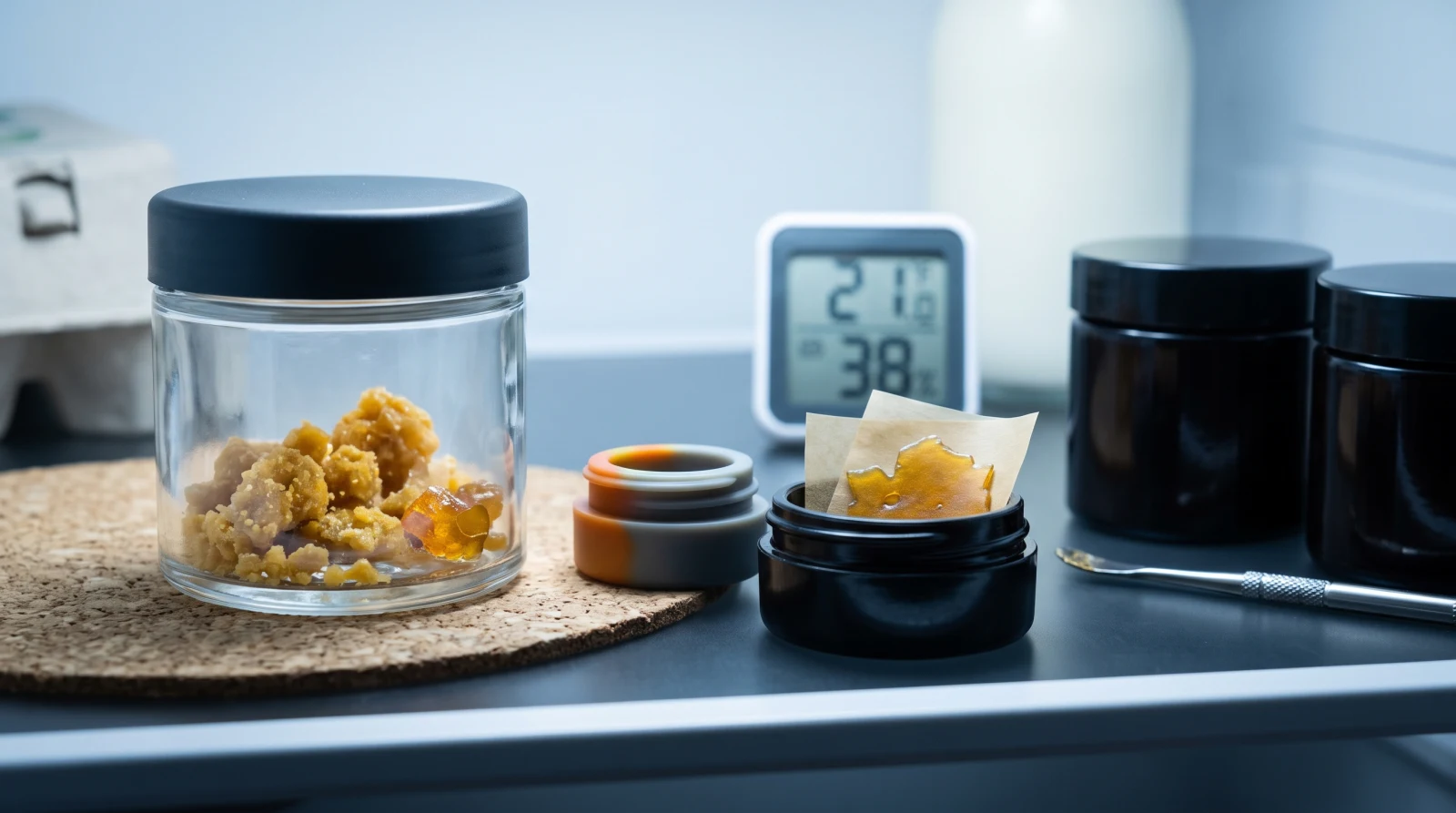
The whipping process introduces micro-air bubbles that disrupt the concentrate's molecular structure, creating a spongy matrix. This aeration also accelerates terpene evaporation during storage, so wax demands airtight containers kept in cool, dark spaces. Silicone jars work well short-term, but glass preserves terpenes longer. If you notice your wax losing smell over weeks, improper storage is likely the culprit.
Wax's malleability makes it forgiving for beginners. Unlike shatter, which can shatter into dust if mishandled, wax scoops easily onto a dab tool without special technique. You can pinch off a dose with your fingers if needed (though oils will transfer to skin), and it loads smoothly into nectar collectors or portable e-rigs without pre-warming.
When to Choose Wax Over Shatter
Opt for wax when flavour outweighs convenience. If you're sampling a new strain and want to taste its full terpene spectrum, wax delivers a truer representation than shatter. It's also the better choice for low-temperature dabs (450-550°F), where those preserved terps shine without scorching. Users who dab multiple times daily may appreciate wax's ease of use , no snapping, no warming, just scoop and go.
Budder: The Creamy Cousin That Spreads Like Frosting
Budder sits on the softer end of the wax family, named for its butter-like consistency. Producers create budder by whipping BHO at higher temperatures than wax (around 100-120°F) during purging, which aerates the extract further and melts any remaining crystalline structures. The outcome is a smooth, spreadable concentrate with 70-85% THC and terpene levels comparable to or exceeding wax , often 7-12%.
This creamy texture appeals to users who dislike crumbly mess. Budder clings to a dab tool without falling apart, making it arguably the easiest concentrate to handle for precise dosing. Its higher terpene content also means intensified flavour, though like wax, budder degrades faster than shatter if exposed to air or heat. Store it in a sealed silicone container in the fridge to extend shelf life.
How Budder Differs From Wax
The line between wax and budder blurs in practice , some producers use the terms interchangeably, while others reserve "budder" for the smoothest, most whipped batches. Technically, budder has a creamier mouthfeel and fewer air pockets than wax, resulting in a denser concentrate that doesn't crumble. If you scoop a dollop and it holds its shape like cake frosting, you're holding budder; if it breaks into granules, it's wax or crumble.
Potency-wise, budder and wax overlap almost entirely. The texture difference stems from production technique, not cannabinoid content. However, budder's denser structure can make it feel slightly "heavier" when dabbed , a psychological effect tied to how the concentrate melts on the nail. Some users swear budder hits harder; lab tests show no meaningful THC gap.
Best Practices for Budder Storage
Budder's high surface area (all those whipped air bubbles) makes it vulnerable to terpene evaporation. Unlike shatter, which forms a protective outer skin, budder's fluffy interior remains exposed to air even in a closed container. Minimize degradation by pressing parchment paper directly onto the budder's surface before sealing the jar, creating a terpene barrier. Refrigerate if you won't finish the gram within two weeks.
Live Resin: The Fresh-Frozen Terpene Bomb
Now we shift from texture variations of cured BHO to a fundamentally different product. Live resin uses fresh-frozen cannabis , flower harvested and immediately frozen to -40°C , rather than dried and cured buds. This locks in the plant's full terpene profile, which otherwise evaporates during the traditional drying process. The result is a concentrate with 10-20% terpenes alongside 70-85% THC, delivering the most aromatic dab experience available.
Live resin's texture ranges from syrupy sauce (high terps, low THC-A crystallization) to sugar wax (high crystallization, moderate terps). The key differentiator isn't consistency but production method: if it started as fresh-frozen material, it's live resin. If it came from cured flower, it's regular BHO wax, budder, or shatter, regardless of how similar they look in the jar.
Why Live Resin Tastes Different
Terpenes are highly volatile , compounds like myrcene and limonene begin evaporating the moment a cannabis plant is cut. Traditional curing (hanging buds in controlled humidity for 10-14 days) preserves cannabinoids but sacrifices up to 60% of the original terpene content. Fresh-freezing halts enzymatic breakdown, capturing terps at their peak concentration. When you dab live resin, you're tasting the strain as it existed in the grow room, not the dried remnant.
This terpene intensity comes with handling quirks. Sauce-style live resin is so terp-heavy it can leak through silicone containers, requiring glass jars with tight lids. Sugar wax live resin is easier to manage but still stickier than standard wax. Both demand low-temperature dabs (under 500°F) to avoid scorching those delicate terps into acrid smoke.
Live Resin vs Standard Concentrates
Expect to pay a 20-40% premium for live resin compared to shatter or wax from the same brand. The fresh-frozen process requires more labour (harvesting and freezing entire plants within hours) and specialized equipment (blast-freezers and closed-loop systems rated for sub-zero temps). However, connoisseurs argue the flavour payoff justifies the cost , live resin delivers a dab that tastes like vapourized flower, not just THC.
Potency-wise, live resin doesn't surpass shatter's ceiling (both can hit 85-90% THC in top-tier batches), but the entourage effect makes live resin feel more robust. Those abundant terpenes modulate the high, often producing a more balanced, clear-headed experience than shatter's sledgehammer potency. Users chasing a functional daytime buzz frequently prefer live resin; nighttime knockout seekers lean toward shatter or indica wax.
The Four-Way Concentrate Comparison Table
With each texture now defined, let's compare them side by side across the metrics that matter most to buyers:
| Factor | Shatter | Wax | Budder | Live Resin |
|---|---|---|---|---|
| Texture | Glassy, brittle, translucent | Crumbly, honeycomb, opaque | Creamy, smooth, spreadable | Syrupy to granular, varies widely |
| THC Range | 70-90% | 65-85% | 70-85% | 70-85% |
| Terpene % | 2-5% | 5-10% | 7-12% | 10-20% |
| Flavour Intensity | Mild to moderate | Moderate to strong | Strong | Extremely strong |
| Ease of Handling | Moderate (snaps, may shatter) | Easy (scoops, may crumble) | Very easy (spreads cleanly) | Tricky (sticky, may leak) |
| Shelf Stability | Excellent (months in cool storage) | Good (weeks in sealed jar) | Good (weeks, fridge recommended) | Fair (days to weeks, fridge essential) |
| Price Point | Mid-range (€25-40/g) | Mid-range (€25-40/g) | Mid-high (€30-45/g) | High (€40-60/g) |
| Best For | Potency seekers, travel, precision dosing | Flavour balance, daily use, beginners | Clean handling, flavour fans, ease of use | Connoisseurs, terp chasers, special occasions |
This table reveals no universal "best" texture , your ideal concentrate depends on priorities. If you dab once nightly and want maximum THC per dollar, shatter wins. If you're exploring strains and value flavour, budder or live resin justify the extra cost. If you're new to dabbing and want forgiving material that won't frustrate you, wax offers the gentlest learning curve.
How to Choose the Right Concentrate for Your Setup
Your consumption method narrows the field further. Not all concentrates perform equally across devices, and matching texture to tool prevents waste and frustration.
Dab Rigs and E-Nails
Traditional dab rigs (glass water pipes with quartz or titanium nails) handle any concentrate texture, but live resin and budder shine at low temps (450-550°F), while shatter tolerates higher heat (600-700°F) without degrading as noticeably. If you own a temp-controlled e-nail, invest in terp-heavy concentrates like budder or live resin , you've got the hardware to preserve their flavour. On a basic torch rig without temp control, shatter's simplicity and heat tolerance make it more forgiving.
Vape Pens and Cartridges
Most concentrate vape pens (like the Puffco Plus or Dr. Dabber) prefer wax or budder. Shatter requires pre-warming with a lighter to soften it for loading, while live resin's stickiness can gum up coils. Some devices explicitly warn against sauce-style live resin , check your manual before experimenting. For hassle-free vaping, stick with crumble or budder.
Nectar Collectors and Straws
Nectar collectors (heated tips dipped directly into concentrate) work best with firmer textures. Shatter and crumble sit flat in a silicone dish, letting you touch the tip to the surface without stirring. Budder and live resin can work but tend to pool around the hot tip, wasting product. If you use a nectar collector frequently, buy wax or shatter in parchment-wrapped slabs for tidier dabbing.
Common Concentrate Storage Mistakes That Ruin Potency
Even the finest live resin degrades into a terp-less shadow of itself if stored improperly. Avoid these pitfalls to maximize shelf life:
Silicone vs Glass Containers
Silicone jars are convenient , non-stick, squeezable, cheap , but they're porous. Terpenes (especially limonene and pinene) leach into silicone over weeks, stripping your concentrate of flavour. For short-term storage (under two weeks), silicone is fine. Beyond that, transfer to glass. Small mason jars or dedicated concentrate containers with airtight seals preserve terps far longer.
Temperature and Light Exposure
Heat accelerates cannabinoid degradation (THC converts to CBN, producing sedative effects rather than euphoria), while UV light breaks down both cannabinoids and terps. Store all concentrates in a cool, dark place , a drawer, closet, or fridge works. Never leave jars on a sunny windowsill or in a hot car. Shatter tolerates room temp if used within a month; live resin demands refrigeration from day one.
Opening Jars Too Often
Every time you open a concentrate jar, you exchange humid room air for the controlled atmosphere inside. This introduces moisture (which can cause molding in rare cases) and oxygen (which oxidizes cannabinoids). Minimize openings by portioning concentrate into smaller jars , store your main stash sealed, transferring a few days' supply to a working jar. This is especially critical for live resin and budder.
The Potency Question: Does Texture Affect THC Content?
A common misconception holds that shatter's glassy appearance signals higher purity than wax's opaque texture. In reality, opacity comes from air and terpenes, not impurities. A well-made wax can test at 85% THC, while poorly purged shatter might clock in at 70%. Always check lab results (printed on packaging or available via QR code) rather than judging potency by appearance.
That said, perceived potency differs from lab numbers. Shatter's lower terpene content means THC dominates the experience, often feeling like a heavier, more sedative high. Live resin's terp-rich profile produces a more nuanced effect , uplifting, clear-headed, or creative, depending on the strain. This is the entourage effect in action: cannabinoids and terpenes working synergistically to shape the high beyond THC percentage alone.
For users chasing maximum intoxication, shatter delivers the most bang per buck. For those seeking specific effects (focus, relaxation, pain relief), live resin or budder's terpene diversity offers better targeting. Neither approach is superior , they serve different goals.
Where to Buy Quality Concentrates in Canada
Canada's legal cannabis market offers concentrates through provincial retailers and licenced delivery services. UperWeed Cannabis provides same-day delivery in Ottawa and Gatineau, with mail-order service available Canada-wide. When shopping concentrates, prioritize vendors who post third-party lab tests , these verify THC/CBD content, terpene profiles, and residual solvent levels (which should be under 500 ppm for butane).
Look for brands with transparent purging processes. Reputable extractors use closed-loop systems that recover and recycle butane, minimizing environmental impact and residual solvents. Avoid concentrates sold without packaging or lab info , these grey-market products may contain unsafe solvent levels or pesticides from unregulated flower.
If you're new to concentrates, start with a sampler pack (some dispensaries offer quarter-gram portions of multiple textures) rather than committing to a full gram. This lets you compare shatter, wax, budder, and live resin side by side without breaking the budget. Once you identify your preference, buy in bulk , grams drop in price when purchased by the eighth (3.5g) or quarter-ounce (7g).
Explore Our Concentrate Collection
From crystal-clear shatter to terpene-rich live resin, UperWeed carries a curated selection of premium concentrates with same-day delivery across Ottawa and Gatineau. Browse lab-tested extracts from trusted Canadian producers.
Shop Concentrates NowFrequently Asked Questions About Shatter, Wax, and Concentrates
Not necessarily. Both shatter and wax typically range from 65-90% THC, with potency determined by starting material and extraction quality rather than texture. Shatter may feel more potent due to lower terpene content, which lets THC dominate the experience, but lab-tested wax can match or exceed shatter's cannabinoid levels.
This process, called sugaring or buddering, occurs when shatter is exposed to heat, humidity, or temperature fluctuations. The molecular structure destabilizes, allowing cannabinoids to crystallize and terpenes to separate. While the texture changes, potency remains intact. Store shatter in a cool, dry place to prevent sugaring.