You're standing in front of a concentrate menu and see two nearly identical names staring back at you: "live resin" and "live rosin." One costs $35 per gram, the other $80. Both promise incredible flavour and potency. But what's the actual difference, and does that one letter justify doubling your budget?
The confusion is real and completely understandable. Live resin and live rosin share four letters, similar marketing language, and premium shelf space. But they're made using fundamentally different processes, contain different residual materials, and deliver distinct experiences. This isn't about splitting hairs over minor technical details. It's about understanding what you're actually buying and whether the price difference matches your priorities.
Let's cut through the industry jargon and break down exactly what separates these two concentrates, why one costs significantly more than the other, and which one actually belongs in your rotation.
The Core Difference: Solvent vs Solventless
Everything about the live resin versus live rosin debate comes down to one fundamental split: how the cannabinoids and terpenes are separated from the plant material. This isn't just a manufacturing curiosity. It affects purity, flavour, price, and even legal classification in some jurisdictions.
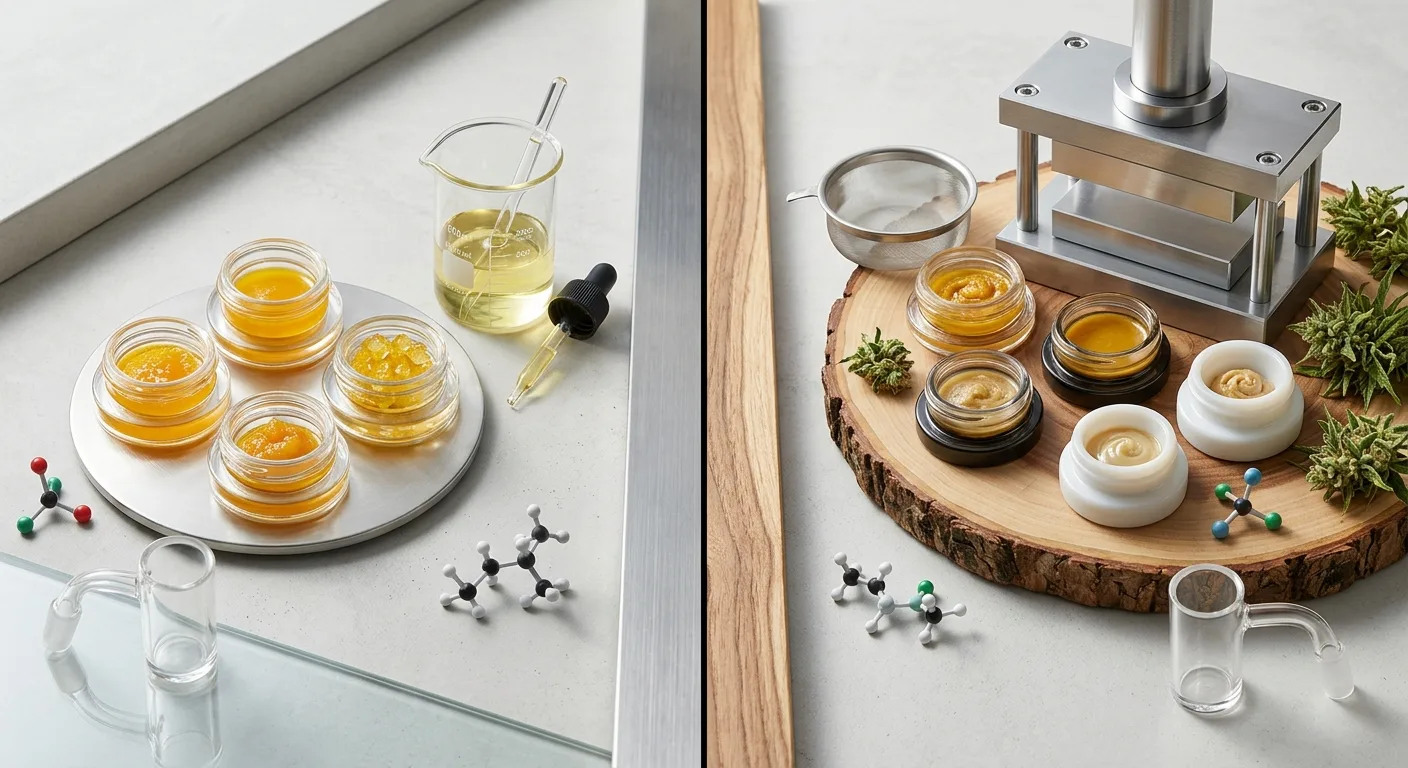
Live resin is a solvent-based extract. Producers flash-freeze fresh cannabis plants immediately after harvest, then use liquid hydrocarbons (typically butane or propane) to strip the cannabinoids and terpenes from the frozen material. The solvent is then purged through a combination of heat and vacuum pressure, leaving behind a concentrate rich in THC and aromatic compounds. When done properly, residual solvent levels fall below detectable thresholds, but the process itself is classified as solvent-based.
Live rosin is a solventless extract. It follows a two-stage mechanical process that uses only ice, water, heat, and pressure. First, fresh-frozen cannabis is agitated in ice water to separate the trichome heads from the plant material (this creates bubble hash). Those trichomes are then collected, dried, and pressed between heated plates under high pressure. The result is a concentrate that contains nothing but the compounds naturally present in the trichome heads themselves. No chemical solvents ever touch the material.
Why "Live" Matters in Both Names
The word "live" in both products refers to the starting material, not the extraction method. Traditional concentrates are made from dried and cured cannabis. Live concentrates use fresh-frozen plants that were harvested and immediately frozen to preserve volatile terpenes that would otherwise degrade during the drying process. This preservation of terpene profiles is what gives both live resin and live rosin their reputation for superior flavour compared to standard concentrates made from cured material.
You can buy regular resin (made from cured plants with solvents) and regular rosin (made from cured plants without solvents). The "live" prefix is an upgrade within each category, not the defining difference between them. The actual distinction is solvent versus solventless extraction methodology.
Production Complexity and Why Rosin Costs More
Walk into any dispensary and you'll notice live rosin commanding prices 40-100% higher than live resin. This isn't arbitrary markup or trendy branding. It reflects genuine differences in production difficulty, equipment investment, yield efficiency, and labour intensity.
Live resin extraction requires specialized closed-loop systems, but once the equipment is dialled in, the process is relatively scalable and efficient. Yields typically range from 15-25% of input material weight, depending on the starting quality. A skilled extraction technician can process significant volumes once the system is running, and the solvent does most of the heavy lifting in separating desirable compounds from plant matter.
Live rosin production is considerably more labour-intensive and yield-sensitive. The bubble hash stage requires careful agitation timing, precise temperature control, and multiple wash cycles using different micron screen sizes to separate trichome heads by quality tier. The collected trichomes must then be freeze-dried (a 24-48 hour process) before pressing. The pressing itself demands attention to temperature, pressure, time, and the quality of the starting hash. Yields are lower, typically 3-10% of the original fresh-frozen flower weight, and mistakes at any stage can destroy an entire batch with no recovery option.
The Equipment Investment Gap
A professional closed-loop hydrocarbon extraction system represents a significant upfront cost, but it's a one-time investment that processes material efficiently for years. Rosin production requires freeze dryers (expensive and slow), rosin presses (which range from hobbyist-grade to industrial hydraulic systems), washing machines, screen bags in multiple micron sizes, and considerable cold storage capacity. The per-gram labour cost is substantially higher because rosin can't be fully automated the way solvent extraction can.
When you pay double for live rosin, you're covering that production reality. Some consumers consider it worth the premium for the assurance of solventless purity. Others find that well-made live resin delivers comparable flavour and effects at a more accessible price point. Neither choice is wrong, but understanding where your money goes matters when building your concentrate rotation.
Flavour, Potency, and the Experience Difference
Beyond the production methods and price tags, what actually changes when you consume live resin versus live rosin? The differences are subtle but real, particularly for consumers who pay attention to flavour nuance and effect character rather than just THC percentages.
Terpene preservation and flavour profiles: Both formats excel at maintaining the aromatic compounds that define strain character, but they preserve them differently. Live resin's hydrocarbon extraction captures a very complete terpene spectrum because the solvents efficiently strip everything from the frozen material. The flavour is often described as bright, punchy, and intense, sometimes even overwhelming if you're used to milder concentrates. Live rosin's mechanical process captures the compounds physically present in intact trichome heads, producing a flavour that many describe as more rounded, natural, or true-to-flower. It's less about one being "better" and more about preference for extraction versus expression of the source material.
Consistency and texture variations: Live resin typically presents as a viscous, sauce-like consistency ranging from honey-thick to nearly liquid, often with THC-A crystals suspended in a terp-heavy sauce. This texture comes from the post-purge separation of cannabinoids and terpenes. Live rosin usually has a budder-like or badder consistency, sometimes grainier, always more opaque. The texture differences affect how you handle the material, how easily it vapourizes, and how you store it, but they don't indicate quality differences within proper storage conditions.
Potency Reality Check
Lab testing numbers show both formats typically testing between 70-90% total cannabinoids, with live rosin sometimes scoring slightly lower because it contains more residual plant lipids and waxes that weren't filtered out during solventless processing. But raw THC percentages tell an incomplete story. The entourage effect created by terpene preservation in both products means the experienced potency often feels stronger than equivalent percentages in less aromatic concentrates.
For consumers who prioritize knowing exactly what's in their concentrate and want absolute assurance of zero residual solvents, live rosin provides peace of mind worth the premium. For those who trust properly purged extraction processes and want maximum terpene intensity at a lower price point, live resin is a sophisticated choice that doesn't compromise on experience. The "better" option depends entirely on what you value and what your budget supports.
Consumption Methods and Storage Considerations
The textural and compositional differences between live resin and live rosin create practical implications for how you consume and store each format. These aren't dramatic enough to make one clearly superior, but they affect daily usability in ways that might tip your preference.
Live resin's sauce-like consistency makes it exceptionally easy to work with using a dab tool. It scoops cleanly, vapourizes efficiently across a wide temperature range, and leaves minimal residue in a clean banger or chamber. The liquid terpene fraction means you can dab at slightly lower temperatures while still achieving full vapourization, which preserves flavour better than high-heat methods. The trade-off is that the sauce consistency can be messy to handle and requires careful storage positioning to prevent spills.
Live rosin's thicker, budder-like texture is more forgiving for storage and transport. It stays where you put it, doesn't leak, and maintains its form at room temperature better than resin sauce. The texture can be slightly more challenging to load cleanly onto a dab tool, and it may require marginally higher vapourization temperatures to fully activate, but the differences are minor with proper technique. Some consumers find rosin leaves more residue after dabbing because of the additional plant lipids present in solventless extracts, though this varies by specific product quality.
Storage Requirements for Maximum Shelf Life
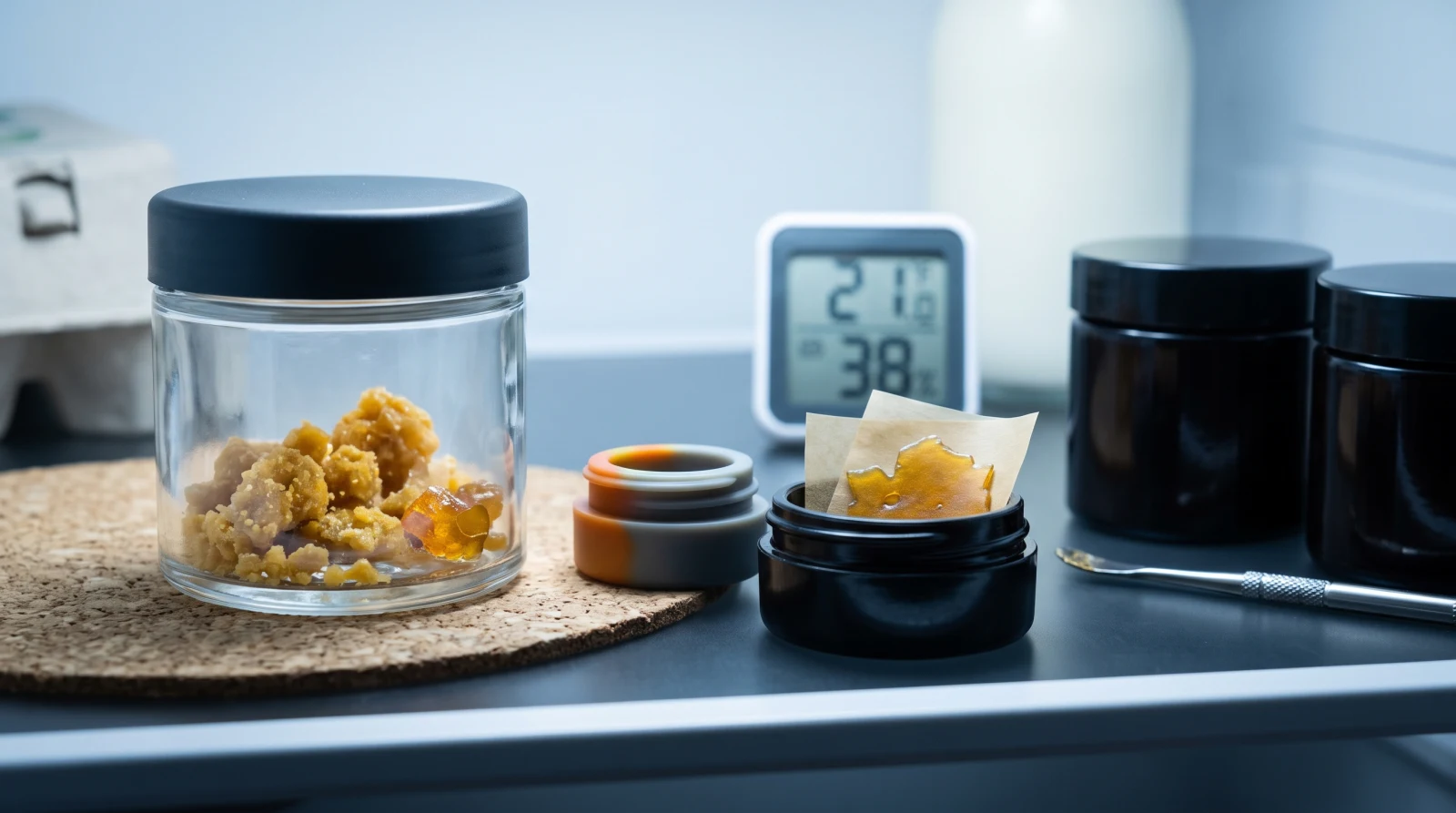
Both concentrate types degrade when exposed to heat, light, and air, but their optimal storage conditions differ slightly. Live resin's higher terpene content makes it more volatile. Store it in an airtight container in a cool, dark place, ideally in the refrigerator for long-term preservation. The sauce may separate further in cold storage, which is normal and doesn't indicate degradation. Just let it come to room temperature before opening the container to prevent condensation.
Live rosin is slightly more stable at room temperature because the mechanical extraction doesn't concentrate terpenes to the same volatile levels. Still, refrigeration extends shelf life significantly and prevents the oxidation that turns rosin darker over time. A key difference is that rosin benefits from minimal freeze-thaw cycles, while resin tolerates them better. If you'll be accessing your stash frequently, rosin may be the more practical choice for countertop storage in moderate climates.
Understanding these practical differences helps prevent the disappointment of degraded product. Whether you're exploring different concentrate textures or building a permanent rotation, storage discipline preserves the qualities you paid premium prices to access.
Making the Choice: Which One Belongs in Your Rotation?
The live resin versus live rosin decision isn't about declaring a winner. It's about matching concentrate characteristics to your consumption priorities, budget realities, and philosophical preferences about extraction methodology. Here's the honest breakdown that cuts through marketing hype.
Choose live resin if: You want exceptional terpene intensity and flavour at a more accessible price point. You're comfortable with properly purged solvent extracts and trust third-party lab testing that confirms clean residual solvent levels. You prefer the convenience of sauce consistency and don't mind slightly more careful storage handling. Your budget allows for regular concentrate purchases but not at ultra-premium pricing. You're building a diverse rotation and want to try multiple strains without breaking the bank.
Choose live rosin if: You strongly prefer solventless products and want absolute certainty that no chemical solvents contacted your concentrate. You're willing to pay significantly more for that assurance and for the rounder, more natural terpene expression that mechanical extraction provides. You value the artisanal production process and smaller-batch mentality of rosin makers. You have storage space that accommodates slightly more demanding preservation requirements. The premium price isn't a barrier when the product aligns with your cannabis philosophy.
The Hybrid Approach Many Consumers Adopt
You don't have to pick one format exclusively. Many experienced concentrate consumers maintain both in their rotation, using live rosin for special occasions or when they want to savour a particular strain's terpene profile, while keeping live resin as their daily driver for consistent quality at sustainable pricing. This approach gives you the best of both worlds without requiring an unlimited budget or forcing an artificial choice between two products that both have legitimate merits.
The market is also seeing innovation in both categories. Some producers are creating live resin products that approach rosin's purity through advanced purging techniques. Others are streamlining rosin production to bring costs down slightly. These aren't converging into a single product, but the gap between them is narrowing as extraction science advances. For consumers exploring the evolution of cannabis concentrates, we're living through an exciting period of refinement in both solvent and solventless extraction methods.
Clearing Up Common Misconceptions
The live resin versus live rosin conversation has spawned several persistent myths that confuse consumers and muddy purchasing decisions. Let's address the most common misconceptions with straightforward corrections.
Myth: Live resin contains dangerous solvent residue. Properly produced live resin undergoes rigorous purging that reduces residual solvents to parts-per-million levels far below safety thresholds. Third-party lab testing in legal markets verifies these numbers. The concern about solvent residue is valid for black-market or improperly purged products, but licenced producers using closed-loop systems and vacuum ovens create clean end products. Your preference for solventless doesn't make solvent-based inherently unsafe when done correctly.
Myth: Live rosin is always better quality than live resin. Quality is determined by starting material, production expertise, and proper handling, not extraction method alone. Poorly made live rosin from inferior flower will never outperform excellent live resin from premium genetics. The price difference reflects production complexity and methodology, not an objective quality hierarchy. Both can be exceptional or mediocre depending on the producer's skill and source material.
Myth: The texture differences indicate potency differences. Sauce versus budder consistency tells you about extraction method and post-production handling, not about THC content or overall potency. Lab testing numbers are the only reliable potency indicator. A crystalline live resin sauce and a creamy live rosin badder can have identical cannabinoid profiles while feeling different to consume because of terpene composition and texture, not raw potency.
Myth: Live rosin is healthier because it's "natural." Both products are cannabis concentrates containing highly concentrated cannabinoids and terpenes. The solventless nature of rosin means no chemical residue, but it doesn't make the consumption of concentrated THC inherently healthier. The health considerations of any concentrate relate primarily to dosage control and consumption method, not extraction technique. This matters for consumers learning about proper THC dosing across different product formats.
The Marketing Language That Confuses Consumers
Cannabis marketing often blurs these distinctions intentionally. Terms like "solventless sauce" (which is rosin marketed to look like resin) or "clean resin" (implying other resin isn't clean) create confusion that serves brand differentiation more than consumer education. When evaluating products, look past the marketing language to the actual extraction method listed in product descriptions or ask your budtender directly: "Is this made with solvents or mechanically extracted?" That simple question cuts through the terminology fog.
The concentrate market rewards informed consumers. Understanding what you're actually buying, why it costs what it does, and how it differs from similar-sounding alternatives puts you in control of your purchasing decisions rather than leaving you vulnerable to marketing trends or budtender upselling.
Explore Premium Concentrates
UperWeed carries a curated selection of live resin and solventless products from trusted Canadian producers. Browse our concentrate menu to find quality options at every price point.
Shop Concentrates NowMost experienced cannabis consumers can identify differences in flavour character and texture, but the effects are similar enough that preference comes down to individual taste. Live resin often delivers a more intense, punchy terpene profile, while live rosin provides a rounder, more natural flavour expression. Blind testing would challenge even experienced consumers to consistently identify which is which based solely on effects rather than flavour and texture cues.
That depends entirely on your priorities. If solventless purity is important to you philosophically or you prefer rosin's flavour character, the premium is justified. If you're primarily seeking potent, flavourful concentrate and trust proper solvent purging processes, live resin delivers comparable experiences at lower cost. Neither answer is universally correct, it's about matching product characteristics to what you value in your consumption experience.
Both are excellent for dabbing and the choice comes down to texture preference and temperature management. Live resin's sauce consistency vapourizes easily at lower temperatures, preserving maximum flavour. Live rosin's budder texture may require slightly higher temps but some consumers prefer how it handles on a dab tool. The dabbing experience with either is high-quality when using proper technique and temperature control.
Not necessarily. Live resin often tests with higher total terpene percentages because hydrocarbon extraction captures the complete volatile compound profile very efficiently. Live rosin preserves the terpenes naturally present in intact trichome heads, which can result in slightly lower overall numbers but what many describe as more authentic or natural terpene expression. Lab numbers don't always correlate with perceived flavour intensity or quality.
With proper storage in airtight containers in cool, dark conditions, both formats maintain quality for several months. Live resin's higher terpene concentration makes it slightly more volatile, benefiting most from refrigeration for storage beyond a few weeks. Live rosin is marginally more stable at room temperature but still degrades with heat and light exposure. For maximum preservation, refrigerate both formats and minimize freeze-thaw cycles, especially for rosin.
Both formats are highly concentrated, typically 70-90% THC, making them significantly more potent than flower. Beginners should start with very small doses (rice-grain sized) and wait to assess effects before increasing. The rapid onset of dabbed concentrates combined with high potency can overwhelm inexperienced consumers. If you're new to concentrates, consider starting with less potent formats or consuming these premium products in small quantities with experienced guidance.
Conclusion: One Letter, Real Differences, Informed Choices
The live resin versus live rosin debate isn't about declaring a champion. It's about understanding the fundamental differences between solvent-based and solventless extraction, recognizing why those differences create significant price gaps, and making informed purchasing decisions that align with your consumption priorities and budget realities.
Live resin delivers exceptional terpene intensity and potency through efficient hydrocarbon extraction, creating punchy flavour profiles at accessible price points for consumers comfortable with properly purged solvent processes. Live rosin provides solventless purity and natural terpene expression through labour-intensive mechanical methods that justify premium pricing for those who prioritize extraction methodology over cost considerations. Neither is objectively superior. Both represent sophisticated approaches to preserving the aromatic and psychoactive compounds that make fresh cannabis special.
The smartest approach for most consumers is trying both formats from quality producers to develop your own preferences based on actual experience rather than marketing claims or price assumptions. Your ideal concentrate rotation might include both, using each where its specific characteristics shine brightest. Understanding what separates these one-letter-different products transforms you from a confused consumer into an informed buyer who knows exactly what they're paying for and why.
Ready to explore premium concentrates made with both extraction methods? UperWeed's curated selection includes quality options across the concentrate spectrum, from accessible live resin to artisanal live rosin, all backed by lab testing and stored properly to preserve the qualities you're paying for. Browse our concentrate menu to find the perfect addition to your rotation.