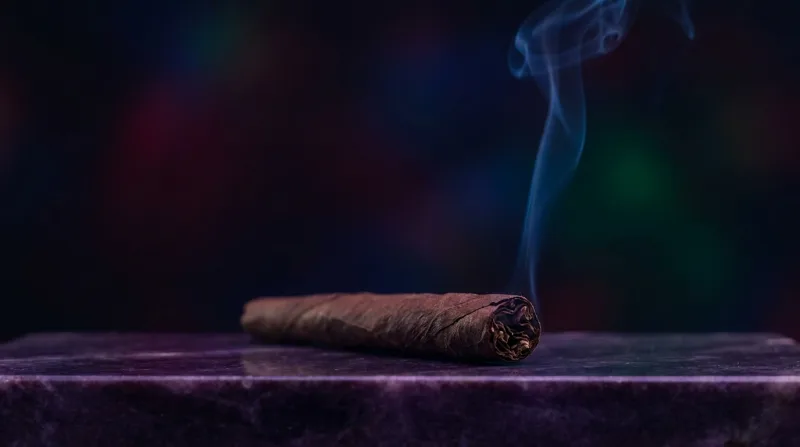
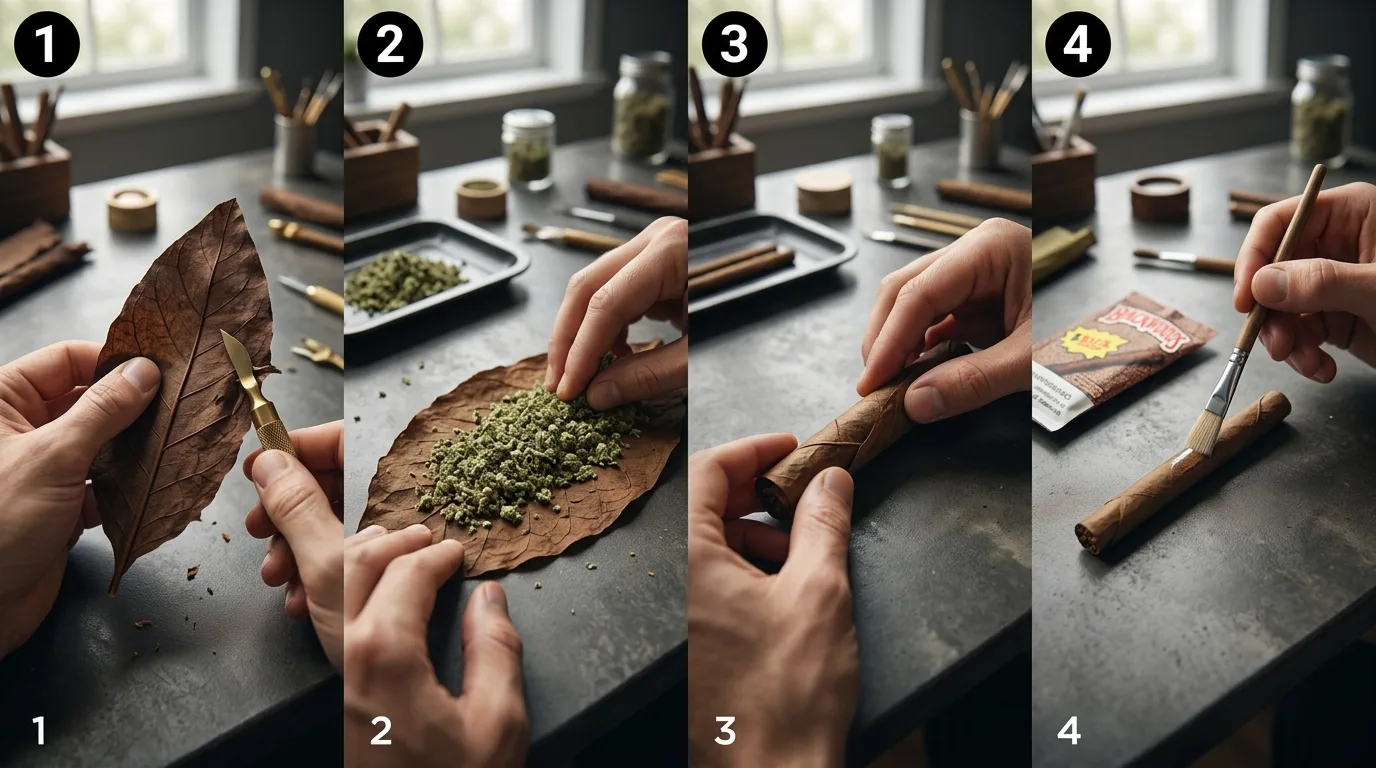
If you've ever tried to roll a Backwoods cigar and ended up with a torn, crumbling mess, you're not alone. These all-natural leaf wraps are notoriously challenging for first-timers, but the payoff is worth it: a slow-burning, flavourful smoke that's become iconic in cannabis culture. The secret isn't in your rolling technique alone. It's in understanding how these tobacco leaves behave, managing their moisture content, and mastering the critical de-stemming step that most tutorials gloss over.
This guide walks through the entire process with granular detail at each stage. We'll cover why Backwoods are different from regular wraps, how to prep the leaf without destroying it, and the moisture management tricks that separate a perfect roll from a frustrating failure. Whether you're rolling cannabis flower or premium hash, these techniques apply universally.
Why Backwoods Are Different (and Harder) Than Regular Wraps
Unlike machine-rolled blunt wraps or papers, Backwoods are natural tobacco leaves that have been fermented, dried, and packaged with minimal processing. This gives them their signature rustic appearance and robust flavour profile, but it also means they're less forgiving during the rolling process.
The leaf arrives with its central vein still intact. This thick stem runs the length of the cigar and must be removed before you can roll anything effectively. The vein is rigid and will crack the leaf if you try to roll over it. Additionally, the leaf's moisture content varies dramatically between cigars in the same pack. Some will be pliable and slightly tacky. Others will be brittle and prone to tearing. This inconsistency is where most people fail.
The natural leaf also lacks the uniform thickness of manufactured wraps. Thin spots tear easily. Thick spots resist rolling. You need to account for these variations as you work. Understanding these structural challenges upfront changes your approach entirely.
Prepping the Leaf: The De-Stemming Process Most People Skip
Before you touch the leaf, assess its moisture level. Gently squeeze the cigar through the packaging. If it feels rigid and crunchy, it's too dry. If it feels soft and gives easily, it's in good condition. If it's bone-dry, you'll need to rehydrate it before proceeding. More on that in the next section.
Unwrapping Without Tearing
Carefully remove the outer wrapper, which is often held in place with a small adhesive seal. Don't rush this step. The outer leaf can stick to itself and tear if you pull too quickly. Once unwrapped, you'll see the inner cigar with its tobacco filler. Empty the filler into a separate container. Some people discard this tobacco, but if you smoke it, save it for later use.
Now you're holding an empty tobacco leaf with a prominent central vein running its length. This vein is your primary obstacle. It's thicker than the surrounding leaf material and runs from the tip to the base. You must remove it completely.
Removing the Central Vein
Lay the leaf flat on a clean, dry surface with the inside facing up. The vein will be most visible from this angle. Starting at the wider end of the leaf, use your thumbnail or a small knife to gently separate the vein from the leaf tissue. Work slowly, applying minimal pressure. The goal is to peel the vein away without tearing the delicate leaf on either side.
As you work toward the tip, the vein becomes thinner and more integrated into the leaf. This is the trickiest section. If the leaf starts to tear, stop and approach from the opposite direction. Some experienced rollers leave the final centimetre of vein intact rather than risk tearing the tip, which is acceptable if you're careful during the roll.
Once the vein is removed, inspect the leaf for tears or weak spots. Small tears can be managed during rolling, but large splits will compromise the entire structure. Set damaged leaves aside. They can be used for shorter rolls or practice attempts.
Managing Moisture: The Make-or-Break Factor
This is where most people fail. A leaf that's too dry will crack and crumble during rolling. A leaf that's too moist will be sticky, difficult to seal, and prone to tearing under tension. You need the leaf in a narrow moisture window: pliable but not wet, flexible but not limp.
Rehydrating Dry Leaves
If your leaf feels brittle after de-stemming, it needs moisture. The fastest method is breath humidity. Hold the leaf close to your mouth and exhale slowly onto the surface, moving across the entire leaf. The warm, humid breath softens the tobacco without over-wetting it. Repeat this process until the leaf feels slightly tacky to the touch.
Alternatively, lightly dampen a paper towel and place it in a sealed container with the leaf for 2-3 minutes. Check frequently. This method adds moisture quickly but can overshoot if you're not careful. If the leaf becomes too wet, pat it gently with a dry towel and let it air-dry for 30 seconds.
Avoid running the leaf under water or submerging it. This oversaturates the tobacco and breaks down its structural integrity. You want surface moisture, not waterlogged leaf tissue.
Drying Overly Moist Leaves
If your leaf is too wet, it will stick to your fingers and refuse to form a proper seal. Lay it on a clean surface and let it air-dry for 1-2 minutes. You can gently wave it in the air to accelerate evaporation. The leaf is ready when it no longer feels damp to the touch but retains flexibility. Press your finger against the surface: it should feel smooth and slightly tacky, not wet or sticky.
Temperature matters here. If you're rolling in a cold environment, the leaf will dry more slowly and may become brittle. If it's hot and humid, the leaf may retain too much moisture. Adjust your technique based on ambient conditions. Experienced rollers often keep a small spray bottle of distilled water nearby for fine-tuning moisture levels throughout the process.
For those interested in pairing their Backwoods with premium cannabis, our guide to Moroccan hash varieties explores how different hash textures work with natural leaf wraps.
The Rolling Technique: Step-by-Step Execution
With your leaf properly prepped and at the right moisture level, you're ready to roll. Lay the leaf flat with the inside facing up and the wider end toward you. This orientation gives you the most working surface and creates a more even burn.
Distributing Your Material
Place your cannabis in a line along the lower third of the leaf, leaving about a centimetre of space at each end. The amount will vary based on the leaf size, but typically 1.5 to 2.5 grams works well. Distribute it evenly to avoid lumps or gaps. Uneven distribution creates air pockets that cause canoeing and harsh hits.
If you're using cannabis flower, grind it to a medium consistency. Too fine and it will pull through; too coarse and it won't pack properly. For hash, break it into small, evenly-sized pieces. Our article on different hash smoking methods includes tips on preparing hash for various roll types.
The Initial Tuck and Roll
Using both thumbs and forefingers, begin tucking the edge of the leaf closest to you over the cannabis. This initial tuck is critical. You want the leaf to wrap snugly around the material without compressing it too tightly. Apply gentle, even pressure along the entire length of the roll.
Once the first tuck is secure, begin rolling the cannabis back and forth between your fingers. This motion shapes the material into a cylinder and works out any air pockets. You should feel the leaf beginning to adhere to itself as the natural tobacco oils activate from the heat of your hands and the moisture in the leaf.
Continue rolling upward, keeping constant tension on the leaf. If you feel resistance or hear cracking, stop immediately. The leaf may need more moisture, or you may be rolling too tightly. Adjust and continue.
Sealing the Roll
When you reach the top edge of the leaf, you need to seal the roll. Unlike papers with adhesive strips, Backwoods rely on moisture activation and natural leaf oils. Lightly moisten the edge of the leaf with your tongue or a damp finger. Don't oversaturate; a light coating is sufficient.
Press the moistened edge against the body of the roll, applying firm, even pressure along the entire seam. Hold for 5-10 seconds to let the seal set. If the leaf won't stick, add a tiny amount of additional moisture. If it's still refusing to seal, the leaf may be too dry or damaged.
Some rollers use a small amount of honey or agave nectar as a natural adhesive for stubborn seals. Apply sparingly with a toothpick if needed. This is a last resort, as too much sweetener affects the flavour.
Finishing Touches and Troubleshooting Common Problems
Once sealed, inspect the entire length of the roll for gaps, tears, or loose spots. Gently run your fingers along the seam to ensure it's secure. If you find a small tear, you can often patch it with a tiny piece of leaf from a damaged cigar, moistened and pressed into place.
Shaping the Ends
Backwoods typically have excess leaf material at both ends. You can twist these closed, tuck them inward, or trim them with scissors. Twisting creates a tapered end that's easy to light. Tucking creates a more uniform appearance but requires additional moisture to make the leaf pliable enough to fold without tearing.
If you trim, use sharp scissors and cut cleanly in one motion. Ragged edges are harder to light and more likely to unravel during smoking. Leave at least 3-4 millimetres of leaf beyond the cannabis to prevent material from falling out.
Common Problems and Fixes
The leaf keeps tearing: Your leaf is too dry. Stop, rehydrate using the breath method, and start over. Don't try to salvage a roll with multiple tears; it will fall apart during smoking.
The roll won't seal: Either the leaf is too dry (add moisture to the seam) or too wet (let it air-dry for 30 seconds, then try again). Ensure you're applying enough pressure during the sealing step.
The roll is too loose: You didn't apply enough tension during the initial tuck and roll phase. Carefully unwrap, redistribute the cannabis more tightly, and re-roll with firmer pressure.
The roll is lumpy or uneven: Your cannabis distribution was inconsistent. Unwrap, redistribute evenly, and roll again. Take your time during the initial placement phase.
Understanding cannabis storage also impacts your rolling success. Check our comprehensive guide on preserving cannabis potency and flavour to ensure your material is at optimal moisture for rolling.
Advanced Tips for Consistent Results
Once you've mastered the basic technique, these refinements will improve consistency and quality.
Choosing the Right Backwoods Flavour
Different Backwoods varieties have slightly different leaf characteristics. Original and Honey tend to have more pliable leaves. Russian Cream and Honey Berry are often thinner and require gentler handling. Wild Rum can be thicker and more forgiving for beginners. Our detailed breakdown of Backwoods flavours ranked and reviewed explores how each variety performs in rolling scenarios.
Environmental Factors
Roll in a controlled environment when possible. Excessive humidity makes leaves too wet and difficult to seal. Very dry air makes them brittle and prone to cracking. Ideal conditions are room temperature (20-22°C) with moderate humidity. If you're rolling outdoors or in variable conditions, adjust your moisture management accordingly.
Practice Leaf Selection
Not all leaves in a pack are created equal. Before opening your Backwoods, gently feel each cigar through the packaging. Choose ones that feel uniformly soft and pliable. Avoid any that feel overly rigid or have obvious hard spots, which indicate uneven moisture distribution or damage during packaging.
Store unopened Backwoods in a sealed container with a humidity pack (62% relative humidity is ideal) to maintain consistent moisture levels. This is especially important in dry climates or during winter months when indoor heating reduces ambient humidity.
The Two-Person Roll
If you're struggling with the roll, try the two-person technique. One person holds the ends of the leaf taut while the other performs the tuck and roll. This provides more control and reduces the chance of tearing. It's an excellent way to learn the feel of proper tension before attempting solo rolls.
Premium Rolling Materials Delivered
Stock up on Backwoods cigars and premium cannabis products with same-day delivery in Ottawa and Gatineau, or Canada-wide mail order. Browse our selection today.
Shop NowLegal Considerations and Responsible Use
In Canada, tobacco products and cannabis products are governed by separate regulatory frameworks. While it's legal to purchase both Backwoods cigars and cannabis products, combining them for personal use must be done in compliance with provincial smoking regulations.
Rolling cannabis in tobacco leaves does not change the legal status of the cannabis, but it does subject the product to tobacco-related restrictions. In most provinces, you cannot smoke tobacco products (or tobacco-wrapped cannabis) in areas where tobacco smoking is prohibited. This includes most public spaces, patios, and vehicles.
Additionally, be aware that Backwoods and similar tobacco products contain nicotine, which is addictive. If you're not a tobacco user, consider this carefully before choosing a tobacco leaf wrap. There are hemp-based alternatives available that provide a similar rolling experience without nicotine content.
Never share tobacco products with minors. Both tobacco and cannabis are restricted to adults 19+ in most provinces (18+ in Alberta and Quebec). Store all products securely and out of reach of children and pets.
Frequently Asked Questions
Most Backwoods can comfortably hold 1.5 to 2.5 grams of ground cannabis. The exact amount depends on the size of the leaf and your rolling technique. Start with 1.5 grams until you're comfortable with the process, then increase as your skills improve. Overfilling makes the roll difficult to seal and creates uneven burning.
Yes, but results vary depending on how dry it has become. Use the breath humidity method repeatedly, or place it in a sealed container with a damp paper towel for 5-10 minutes. Extremely dried-out leaves may never return to ideal rolling condition. Prevention is better: store unused Backwoods in a sealed container with a humidity control pack.
Uneven burning is almost always caused by inconsistent cannabis distribution inside the roll. Make sure your material is ground to a uniform consistency and spread evenly along the entire length of the leaf. Air pockets cause accelerated burning in those sections. Also ensure the leaf itself has consistent moisture throughout before rolling.
Remove as much as possible, especially the thick portion at the wide end of the leaf. The thin, tapered portion near the tip can be left if removing it risks tearing the leaf. A small amount of vein won't ruin the roll, but leaving the entire central stem will make it impossible to roll properly and will create harsh smoke.
A well-rolled Backwoods with 1.5-2 grams of cannabis typically burns for 20-30 minutes depending on how frequently you're hitting it. The thick tobacco leaf burns slower than papers or thin wraps. If it's burning too fast, you may have rolled too loosely. If it's going out constantly, it may be too tight or the cannabis too moist.
Yes, but hash requires different preparation. Break it into small, evenly-sized pieces and mix it with a small amount of ground flower for better burning. Pure hash can be difficult to keep lit in a Backwoods. Softer hash varieties work better than hard, brittle types. Warm the hash slightly between your fingers before breaking it apart for easier handling.
Final Thoughts: Practice Makes Perfect
Learning to roll a Backwoods is a skill that improves dramatically with repetition. Your first few attempts may be frustrating, but understanding the moisture dynamics and de-stemming process gives you a massive advantage over trial-and-error learning. Every leaf is slightly different, which means you'll need to adjust your technique based on the specific cigar you're working with.
The key takeaways: manage moisture religiously, remove the entire vein, distribute your cannabis evenly, and maintain consistent tension during the roll. These four elements account for 90% of success. The remaining 10% is muscle memory that develops naturally as you practice.
Start with leaves that feel pliable in the package. Use quality, properly-cured cannabis at the right moisture level. Work in a comfortable environment with good lighting and no distractions. If a roll isn't working, don't force it. Unwrap, reassess the leaf condition, and try again. With a dozen practice attempts, you'll develop the feel for proper tension and moisture that makes the process intuitive rather than frustrating.
For premium cannabis products perfectly suited for Backwoods rolling, explore our selection at UperWeed's online shop. We offer same-day delivery in Ottawa and Gatineau, plus discreet Canada-wide shipping on all orders.