If you've ever opened a jar of cannabis only to find your once-sticky buds turned brittle and scentless, you already know that storage matters. But here's the number most guides never mention: 59-63% relative humidity. That precise range is the difference between flower that stays fresh for months and weed that degrades within weeks. Whether you just picked up premium flower like Tom Ford Pink Kush or you're stocking up on bulk deals, understanding how to store weed properly will save you money and preserve the experience you paid for.
This isn't about folklore or half-remembered advice from a friend. Cannabis storage is chemistry: terpene preservation, cannabinoid stability, and mould prevention all hinge on controlling four environmental factors. Get them right, and your stash will remain potent and aromatic for six months or longer. Get them wrong, and you'll watch your investment turn to dust,litreally.
Why 59-63% Relative Humidity Is the Magic Number
The humidity range of 59-63% RH isn't arbitrary. It's the sweet spot where cannabis resin glands remain pliable without creating conditions for mould growth. Below 59%, terpenes,the aromatic compounds that define your strain's flavour profile,begin to evaporate. The flower becomes brittle, harsh to smoke, and loses the nuanced effects that different terpene profiles provide.
Above 63% humidity, you enter the danger zone for mould and mildew. Botrytis cinerea, the fungus responsible for bud rot, thrives in moist environments. Once it takes hold, your entire stash becomes unsafe to consume. The 59-63% range prevents trichome degradation while keeping moisture levels too low for microbial growth.
How to Measure and Maintain Humidity
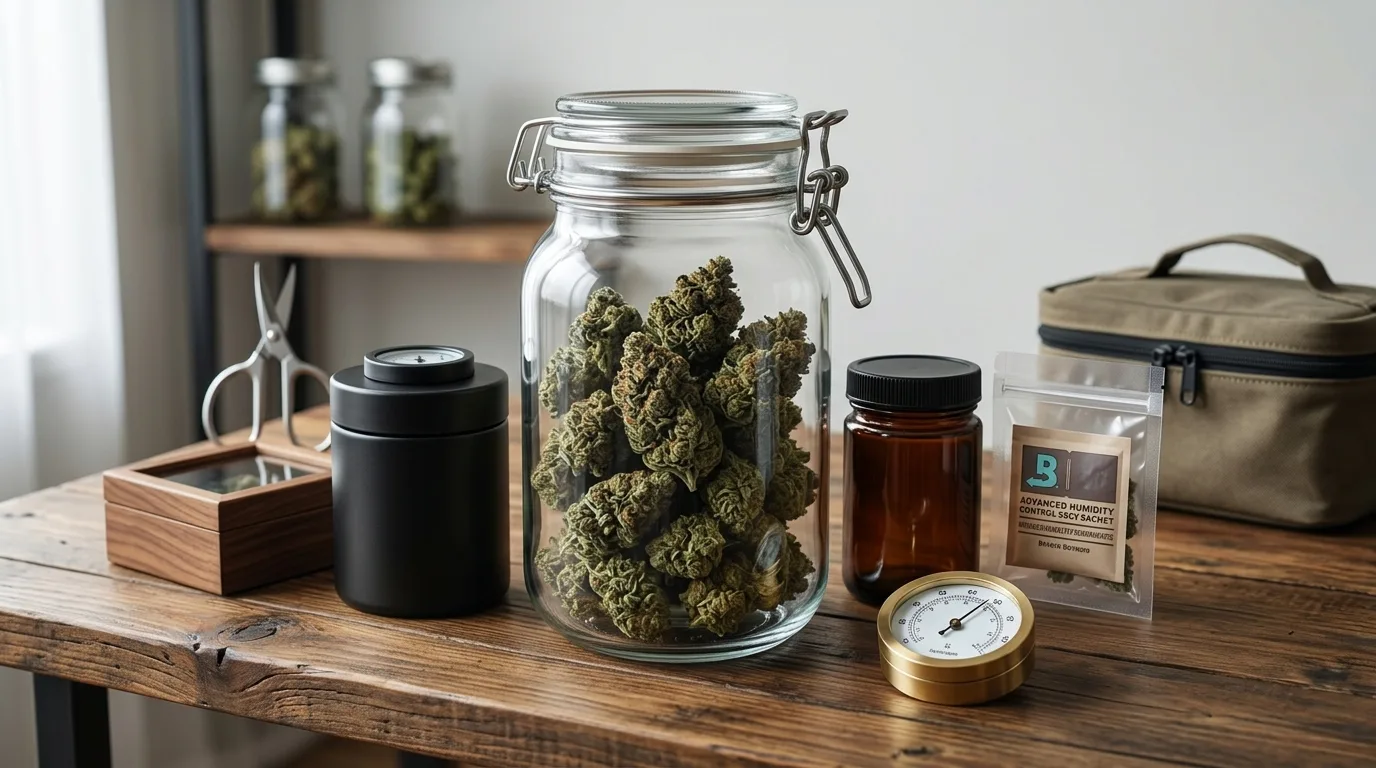
Invest in a small digital hygrometer designed for cannabis storage. These cost between $10-30 and take the guesswork out of monitoring conditions. Place the hygrometer inside your storage container for accurate readings of the microclimate surrounding your flower.
Two-way humidity control packs,Boveda and Integra Boost are the leading brands,are engineered to maintain the 59-63% range automatically. They add or absorb moisture as needed, creating a stable environment. A 4-gram pack works for up to 14 grams of flower, while 8-gram packs handle up to an ounce. Replace them every 2-4 months or when they feel completely rigid.
Without humidity packs, environmental fluctuations will compromise your stash. A container that feels airtight to you still allows minor moisture exchange, and seasonal changes in your home's humidity will affect your cannabis. The small investment in humidity control pays for itself by extending shelf life.
Container Types: What Works and What Doesn't
Not all containers are created equal for cannabis storage. The ideal vessel blocks light, seals airtight, and doesn't interact chemically with your flower. Here's how common options stack up.
Glass Jars: The Gold Standard
Mason jars and purpose-built cannabis storage jars made from dark or UV-resistant glass are the best choice for most consumers. Glass is non-porous, doesn't retain odours, and creates a true airtight seal when paired with quality lids. Amber or violet glass blocks light spectrum wavelengths that degrade cannabinoids, making them superior to clear glass.
Choose jars sized appropriately to your stash. Excess air space accelerates degradation, so a half-full quart jar is worse than a full half-pint. If you're storing multiple strains, label each jar with the strain name and date to track freshness.
Ceramic and Metal Containers
Opaque ceramic containers with rubber-sealed lids offer excellent light protection and aesthetic appeal. They work well but lack the visual convenience of glass,you can't assess your flower without opening the container. Metal tins and containers work similarly, though lower-quality metal can impart subtle flavours over time. Stainless steel is inert and safe.
What to Avoid
Plastic bags and containers are cannabis's worst enemy. Plastic creates static that pulls trichomes off your buds, and most plastics are semi-permeable to oxygen and moisture. The degradation happens faster than you'd expect,often within weeks. Even vacuum-sealed bags allow gradual oxidation.
Plastic grinders that double as storage are equally problematic. The kief you see coating the inside is potency you've lost from your flower. Cigar humidors seem logical but maintain 70-72% humidity, far too high for cannabis. The cedar lining also imparts flavours to your weed.
The Four Environmental Factors You Must Control
Beyond humidity, three other variables determine how long your cannabis remains fresh: temperature, light exposure, and air exposure. Master all four, and you're looking at 6-12 months of shelf life for properly cured flower.
Temperature: Cool and Consistent
Store cannabis between 15-21°C (60-70°F). Higher temperatures accelerate cannabinoid degradation and terpene evaporation. THC begins converting to CBN,a less psychoactive cannabinoid,at sustained temperatures above 25°C. Lower temperatures slow degradation but refrigeration introduces new problems we'll address shortly.
Consistency matters as much as the temperature itself. Fluctuations cause condensation inside containers, spiking humidity and promoting mould. Avoid storage locations near heat sources, windows, or areas with temperature swings. A cool, dark cupboard in an interior room maintains the steadiest conditions in most homes.
Light: Total Darkness Is Best
UV light and even ambient visible light degrade cannabinoids through photochemical reactions. A 1970s study published in the Journal of Pharmacy and Pharmacology found that light was the single largest factor in cannabinoid degradation, surpassing temperature and air exposure when uncontrolled.
UV-resistant glass helps, but complete darkness is ideal. Store your containers inside a drawer, cabinet, or dedicated storage box. If you display your collection, ensure it's away from windows and use LED lighting rather than incandescent bulbs, which emit more heat and UV.
Air Exposure: Minimize Oxygen Contact
Oxygen degrades cannabinoids through oxidation, the same process that turns cut apples brown. Every time you open a container, you introduce fresh oxygen. While some air exchange is necessary during curing, long-term storage requires minimizing exposure.
Fill containers to 75-80% capacity. Some air space allows for humidity pack function, but excessive headspace means more oxygen contact. Open containers only when necessary, and avoid leaving them uncapped while you prepare to consume. Nitrogen-flushed containers used by some commercial brands further reduce oxidation, though they're overkill for most personal storage.
How Long Does Weed Actually Keep?
Properly stored cannabis flower maintains peak quality for 6-12 months. After one year, you'll notice diminished potency and muted terpene profiles even with perfect storage. By 18-24 months, most flower has degraded significantly, though it remains safe to consume if no mould developed.
This timeline assumes properly cured flower stored under ideal conditions. Poorly cured cannabis or flower that was already degraded when purchased will decline faster. Premium strains from quality dispensaries that emphasize proper curing and handling give you the longest storage runway.
Signs Your Weed Has Gone Bad
Brittle, crumbly texture indicates terpene loss and dehydration. The flower may still contain cannabinoids but will be harsh and flavourless. Musty or hay-like smells signal improper curing or the early stages of mould. Any visible mould,white, green, or black fuzzy growth,means the entire batch must be discarded. Mould contamination isn't always visible, so trust your nose as much as your eyes.
Discolouration toward brown or yellow suggests oxidation and cannabinoid degradation. Fresh flower should retain vibrant greens and purples depending on the strain. If your Purple Runtz looks tan instead of violet, storage conditions failed.
Special Storage Scenarios: Concentrates, Edibles, and Pre-Rolls
While flower requires specific humidity control, other cannabis products have different storage needs that often get overlooked.
Concentrates and Extracts
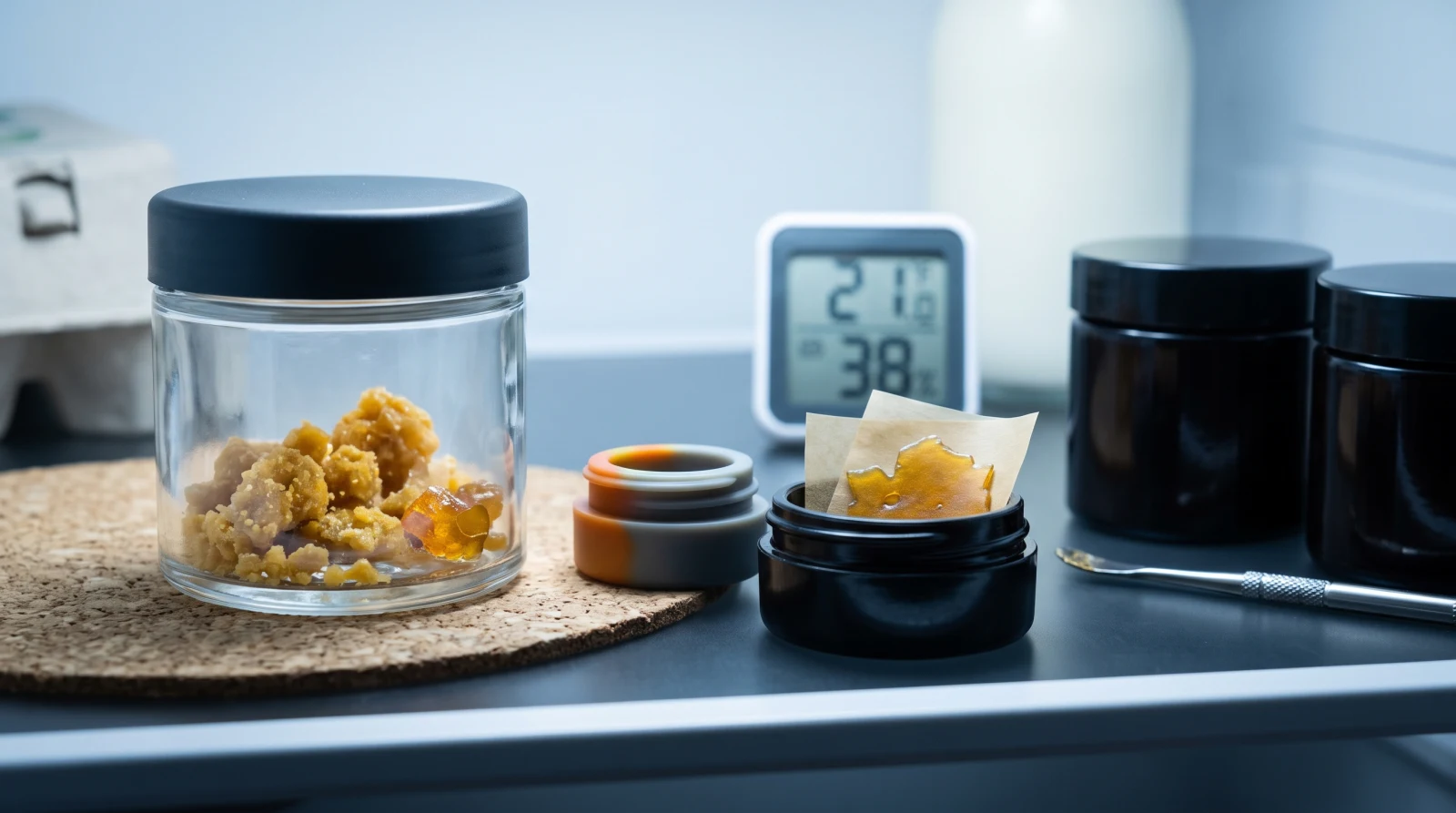
Shatter, wax, live resin, and other concentrates require airtight containers but no humidity control. Store them in the refrigerator or freezer in silicone containers or parchment paper inside glass jars. Cold temperatures prevent terpene evaporation without the moisture concerns that affect flower. Always allow refrigerated concentrates to reach room temperature before opening to prevent condensation.
Edibles
THC gummies and baked goods follow standard food storage guidelines. Keep them sealed in their original packaging or airtight containers away from heat and light. Refrigerate items with dairy or fresh ingredients. Most commercially produced edibles like Galaxy Gummies remain stable at room temperature for months due to preservatives, but always check expiration dates.
Pre-Rolls
Pre-rolled joints dry out faster than intact buds because ground cannabis has more surface area exposed to air. Store them in their tubes or airtight containers with a small humidity pack. Without protection, pre-rolls become harsh and difficult to smoke within weeks. Some consumers store them in the refrigerator inside airtight tubes to extend freshness.
Common Storage Mistakes That Ruin Good Weed
Even experienced consumers make these errors that compromise their stash. Avoid these pitfalls to maximize your flower's lifespan.
Freezing Cannabis
The freezer seems logical,cold preserves food, so why not weed? The problem is ice crystal formation. Freezing causes trichomes to become brittle and break off when handled. You'll lose potency and create a mess of loose kief. The only time freezing makes sense is for concentrates or when making bubble hash, where trichome removal is the goal.
Storing Different Strains Together
Mixing strains in one container causes terpene cross-contamination. The unique flavour profiles you paid for blend into a generic cannabis smell. Keep strains separated in individual containers, especially when storing premium flower with distinct characteristics. This is particularly important when you're comparing effects between indica and sativa varieties.
Over-Handling Your Flower
Every time you touch cannabis buds, you transfer oils from your skin and knock off trichomes. Use clean tweezers or gloves when handling flower you're storing long-term. Minimize how often you open containers, especially if you're only removing small amounts. Consider dividing large purchases into a working container you access frequently and sealed long-term storage.
Storing Near Appliances or Vents
Heat from refrigerators, ovens, water heaters, and electronics creates temperature fluctuations. HVAC vents cause the same problem. Even if the average temperature seems acceptable, cycling between warm and cool creates condensation. Choose storage locations in interior spaces away from mechanical systems.
Creating a Humidity Reference Chart for Your Conditions
Environmental conditions vary by region and season. Here's how different humidity levels affect cannabis storage:
| Relative Humidity | Effect on Cannabis | Storage Viability |
|---|---|---|
| Below 55% RH | Trichomes degrade, terpenes evaporate, flower becomes brittle | Poor - degradation accelerates |
| 55-58% RH | Slightly dry but acceptable for short-term storage | Acceptable - monitor closely |
| 59-63% RH | Optimal - preserves terpenes and prevents mould | Ideal - maximum shelf life |
| 64-67% RH | Slightly elevated moisture, monitor for mould | Risky - acceptable only short-term |
| Above 67% RH | High mould and mildew risk, flower may feel damp | Unsafe - requires immediate correction |
Use this chart to assess your storage conditions. If you live in a particularly dry or humid climate, humidity packs become essential rather than optional. Canadian winters with indoor heating can drop ambient humidity below 30%, while coastal summers might push it above 70%. Two-way humidity control compensates for these extremes.
Premium Cannabis Deserves Premium Storage
Stock up on top-shelf flower that's been properly cured and handled from our British Columbia suppliers. When you start with quality, proper storage keeps it that way.
Browse BC SelectionAdvanced Tips for Serious Collectors
If you maintain a substantial collection or invest in rare cultivars, these advanced techniques take storage to the next level.
Nitrogen Flushing
Nitrogen is an inert gas that displaces oxygen in storage containers. Commercial nitrogen canisters designed for wine preservation work for cannabis. After filling your jar, spray a short burst of nitrogen before sealing. This creates an oxygen-free environment that dramatically slows degradation. It's overkill for everyday storage but worthwhile for expensive or rare strains you plan to store long-term.
Vacuum Sealing for Extended Storage
While vacuum sealing in plastic bags is problematic, vacuum-sealed glass containers exist specifically for cannabis. These use a pump to remove air from jars with specialized lids. Combined with humidity packs and dark glass, vacuum sealing can extend viable storage beyond 12 months. The initial investment is significant, but collectors storing multiple ounces find it worthwhile.
Rotation Systems
Implement a first-in, first-out rotation like restaurants use for inventory. Date every purchase and consume older stock first. This prevents the common scenario where you discover forgotten flower that's been degrading for months while you enjoyed newer pickups. A simple label on each jar with the purchase date keeps your rotation organized.
Partially. Humidity packs will rehydrate dry cannabis to make it less brittle and easier to handle, but they cannot restore evaporated terpenes. The flavour and aroma will remain diminished even after rehydration. Think of it as making old weed smokeable rather than truly fresh. Prevention through proper storage from the start is far more effective than attempted revival.
Freezing cannabis for long-term storage damages trichomes through ice crystal formation and makes them brittle. While frozen cannabis remains safe to consume indefinitely, you'll lose significant potency from trichome degradation every time you handle it. For flower, proper room-temperature storage at 59-63% RH is superior to freezing. Reserve freezing for concentrates or when making ice water hash where trichome removal is intentional.
Refrigeration creates more problems than it solves for cannabis flower. The temperature fluctuations when opening the fridge cause condensation inside containers, spiking humidity and promoting mould. Additionally, cannabis absorbs odours, and refrigerators contain strong food smells. The ideal storage temperature of 15-21°C is achievable in most homes without refrigeration. Save the fridge for concentrates and extracts only.
A 32-ounce (1-quart) mason jar provides optimal space for an ounce of flower with minimal excess air. You want the container roughly 75-80% full, which allows room for a humidity pack while minimizing oxygen exposure. If you're storing multiple strains, four 8-ounce jars work better than one large container, preventing cross-contamination of terpene profiles and allowing you to access one strain without exposing others to air.
Replace Boveda or Integra Boost packs every 2-4 months, or when they become completely rigid. The packs contain a salt solution that gradually loses effectiveness. You'll know they're spent when they feel hard like a cracker rather than slightly soft and pliable. Using expired packs provides no humidity control, allowing your cannabis to degrade. Mark a replacement date on your calendar when you insert fresh packs to stay ahead of degradation.
Properly stored cannabis remains safe to consume for years, but quality declines significantly after 12 months regardless of storage conditions. Cannabinoids naturally convert,THC degrades to CBN, reducing psychoactive potency. Terpenes continue evaporating slowly even in sealed containers. By 18-24 months, most flower has lost enough character that it's noticeably inferior to fresh product. For maximum experience, consume within 6-12 months and refresh your supply regularly rather than hoarding ageing flower.
The Bottom Line: Proper Storage Protects Your Investment
Cannabis storage isn't complicated, but it requires intention. The 59-63% relative humidity target, combined with cool temperatures, total darkness, and minimal air exposure, preserves your flower's potency and flavour for months. Glass containers with humidity packs cost less than a single eighth but protect everything you purchase afterward.
Think of storage as insurance for your investment. Whether you're picking up budget-friendly options or premium cultivars, degraded cannabis is wasted money. A $30 investment in proper storage equipment pays for itself the first time you open a jar six months later and find flower that's as fresh as the day you bought it. The terpene-rich aroma, the sticky resin, the full-spectrum effects,they're all preserved when you control the four environmental factors.
Start implementing these practices with your next purchase. Your future self will thank you when you're enjoying properly preserved cannabis instead of harsh, flavourless smoke from degraded flower. Ready to stock up on premium flower that's worth storing properly? Browse our selection of mail-order cannabis delivered across Canada, handled with care from our suppliers to your door.