You've been buying flower for years. You know your indicas from your sativas, you've got a favourite grinder, and you're starting to see concentrates everywhere,shatter, wax, live resin,but there's one problem: every tutorial assumes you're ready to drop $300 on a dab rig, torch, and accessories. You're not. You just want to know if you can try this stuff without committing to a whole new consumption method.
Good news: you absolutely can dab without a rig. Some methods work surprisingly well with gear you might already own. Others are janky workarounds that technically function but aren't worth the hassle. This guide covers both, honestly, so you can make an informed choice about whether concentrates fit into your current setup or whether it's worth investing in proper equipment down the line.
Why You'd Want to Dab Without a Rig in the First Place
Before we dive into methods, let's address the elephant in the room: dab rigs exist for good reasons. They're purpose-built to vapourize concentrates at precise temperatures, preserving flavour and maximizing potency. But they're also bulky, conspicuous, and expensive. If you're just dipping your toes into concentrates, or if you travel frequently, or if you simply don't want another piece of glassware cluttering your space, alternative methods make perfect sense.
Concentrates like shatter and wax deliver cannabinoid doses that flower can't match gram-for-gram. A tiny rice-grain-sized dab can hit harder than an entire joint, which means your stash lasts longer and your lungs process less material overall. The appeal is obvious. The barrier to entry shouldn't be a shopping list that looks like a chemistry lab starter kit.
What Counts as "Dabbing" Anyway?
Dabbing, at its core, is flash-vapourizing a cannabis concentrate at a temperature high enough to release cannabinoids and terpenes but low enough to avoid combustion. That's it. The rig is just one tool for achieving that outcome. Any method that heats concentrate to roughly 315-400°C (600-750°F) without burning it qualifies. Some of the methods below hit that sweet spot cleanly. Others get close enough for casual use. A few miss the mark entirely but remain popular because, well, people try them anyway.
Method 1: The Nectar Collector (The Most Rig-Like Alternative)
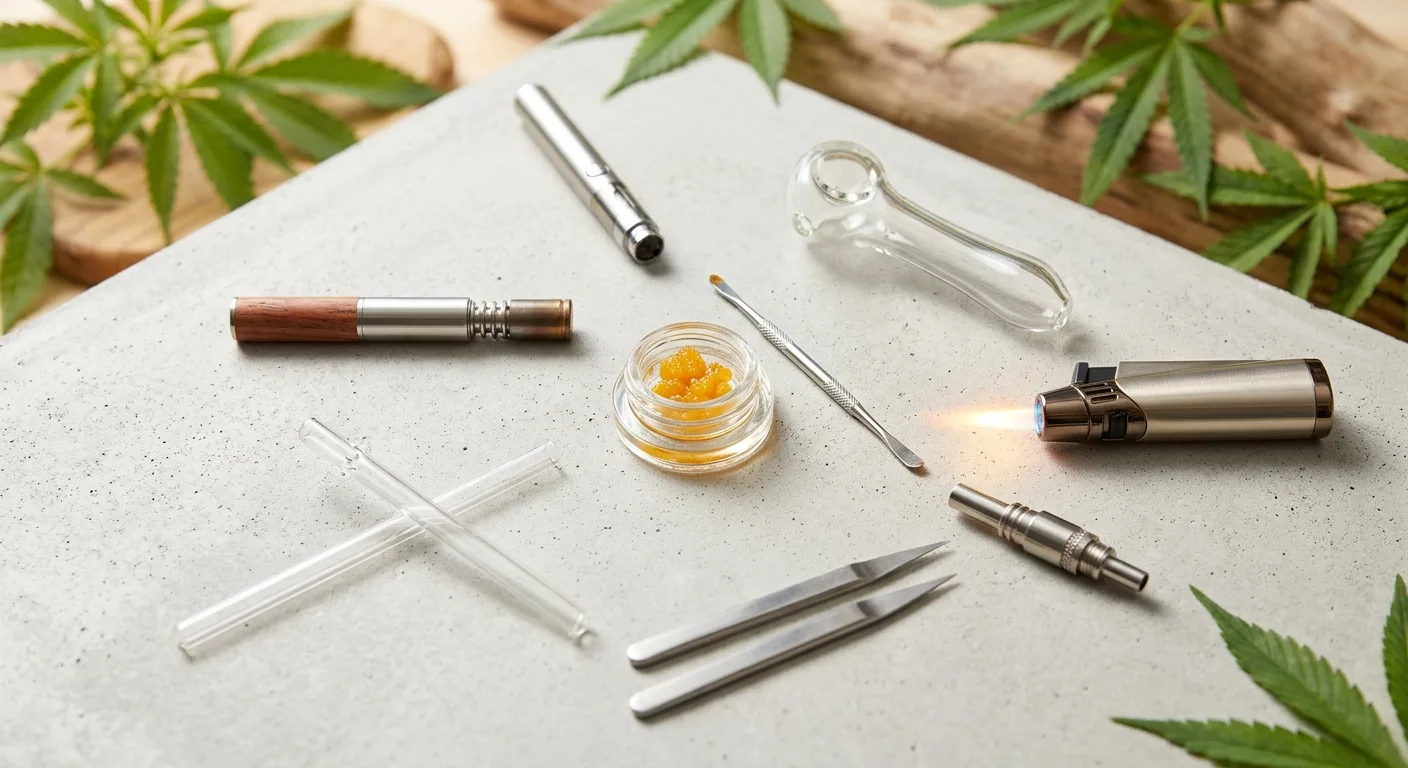
A nectar collector is essentially a dab rig rearranged into a vertical straw. Instead of dropping concentrate onto a heated nail, you heat the tip of the collector and touch it directly to your concentrate on a heat-safe surface. It's portable, less fragile than a rig, and costs between $30-$80 for a decent glass or silicone model.
This is the method I recommend most often to flower smokers curious about concentrates. It requires a torch (the same butane torch you'd use for a rig), but the learning curve is gentler. You control the interaction between heat and concentrate in real time, which means you can start slow and avoid wasting product while you figure out your technique.
How to Use a Nectar Collector Properly
Heat the titanium or quartz tip with your torch for 20-30 seconds until it glows faintly. Let it cool for 5-10 seconds,this is crucial, because a too-hot tip will scorch your concentrate and taste like burnt rubber. Place a small amount of concentrate (about the size of a peppercorn) on a silicone mat or glass dish. Touch the heated tip to the concentrate while inhaling slowly through the mouthpiece. The concentrate should vapourize on contact, producing smooth vapour without smoke.
The main advantage here is control. Unlike a rig where you commit to a full dab the moment you drop it onto the nail, a nectar collector lets you metre your dose in real time. If you're getting too high, you simply stop touching the tip to your product. If you want more, you go back in. It's the training wheels version of dabbing, and there's no shame in that.
Method 2: Dab Pen or Wax Vape (The Zero-Torch Solution)
Dab pens are battery-powered devices with a heating chamber designed specifically for concentrates. They look like oversized vape pens, cost anywhere from $50-$200, and require zero flame. You load a small amount of concentrate into the chamber, press a button, and inhale. That's it. No torch, no glass, no ritual.
This is the method for people who value convenience over everything else. The vapour quality won't match a proper rig or even a nectar collector, and you'll go through coils or atomizers that need replacing every few weeks, but the tradeoff is simplicity. You can use a dab pen in situations where pulling out a torch would raise eyebrows.
What to Look for in a Dab Pen
Avoid anything under $40,those devices use cheap coils that burn out fast and taste metallic. Look for pens with ceramic or quartz chambers, adjustable temperature settings, and replaceable atomizers. Brands like Puffco, KandyPens, and Yocan dominate the mid-range market for good reason. A quality pen will heat your concentrate evenly without combusting it, and the vapour should taste clean, not like burning wire.
The downsides are real, though. Dab pens waste concentrate. The chamber walls get coated with residue that you can't fully reclaim, and over time that buildup affects flavour. You'll also never get the full terpene profile you'd taste from a low-temperature dab on a proper rig. But if your priority is portability and discretion, this tradeoff makes sense.
Method 3: The "Knife Dabs" or Hot Knives Method (Functional But Dated)
This is the OG concentrate method from before dab rigs became mainstream. You heat two butter knives on a stove element or with a torch, sandwich a bit of concentrate between them, and inhale the vapour through a funnel or bottle with the bottom cut off. It's crude, it works, and it's definitely not the first choice if you have other options.
I'm including this method because people still do it, especially in situations where they have concentrate but zero proper equipment. It's the true zero-dollar option if you're already in a kitchen. But it comes with caveats that matter.
Why Hot Knives Are a Last Resort, Not a Lifestyle
First, temperature control is nonexistent. You're guessing how hot the knives are based on visual cues, which means you're likely overheating and destroying the terpenes that give concentrates their flavour. Second, the setup is awkward,you need both hands for the knives and somehow have to inhale at the same time, which usually involves a friend or some DIY bottle contraption. Third, you're heating metal that wasn't designed for this purpose, and cheap stainless steel can off-gas at high temperatures.
That said, if you're in a pinch and someone hands you a gram of shatter at a cottage with no other gear, hot knives will get the job done. Just don't make it your regular method. It's the cannabis equivalent of opening a beer with a lighter,impressive that it works, questionable as a long-term strategy.
Method 4: Adding Concentrate to Flower (The Hybrid Approach)
This isn't dabbing in the pure sense, but it's how a lot of flower smokers first experience concentrates without changing their routine. You take a small piece of shatter or wax, break it up, and layer it into a bowl or joint with your regular cannabis. The flower acts as a wick and buffer, and the concentrate boosts the potency significantly.
This method works best with crumbly concentrates like wax or budder. Shatter can be layered in thin sheets, but it's trickier to distribute evenly. Avoid putting concentrate on the outside of joints,it doesn't burn efficiently and you'll waste most of it. Sandwiching it between layers of flower in the middle of the joint or packing it into the centre of a bowl gives better results.
The Real-World Performance of Flower + Concentrate
Expect a significantly stronger high than flower alone, but don't expect the clean, flavour-forward experience of vapourizing concentrate properly. You're combusting everything together, which means you're losing the nuanced terpene profiles that make concentrates interesting. What you gain is simplicity,no new gear, no learning curve, just more potent smoke using tools you already know.
This approach makes sense if you're trying to stretch a small amount of concentrate or if you're simply curious about whether you like the effects before investing in dedicated equipment. It's also a good way to introduce friends to concentrates without overwhelming them with torches and terminology. Just dose conservatively,a little goes a long way, and greening out from overly potent smoke is no fun.
Method 5: The Dry Herb Vape Sandwich (For Vapourizer Owners)
If you already own a dry herb vapourizer like a Pax, Arizer, or Volcano, you can use it for concentrates with a simple technique: sandwich a small amount of concentrate between layers of flower. The flower prevents the concentrate from melting directly onto the heating element and gumming up your device, while still allowing it to vapourize at the same temperature as the flower.
This method only works with vapourizers that reach at least 200°C (390°F), and even then, results vary by device. Desktop vapes like the Volcano handle this better than portable units because they have more consistent heating. Portable vapes with conduction heating (where the chamber walls heat the material) tend to create uneven results,you'll get some vapour but also some wasted concentrate that melts into crevices.
When This Method Makes Sense
If you're already a committed vapourizer user and someone offers you concentrate, this lets you try it without buying new gear. It won't give you the full dabbing experience,the temperatures are lower than optimal for concentrates, so the vapour will be thinner and the flavour more muted,but it's a functional compromise. Just be prepared to clean your vapourizer more thoroughly afterward, as concentrate residue is stickier than flower resin.
Some vapourizers come with concentrate pads or chambers designed specifically for this purpose. If yours does, use them. If not, the flower sandwich method prevents the worst of the mess while still letting you consume the concentrate effectively enough.
Method 6: Twaxing a Joint (The Wasteful Showoff Method)
Twaxing means coating the outside of a joint with concentrate, usually by heating shatter or wax slightly to make it pliable, then wrapping it around the paper like a sticky ribbon. It looks impressive in videos. It's wildly inefficient in practice.
Here's why: the concentrate on the outside of a joint burns, not vapourizes. You're applying open flame directly to it, which destroys most of the cannabinoids and terpenes before they reach your lungs. The high you get comes mostly from whatever concentrate happens to melt inward and the flower inside the joint. The rest goes up in smoke that you don't inhale. It's the cannabis equivalent of lighting money on fire for the aesthetic.
I'm listing this method because people ask about it constantly, but I can't recommend it with a straight face. If you want to combine flower and concentrate, put the concentrate inside the joint, not on it. You'll get better results, waste less product, and skip the sticky fingers.
Two Methods You'll See Recommended That Are Actually Terrible Ideas
The "Healthstone" or Glass Screen Method
This involves putting a porous stone or glass screen in a regular bowl, placing concentrate on top, and heating it with a lighter while inhaling. In theory, the stone vapourizes the concentrate. In practice, you're applying direct flame to concentrate, which means you're combusting it, not vapourizing it. The taste is harsh, the efficiency is poor, and you're better off just mixing the concentrate with flower in a regular bowl. Skip this entirely.
The "Crack Pipe" or Meth Pipe Method
Some people suggest using an oil burner pipe (yes, the glass pipes associated with hard drugs) for concentrates. Does it technically work? Sure, in the same way that hot knives work,it heats concentrate until vapour happens. Should you do it? Absolutely not, for reasons that go beyond function. The optics alone make this a non-starter, and there's no situation where this is your best option if you have litreally any other method available.
What You Actually Need to Get Started (The Real Minimum Gear)
If you've read this far and you're thinking about trying concentrates with intention rather than just improvising, here's what the actual minimum viable setup looks like without committing to a full rig:
Budget Option ($40-$60): A basic nectar collector with a titanium tip and a small butane torch. Add a silicone mat for a heat-safe surface. This gives you real dabbing capability for less than the cost of a nice grinder. You can find these at most head shops or online.
No-Torch Option ($50-$100): A mid-range dab pen with a ceramic chamber and adjustable temperature. Look for brands with good coil availability so you're not stuck when the atomizer burns out. This is the convenience play,less flavour than a nectar collector, but you can use it anywhere without raising eyebrows.
Zero-Dollar Option (If You Already Smoke Flower): Mix small amounts of concentrate into your regular bowls or joints. It's not elegant, but it works, and it costs you nothing in new equipment. This is the test-drive approach before deciding whether concentrates are worth pursuing further.
None of these options require investing in elaborate setups, and all of them give you a legitimate sense of what concentrates offer compared to flower. If you decide you love the experience, you can always upgrade to a proper rig later. If you decide concentrates aren't your thing, you're out less than the cost of an ounce of decent flower.
Temperature Matters More Than You Think (Even Without a Rig)
One advantage proper dab rigs have is temperature control. Electronic nails let you set precise temperatures, and even manual nails with torches follow timing protocols that land you in the right range. When you're dabbing without a rig, you lose that precision, but understanding the temperature zones still helps you get better results with improvised methods.
Low temp (315-370°C / 600-700°F): Maximum flavour, smoothest vapour, but requires patience and proper technique. Nectar collectors and quality dab pens can hit this range if you're careful. This is where you taste the actual terpene profile of your concentrate rather than just getting high.
Medium temp (370-425°C / 700-800°F): Balanced flavour and potency with thicker vapour production. This is the sweet spot for most people and where most of the alternative methods land when used correctly. You get decent taste without sacrificing cloud production.
High temp (425°C+ / 800°F+): Harsh vapour, burnt terpenes, but guaranteed vapourization with no wasted concentrate. Hot knives usually land here, as do cheap dab pens without temperature control. You'll get high, but it won't taste good, and you're destroying the compounds that make concentrates interesting.
The point here is that even with budget gear, you can aim for better temperatures by letting things cool slightly before applying concentrate. That five-second cooldown after heating a nectar collector tip? That's the difference between tasting lemon and pine or tasting burnt popcorn.
How Much Concentrate Do You Actually Use Per Dab?
This trips up a lot of flower smokers trying concentrates for the first time. You're used to packing bowls and rolling joints measured in fractions of a gram. Concentrate doses are measured in rice grains and peppercorns. A proper dab is usually 10-30mg for most people, which looks tiny but delivers cannabinoid doses equivalent to much larger amounts of flower.
If you're using a nectar collector, start with a piece of shatter the size of a match head. If you're mixing concentrate into flower, a crumble chunk the size of a small pea is plenty for a bowl. If you're using a dab pen, load just enough to cover the coil,usually about half the chamber. Dosing conservatively isn't just about avoiding uncomfortable highs; it's about making your concentrate last and learning how your body responds.
Concentrates typically test between 60-90% THC, compared to flower's 15-30%. That means a 20mg dab of 80% concentrate contains 16mg of THC,roughly equivalent to smoking a third of a gram of 20% flower. The math matters because overestimating how much you need is expensive and unpleasant.
The Storage Problem Nobody Mentions
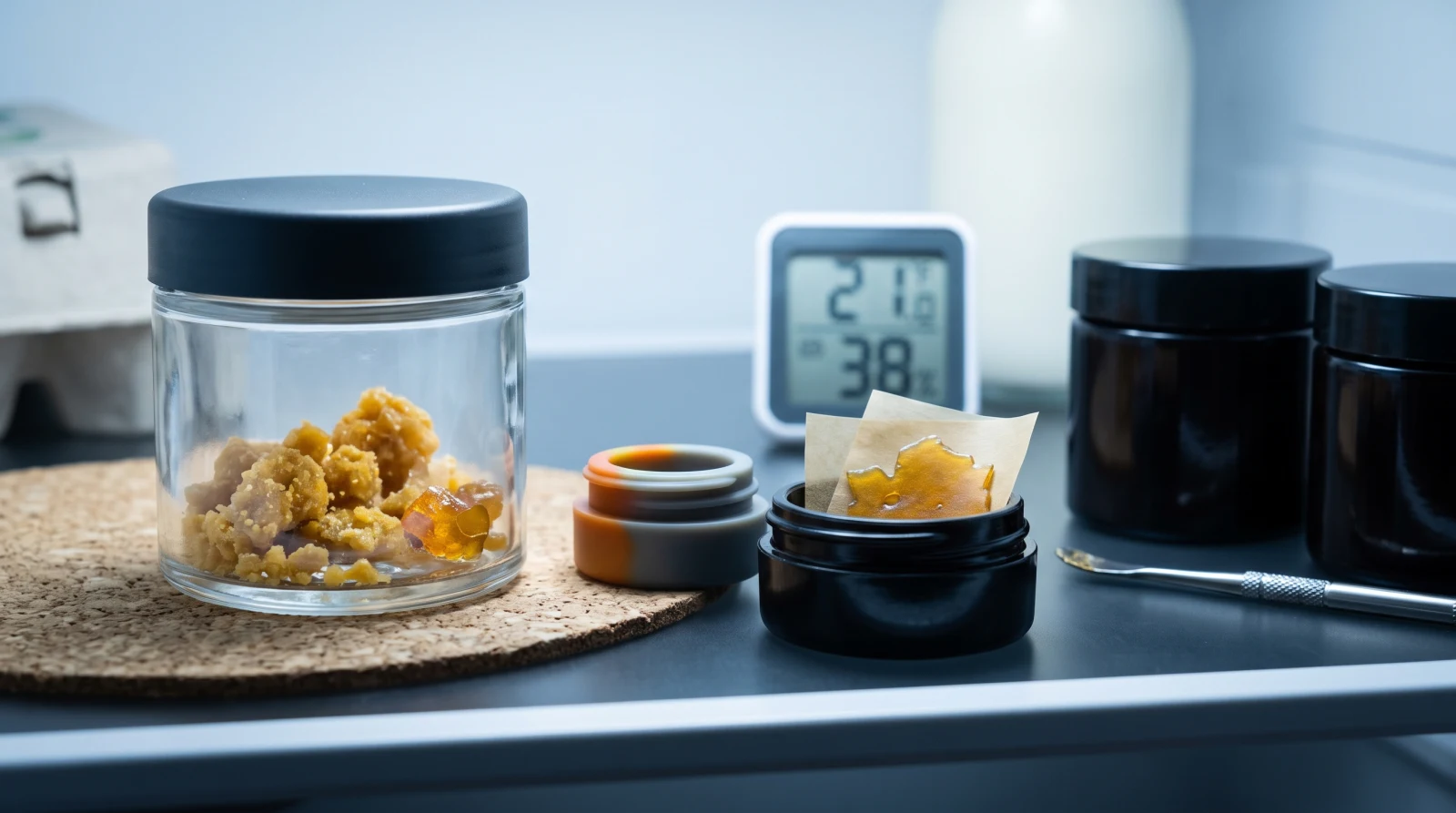
Here's something that catches flower smokers off-guard: concentrates are sticky and annoying to store. Flower sits in a jar and behaves. Shatter needs to stay cold or it turns to sap. Wax sticks to everything. Budder melts if you leave it in a warm car. If you're trying concentrates without committing to a full setup, you also need a storage plan.
Keep concentrates in silicone containers in a cool, dark place,your fridge works perfectly. Use parchment paper if you're breaking off pieces for mixing with flower. Keep a dedicated dab tool (a small metal or glass stick with a flat or pointed end) for handling sticky concentrates so you're not using random household objects and making a mess.
This seems obvious in retrospect, but first-time concentrate buyers often show up with a gram of shatter, realize they can't just break pieces off with their fingers, and end up with sticky residue all over their phone, grinder, and whatever else they were holding. A $3 dab tool prevents this entirely and makes every method on this list cleaner to execute.
When You Should Just Buy the Rig (And Stop Improvising)
Alternative methods work for experimentation, occasional use, and situations where portability matters. But if you find yourself buying concentrate regularly, or if you genuinely prefer the cleaner high that concentrates deliver compared to flower, the rig stops being an expense and starts being an investment that pays for itself in better experiences.
Here's when the tipping point happens: if you're going through a gram of concentrate every week or two, a basic rig setup ($100-$150 for a decent glass piece, nail, and torch) will improve your quality of life enough to justify the cost. You'll taste your concentrates properly. You'll waste less product. You'll stop fumbling with improvised methods that work "good enough" but never great.
Think of alternative methods as試用 (trial) versions. They give you enough experience to know whether dabbing fits your consumption style. If it does, upgrading to proper equipment is the logical next step. If it doesn't, you've learned that without spending hundreds of dollars on gear you'll never use. That's the point of this guide,informed decisions based on what you actually need, not what the industry assumes everyone wants.
The Quality Question: Does Method Affect Potency?
Short answer: no, but kind of. The THC in your concentrate doesn't disappear because you used a nectar collector instead of a $400 rig. But the efficiency of delivery varies by method, which effectively changes how much of that potency you actually absorb.
Proper vapourization at controlled temperatures converts more cannabinoids into inhalable vapour with less waste. Combustion methods (like hot knives or twaxing joints) destroy some percentage through burning. Mixing concentrate with flower lands somewhere in the middle,you're absorbing cannabinoids from both, but combusting everything together rather than cleanly vapourizing.
In practical terms, this means a dab pen might require slightly more concentrate than a nectar collector to achieve the same effect, and hot knives might require more still. But we're talking about differences of 10-20%, not double or half. As long as you're getting vapour (or even smoke) into your lungs, you're getting high. The methods differ in efficiency, flavour, and convenience more than raw effectiveness.
Ready to Try Concentrates?
Browse our selection of premium shatter, wax, and hash. Same-day delivery in Ottawa and Gatineau, Canada-wide shipping available.
Shop ConcentratesFrequently Asked Questions About Dabbing Without a Rig
Not effectively. Regular lighters don't produce enough heat to vapourize concentrates properly. You'll end up combusting the concentrate instead of vapourizing it, which wastes product and tastes harsh. If you're trying to dab without a rig, a nectar collector with a small butane torch or a battery-powered dab pen are the minimum viable options.
A basic nectar collector costs $30-$80, while a functional dab rig setup (glass piece, nail, torch, and accessories) runs $100-$300. Nectar collectors are cheaper because they're simpler devices with fewer components. They're also more portable and harder to break than traditional rigs, making them a good entry point for concentrate beginners.
Not significantly. The THC content of your concentrate doesn't change based on consumption method. However, improper heating,too hot or too cold,can reduce efficiency, meaning you absorb less of the available cannabinoids. A proper rig with temperature control optimizes efficiency, but alternative methods still deliver the majority of the concentrate's potency if used correctly.
Yes, but put it inside the joint between layers of flower, not on the outside. Concentrate on the exterior burns away before you inhale it, wasting most of the product. Sandwiching shatter or wax in the middle of your flower allows it to melt into the joint as it burns, delivering the cannabinoids more effectively. Expect a much stronger high than flower alone.