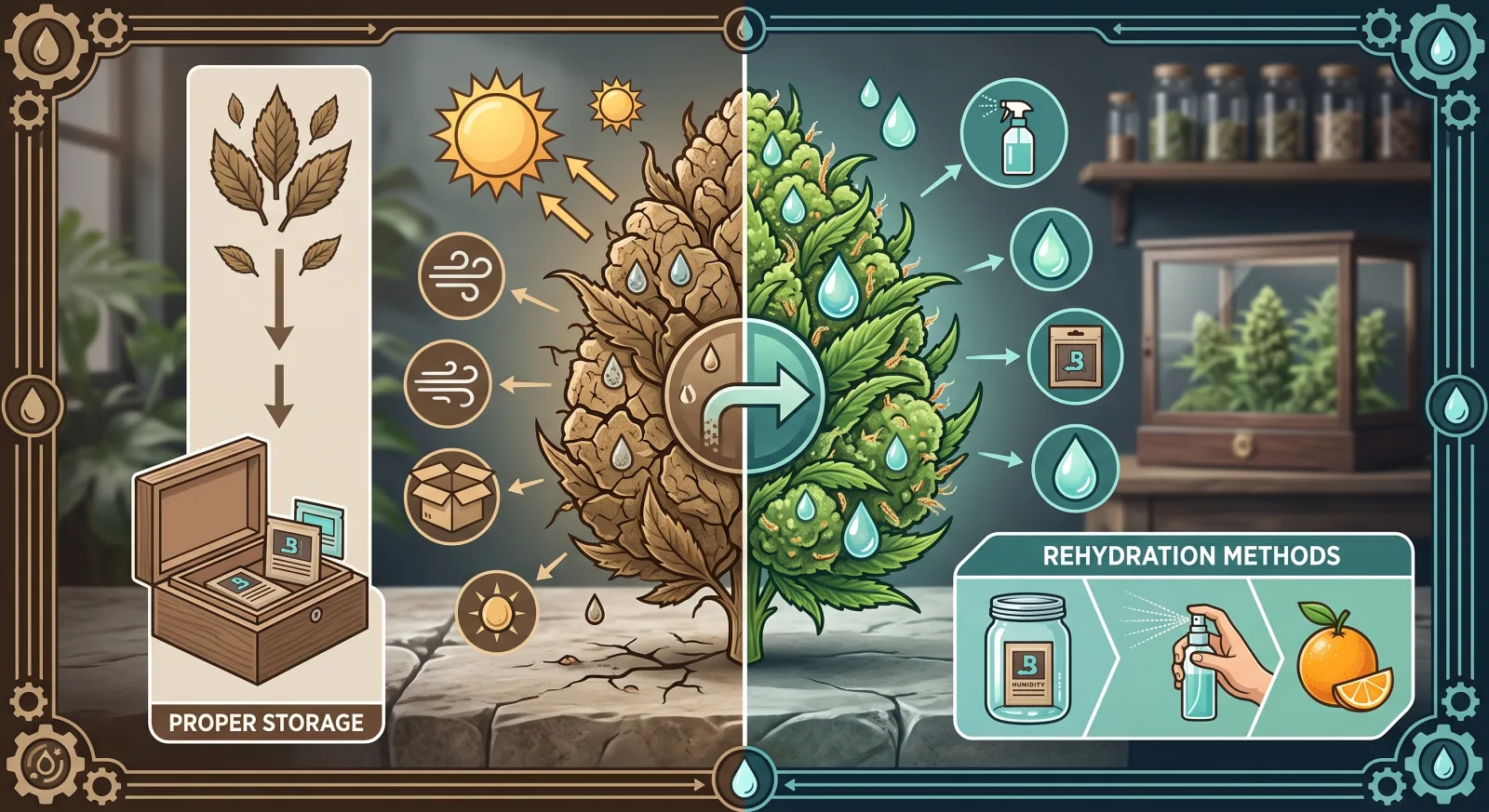
You just opened your fresh bag of cannabis and instead of the sticky, slightly springy buds you expected, you're greeted with brittle, crumbly flower that turns to dust at the slightest touch. Before you assume your mail order cannabis arrived in poor condition or that your local dispensary sold you old product, take a breath. Dry weed is one of the most common complaints in the cannabis world, but it's rarely about quality at the source. In fact, understanding why your weed is dry and how to fix it properly can save you from wasting good flower and help you become a more informed consumer.
This comprehensive guide walks through every reason your cannabis might have lost its moisture, from storage mistakes to environmental factors you didn't even know were at play. More importantly, we'll cover the proven rehydration methods that actually work, and the common "fixes" that will ruin your flower entirely. Whether you're in Ottawa, Vancouver, or anywhere across Canada, these principles apply to every gram you purchase.
The Science Behind Cannabis Moisture Content
Cannabis flower contains between 5% and 15% moisture when properly cured, with the ideal range sitting around 10-12% for most consumers. This isn't arbitrary. At this moisture level, the trichomes remain intact, the terpenes stay volatile and aromatic, and the flower burns smoothly without being harsh. Too dry, and you lose flavour, potency degrades faster, and the smoke becomes acrid. Too moist, and you risk mold growth and an unpleasant smoking experience.
The drying process begins the moment cannabis is harvested. Professional cultivators dry their flower in controlled environments, typically at 60-65°F with 55-62% relative humidity for 7-14 days. After drying, the curing process continues for weeks or months in sealed containers, allowing chlorophyll to break down and terpenes to mature. This is where most premium flower gets its character.
What Happens When Cannabis Loses Too Much Moisture
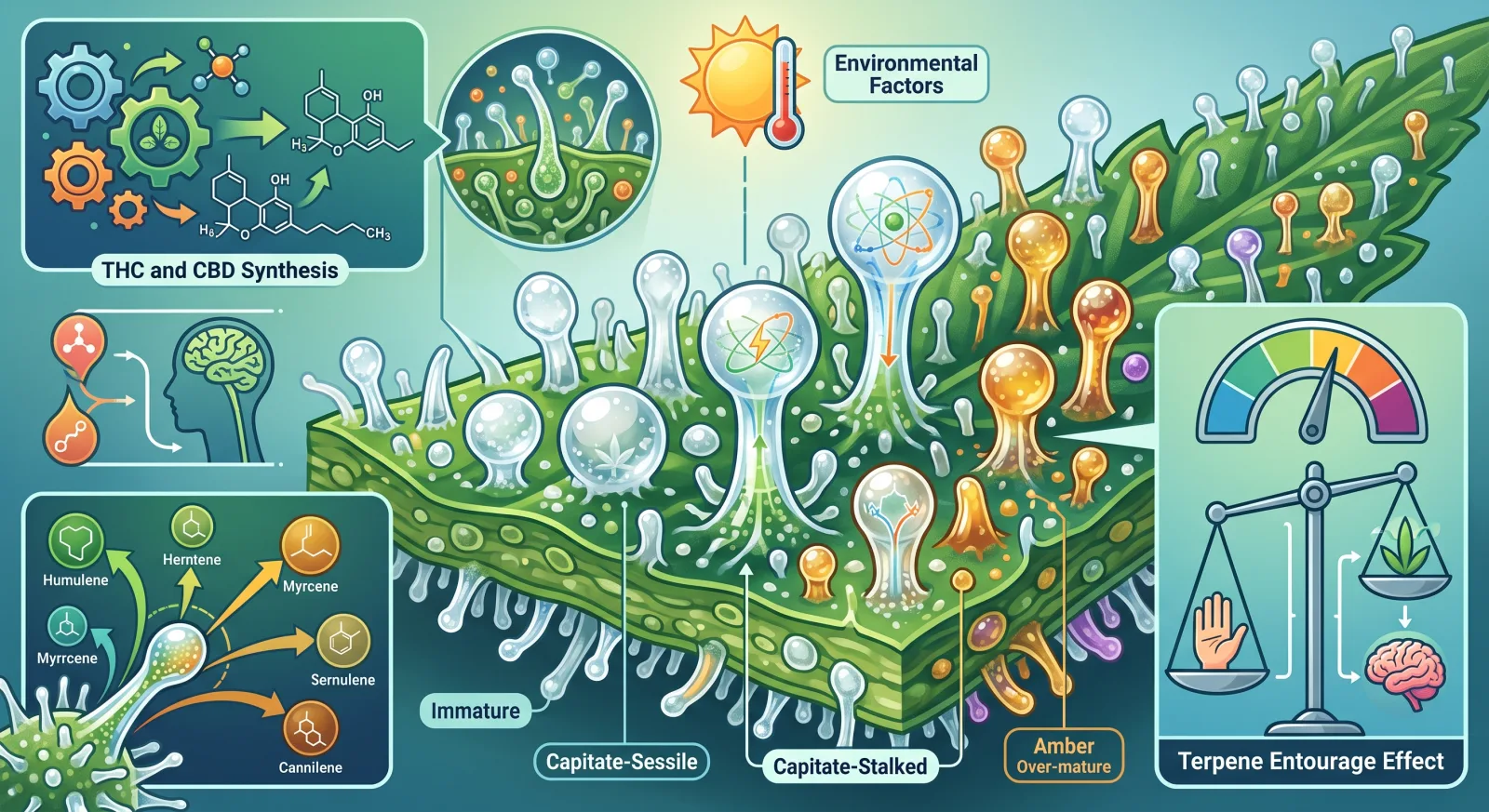
When your weed crosses below that 5% moisture threshold, several things happen simultaneously. The trichome heads become brittle and break off easily, especially during handling or grinding. These trichomes contain the majority of your cannabinoids and terpenes, so losing them means losing potency and flavour. The plant material itself becomes fragile, crumbling into a powder-like consistency that's difficult to roll and burns too quickly.
Terpenes are particularly vulnerable. These volatile organic compounds evaporate at room temperature when there's insufficient moisture to stabilize them. Once they're gone, you're left with flower that might still contain THC but lacks the aromatic complexity and entourage effect that makes different strains unique. This is why bone-dry weed often smells like hay or generic "green plant" rather than the distinct profiles you expect from named cultivars.
The Real Reasons Your Cannabis Dried Out
Before you email your supplier or leave a negative review, understand that dry cannabis is almost never about receiving old or improperly stored product from the source. Most reputable suppliers, including mail order cannabis services, store their inventory in climate-controlled facilities with proper humidity management. The moisture loss typically happens after the product reaches you, and here's where things go wrong.
Storage Mistakes Everyone Makes
The most common culprit is improper storage containers. That plastic baggie your weed came in? It's designed for transport, not storage. Thin plastic bags don't create an airtight seal, allowing moisture to escape constantly. Even resealable bags aren't ideal because they're permeable over time. If you've left your cannabis in the original packaging for more than a few days, especially in a dry climate, that's likely your problem.
Glass jars with rubber-seal lids are the gold standard for cannabis storage, but only if you're using them correctly. An oversized jar with too much air space allows moisture to redistribute unevenly, leaving some buds dry while others stay fresh. The jar also needs to be kept in a dark, cool location. That shelf by your window or on top of your fridge? Too much light and temperature fluctuation, both of which accelerate moisture loss.
Environmental Factors You Can't See
Your local climate plays a massive role. If you're in Calgary or Edmonton during winter, your indoor humidity can drop to 20-30% when the heat's running. In Vancouver's summer, it might be 40-50%. Cannabis equilibrates with its environment, meaning it will give up moisture until it matches the relative humidity around it. Without humidity control in your storage, your flower will dry out within days in low-humidity environments.
Temperature cycling is equally damaging. Every time you take your stash from a cool spot to a warm room and back, condensation forms and evaporates, taking moisture with it. This is why keeping your weed in your car's glove compartment or moving it between locations constantly leads to rapid moisture loss. Consistency is everything in cannabis storage.
Time and Oxidation
Even perfectly stored cannabis will slowly lose moisture over months. Oxidation is inevitable, and as cannabinoids degrade, the plant material becomes more brittle. If you bought in bulk six months ago and are just now getting to the bottom of your supply, some dryness is natural. This doesn't mean the flower is ruined, but it does mean you'll need to employ rehydration techniques if you want to restore the optimal smoking experience.
How to Rehydrate Cannabis Properly (Without Ruining It)
Now we get to the practical solutions. Rehydrating dry cannabis is absolutely possible, but the method matters enormously. Done correctly, you can restore much of the texture and improve the burn quality. Done incorrectly, you'll introduce mold, create uneven moisture distribution, or add unwanted flavours. Here are the methods that actually work, ranked from most reliable to riskiest.
Humidity Control Packs: The Professional Solution
Boveda and Integra Boost packs are two-way humidity regulators that either add or remove moisture to maintain a specific relative humidity. The 62% packs are ideal for cannabis flower. You simply place one or two packs (depending on the amount of flower) in your storage jar with the dry buds, seal it, and wait. Within 24-48 hours, the flower will have absorbed moisture evenly throughout.
This method is foolproof because the packs can't over-hydrate your cannabis. Once the environment reaches 62% RH, the pack stops adding moisture. There's no risk of mold if you're using these correctly in a sealed container. The only downside is cost, as the packs eventually dry out and need replacing every few months, but they're reusable until then and cost just a few dollars. For anyone serious about cannabis quality, these packs are non-negotiable in your storage setup.
The Peel Method: Quick and Controlled
If you don't have humidity packs on hand, a small piece of citrus peel (orange, lemon, or grapefruit) can rehydrate cannabis in 2-6 hours. The key is to not let the peel touch the flower directly. Place a small piece of peel on the inside of your jar lid or suspended on parchment paper above the cannabis. Check every hour. As soon as your buds regain some spring and stop crumbling, remove the peel immediately.
The risk here is two-fold: leaving the peel in too long introduces excess moisture and mold risk, and citrus oils can transfer subtle flavours to your flower. Some people like this, most don't. If you use this method, make sure the peel is from an organic, unwaxed fruit and that you're checking frequently. This is a short-term emergency fix, not a storage solution.
Lettuce Leaf or Bread Slice: The Old-School Approach
Some cannabis users swear by placing a small piece of fresh lettuce or a corner of bread in their storage container overnight. These items release moisture slowly and are less likely to impart flavour than citrus. However, organic matter like bread and lettuce can mold extremely quickly, especially in a sealed environment. If you use this method, check every 2-3 hours and never leave it for more than 12 hours total.
Honestly, this method is dated and risky compared to humidity packs. It made sense thirty years ago when specialized cannabis storage products didn't exist, but in 2025 there's no reason to gamble with moldy bread when better options are available for a few dollars. Use this only as a last resort if you're in a bind.
Rehydration Methods That Will Ruin Your Flower
Just as important as knowing what works is understanding what doesn't. Several "fixes" circulate online and in smoking circles that sound plausible but will actually damage your cannabis, sometimes permanently. Here's what to avoid and why each method fails.
Direct Water Application: Never Do This
Spraying water directly onto dry buds or storing cannabis with a wet paper towel sounds logical. If it's dry, add water, right? Wrong. Direct water contact causes the outer layer of the flower to absorb moisture rapidly while the interior stays dry. This creates the perfect environment for mold and mildew to colonize within 24-48 hours. Even if mold doesn't form, the uneven hydration makes the flower harsh and difficult to burn evenly.
Water also strips away water-soluble terpenes and can wash away loose trichomes. You'll end up with cannabis that's technically rehydrated but has lost much of its potency and all of its flavour profile. There is never a scenario where directly wetting your flower improves it. Avoid this method entirely.
Steam Exposure: Too Much, Too Fast
Some guides suggest holding dry cannabis over boiling water or storing it in a bathroom during a hot shower. The theory is that steam will gently rehydrate the flower. The reality is that steam introduces far too much moisture too quickly, and the heat accelerates terpene evaporation. You'll end up with soggy, flavourless weed that smells like wet plant material instead of cannabis.
Freezer Storage for "Freshness": A Persistent Myth
Freezing cannabis doesn't rehydrate it, but it's worth addressing because it's often suggested as a storage solution for dry weed. When you freeze flower, the moisture inside crystallizes and expands, rupturing trichome heads and cell walls. When you thaw it, you're left with even drier, more damaged material than you started with. Freezers also cycle humidity wildly every time the defrost cycle runs. Never freeze your flower unless you're making extracts where trichome damage doesn't matter.
Prevention: How to Keep Your Cannabis Fresh From Day One
The best solution to dry weed is never letting it dry out in the first place. With proper storage protocols from the moment your cannabis delivery arrives, you can maintain optimal moisture for months. Here's a systematic approach that works for any quantity.
The Right Container Makes All the Difference
Invest in airtight glass jars with rubber gasket seals. Mason jars work perfectly. Size your container to your stash: you want minimal air space, so use smaller jars for small amounts. For larger quantities, consider vacuum-seal containers designed for cannabis storage. These range from $10-40 depending on size and features, and they'll pay for themselves by preserving your flower's quality.
Avoid anything clear if possible, or store your jars in a dark place. UV light degrades cannabinoids and terpenes rapidly. If you must use clear containers, keep them in a drawer or cabinet. Dark amber glass jars are ideal because they block UV while still allowing you to see your product.
Humidity Control From Purchase to Consumption
Add a Boveda 62% or Integra Boost pack to each storage jar immediately. For a standard mason jar holding 7-14 grams, one 8-gram pack is sufficient. These packs cost about $2-5 each and last 2-6 months depending on your climate and how often you open the container. Replace them when they become rigid or dried out. This small investment is the single most effective thing you can do to prevent dry cannabis.
Check your storage environment. Ideal conditions are 60-70°F with stable temperature and away from heat sources. A basement cupboard, bedroom drawer, or dedicated storage box all work well. Avoid kitchens (temperature fluctuation), bathrooms (humidity swings), and anywhere that gets direct sunlight. Consistency is more important than perfect temperature control.
Smart Consumption Habits
Only open your storage container when you need to access the flower. Every time you expose cannabis to room air, moisture exchanges occur. If you're smoking throughout the day, keep a small amount in a separate daily-use container and leave your main stash sealed. This "working jar" approach minimizes how often your full supply is exposed to environmental fluctuations.
When you do open your container, limit the time. Don't leave jars open while you roll or pack bowls. Take what you need, seal it back up immediately. If you're shopping products like popcorn buds or shake in bulk, divide your purchase into multiple containers so you're not exposing your entire supply every time you use some.
When Dry Weed Is Actually a Quality Indicator
Not all dry cannabis is equal. There's a difference between flower that lost moisture during storage and flower that was improperly dried and cured from the start. Understanding these differences helps you identify actual quality problems versus simple storage issues you can fix.
Proper Cure Gone Dry vs. Never Properly Cured
Cannabis that was well-cured but dried out during storage will still have decent colour, visible trichomes (even if some have been knocked off), and a faint aroma. When you rehydrate it, much of the character returns. The structure of the flower remains intact, and you can see the individual calyxes and leaves clearly. This is cannabis worth rehydrating.
Flower that was rushed through drying and curing, then also dried out, looks pale green or brown, feels like dried grass clippings, and has almost no smell even when fresh. The trichomes are virtually absent, and rehydration only adds moisture without bringing back any quality. This is poor starting material that no storage technique can fix. If you encounter this, it's a legitimate quality complaint worth addressing with your supplier.
Reading Your Purchase: What to Look For
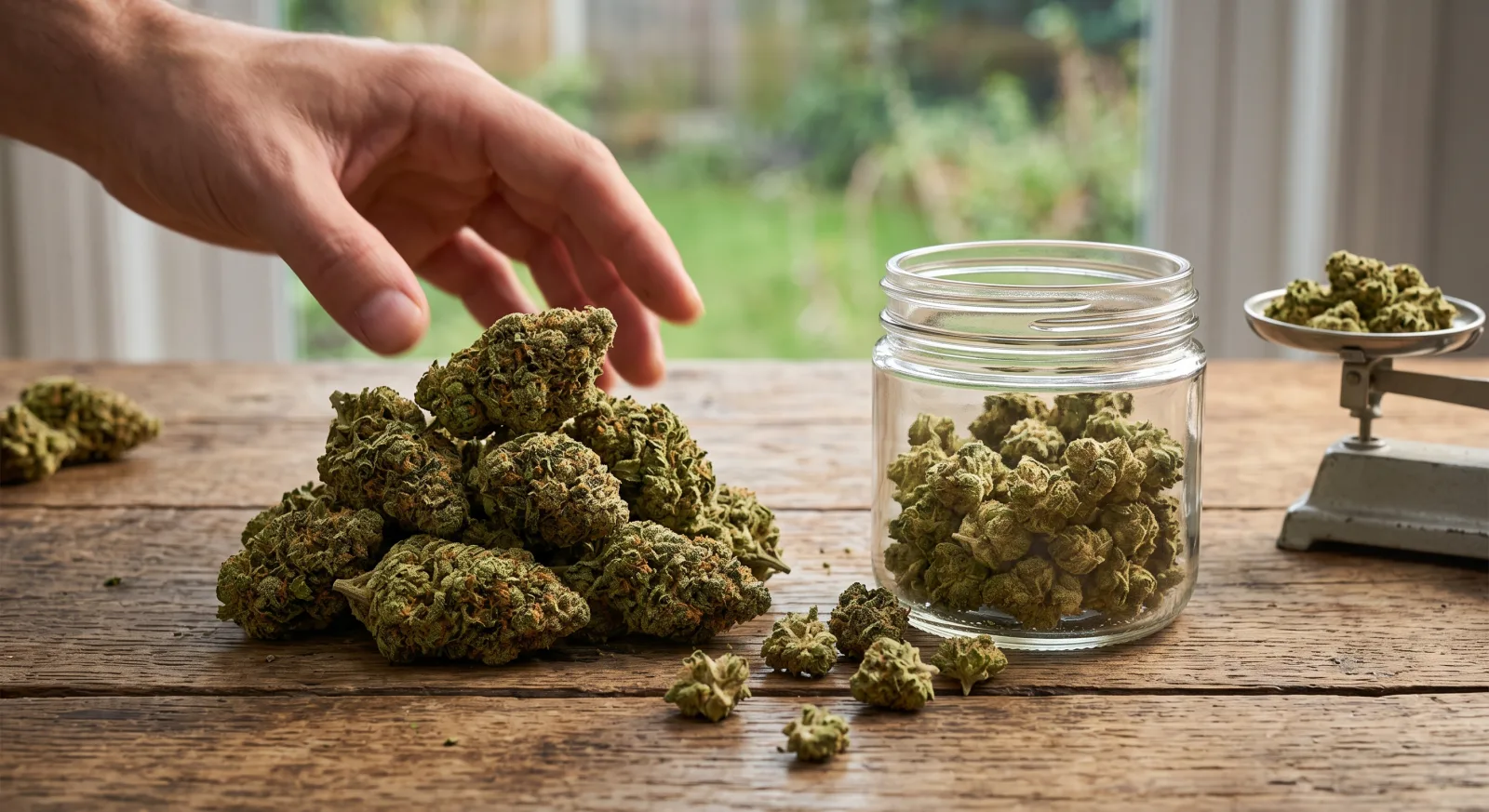
When you first receive cannabis, whether from a mail order service or local shop, assess it immediately. Properly dried and cured flower should have some give when you squeeze it gently. It shouldn't crumble to dust, but it also shouldn't feel wet or spongy. The aroma should be immediately noticeable when you open the container. If you're getting hay smell or nothing at all from supposedly premium flower, that's a curing issue, not a storage issue.
Check the packaging date if available. Cannabis more than six months old may have lost some moisture even with perfect storage, but it should still be viable. Anything over a year old that hasn't been stored with humidity control is likely to be quite dry regardless of initial quality. This isn't necessarily a problem with budget purchases like shake where you plan to rehydrate anyway, but it matters for premium flower where you're paying for peak freshness.
Get Fresh, Properly Stored Cannabis Delivered
Shop our selection of premium flower, all stored in climate-controlled facilities with proper humidity management. Free same-day delivery in Ottawa, Gatineau, and Canada-wide shipping.
Browse ProductsYes, overly dry cannabis is safe to smoke, but the experience is harsher. Dry flower burns faster and hotter, producing acrid smoke that's irritating to your throat and lungs. You'll also lose flavour since many terpenes have evaporated. The THC content remains largely intact, so potency isn't dramatically affected, but the overall quality of the smoking experience suffers significantly. Rehydrating before smoking improves burn quality and harshness considerably.
With Boveda or Integra Boost humidity packs, expect 24-48 hours for noticeable rehydration and 3-5 days for optimal results. The exact timing depends on how dry your cannabis is, the amount of flower, container size, and ambient humidity. Bone-dry flower in a small sealed jar will rehydrate faster than a large quantity in an oversized container. Check daily by gently squeezing a bud,when it has some spring and doesn't crumble, it's ready. Don't rush the process by using multiple packs, as this can over-hydrate.
Rehydration cannot restore terpenes that have already evaporated, but it can preserve what remains and make existing terpenes more noticeable. When cannabis is bone-dry, the remaining terpenes are locked in the plant material and harder to detect. Adding moisture back allows those compounds to volatilize normally, improving the aroma. However, if your flower smells like hay or nothing at all when dry, rehydration won't magically create new terpenes. The best practice is preventing terpene loss through proper storage from the start.
Mold appears as white, grey, or black fuzzy growth on the buds, often in clusters that look like spider webs or powder. It has a distinct musty or mildew smell different from cannabis's natural aroma. If you see any fuzzy growth, discoloured patches, or smell anything off, discard the entire batch immediately,mold spreads through spores you can't see. This is why slow, controlled rehydration with humidity packs is crucial. Never use direct water, and never exceed 65% relative humidity in your storage container.
Dry cannabis retains most of its THC content, but loses potency through two mechanisms: trichome loss and cannabinoid degradation. When flower is brittle, handling and grinding cause trichome heads to break off, litreally removing the potent resin glands. Over time, THC also slowly converts to CBN through oxidation, which accelerates when moisture is very low. A well-stored dry bud might lose 5-15% potency over several months. Poorly stored dry weed in fluctuating conditions can lose 20-30% or more over the same period. Proper storage prevents both issues.
Humidity packs significantly extend cannabis freshness, but not infinitely. Even perfectly stored flower slowly degrades through oxidation over 6-12 months. THC converts to CBN, terpenes gradually evaporate, and chlorophyll breaks down. For optimal quality, consume your cannabis within 6 months even with humidity control. That said, properly stored flower with fresh humidity packs remains perfectly usable for a year or longer,it just won't have the same peak flavour and potency as fresher material. Replace humidity packs every 2-6 months depending on your climate.
Making Peace With Dry Weed: Final Thoughts
Discovering your cannabis is drier than expected doesn't mean you received inferior product or that your purchase is wasted. In most cases, dry weed is a storage and environmental issue that's entirely preventable and often reversible. Understanding the science of cannabis moisture, recognizing the real causes of drying, and implementing proper rehydration techniques when needed transforms you from a frustrated consumer into an educated one.
The investment in proper storage,quality glass containers, humidity control packs, and a consistent environment,costs less than $30 and preserves hundreds of dollars worth of cannabis over a year. Whether you're buying premium strains or budget flower, these principles apply equally. Moisture management is the difference between cannabis that delivers the full experience its genetics promise and flower that disappoints through no fault of the cultivator or seller.
Next time you open a bag and find dry buds, resist the urge to immediately blame your supplier. Check your storage first, implement the rehydration methods outlined here, and establish prevention protocols for future purchases. Your cannabis will thank you with better flavour, smoother smoke, and the full spectrum of effects you paid for.