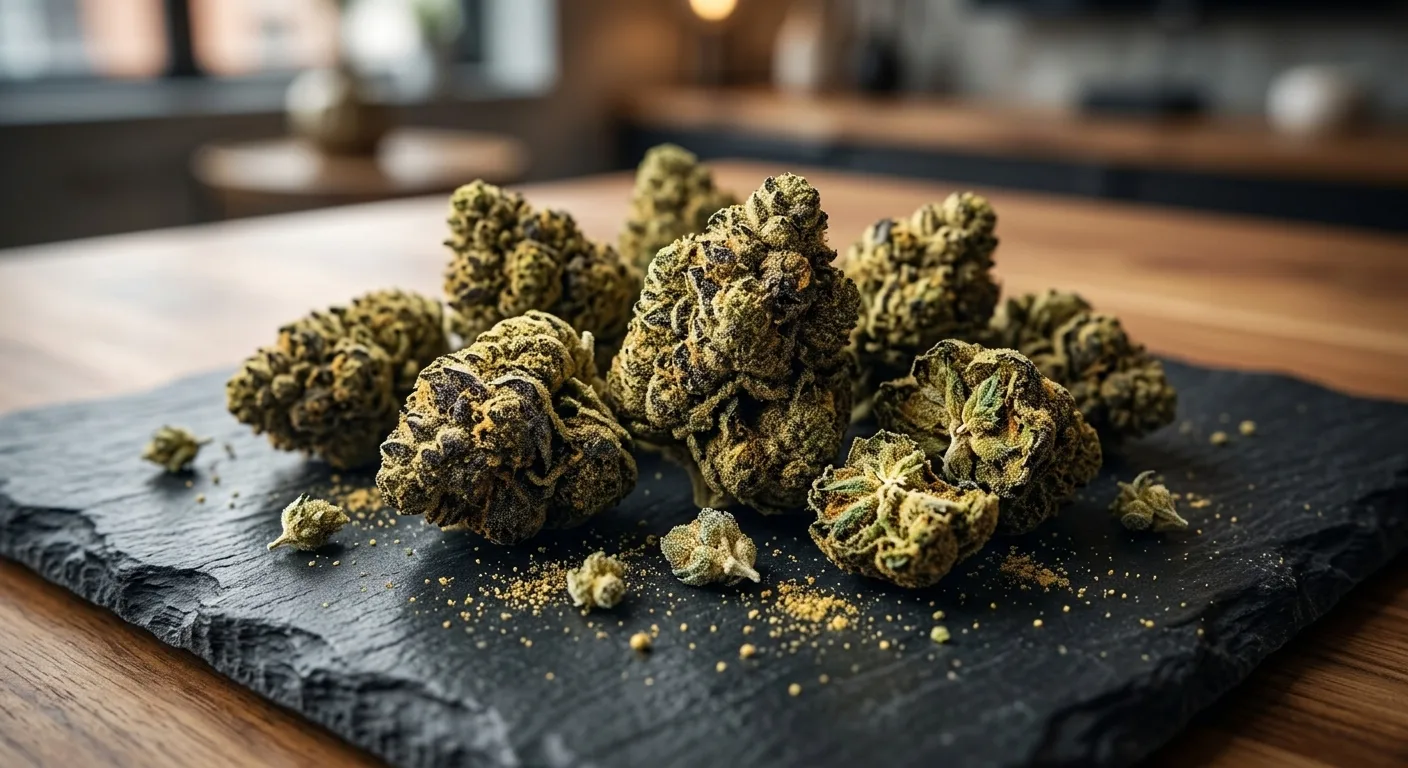
If you've spent any time browsing online cannabis menus or scrolling through weed culture forums, you've likely encountered the term "moonrocks" thrown around with a mix of reverence and bewilderment. These glistening, almost extraterrestrial-looking nuggets command premium prices and legendary status among seasoned consumers. But what exactly are moonrocks, and why do they inspire such devoted followings and cautionary tales in equal measure?
Moonrock weed represents the ultimate expression of cannabis potency engineering. By layering flower, concentrate, and kief into a single compact powerhouse, moonrocks routinely test between 50-80% THC, dwarfing the 20-30% range of even premium AAAA flower. This guide unpacks the science, craft, and practical reality of consuming what many consider the most intense cannabis product available in flower form.
What Are Moonrocks? The Three-Layer Construction Explained
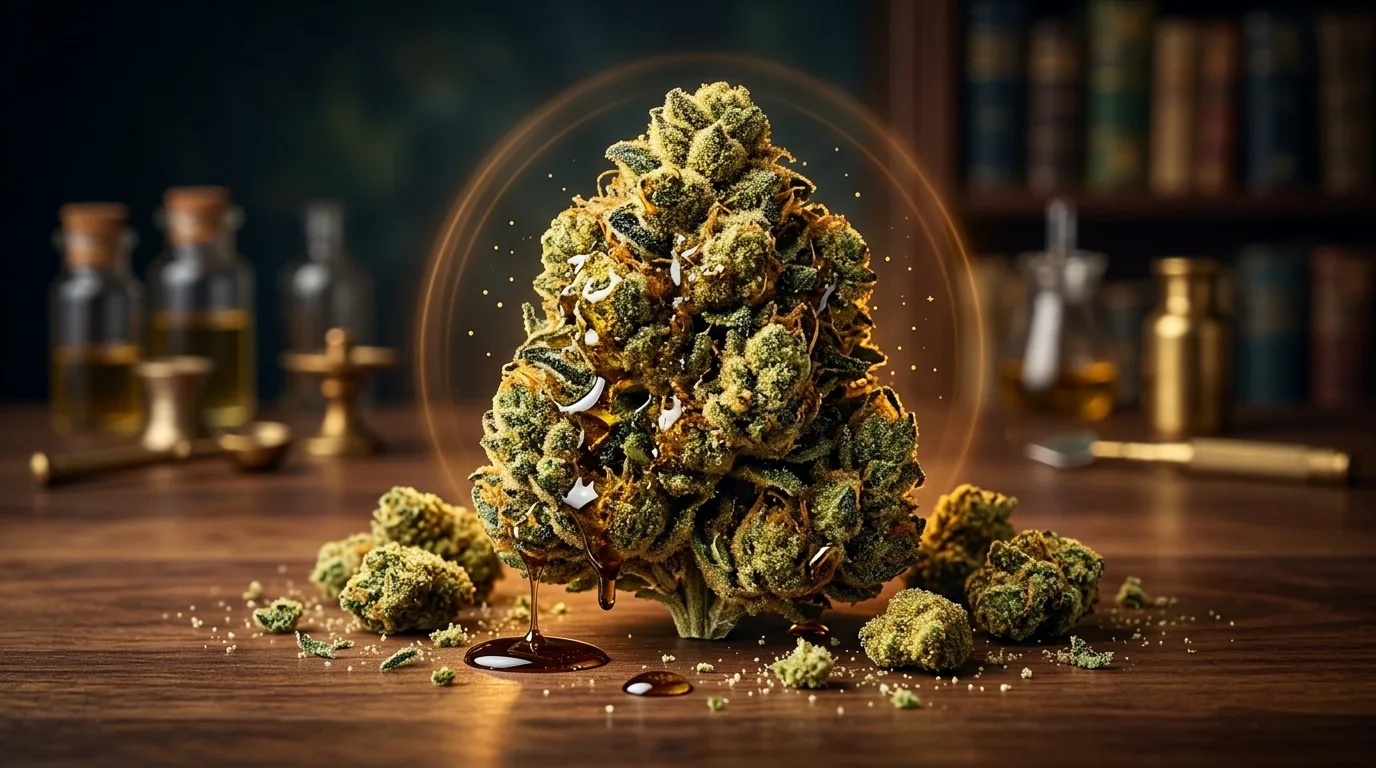
At its core, a moonrock is a premium cannabis bud that has been systematically enhanced through a three-stage coating process. Think of it as the turducken of the cannabis world, except instead of poultry, you're working with progressively more concentrated forms of the same plant.
The base layer starts with a high-quality cannabis flower, typically a dense indica or hybrid nug selected for structural integrity. This isn't the place for airy sativa buds that will crumble under the weight of what comes next. Producers usually choose strains already sitting in the 20-25% THC range as their foundation.
The second layer involves completely coating this bud in cannabis oil or hash oil. Some producers use CO2 oil for its purity, while others prefer distillate for maximum THC concentration. The oil serves dual purposes: it adds a significant cannabinoid boost while creating a sticky surface for the final layer to adhere to. This coating process requires careful temperature control because excessive heat can degrade cannabinoids, while insufficient warmth leaves the oil too viscous to apply evenly.
The finishing touch is a generous dusting of kief, the crystalline trichome heads that naturally separate from cannabis during grinding and handling. High-grade kief can test at 40-60% THC on its own, and it's this golden powder that gives moonrocks their distinctive appearance and texture. The kief layer doesn't just add potency; it also provides a protective barrier that helps preserve the volatile terpenes in the inner layers.
Why the Name "Moonrock"?
The nomenclature isn't arbitrary marketing fluff. When properly made, these products genuinely resemble lunar geology, with a craggy, dust-covered surface texture that looks like something retrieved from a NASA mission. The name also playfully nods to the stratospheric high these products deliver, though whether you'll actually feel like you're orbiting the moon depends largely on your tolerance and consumption method.
The term "cannabis caviar" sometimes appears as an alternative label, though purists argue there's a technical distinction: caviar refers to the bud-plus-oil combination before the final kief coating, while moonrock is the complete three-layer product. In practice, retailers and consumers use the terms interchangeably.
How Moonrocks Are Made: The Production Process Breakdown
Understanding moonrock production helps explain both the premium pricing and the potency variations you'll encounter across different producers. This isn't a process you can rush, and quality control separates mediocre moonrocks from genuinely exceptional ones.
Step One: Base Flower Selection
Professional moonrock makers start with flower that would already qualify as top-shelf on its own merits. Dense, resinous buds with structural integrity are essential because the coating process adds significant weight and moisture. Loose, fluffy buds tend to compress unevenly or fall apart during handling. Indica-dominant strains like gas strains with their compact bud structure often serve as ideal foundations.
The moisture content of the base flower matters more than you might expect. Buds that are too dry will absorb oil unevenly and may crumble during the coating process. Overly moist buds won't hold the kief layer effectively and risk mold development under the oil barrier. The sweet spot sits around 55-62% relative humidity, similar to optimal long-term storage conditions.
Step Two: Oil Application
The oil coating stage requires precision and patience. Producers typically warm the hash oil to reduce viscosity, making it easier to achieve complete, even coverage. Some manufacturers use brush application for artisanal batches, while larger operations employ spray or dip methods for consistency.
The thickness of this oil layer directly impacts final potency but also affects burn characteristics and flavour. Too much oil and you're left with a product that's difficult to break apart and doesn't burn cleanly. Too little and you're essentially selling premium flower at moonrock prices, without the potency to justify the markup.
Step Three: Kief Coating
The final kief application happens while the oil layer remains tacky. Producers typically roll or tumble the oil-coated buds through trays of kief until completely covered. Multiple passes may be necessary to achieve the characteristic thick coating that defines premium moonrocks.
The quality of this kief layer varies dramatically between products. Some producers use single-strain kief that complements the base flower's terpene profile, creating a harmonious entourage effect. Others use whatever kief they have available, resulting in a muddled flavour profile that prioritizes potency over experience. This distinction rarely appears in product descriptions but becomes immediately apparent upon consumption.
Why Moonrock Potency Reaches 50-80% THC
The astronomical THC percentages associated with moonrocks aren't marketing exaggeration. The layered construction creates a genuinely synergistic concentration effect that multiplies rather than merely adds the potency of its components.
Start with your base flower at 20-25% THC. Add a hash oil coating at 60-80% THC comprising roughly 30-40% of the final product weight. Top it with kief at 40-60% THC making up another 15-20% of total mass. When you average these components by weight, you reliably land in that 50-80% range, with some exceptional batches pushing even higher.
This isn't the same as consuming each component separately. The oil acts as a carrier that helps cannabinoids absorb more efficiently when vapourized or combusted. The kief's high surface area means those cannabinoids flash-vapourize at lower temperatures than they would in solid flower form. You're not just adding potencies; you're creating a delivery mechanism that maximizes bioavailability.
For context, high-THC flower strains top out around 30-35% in optimal conditions. Moonrocks essentially skip past the biological limitations of the plant itself by adding concentrated extractions back onto the flower. It's potency engineering through post-harvest enhancement rather than selective breeding.
The Tolerance Reality Check
Those impressive numbers come with a practical asterisk for most consumers. If your regular flower sits around 20% THC and you've built tolerance at that level, jumping to 70% THC moonrocks isn't just doubling your dose. You're potentially tripling or quadrupling your cannabinoid intake depending on consumption method and product quality.
This concentration leap explains why moonrocks have earned a reputation as either transformative or overwhelming, with very little middle ground. Your previous cannabis experience provides limited preparation for the intensity curve these products deliver. Even daily consumers frequently report that moonrocks hit differently, both in speed of onset and duration of effects.
How to Smoke Moonrocks: The Five Methods That Actually Work
Moonrocks present unique consumption challenges that standard flower smoking techniques don't adequately address. The sticky oil coating and powdery kief layer require modified approaches to avoid waste and ensure even burning.
Method 1: Hand-Torn in a Bong or Pipe
This is the method most experienced moonrock consumers eventually settle on. Use your fingers to tear small pieces rather than grinding, as grinders get hopelessly gummed up by the oil layer and pulverize the kief into your grinder's crevices where it's lost. Break off rice-to-pea-sized chunks and place them on a bed of regular flower in your bowl.
The base flower layer is crucial. Moonrock by itself doesn't provide enough airflow and tends to burn unevenly, wasting significant material. A 50-50 mix of moonrock to regular flower provides the best balance of potency and functionality. Use the regular flower as both a base layer and a top cap to sandwich the moonrock pieces.
Light with a hemp wick or standard lighter, but use a gentle, indirect flame. You're trying to melt and vapourize the coating layers rather than directly combusting them. Take slow, steady draws rather than aggressive pulls that might draw loose kief through your bowl piece.
Method 2: Vapourization (With Caveats)
Desktop vapourizers with concentrate-compatible chambers can handle moonrocks if you're willing to commit to thorough cleaning afterward. The oil content means residue buildup happens faster than with standard flower. Set your temperature higher than you would for regular flower, typically 390-420°F to fully vapourize the concentrate layers.
Portable vapourizers designed exclusively for flower should be avoided. The oil will seep into heating elements and airways, potentially damaging the device permanently. Even "hybrid" portable units that claim to handle concentrates often struggle with the sticky density of quality moonrocks.
Method 3: In a Joint or Blunt (The Inefficient Choice)
Rolling moonrocks is technically possible but practically wasteful. The oil makes rolling difficult and causes uneven burning that results in constant relighting. Kief falls out during the rolling process, and the excessive heat from paper combustion can degrade terpenes you're paying premium prices to experience.
If you're determined to use this method, treat the moonrock as a core element surrounded by regular flower, similar to the "twax" technique used with concentrates. Use more flower than you normally would to create structure, and accept that you'll need to relight frequently. This method works better in blunts where the thicker wrap provides more structural integrity.
Method 4: Mixed in a Dry Herb Vape (Advanced Users Only)
Some adventurous consumers report success mixing small moonrock pieces with regular flower in high-end dry herb vapourizers like the Volcano or Arizer Extreme Q. The key is using moonrock sparingly, never more than 20% of your chamber's total capacity, and accepting that deep cleaning will be necessary after each session.
Pack the chamber loosely to allow airflow, and use temperature stepping: start at 365°F for the first few draws to vapourize terpenes, then increase to 390°F and finally 420°F to extract the heavier cannabinoids from the oil layer. This method provides the best flavour preservation but requires equipment investment and maintenance commitment.
Method 5: The "Hot Knives" Throwback
For those familiar with old-school concentrate consumption, the hot knife method works surprisingly well with moonrocks. Heat two butter knives on a stove element, press a small piece of moonrock between them, and inhale the vapour through a bottle or funnel. It's low-tech, somewhat harsh, and not exactly elegant, but it's effective and requires no special equipment.
This method particularly suits situations where you want to sample moonrocks without committing an entire bowl or vapourizer chamber. It's also useful for testing new products before investing in a larger consumption session.
The Moonrock Experience: What to Expect and How to Prepare
Understanding the consumption mechanics is only half the equation. The moonrock experience itself deserves preparation, especially if you're accustomed to standard flower effects.
Onset Time and Duration
Smoked or vapourized moonrocks typically hit within 5-15 minutes, similar to regular flower but often with more pronounced intensity. The high concentration means effects escalate quickly rather than building gradually. Many users report feeling baseline effects within minutes that continue intensifying for 20-30 minutes before plateauing.
Duration extends well beyond typical flower sessions. Where quality flower might provide 2-3 hours of noticeable effects, moonrocks commonly deliver 4-6 hours of active high, with residual effects potentially lasting into the next day for less experienced consumers. This extended duration makes timing important. Starting a moonrock session an hour before bed might leave you drowsy well into the next morning.
Effect Profile Characteristics
The indica-dominant base flower used in most moonrocks tends to produce heavily sedating, body-focused effects even in consumers who don't typically find indicas particularly impairing. The concentration factor seems to amplify these characteristics rather than simply extending them. Expect significant couch-lock, increased appetite, and potential difficulty with complex tasks or conversation.
Tolerance plays a smaller role than you might expect. Daily consumers report that moonrocks still produce noticeably stronger effects than their regular products, though the differential narrows with repeated use. If you've never experienced greening out from cannabis overconsumption, moonrocks present a legitimate risk if approached without respect for their potency.
Setting Yourself Up for Success
Treat your first moonrock session like you would approach high-dose edibles. Clear your schedule for the entire day, not just the next few hours. Have food and water readily available because getting them mid-session may feel more challenging than anticipated. Choose a comfortable, familiar environment where you can remain stationary if effects prove more intense than expected.
The "start low, go slow" mantra applies even more critically here than with beginner edible dosing. A single small hit from a pipe or bong provides a reasonable starting point. Wait a full 30 minutes before considering a second hit, as the delayed peak can trick you into overconsumption if you're chasing immediate effects.
Why Moonrocks Cost More: The Economics Behind the Price Tag
Moonrocks typically command $20-40 per gram, roughly double or triple the price of premium flower. This pricing reflects genuine production costs rather than pure markup, though understanding the value equation helps determine when the premium is justified.
The base flower represents your first cost layer. Quality moonrocks start with buds that would retail for $8-12 per gram as standalone flower. Then you're adding hash oil that would sell for $30-50 per gram if purchased separately. Finally, there's kief that, while often a byproduct of other processing, still carries market value around $15-25 per gram when sold independently.
Labour costs matter more than many consumers realize. Hand-coating individual buds with oil and kief is time-intensive skilled work that can't be easily automated without quality loss. Each gram of finished moonrock represents multiple production steps, quality checks, and handling stages that don't apply to standard flower sales.
The math works out roughly like this: if a gram of moonrock is 50% base flower, 35% oil, and 15% kief, you're looking at about $6 in flower costs, $12 in oil costs, $3 in kief costs, plus labour, packaging, and margin. That $20-25 retail price suddenly looks less like price gouging and more like reasonable cost recovery.
When Moonrocks Are Worth the Premium
For consumers with high tolerance who find themselves consuming increasingly large amounts of standard flower to achieve desired effects, moonrocks can actually provide better value. One or two hits of quality moonrock replacing an entire joint of premium flower represents both cost savings and reduced smoke inhalation.
Special occasions and shared experiences justify the premium for many users. Moonrocks have ceremonial quality that makes them suitable for celebrations or social sessions where the product itself becomes part of the experience rather than mere means to an end.
Medical users managing chronic pain or severe insomnia sometimes find moonrocks provide relief at lower consumption volumes than standard flower, though the intense effects may prove too sedating for daytime symptom management.
Quality Indicators: Spotting Premium Moonrocks vs. Mediocre Knockoffs
The moonrock market includes both exceptional artisanal products and hastily assembled cash-grabs hoping to capitalize on the name recognition. Several visual and tactile cues help distinguish quality from pretense.
Visual Assessment
Premium moonrocks show even, complete kief coverage without bare patches or oil seepage. The coating should look uniform rather than clumpy, and you shouldn't see significant amounts of loose kief in the package bottom. If more kief has fallen off during shipping than remains on the bud, you're looking at a poorly constructed product.
The colour of the kief layer provides clues about freshness and quality. Bright golden or light amber indicates recently collected, properly stored trichomes. Dull brown or grey suggests oxidized, degraded material that will deliver harsh smoke and muted effects. The oil layer underneath, visible where kief coverage thins, should appear translucent amber, not dark brown or black.
Texture and Structure
Quality moonrocks feel sticky but not wet. Excessive moisture suggests the oil layer is separating or the base flower wasn't properly cured before coating. The bud should maintain its original structure; if it feels like a compressed ball of hash rather than identifiable flower architecture, you're likely dealing with trim or shake that was pressed and coated to disguise its origins.
When you break apart a piece, you should encounter distinct layers: visible kief on the surface, glossy oil beneath, and recognizable flower structure at the core. Products where these elements seem homogenized rather than layered often indicate lower quality inputs or poor production technique.
The Aroma Test
Premium moonrocks smell strongly of cannabis terpenes, not just generically "weedy" but with distinct aromatic notes from the strain profile. The oil and kief layers should complement rather than mask the base flower's scent. If you detect chemical odours, excessive harshness, or virtually no smell at all, quality is questionable.
Some muting of aroma compared to fresh flower is normal because the oil layer creates a barrier to terpene volatilization. But quality moonrocks made from terpy base flower with proper storage will still announce themselves clearly when the package opens.
Moonrocks vs. Other High-Potency Options: The Competitive Landscape
Moonrocks occupy a unique middle ground in the high-potency cannabis market, offering advantages and drawbacks compared to alternatives like straight concentrates, vape cartridges, or potent edibles.
Moonrocks vs. Concentrates
Pure concentrates like shatter or live resin reach higher potencies (70-95% THC) than most moonrocks and provide cleaner vapourization with less residue. However, they require specialized equipment and knowledge that creates barriers for consumers comfortable with traditional smoking. Moonrocks bridge this gap, offering concentrate-level potency through familiar consumption methods.
The entourage effect argument also favours moonrocks for some users. By preserving the full flower matrix alongside concentrated extractions, moonrocks maintain a broader cannabinoid and terpene profile than single-extraction concentrates. This fuller spectrum may produce more balanced effects for users sensitive to the intensity of pure THC concentrates.
Moonrocks vs. High-Potency Vape Cartridges
THC vape cartridges offer convenience and discretion that moonrocks can't match, along with precisely controlled dosing and no combustion byproducts. They're also generally cheaper per milligram of THC than moonrocks when you calculate it out. However, vape cartridges lack the ritual and sensory experience that many cannabis consumers value. Smoking moonrocks is an event; hitting a vape pen is a utility.
Concerns about vape cartridge safety and additives, while largely addressed in regulated markets, still drive some consumers toward flower-based products. Moonrocks provide potency without the questions about cutting agents or hardware safety that periodically plague the vape market.
Moonrocks vs. High-Dose Edibles
Potent cannabis edibles like 100mg THC edibles offer longer-lasting effects and zero inhalation risk but come with unpredictable onset times and difficulty controlling intensity once effects begin. Moonrocks provide the faster onset and easier dose control of inhalation while delivering edible-tier potency.
The different metabolic pathways also matter. Edibles convert THC to 11-hydroxy-THC in the liver, producing distinctly different effects than inhaled THC. Some users prefer one over the other, making moonrocks and edibles complementary rather than competing options in a well-rounded cannabis routine.
Storage and Preservation: Keeping Moonrocks Potent
The layered construction of moonrocks makes them more vulnerable to degradation than standard flower, but proper storage extends shelf life and preserves potency remarkably well.
Store moonrocks in airtight glass containers, never plastic bags. The sticky oil layer will adhere to plastic surfaces, pulling kief off the bud and leaving you with degraded product and contaminated packaging. Small mason jars work perfectly and cost next to nothing.
Temperature control matters more for moonrocks than regular flower because of the oil component. Store at cool room temperature (60-70°F) in a dark location. Higher temperatures can cause the oil to separate and seep through the kief layer, creating mess and altering the smoking characteristics. Refrigeration isn't recommended as it can introduce moisture and make the oil layer brittle.
Humidity control using Boveda or similar packs helps, but aim for lower levels than you would with regular flower, around 55-58% RH rather than the 62% standard. The oil layer provides moisture protection the flower normally requires, and excessive humidity can cause the kief to clump or even promote mold growth underneath the oil barrier.
Properly stored moonrocks maintain quality for 3-6 months without significant degradation, comparable to standard flower. Beyond six months, expect gradual terpene loss and cannabinoid oxidation, though the product remains safe and functional considerably longer.
Ready to Explore Premium Cannabis Products?
Discover our selection of high-quality flower, hash, and concentrates available for same-day delivery across Ottawa and Canada-wide shipping.
Shop NowMoonrocks are not recommended for cannabis beginners due to their extremely high potency (50-80% THC). Even experienced consumers often find them significantly more intense than regular flower. If you're new to cannabis, start with standard flower in the 15-20% THC range and work your way up as you understand your tolerance and preferences.