Walk into any cannabis dispensary in Canada and you'll hear the same question echo across the counter: "What's your highest THC strain?" It's become the default metric by which consumers judge quality, potency, and value. But here's the uncomfortable truth that the cannabis industry rarely admits: the obsession with sky-high THC percentages is based on a fundamental misunderstanding of how cannabis actually works. That 35% THC flower isn't necessarily going to get you more stoned than a well-balanced 22% strain, and those eye-watering 98% concentrate claims? They're not just misleading,they're scientifically implausible.
The race to produce the highest THC strain has created a market distortion that benefits neither growers nor consumers. While THC certainly matters, it's just one variable in an extraordinarily complex equation that includes dozens of cannabinoids, hundreds of terpenes, and an interaction effect scientists are only beginning to understand. This article dismantles the THC myth and explains what actually determines the quality of your cannabis experience,information that will save you money and dramatically improve your highs.
The THC Ceiling: Why 25% Is the Point of Diminishing Returns
Cannabis researchers have known for years what the marketing departments prefer to ignore: THC potency hits a ceiling of effectiveness somewhere between 20% and 30%. A landmark 2020 study from the University of Colourado examined the relationship between THC concentration and actual psychoactive effects across hundreds of consumers. The findings were unequivocal,participants using concentrates with 90% THC showed virtually identical subjective highs and impairment levels to those using 70% concentrates. The difference? Dramatically increased tolerance buildup in the higher-THC group.
The phenomenon is rooted in basic pharmacology. Your endocannabinoid system contains a finite number of CB1 receptors, the binding sites where THC produces its psychoactive effects. Once you've saturated roughly 20-30% of available receptors, additional THC molecules have nowhere productive to go. They're metabolized and excreted without contributing meaningfully to the high. It's like trying to pour a gallon of water into a cup that's already three-quarters full,the extra liquid doesn't make the cup "more full," it just spills over the sides.
This saturation effect explains why veteran consumers often report that mid-range strains (18-24% THC) deliver more nuanced, enjoyable experiences than the ultra-potent options. When you're not overwhelming your receptor sites, the subtler cannabinoids and terpenes can interact with the system in more complex ways. The result is what cannabis connoisseurs call a "full-spectrum" high,layered, dynamic, and far more interesting than the one-dimensional blast of pure THC.
The Tolerance Trap of Ultra-High THC
Perhaps the cruellest irony of chasing the highest THC strain is that it guarantees you'll need progressively stronger products to achieve the same effects. Your endocannabinoid system responds to chronic high-dose THC exposure by downregulating receptor expression,litreally reducing the number of CB1 binding sites available. Within weeks of regular ultra-high-THC consumption, you've trained your brain to be less sensitive to cannabinoids across the board.
The tolerance treadmill forces consumers into an expensive cycle: buy stronger product, adapt to it quickly, need even stronger product, repeat. Meanwhile, someone using moderate-potency cannabis with diverse cannabinoid profiles maintains sensitivity, experiences richer effects, and spends considerably less. It's a textbook case of more being less.
Debunking the 98% THC Myth: Why Those Numbers Are Impossible
Let's address the elephant in the room: those cannabis concentrates claiming 95-99% THC. They're not just exaggerated,they're chemically impossible with current extraction technology. Pure THC in crystalline form tops out at around 99.9% purity under labouratory conditions, but that substance bears no resemblance to the viscous, terpene-rich concentrates sold in dispensaries. Any product claiming 98% THC while still containing the terpenes, flavonoids, and minor cannabinoids that make it pleasant to consume is either mislabeled or fraudulent.
The confusion stems from how THC content is measured and reported. Most third-party lab tests measure total potential THC,the combination of active THC and THCA (the non-psychoactive acid form that converts to THC when heated). This is then expressed as a percentage of total mass. But here's where the math gets murky: testing methodologies vary wildly between labs, standardization is minimal, and some facilities have been caught inflating numbers to help clients market their products.
A truly high-quality concentrate might legitimately test between 70% and 85% total cannabinoids, with THC comprising the lion's share. Anything claiming numbers in the 90s should raise immediate red flags. The remaining 10-15% of mass in legitimate concentrates consists of terpenes, plant waxes, residual solvents (hopefully minimal), and minor cannabinoids,all crucial components of the entourage effect we'll explore shortly.
The Testing Lab Scandal Canada Hasn't Solved
Canada's cannabis testing regime, while better than the unregulated systems in some jurisdictions, still suffers from a fundamental conflict of interest. Licenced producers choose which labs to use and pay for the testing. Labs that consistently return lower, more conservative numbers risk losing clients to competitors who deliver the inflated results growers want to see on their packaging. The result is a quiet accuracy crisis that Health Canada has acknowledged but struggled to address.
Savvy consumers have learned to take THC percentages as rough guidelines rather than precise measurements. A 5-10% margin of error is not uncommon, and batch-to-batch variation means the jar you purchase might differ significantly from the sample that was tested. This variability is yet another reason why chasing the absolute highest number is a fool's errand.
The Entourage Effect: Why Supporting Cast Matters More Than the Star
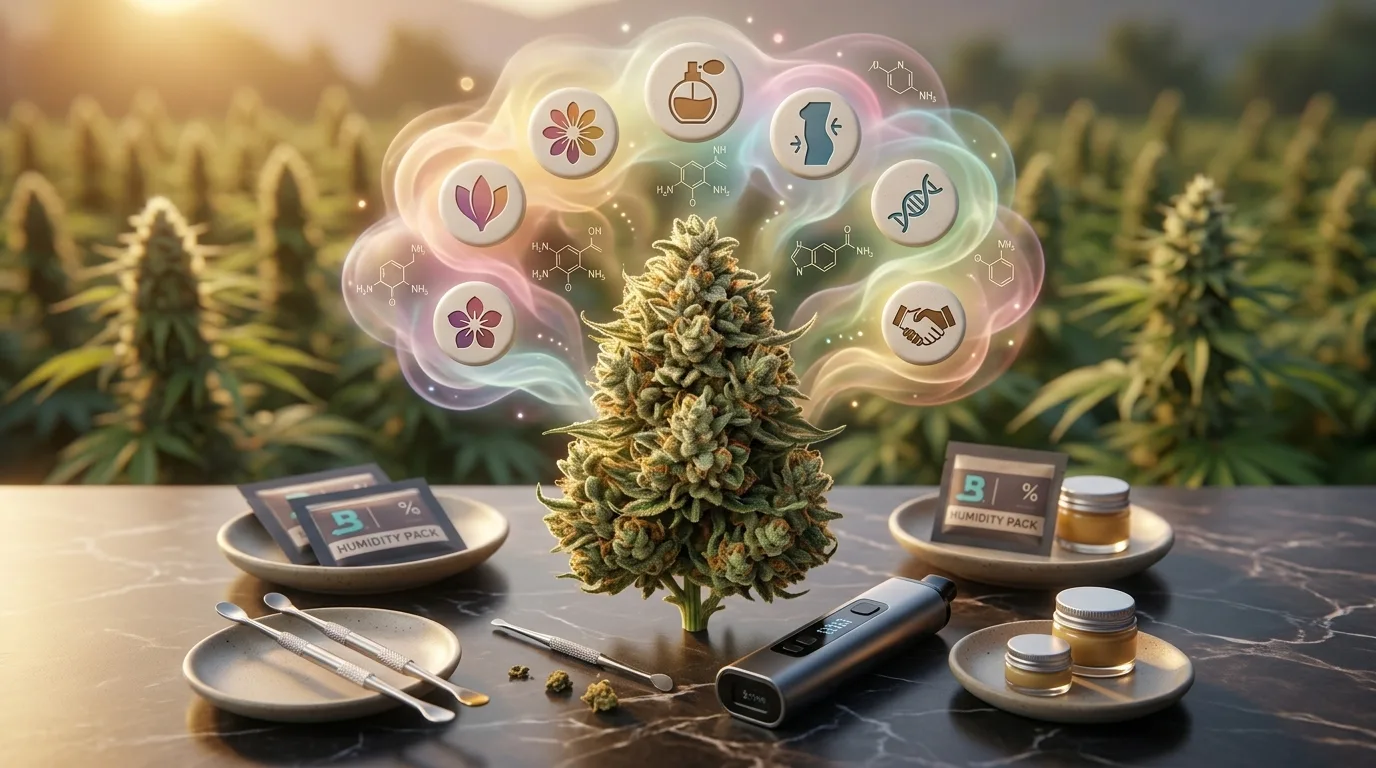
If THC were the only compound that mattered, we'd all be consuming pure pharmaceutical-grade THC pills and calling it a day. But anyone who's tried pure THC in isolation can tell you it's not a particularly pleasant experience,anxiety-inducing, one-dimensional, and lacking the warmth and complexity of whole-plant cannabis. The reason whole-plant products feel better is the entourage effect, a term describing how cannabinoids and terpenes work synergistically to produce effects greater than the sum of their parts.
Consider myrcene, the most common terpene in cannabis. On its own, myrcene is a mild sedative found in mangoes and lemongrass. In combination with THC, it enhances cannabinoid absorption across the blood-brain barrier and potentiates the relaxing, body-focused elements of the high. A strain with 20% THC and high myrcene content will feel more potent and more sedating than a 28% THC strain with minimal myrcene,despite the lower THC number. Understanding what terpenes are and how they shape your experience matters far more than memorizing THC percentages.
Then there's CBD, THC's gentler cousin, which modulates the psychoactive intensity of THC while contributing its own anti-anxiety and anti-inflammatory effects. Strains with a 2:1 or 3:1 THC:CBD ratio often produce clearer, more functional highs than pure high-THC cultivars. CBG, CBN, THCV,each of these minor cannabinoids tweaks the experience in subtle but meaningful ways. A chemically diverse strain with 22% THC might deliver a far superior experience to a monoterpene-depleted 32% THC product.
Terpenes as the Real Differentiator
If you want to predict how a strain will actually make you feel, stop looking at the THC percentage and start examining the terpene profile. Limonene-dominant strains tend toward uplifting, energetic effects regardless of THC content. Linalool-heavy genetics skew sedating and anxiety-reducing. Pinene can promote alertness and memory retention. Caryophyllene activates CB2 receptors entirely independently of THC, contributing anti-inflammatory effects and a subtle body relaxation.
The highest THC strain in the dispensary is meaningless if its terpenes have been destroyed by improper curing, over-drying, or degradation during storage. A 24% THC flower with 2-3% total terpenes will outperform a 30% THC flower with 0.5% terpenes every single time. This is why craft growers obsess over harvest timing, curing protocols, and storage conditions,they understand that preserving the supporting cast matters more than maxing out the headliner.
What Actually Makes a Cannabis Strain Potent
True cannabis potency is multifactorial. It's the interaction of THC concentration, terpene profile, minor cannabinoid content, freshness, and individual biology. Two people can consume the identical flower and report completely different subjective effects based on their unique endocannabinoid systems, tolerance levels, and even what they've eaten that day. This inherent variability makes the quest for an objectively "strongest" strain somewhat absurd.
That said, certain strains have earned reputations for consistently powerful effects,not because they always test highest in THC, but because they express particularly synergistic chemical profiles. Cultivars like Godfather OG reliably deliver heavy, long-lasting effects not through sheer THC dominance but through a dense terpene matrix that amplifies and extends the psychoactive experience. The indica versus sativa distinction matters less than whether the grower managed to preserve the strain's complete chemical signature from harvest to consumption.
The Freshness Factor Everyone Ignores
Here's a variable that trumps THC percentage every time: freshness. Cannabis begins degrading the moment it's harvested. THC oxidizes into CBN, terpenes evaporate, and the overall potency declines. A six-month-old jar testing at 28% THC might deliver weaker effects than a two-week-old jar testing at 21% THC simply because the former has lost 20% of its terpenes to evaporation and seen significant cannabinoid degradation.
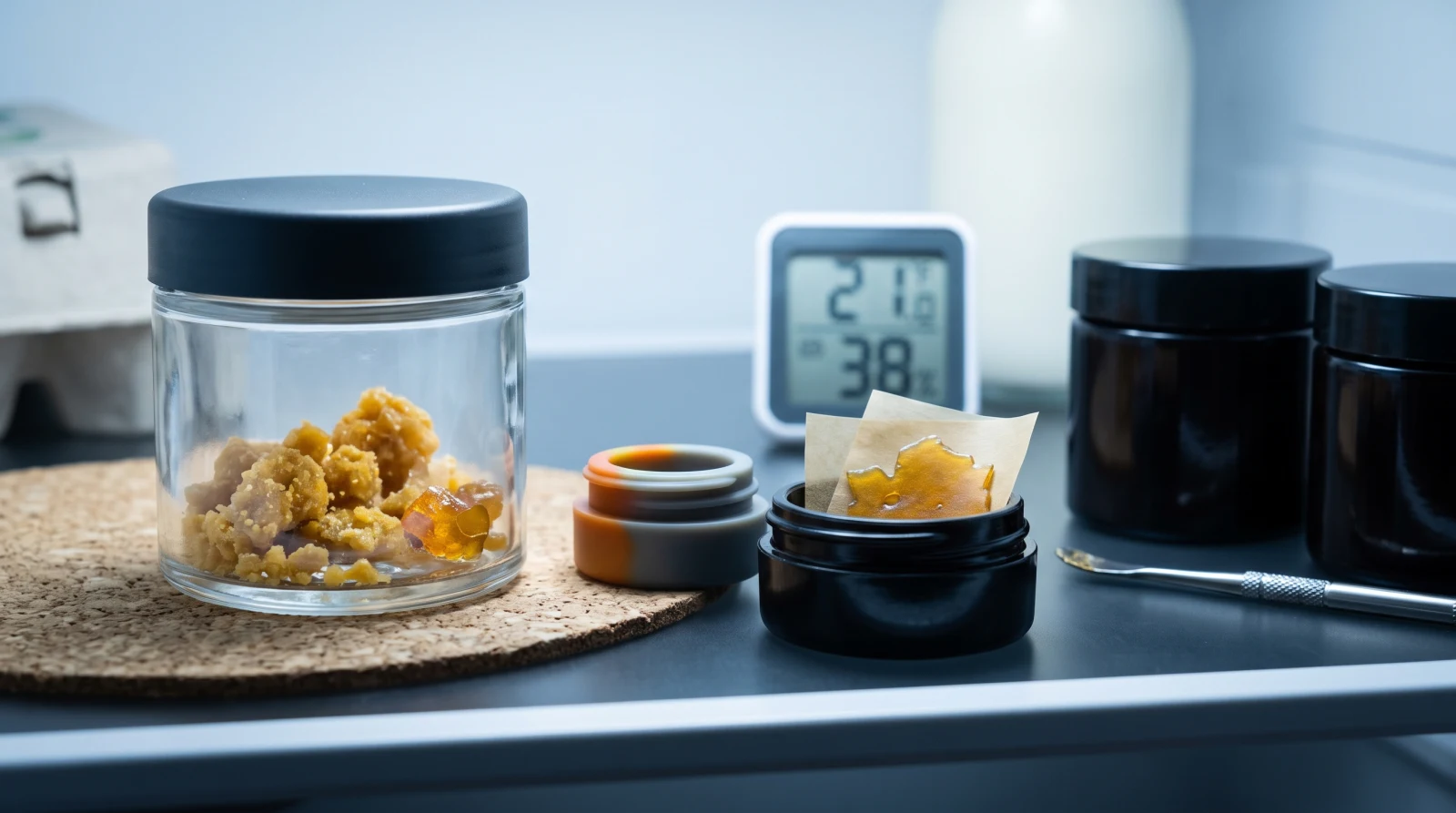
This is why proper storage matters enormously and why purchase date can be more important than label claims. If you're serious about cannabis quality, learn how to store weed properly in airtight, light-proof containers at stable temperatures. The highest THC strain stored poorly becomes mid-grade product within weeks.
The Case for Moderate-THC, High-Quality Flower
Once you understand the limitations of THC as a quality metric, the path forward becomes clear: prioritize well-grown, properly cured cannabis with robust terpene profiles over labouratory numbers. This often means seeking out craft producers who emphasize small-batch quality over mass-market potency claims. It means asking your budtender about terpene content and harvest dates rather than just asking for "the strongest thing you have."
Many of the most acclaimed strains in the Canadian market test between 18% and 25% THC,nowhere near the highest available, but consistently delivering superior experiences. These cultivars achieve their effects through chemical complexity, not brute-force THC concentration. They're also significantly easier on your tolerance, allowing you to maintain sensitivity and continue enjoying moderate doses indefinitely rather than spiralling into the tolerance trap.
Cost is another consideration rarely discussed in THC debates. High-testing strains command premium prices, sometimes double the cost per gram of mid-range options. But if the actual experiential difference is minimal or even negative (due to terpene degradation in the pursuit of maximum THC), you're paying a significant premium for marketing rather than quality. Smart consumers optimize for value,the best experience per dollar spent,rather than chasing arbitrary chemical benchmarks.
What to Look for Instead of THC Percentage
Build your selection criteria around these factors instead:
Terpene content: Look for products with at least 1.5-2% total terpenes, ideally higher. Dominant terpenes should align with your desired effects.
Harvest or package date: The fresher, the better. Avoid anything more than three months old if possible.
Minor cannabinoid presence: Some CBD, CBG, or other minors indicate a full-spectrum product rather than a THC-maxed monoculture.
Appearance and aroma: Vibrant colour, intact trichomes, and strong smell indicate proper handling and storage.
Grower reputation: Established craft producers with quality track records beat unknown brands chasing THC records.
These variables collectively predict quality far more accurately than THC percentage alone. They also happen to be the factors that serious cannabis judges evaluate at competitions,where the highest-testing entries rarely win top honours.
Finding Balance: Strains That Do Potency Right
For readers who do want genuinely strong cannabis,just not at the expense of quality,certain cultivars manage to deliver high THC while maintaining robust terpene profiles and avoiding the pitfalls we've discussed. These strains typically fall in the 24-28% THC range with 2%+ total terpenes, offering intensity without sacrificing the entourage effect.
Genetics like Tom Ford Pink Kush exemplify this balance,potent enough to satisfy experienced consumers while retaining the rich, fuel-forward terpene profile that defines high-end cannabis. Similarly, properly grown Godfather OG delivers heavy effects through synergy rather than THC dominance alone. These cultivars prove that "potent" and "high-quality" can coexist when growers prioritize complete chemical expression over single-cannabinoid maximization.
The key is seeking genetics with naturally elevated THC potential that are then grown and cured with sufficient care to preserve everything else. This typically means small-batch cultivation, hand-trimming, and careful climate control throughout the drying and curing process. It's a more labour-intensive approach that doesn't scale well to industrial production,which is why the highest-quality examples often come from craft producers rather than large licenced facilities.
The Role of Growing Technique in True Potency
Even genetically identical cannabis can vary wildly in quality depending on cultivation technique. A Godfather OG grown under optimal conditions with proper nutrition, lighting, and environmental control will vastly outperform the same genetics rushed through a commercial grow cycle. The difference shows up not primarily in THC percentage but in terpene preservation, trichome development, and overall chemical maturity at harvest.
This is why discerning consumers learn to recognize quality growers and stick with them, even if their lab numbers aren't always the highest on the shelf. Consistency and attention to detail matter more than peak performance. A producer reliably delivering 22-24% THC flower with exceptional terpenes beats one occasionally hitting 30% amid a sea of mediocre batches.
The Future: Moving Beyond THC Labelling
The cannabis industry is slowly evolving toward more sophisticated quality metrics. Some jurisdictions now require terpene disclosure alongside cannabinoid content. Consumers are becoming educated enough to ask meaningful questions about chemical profiles rather than just THC percentages. And a new generation of testing standards aims to bring more accuracy and accountability to labouratory claims.
We may eventually see cannabis labelling that mirrors wine,highlighting dominant flavour compounds, harvest dates, and terroir rather than reducing complex agricultural products to single numbers. Imagine choosing cannabis based on "2023 vintage, Okanagan grown, myrcene-dominant with notes of pine and citrus" rather than "28% THC." This would dramatically improve consumer education and market honesty while allowing quality producers to differentiate themselves on merit rather than testing gamesmanship.
In the meantime, consumers can drive this change by voting with their wallets. Support producers who emphasize complete chemical profiles over THC alone. Ask budtenders about terpenes and harvest dates. Leave reviews that discuss nuanced effects rather than just "strength." The more the market rewards quality over labouratory numbers, the faster the industry will shift toward more honest, consumer-friendly standards.
For those interested in understanding what quality grading systems like AAAA actually mean in practical terms, the shift away from THC-only evaluation is already happening in craft circles. The highest grades go to chemically complete products, not THC-maximized specimens.
Experience the Difference of Balanced Cannabis
Discover premium strains selected for complete terpene profiles and optimal effects, not just THC percentages. Same-day delivery in Ottawa, Gatineau, and across Canada.
Shop Craft CannabisFrequently Asked Questions About High-THC Cannabis
Under ideal labouratory conditions, properly tested cannabis flower tops out around 30-35% THC. Claims beyond this range are either measuring total cannabinoids (not just THC), using unreliable testing methods, or simply inaccurate. The highest consistently verified flower results cluster around 28-32% THC.
No. Due to cannabinoid receptor saturation, the relationship between THC percentage and subjective effects is not linear. A 30% strain might feel only marginally stronger than a 20% strain, especially if the lower-THC option has superior terpene content and fresher product. Individual tolerance and the entourage effect play larger roles than raw THC numbers.
Terpenes and minor cannabinoids significantly influence how THC affects you. A 19% THC strain rich in myrcene and linalool can feel heavier and more sedating than a 27% THC strain with degraded terpenes. Freshness, consumption method, and individual endocannabinoid system differences also contribute to this phenomenon.
No. These claims are scientifically implausible for products that still contain terpenes and other desirable compounds. Legitimate high-quality concentrates test between 70-85% total cannabinoids. Anything claiming higher percentages is either using questionable testing methods, measuring something other than pure THC, or engaging in false advertising.
Look for products with high terpene content (2%+), recent harvest dates, reputable craft growers, and robust minor cannabinoid profiles. Ask budtenders about dominant terpenes and how strains actually affect users rather than just requesting the highest THC option. Your nose is also a reliable guide,strong, complex aroma indicates preserved terpenes and overall quality.
Yes. Regular use of ultra-high-THC products leads to faster CB1 receptor downregulation, requiring progressively stronger doses to achieve similar effects. Moderate-THC products with diverse cannabinoid profiles allow you to maintain sensitivity longer and experience more nuanced effects over time.
Conclusion: Rethinking Cannabis Potency in the Modern Market
The pursuit of the highest THC strain is a marketing-driven distraction from what actually determines cannabis quality and effects. While THC certainly contributes to potency, it operates within a complex system of terpenes, minor cannabinoids, and individual biology that makes simple percentage comparisons nearly meaningless. Strains testing at 22% THC routinely outperform 30%+ options when properly grown, cured, and stored with attention to complete chemical profiles.
Smart consumers have moved beyond THC tunnel vision. They evaluate freshness, terpene content, grower reputation, and overall chemical diversity,factors that collectively predict the actual experience far more accurately than labouratory numbers ever could. This approach not only delivers better highs but also protects your tolerance, saves money, and supports the craft producers who prioritize quality over marketing gimmicks.
The next time you're shopping for cannabis, resist the reflex to ask for the strongest strain. Instead, seek out the most chemically complete, properly preserved, freshly harvested option available. Your endocannabinoid system,and your wallet,will thank you. The real highest THC strain isn't the one with the biggest number on the label; it's the one that delivers the effects you're seeking through synergy, not brute force.
Ready to explore cannabis selected for quality over hype? Browse our curated selection of premium strains chosen for complete terpene profiles and authentic effects, with same-day delivery across Ottawa, Gatineau, and Canada-wide shipping available.