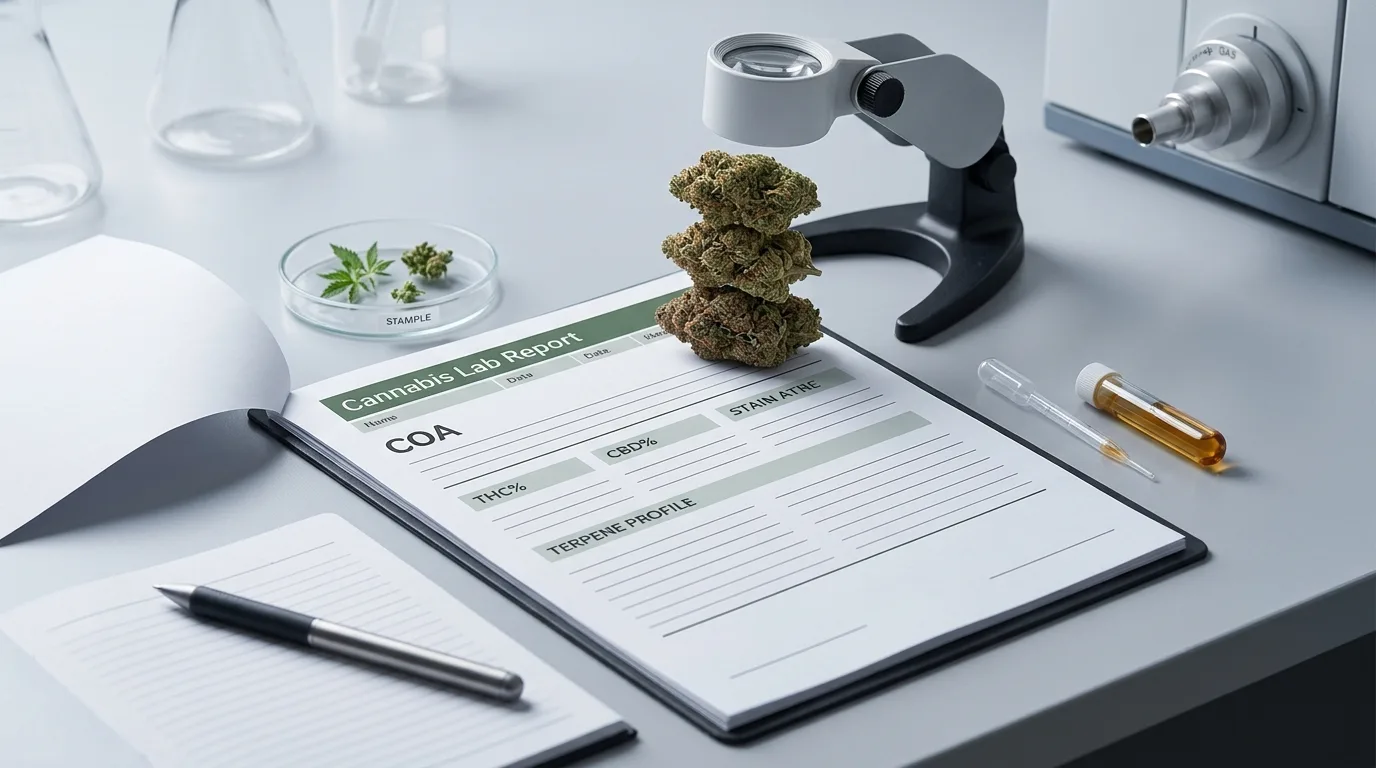
You've probably seen the abbreviation "COA" next to lab results on a dispensary website, maybe even clicked through to see rows of numbers, percentages, and technical terms that might as well be written in another language. Certificate of Analysis reports are the single most transparent piece of information you can access about what you're actually putting in your body, yet most cannabis consumers have never learned to read one. This comprehensive guide walks you through a real COA screenshot, annotating every section so you can confidently evaluate quality, safety, and potency before your next purchase.
Understanding lab reports isn't just for chemistry nerds or medical patients. Whether you're shopping for craft flower, concentrates, or edibles, knowing how to interpret cannabinoid profiles, terpene percentages, and contamination test results empowers you to make informed decisions and avoid products that don't meet safety standards. Let's decode the document that separates legitimate cannabis from mystery weed.
What Is a Certificate of Analysis (COA)?
A Certificate of Analysis is an official labouratory document that confirms the chemical composition and safety of a cannabis product. Third-party testing facilities analyze samples submitted by producers, generating reports that detail cannabinoid potency, terpene content, and the presence (or absence) of harmful contaminants like pesticides, heavy metals, residual solvents, and microbial pathogens.
In Canada, while Health Canada requires licenced producers to test products before sale, the regulations for craft growers and legacy market operators vary. Reputable mail-order dispensaries voluntarily provide COAs to demonstrate product quality and build consumer trust. The existence of a recent, detailed lab report is your first quality indicator,it shows a producer cares enough about transparency to invest in professional testing.
COAs typically include several panels of information: cannabinoid analysis, terpene profile, pesticide screening, residual solvent testing, heavy metal analysis, and microbial contamination checks. Not every report includes all panels (comprehensive testing is expensive), but at minimum, you should see cannabinoid potency and some form of contamination screening. Premium producers testing craft batches often include full terpene profiles because these compounds significantly influence effects and flavour.
Cannabinoid Profile Panel: Decoding Potency Numbers
The cannabinoid panel is what most consumers check first, and it's where you'll find the THC and CBD percentages advertised on product listings. But there's more nuance here than a single number suggests. Let's break down what you're actually looking at.
THCA vs THC: The Decarboxylation Factor
When you see a lab report showing separate values for THCA and THC, you're looking at the raw, unheated cannabis versus the activated form. THCA (tetrahydrocannabinolic acid) is the non-intoxicating precursor that exists in fresh flower. When you apply heat,through smoking, vaping, or baking edibles,THCA converts to THC through decarboxylation. A typical COA might show THCA at 24.5% and THC at 0.8%, which means the flower hasn't been heated yet.
The total potential THC is calculated by multiplying THCA by 0.877 (the conversion factor accounting for molecular weight loss during decarboxylation) and adding existing THC. So that 24.5% THCA + 0.8% THC flower would deliver approximately 22.3% total THC when consumed. Most reputable reports list both the individual cannabinoids and the calculated "Total THC" so you don't need to do the math yourself.
Minor Cannabinoids That Matter
Beyond THC and CBD, comprehensive panels test for CBG, CBN, CBC, and THCV. These minor cannabinoids appear in smaller percentages but contribute to the entourage effect. CBG (cannabigerol) often shows up at 0.5-1.5% in young flowers and is being studied for its potential anti-inflammatory properties. CBN (cannabinol) forms as THC degrades over time, so higher CBN levels (above 0.5%) might indicate older or improperly stored cannabis,though some consumers seek it out for its sedative qualities.
CBC (cannabichromene) and THCV (tetrahydrocannabivarin) are less common but worth noting when present. THCV in particular has unique properties,it can suppress appetite and provide a clear-headed, energetic effect at low doses, making it valuable in certain sativa-dominant strains. When reviewing a COA, check the minor cannabinoid section for these compounds; their presence or absence tells you something about strain genetics and harvest timing.
Reading Beyond the Headline Number
A product labelled "30% THC" sounds impressive, but the COA context matters. Is that total potential THC or just THCA? Was the test performed on a single bud (possibly cherry-picked) or a representative sample from the batch? Legitimate reports include batch numbers, sample collection dates, and testing dates,look for these details to verify the results apply to what you're actually purchasing.
Some reports also show a range or standard deviation, acknowledging that cannabinoid content varies slightly throughout a harvest. A report showing "28-32% THC" is actually more trustworthy than one claiming an exact 30.00%, because it reflects the natural variation in plant chemistry. As we explored in our guide to why chasing the highest THC strain often misses the point, potency is just one factor in your overall experience.
Terpene Profile: The Flavour and Effect Fingerprint
If cannabinoid panels tell you how strong a product is, terpene profiles tell you what it will feel like and taste like. Terpenes are aromatic compounds produced by cannabis (and countless other plants) that determine flavour, scent, and modulate cannabinoid effects through the entourage effect. A comprehensive COA includes a terpene analysis showing individual compounds and their concentrations, typically measured in mg/g or as percentages.
Primary Terpenes and What They Indicate
Most cannabis strains are dominated by three to five primary terpenes. Myrcene is the most common, often comprising 30-60% of total terpene content in indica-dominant varieties. It has an earthy, musky scent and is associated with the sedative "couch-lock" effect. If a COA shows myrcene above 0.5%, you're likely looking at a relaxing, body-centreed experience.
Limonene brings citrus notes and an uplifting, mood-enhancing quality, commonly found in sativa and hybrid strains. Caryophyllene adds pepper and spice, and uniquely, it's the only terpene that acts as a cannabinoid receptor agonist,meaning it directly activates CB2 receptors and may offer anti-inflammatory benefits. Pinene (both alpha and beta varieties) smells like pine and may promote alertness and memory retention, while linalool contributes floral, lavender-like notes with calming properties.
Total Terpene Percentage Matters
Look for the total terpene content, usually listed at the bottom of the terpene panel. Premium craft flower typically tests between 1.5% and 3% total terpenes, while exceptional batches can reach 4-5%. Anything below 1% suggests older product, improper curing, or genetics that don't emphasize terpene production. This number is as important as THC percentage for predicting your experience,a 20% THC strain with 3% terpenes will likely outperform a 28% THC strain with 0.8% terpenes in terms of flavour and nuanced effects.
Understanding what terpenes are and how they shape your cannabis experience transforms how you shop. Instead of choosing solely by THC content, you can select products with terpene profiles that match your desired effects,energizing limonene-dominant sativas for daytime use, or myrcene-heavy indicas for evening relaxation.
Interpreting the Terpene Ratios
The ratio between terpenes matters as much as individual percentages. A strain showing 1.2% myrcene, 0.4% limonene, and 0.3% caryophyllene will feel significantly different from one with 0.6% myrcene, 1.0% limonene, and 0.7% pinene, even if both have similar total terpene content and THC levels. The first profile suggests a relaxing, earthy indica experience; the second points to an uplifting, clear-headed hybrid.
Some advanced COAs include minor terpenes like terpinolene, humulene, and ocimene, each contributing unique aromatic and therapeutic qualities. Terpinolene, for example, appears in many sativa strains and has a fresh, floral character. Humulene shares chemical similarities with caryophyllene and adds woody, hoppy notes. The presence of these secondary terpenes indicates careful cultivation and harvest timing,they're volatile compounds that degrade quickly if product isn't handled properly.
Contamination Panels: Safety Screening Explained
Beyond potency and flavour, COAs verify that cannabis is safe to consume by testing for harmful contaminants. These safety panels are where lab testing truly proves its value,they catch problems invisible to the naked eye that could pose serious health risks.
Pesticide Residue Testing
The pesticide panel screens for agricultural chemicals that should never appear in cannabis destined for inhalation. Labs test for dozens or even hundreds of specific compounds, including fungicides, insecticides, and herbicides. A passing result shows "ND" (non-detect) or values below the acceptable regulatory limit for each tested substance. Canadian regulations set maximum residue limits (MRLs) for pesticides in cannabis, and licenced producers must stay below these thresholds.
If you see any pesticide listed as "detected" or showing a numerical value, compare it against the regulatory limit shown in the same row. Responsible labs flag any result approaching or exceeding limits with red highlighting or fail notices. Keep in mind that "organic" or "pesticide-free" claims without supporting COA evidence are just marketing,the lab report is your proof of clean cultivation practices.
Residual Solvents (For Concentrates)
When reviewing COAs for concentrates, vape cartridges, or extracts, the residual solvent panel becomes critical. Extraction processes often use solvents like butane, propane, ethanol, or CO2 to separate cannabinoids from plant matter. Properly purged products should show these solvents at non-detectable levels or well below safety limits (typically measured in parts per million).
Common solvents tested include butane, propane, hexane, ethanol, and heptane. The acceptable limits vary by solvent,Health Canada sets specific maximum levels for each based on toxicity and inhalation risk. Premium extract producers achieve "ND" results across the board through proper purging techniques. If you're comparing concentrates and one shows residual butane at 400 ppm while another shows ND, the choice is clear,even if the first product technically passes regulatory limits, you want the cleanest possible product when vapourizing.
Heavy Metals and Microbial Contamination
Heavy metal testing screens for lead, arsenic, cadmium, and mercury,toxic elements that can accumulate in cannabis plants grown in contaminated soil. These should always show non-detect or extremely low values. Passing results here indicate clean growing medium and proper cultivation conditions.
Microbial testing checks for harmful bacteria, mold, and yeast that could cause respiratory issues or infections in immunocompromised consumers. Total yeast and mold counts, total aerobic bacteria, bile-tolerant gram-negative bacteria, and specific pathogens like E. coli and Salmonella are measured. Passing results typically show counts below regulatory thresholds or ND for pathogens. This panel is especially important for consumers with compromised immune systems,a clean microbial screen confirms the product is safe for medical use.
When shopping for high-quality flower, checking the safety panels protects your health beyond just seeking potency. Whether you prefer pressed Cali bricks or traditional buds, a comprehensive contamination screening verifies you're consuming clean cannabis.
How to Verify COA Authenticity
Not all certificates of analysis are created equal, and unfortunately, some less scrupulous operators manipulate or fabricate lab results. Knowing how to verify authenticity protects you from misleading information and ensures you're getting what you pay for.
Check the Lab Credentials
Legitimate COAs come from accredited, third-party testing labouratories with proper certification. Look for the lab name and contact information,you should be able to independently verify the facility exists and holds appropriate ISO 17025 accreditation (the international standard for testing labouratory competence). Reputable Canadian cannabis testing labs include facilities like Keystone Labs, Lighthouse Lab Analytics, and Conneqt Labs, among others.
The COA should include the lab's licence numbers, accreditation certificates, and contact details. Some include QR codes or verification numbers that link back to the lab's database, allowing you to confirm the report is genuine and hasn't been altered. If a COA lacks lab contact information or uses a generic template without official letterhead, treat it with skepticism.
Match Batch Numbers and Dates
Every COA includes batch or lot numbers that identify the specific product tested. When you receive your order, check that the batch number on the package matches the COA provided. The testing date should be reasonably recent,cannabis quality degrades over time, so a COA from eighteen months ago doesn't tell you much about current product condition, even if batch numbers match.
Sample collection dates matter too. There should be minimal gap between when the sample was collected and when it was tested (usually within days or weeks). Large time gaps might indicate the sample degraded before testing, producing results that don't reflect the product's quality at packaging time. Professional producers test regularly and provide COAs specific to each batch they sell.
Look for Complete Testing Panels
While basic testing might only cover cannabinoids, comprehensive COAs from quality-focused producers include multiple panels: cannabinoids, terpenes, pesticides, residual solvents (for extracts), heavy metals, and microbial screening. A report that only shows THC percentage without any safety screening raises questions,what are they hiding?
Premium products warrant premium testing. If you're paying top dollar for craft cannabis, the producer should invest in full-panel testing to verify the quality justifies the price. Budget products might have limited testing, but even entry-level options should include basic contamination screening for pesticides and microbials. The investment in testing reflects the producer's commitment to consumer safety and product transparency.
Applying COA Knowledge to Your Cannabis Purchases
Now that you can read and verify certificates of analysis, how do you use this knowledge when shopping? Here's how to integrate COA evaluation into your buying decisions across different product categories.
Evaluating Flower Quality
When purchasing cannabis flower, request COAs for specific strains and batches you're considering. Compare total cannabinoid content, but weight terpene profiles heavily in your decision. A strain with 22% THC and 2.5% terpenes will likely provide a better experience than 28% THC with 1% terpenes. Check that the terpene profile matches the strain's advertised characteristics,claimed "gas strains" should show significant caryophyllene and myrcene to justify their fuel-forward terpene profiles.
Review contamination panels for any detects in pesticides or concerning microbial counts. Premium flower should pass all safety screenings with flying colours. If you're comparing multiple options and one shows borderline pesticide results while another is completely clean, the choice is obvious,don't compromise on safety to save a few dollars.
Concentrate and Extract Selection
For concentrates, vape cartridges, and extracts, cannabinoid potency ranges much higher than flower,often 70-90% total cannabinoids. The residual solvent panel becomes your primary safety concern. Ensure all tested solvents show ND or extremely low values. Premium concentrates from skilled extractors consistently achieve non-detect results across all solvents.
Terpene content in concentrates varies by extraction method. Live resin and live rosin preserve more terpenes than traditional BHO or distillate, often showing 5-10% total terpene content. If you're choosing between concentrate options, higher terpene content generally indicates better flavour and a more rounded entourage effect. The presence of strain-specific terpenes also suggests the concentrate was made from quality starting material, not trim or older flower.
Edibles and Infused Products
COAs for edibles focus heavily on dosing accuracy and consistency. The cannabinoid panel should show that the stated dose matches tested content within a reasonable margin (±10% is typical for homogeneity). For example, a 10mg THC gummy should test between 9-11mg. Products showing significant variation between stated and tested dosage raise quality control questions.
For baked goods and infused products, check the microbial panel carefully. Food products have additional contamination risks beyond raw flower. Residual solvent screening matters if the edible was made with cannabis oil extracted using solvents rather than infused with flower. Understanding proper edibles dosing starts with trusting the numbers on the label, which requires accurate COA verification.
Common COA Red Flags to Watch For
Beyond knowing what good reports look like, learn to spot warning signs that suggest problems with product quality or testing authenticity. These red flags should prompt additional scrutiny or cause you to shop elsewhere.
Suspiciously high numbers: THC percentages above 35% are extremely rare in flower, and terpene totals above 5% are uncommon. If you see a COA claiming 40% THC and 6% terpenes, verify the testing lab's credentials carefully,the numbers might be accurate, but they might also indicate testing irregularities or result manipulation.
Missing safety panels: Any reputable producer selling premium cannabis should test for contamination. If a COA only shows cannabinoids and terpenes without pesticide or microbial screening, question why. Safety testing costs money, and its absence often indicates corner-cutting or something to hide.
Outdated test dates: Cannabis quality degrades over time. A COA from twelve months ago doesn't reflect current product condition. Cannabinoids oxidize, terpenes evaporate, and microbial growth can occur during storage. Recent testing (within 2-3 months for flower, 6 months for sealed concentrates) is essential for accurate quality assessment.
Inconsistent information: The strain name, batch number, and product description should match across the COA and product packaging. Mismatches suggest either poor record-keeping or deliberate misrepresentation. The testing facility name and batch identifier should be clearly stated and verifiable.
Generic or template reports: Some fabricated COAs use generic templates with filled-in numbers but lack proper lab accreditation, unique report numbers, or official letterhead. Legitimate reports from professional labouratories include detailed metadata, lab analyst signatures, and quality assurance seals.
Building COA Litreacy Into Your Buying Routine
Making COA review a standard part of your purchasing process doesn't require becoming a chemist. Start by requesting reports for products you regularly buy and familiarize yourself with what good results look like for your preferred strains and formats. Over time, you'll develop an intuitive sense for quality indicators and red flags.
Many online dispensaries now publish COAs directly on product pages or make them available upon request. Shopping with transparent mail-order services that prioritize lab testing removes the guesswork from quality assessment. When a producer willingly shares comprehensive testing results, they're demonstrating confidence in their cultivation and processing practices.
Don't hesitate to contact customer service with questions about COAs. Ask for batch-specific reports before purchasing, especially for premium products or medical use. Legitimate operations welcome these inquiries because they recognize informed consumers make better long-term customers. Producers who deflect requests for lab results or only provide partial information aren't worth your business.
As Canada's cannabis market matures, lab testing transparency increasingly separates quality-focused producers from mass-market operators. Your ability to read and interpret COAs gives you the power to vote with your wallet for companies that invest in safety, consistency, and transparency. Whether you're shopping for your first beginner edible dose or restocking your favourite concentrate, let the lab report guide your decision.
For flower, COAs should be dated within 2-3 months of your purchase to accurately reflect current quality. Sealed concentrates and extracts remain stable longer, so 6-month-old reports are acceptable if the product was properly stored. Edibles and infused products should have testing performed on the specific batch you're purchasing. Always verify batch numbers match between the COA and product packaging.
Yes. Lab testing confirms safety and potency but doesn't measure subjective quality factors like proper curing, trimming, or overall bag appeal. A product can test clean for contaminants and show decent cannabinoid levels while still being poorly grown, improperly stored, or lacking the terpene complexity that makes premium cannabis enjoyable. COAs are a quality floor, not a ceiling,they eliminate unsafe products but don't guarantee the best possible experience.
THC refers to delta-9 THC in its activated form, which is typically a small percentage in raw flower. Total THC is a calculated value that represents the maximum THC you'll receive after heating the product, combining existing THC with converted THCA (multiplied by 0.877 to account for molecular weight loss during decarboxylation). Total THC is the number you should reference when comparing product potency.
Licenced producers selling through legal retail channels must test products and meet Health Canada quality standards, but not all are required to publicly share detailed COAs. Legacy market producers and craft growers operating in the mail-order space aren't legally required to test, making voluntary COA provision a strong quality signal. Always look for products with accessible, comprehensive lab testing regardless of the seller's licensing status.