You ate the gummy two hours ago. Your friends are giggling on the couch, but you feel nothing. You check the package again,same dose, same brand. So why didn't your edible work?
This frustrating experience is more common than you think, and the answer rarely boils down to just one factor. Cannabis edibles don't affect everyone the same way because your body's response depends on a complex interplay of metabolism, genetics, stomach contents, product quality, and timing. While some people feel effects within 30 minutes, others may wait three hours or feel nothing at all from the same dose. Understanding why your edible didn't work requires looking at both your unique biology and the product itself,and the honest truth is that sometimes edibles just don't deliver as expected, even from reputable sources.
Your Liver Might Process THC Differently Than Others
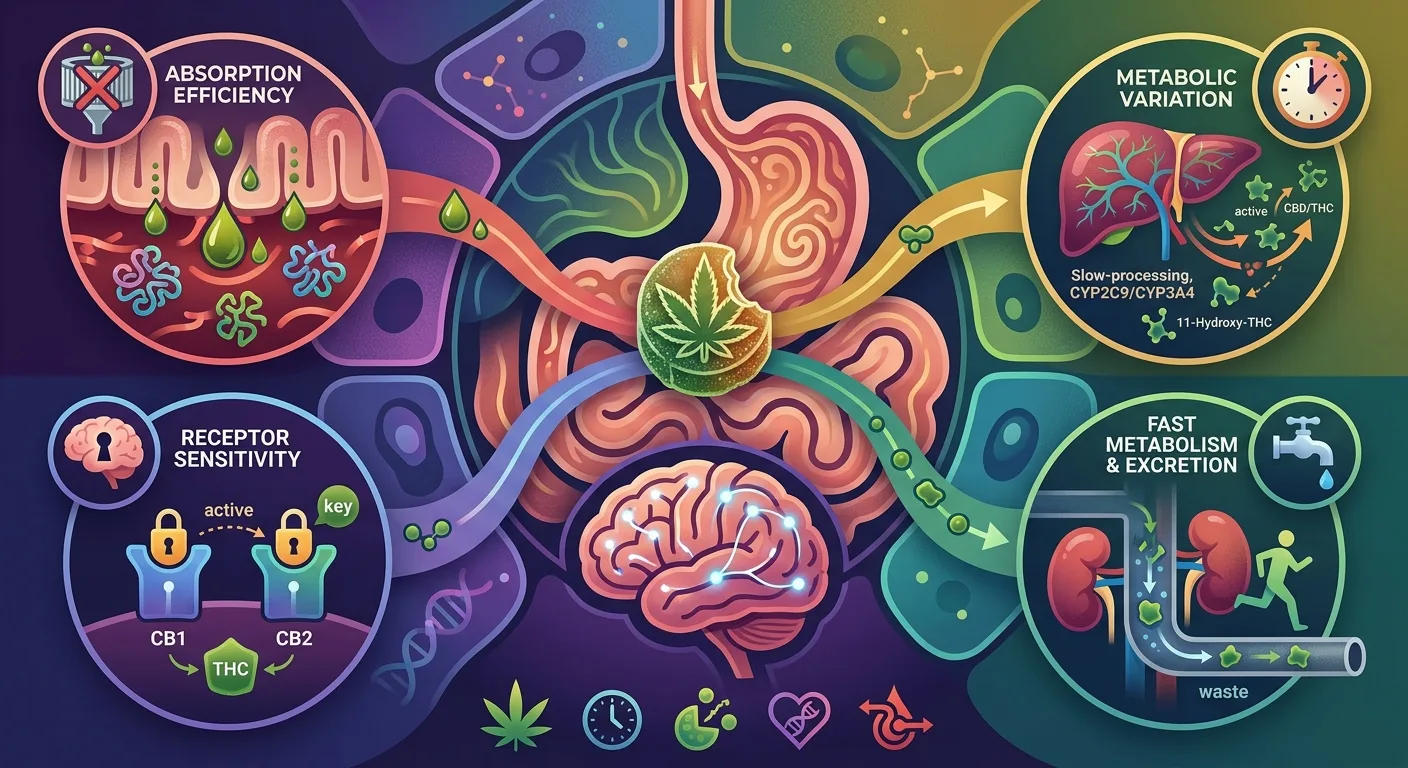
The most scientifically documented reason edibles fail for some users comes down to liver metabolism. When you eat cannabis, THC travels through your digestive system to your liver, where enzymes convert delta-9-THC into 11-hydroxy-THC,a metabolite that's actually more potent and longer-lasting than the original compound. This is why edibles hit differently than smoking.
But here's the catch: not everyone's liver produces the same amount or type of metabolizing enzymes. The CYP2C9 enzyme, specifically, plays a crucial role in breaking down THC. Genetic variations in this enzyme can make you either a fast metabolizer or a slow metabolizer. Fast metabolizers process THC so quickly that it may not reach sufficient blood concentration to produce noticeable effects. Slow metabolizers, conversely, may feel overwhelming effects from smaller doses.
Research published in the journal Drug Metabolism and Disposition found that approximately 20 percent of people carry genetic variants that significantly alter their THC metabolism rate. If you're in this group, standard edible doses may simply not work for you through conventional oral consumption. Some people with these genetic profiles report needing doses three to four times higher than average to feel comparable effects,or they may never respond strongly to edibles regardless of dose.
First-Pass Metabolism: The Liver's Double-Edged Sword
First-pass metabolism refers to the initial breakdown of substances in your liver before they reach general circulation. For edibles, this process destroys a significant portion of THC before it ever reaches your bloodstream. Studies suggest that only 10 to 20 percent of ingested THC actually makes it past the liver into your system.
If your liver is particularly efficient at first-pass metabolism,due to genetics, high enzyme activity, or other factors,you might metabolize THC so thoroughly that insufficient amounts reach cannabinoid receptors in your brain. This isn't a failure of the edible; it's your body being exceptionally good at its job of filtering substances.
What You Ate Before Matters More Than You Think
The contents of your stomach when you consume an edible dramatically affect onset time and intensity. THC is fat-soluble, meaning it absorbs best when consumed with dietary fats. If you took your edible on a completely empty stomach, absorption may be erratic and unpredictable.
Conversely, if you just finished a large, heavy meal, that food creates a backlog in your digestive system. Your edible might sit in your stomach for hours before moving to the small intestine where most THC absorption occurs. This delay can push onset time from 60 minutes to 3 or 4 hours,long enough that you might assume it's not working and give up waiting.
The Ideal Eating Window for Edibles
Cannabis researchers and experienced users suggest a middle ground: consume your edible 30 to 60 minutes after eating a moderate meal that contains some healthy fats. This approach provides enough digestive activity to move the edible through your system efficiently while the fat content aids THC absorption. Foods like avocado, nuts, olive oil, or cheese work particularly well as pre-edible meals.
The science backs this up. A study in the European Journal of Clinical Pharmacology found that THC bioavailability increased by nearly 3 times when consumed with a high-fat meal compared to fasting conditions. If you took your edible on an empty stomach expecting faster results, you might have actually sabotaged absorption entirely.
Your Tolerance Level Changes Everything
Regular cannabis users often forget how dramatically tolerance affects edible response. If you smoke or vape daily, you've built up a tolerance to THC that extends to all consumption methods, including edibles. The 10mg dose that worked perfectly a year ago might now produce barely perceptible effects.
Tolerance develops because repeated THC exposure downregulates CB1 receptors in your brain. Your body litreally reduces the number of available receptors that THC can bind to, requiring higher doses to achieve the same effect. For heavy daily users, a dose of 50mg to 100mg might be necessary to feel what a casual user experiences from 10mg.
Cross-Tolerance Between Consumption Methods
Many users mistakenly believe that smoking tolerance doesn't affect edibles, or vice versa. While it's true that edibles produce the more potent 11-hydroxy-THC metabolite, your cannabinoid receptors don't distinguish between delivery methods. If they're downregulated from daily smoking, they're downregulated for edibles too.
The solution isn't always taking more,sometimes it's taking a tolerance break. Research shows that even a 48-hour abstinence period can begin upregulating receptors, while a 2-week break can reset tolerance significantly. If edibles have stopped working for you after months of daily use, this receptor saturation is likely the culprit. Taking a break and starting fresh with lower doses often restores sensitivity.
Product Quality and Dosing Inconsistencies
This is the uncomfortable truth that the cannabis industry doesn't always want to acknowledge: not all edibles are accurately dosed. Even in legal markets with testing requirements, dosing inconsistencies exist. A 2015 study published in the Journal of the American Medical Association tested edibles from legal California dispensaries and found that only 17 percent were accurately labelled,23 percent were under-dosed, and 60 percent were over-dosed.
While testing standards have improved since 2015, particularly in Canada's regulated market, variability still occurs. Manufacturing challenges, uneven distribution of THC in the product, and degradation during storage can all result in edibles that contain significantly less THC than labelled. If your edible didn't work, there's a real possibility it simply didn't contain the stated dose.
How to Identify Under-Dosed Products
Look for products with recent lab reports showing cannabinoid content. Reputable producers provide certificates of analysis (COA) that verify potency. If you're consistently having problems with a particular brand while other edibles work fine, that's a red flag about product quality. In Canada's legal market, Health Canada requires third-party testing, but enforcement varies and degradation can occur after testing.
Storage also matters. THC degrades over time, especially when exposed to light, heat, and oxygen. An edible that's been sitting in your cupboard for six months may have significantly reduced potency compared to when it was fresh. Always check manufacture dates and store edibles in cool, dark places in airtight containers.
Timing and Patience: The Three-Hour Rule
Perhaps the most common reason people think their edible didn't work is simply impatience. Onset time for edibles varies wildly based on all the factors we've discussed,metabolism, stomach contents, product formulation. While some people feel effects in 30 minutes, the complete absorption and metabolism process can take 2 to 3 hours for others.
The cardinal rule of edibles is waiting at least 2 hours before concluding it's not working. Taking a second dose at the 60-minute mark because you "don't feel anything" is how people end up uncomfortably high 3 hours later when both doses finally kick in. This delayed onset is particularly common with solid edibles like brownies and cookies, which take longer to break down in the digestive system than gummies or tinctures.
When Edibles Finally Hit Late
If you've given up waiting after 90 minutes and then suddenly feel effects at the 3-hour mark, your digestive timing was the issue. This often happens when you consumed the edible with a very large meal, when your metabolism is naturally slower (late at night), or when the product was particularly hard or dense and took longer to break down.
Some experienced users report that certain full-spectrum edibles, particularly those with significant amounts of CBD and other cannabinoids, take longer to produce noticeable effects but last longer once they do. The entourage effect created by multiple cannabinoids and terpenes working together may alter absorption kinetics in ways we're still learning about.
Medical Conditions That Affect Absorption
Several medical conditions can significantly impair your ability to absorb THC from edibles. Gastrointestinal disorders like Crohn's disease, irritable bowel syndrome, celiac disease, and gastric bypass surgery all affect how nutrients and compounds move through your digestive system. If you have compromised gut health, edibles may not work effectively regardless of dose.
Liver conditions present another complicating factor. Since THC metabolism happens primarily in the liver, anyone with hepatic impairment, fatty liver disease, or taking medications that affect liver function may experience altered edible effects. Some medications inhibit the CYP450 enzymes responsible for metabolizing THC, potentially making edibles more potent, while others enhance these enzymes and reduce effects.
Medications That Interfere With Edible Metabolism
Common medications that can alter THC metabolism include certain antibiotics, antifungals, antidepressants, and heart medications. Grapefruit is famously known to inhibit CYP450 enzymes,if you're someone who's been warned against eating grapefruit with your medications, those same medications likely affect how you process edibles.
This doesn't mean edibles are unsafe with these medications, but it does mean your response may be unpredictable. If you recently started a new prescription and edibles suddenly stopped working (or started working too well), drug interaction with liver enzymes is the likely explanation. Always discuss cannabis use with your healthcare provider, especially if you're on prescription medications.
The "Non-Responder" Phenomenon
In rare cases, some individuals appear to be true edible non-responders,people for whom oral THC simply doesn't produce significant effects regardless of dose, timing, or product quality. While this phenomenon isn't fully understood, theories include extreme variations in cannabinoid receptor expression, unique liver enzyme profiles, or gut microbiome differences that prevent proper absorption.
A 2020 study in Cannabis and Cannabinoid Research estimated that approximately 5 to 10 percent of cannabis users may be hypo-responsive to edibles specifically. These individuals often report normal responses to smoked or vapourized cannabis but minimal effects from even very high oral doses. For these people, alternative delivery methods like sublingual tinctures, which bypass first-pass liver metabolism, may work better.
Alternative Delivery for Non-Responders
If you've tried multiple products at increasing doses with minimal effect, consider alternative consumption methods. Sublingual tinctures held under the tongue for 60 to 90 seconds allow THC to absorb directly into the bloodstream through mucous membranes, skipping the liver's first-pass metabolism entirely. Onset is faster (15 to 30 minutes) and more predictable than traditional edibles.
THC beverages also show promise for people who don't respond well to solid edibles. Nanoemulsion technology used in some cannabis drinks creates microscopic THC particles that absorb more quickly and completely than traditional edibles. These products typically produce effects in 15 to 45 minutes and may bypass some of the metabolic issues that cause traditional edibles to fail.
What to Do When Your Edible Doesn't Work
If you're currently in the situation where your edible hasn't produced expected effects, here's a practical action plan. First, check the time,have you waited at least 2 full hours? If not, be patient. Resist the urge to take more until you're absolutely certain the first dose isn't going to work.
Second, evaluate what you've eaten today. Did you take the edible on an empty stomach? If so, eat something with fat content now,a handful of nuts, some cheese, or a spoonful of peanut butter. This can sometimes kickstart absorption of THC that's sitting in your stomach. Conversely, if you ate an enormous meal right before the edible, the delay may simply be digestive backlog.
Third, consider your recent cannabis use. If you consume daily, tolerance is likely playing a role. For your next attempt, either take a tolerance break or try a higher dose. Many regular users find their effective edible dose is 25mg to 50mg rather than the standard 10mg beginner dose. Some experienced users require 100mg or more.
Troubleshooting for Next Time
For your next edible experience, optimize conditions: take it 30 to 60 minutes after eating a moderate meal with healthy fats, choose a reputable product with recent lab testing, and clear your schedule for at least 4 hours so you're not anxiously checking the clock. Try the same product and dose twice before concluding it doesn't work for you, as individual variation can occur even within your own body from day to day.
If you've systematically tried different products, doses, and timing strategies without success, you may be a poor metabolizer of oral THC. In that case, vape cartridges or concentrates consumed through alternative methods will likely work better for you. There's no shame in discovering that edibles aren't your optimal delivery method,cannabis consumption is highly individual.
Find Quality Cannabis Products Delivered to Your Door
Whether you prefer edibles, vapes, or flower, we deliver tested cannabis products across Canada. Browse our selection and experience reliable service backed by accurate product information.
Shop NowFrequently Asked Questions
It's strongly recommended to wait at least 2 to 3 hours before considering a second dose. Edibles can have delayed onset, and taking more too soon is the most common cause of uncomfortably intense experiences when both doses eventually kick in. If you must take more, limit it to half your original dose.
Individual variation in liver enzymes, metabolism speed, tolerance levels, and cannabinoid receptor expression means edibles affect everyone differently. Approximately 10 to 20 percent of people are poor metabolizers of oral THC due to genetic factors, and daily cannabis users develop tolerance that requires higher doses to feel comparable effects.
Yes, consuming foods with healthy fats after taking an edible can improve absorption, especially if you took it on an empty stomach. THC is fat-soluble and absorbs best in the presence of dietary fats. Eating something like nuts, avocado, or cheese 30 to 60 minutes after your edible may help kickstart effects if they haven't started yet.
Look for products with recent certificates of analysis from third-party labs showing actual cannabinoid content. If multiple people report the same product not working as expected, or if other brands work fine for you but one particular product doesn't, under-dosing may be the issue. Reputable producers provide lab reports and manufacture dates on their packaging or website.
Yes, gastrointestinal disorders like Crohn's disease, IBS, celiac disease, or previous gastric bypass surgery can impair THC absorption. Liver conditions also affect edible metabolism since THC processing happens primarily in the liver. Additionally, many common medications alter the liver enzymes that metabolize THC, making edibles more or less effective.
Research suggests 5 to 10 percent of cannabis users may be hypo-responsive to oral THC due to genetic variations in metabolism or receptor expression. These individuals often respond normally to smoked or vapourized cannabis but experience minimal effects from even high-dose edibles. For true non-responders, sublingual tinctures or other delivery methods that bypass liver metabolism work better.
The Bottom Line on Non-Working Edibles
When your edible doesn't work, it's rarely just one simple explanation. The interaction between your unique metabolism, liver enzyme genetics, tolerance level, stomach contents, and product quality creates a complex equation where many variables can go wrong. While it's frustrating to feel left out when friends are experiencing effects you're not, understanding the science helps you troubleshoot and find what works for your body.
The honest truth is that edibles remain the least predictable cannabis consumption method precisely because they depend on so many biological and environmental factors. This doesn't make them bad or unreliable for everyone, but it does mean they require patience, experimentation, and realistic expectations. Some people will always respond better to other delivery methods, and that's perfectly fine.
If traditional edibles consistently fail you after systematic troubleshooting, consider exploring vapourizer options or sublingual products that offer more predictable onset and effects. The goal is finding what works reliably for your body, not forcing a consumption method that fights your biology. For those ready to explore quality cannabis products with accurate testing and reliable delivery across Canada, we're here to help you find your ideal consumption method.