If you've ever stared at a syringe of THC distillate wondering exactly how to turn it into brownies without sending yourself or your friends to the moon, you're not alone. Making edibles with distillate is actually one of the simplest methods for home cannabis cooking, but there's one critical step most online guides gloss over: the dose calculation. Without understanding the arithmetic behind milligrams per serving, you're essentially playing Russian roulette with your nervous system. This guide breaks down the entire process, from equipment to the actual math that keeps your edibles safe, predictable, and enjoyable.
THC distillate is already activated (decarboxylated), meaning you can mix it directly into recipes without any baking or heating required. This makes it the most beginner-friendly cannabis ingredient for edibles. But that convenience comes with responsibility: distillate is potent, usually testing between 85-95% THC, and a single gram contains 850-950 milligrams of THC. One miscalculation and you've created a batch of accidental rocket fuel.
Why Distillate Is the Best Starting Point for Homemade Edibles
Before we dive into the recipe and math, let's establish why distillate beats other cannabis formats for edible production. Unlike flower, which requires decarboxylation (heating to activate THC), or concentrates like shatter or wax that may still need activation, distillate arrives at your door ready to eat. It's been refined to remove plant material, fats, and impurities, leaving behind nearly pure cannabinoids.
This purity means no cannabis taste in your final product unless you want it there. Distillate is flavourless and odourless, so your brownies will taste like brownies, not like someone dumped a grinder into the batter. It also mixes easily into fats (butter, oil, coconut oil) or even directly into melted chocolate, honey, or any recipe with a fat component to bind to.
The consistency is another advantage. A gram of distillate from a reputable source will have a lab-tested potency printed on the package. This is the number you'll use for all your dose calculations. Most distillates fall between 85-92% THC, though some premium products push higher. Always check the label, because that percentage is the foundation of safe edible production.
What You'll Need Before You Start
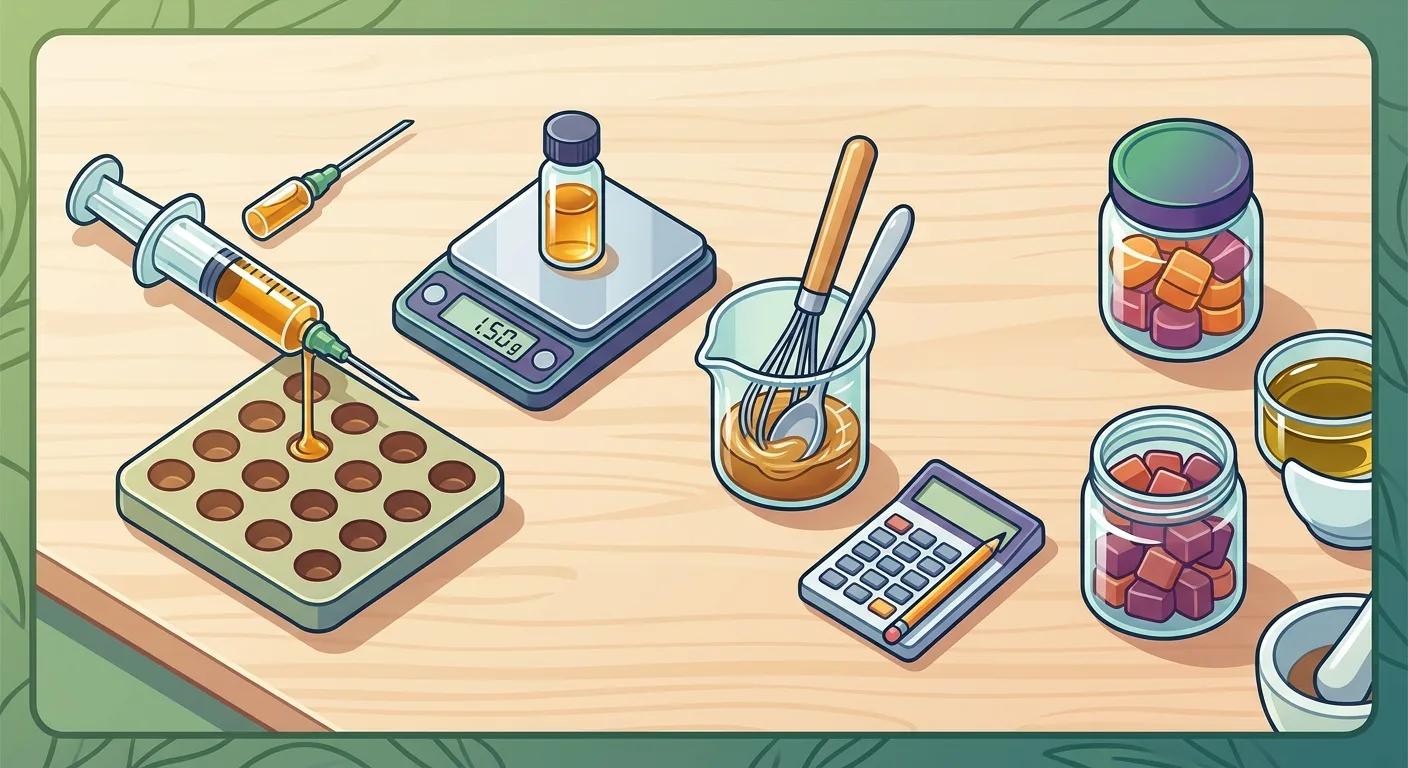
Gather these items before you begin. This isn't a complicated process, but having everything on hand makes the arithmetic and mixing much smoother:
- THC distillate (1 gram is enough for a strong batch of 12-16 servings)
- Digital kitchen scale (accurate to 0.1 grams)
- Fat-based ingredient (butter, coconut oil, or olive oil)
- Double boiler or microwave-safe bowl
- Silicone spatula for scraping every last bit
- Recipe of your choice (brownies, cookies, gummies, chocolate, etc.)
- Calculator (your phone works fine)
- Patience (seriously, this is critical for testing doses)
If your distillate came in a syringe, you're already set for easy dispensing. If it's in a jar, you'll need to warm it slightly to make it pourable. Distillate is thick and sticky at room temperature, but it flows easily when gently heated.
The Dose Calculation Formula That Actually Matters
Here's where most guides fail you. They'll tell you to "add distillate to taste" or give vague instructions like "use half a gram for mild effects." That's useless. What you need is the actual formula, broken down step by step, so you can calculate exactly how many milligrams of THC are in each serving.
The formula is simple. Memorize this:
(Grams of distillate × Potency percentage × 1000) ÷ Number of servings = Milligrams per serving
Let's break that down with a real example. You buy 1 gram of distillate that tests at 90% THC. You want to make 12 brownies. Here's how you calculate the dose for each brownie:
- Convert grams to milligrams: 1 gram = 1000 milligrams
- Calculate total THC: 1 gram × 0.90 (90%) = 0.9 grams of pure THC
- Convert to milligrams: 0.9 grams × 1000 = 900 milligrams total THC
- Divide by servings: 900 mg ÷ 12 brownies = 75 mg per brownie
That's a strong dose. For most people, 75mg would be overwhelming. Let's say you want a more moderate 10mg per serving instead, which is a common recreational dose for someone with some tolerance. Now you work backwards:
900 mg total ÷ 10 mg per serving = 90 servings
So that same 1 gram of 90% distillate should be divided into 90 pieces if you want 10mg doses. If you're making brownies, that means cutting your batch into 90 small squares, or making multiple batches and splitting the distillate accordingly.
Common Dose Ranges and Who They're For
Before you commit to a dose, understand what different milligram amounts actually feel like. Individual tolerance varies wildly, but these ranges are a starting guideline:
- 2.5-5mg: Microdose territory. Mild relaxation, slight mood lift, functional for most people. Good for first-timers or daytime use.
- 10-15mg: Standard recreational dose. Noticeable euphoria, body relaxation, altered perception. Most regular cannabis users feel comfortable here.
- 20-30mg: Strong effects. Deep body high, potential couch-lock, time distortion. For experienced users only.
- 50mg+: Very strong. Intense psychoactive effects, possible discomfort or anxiety if you're not prepared. Medical patients with high tolerance or specific needs.
- 100mg+: Extremely potent. Most people will find this overwhelming. Reserved for patients with serious tolerance or specific medical conditions.
The golden rule: start low, go slow. Even if you smoke cannabis daily, edibles hit differently. The THC is metabolized through your liver, converting delta-9 THC into 11-hydroxy-THC, a more potent compound that crosses the blood-brain barrier more efficiently. This is why edibles feel stronger and last longer than smoking.
If you're unsure about dosing for yourself or others, aim for 5-10mg per serving and tell everyone to eat one piece and wait at least two hours before considering more. This waiting period is non-negotiable. Many people eat more after 45 minutes because they "don't feel anything," and then both doses hit at once, leading to an uncomfortable experience.
The Step-by-Step Process for Making Edibles with Distillate
Now that you understand the dose math, here's the actual production process. This method works for virtually any recipe that contains fat. We'll use brownies as the example, but the technique applies to cookies, chocolates, gummies, or even savoury dishes.
Step 1: Calculate Your Total THC and Desired Dose
Use the formula from the previous section. Write down your numbers before you start cooking. Know exactly how many milligrams you have total, and how many milligrams you want per serving. This is the foundation of safe edible production.
Example: You have 2 grams of 88% distillate and want to make 24 brownies at 15mg each.
- Total THC: 2 grams × 0.88 × 1000 = 1,760 mg
- Per serving: 1,760 mg ÷ 24 brownies = 73.3 mg per brownie
That's too strong for your target. So you adjust: 1,760 mg ÷ 15 mg per serving = 117 servings. You'd need to make a much larger batch or use less distillate. Let's use 0.5 grams instead: 0.5 × 0.88 × 1000 = 440 mg total. 440 ÷ 24 = 18.3 mg per brownie. That's close enough to your 15mg target.
Step 2: Infuse Your Fat
Distillate mixes best when combined with a fat-based ingredient. For brownies, you'll typically add it to melted butter or oil. Here's how:
- Measure the amount of butter or oil your recipe calls for (usually 1/2 to 3/4 cup for a standard brownie mix).
- Warm the fat gently in a double boiler or microwave. You want it liquid but not smoking hot. Around 120-140°F is perfect.
- Add your measured distillate directly to the warm fat. If it's in a syringe, push it out slowly. If it's in a jar, use a spatula to scrape every bit into the fat.
- Stir thoroughly for 2-3 minutes. The distillate should completely dissolve into the fat, creating a uniform mixture with no visible clumps.
- If the distillate is stubborn, warm the mixture slightly more and keep stirring. It will eventually incorporate.
This infused fat is now your carrier for the THC. When you mix it into your batter, the cannabinoids will distribute evenly throughout (assuming you mix well). This even distribution is why the dose per serving calculation works, the THC is theoretically uniform across every brownie.
Step 3: Follow Your Recipe Exactly
Use the infused fat in place of regular butter or oil in your recipe. Mix the batter according to the package or recipe instructions. Don't skimp on mixing time, you want that infused fat distributed as evenly as possible throughout the batter.
Pour the batter into your prepared pan and bake according to the recipe. Yes, you can bake with distillate, it's already decarboxylated so the heat won't degrade the THC significantly. Edibles are typically baked at 325-350°F, well below the temperature where THC begins to break down (around 400°F).
Step 4: Cut Evenly and Test One Serving
This step is critical. Once your brownies (or whatever you made) are cooled, cut them into the exact number of servings you calculated. If your math said 24 brownies at 18mg each, cut 24 pieces. Use a ruler if you need to. Uneven cutting means uneven dosing.
Before you share with anyone or eat more than one piece, test a single serving. Eat it, then wait two full hours. Set a timer. Do not eat more during this window. Edibles can take 45-90 minutes to kick in, sometimes longer depending on your metabolism and what else you've eaten.
If after two hours you feel nothing or want a stronger effect, you can eat another piece the next day and adjust your calculations for future batches. But don't chase the high during your first test. Patience prevents the "I ate too much" panic that ruins the experience.
Advanced Tips for Consistent, High-Quality Edibles
Once you've mastered the basic process, these refinements will improve your results:
Mix in Lecithin for Better Bioavailability
Sunflower or soy lecithin is an emulsifier that helps THC bind to fats more effectively and improves absorption in your digestive system. Add 1-2 tablespoons of liquid lecithin to your infused fat before mixing into the recipe. Users report faster onset times and more predictable effects when lecithin is included.
You can find lecithin at health food stores or online. It's inexpensive and one bottle lasts through many batches. Just stir it into your warm fat along with the distillate.
Account for Uneven Mixing
Even with thorough stirring, homemade edibles aren't lab-grade uniform. One brownie might have 15mg, another might have 22mg. This is unavoidable in home kitchens without professional mixing equipment. The solution is conservative dosing, aim for slightly lower doses per serving than your absolute comfort maximum, because some pieces will be stronger.
Label your edibles clearly. Write the estimated dose per serving, the date you made them, and a warning that effects can take up to two hours. If you're sharing, brief everyone on the dose and the wait time. Responsible edible production includes responsible consumption education.
Storage Extends Potency
THC degrades over time when exposed to light, heat, and air. Store your edibles in an airtight container in a cool, dark place. Refrigeration extends shelf life for baked goods. Freezing works even better for long-term storage, just thaw individual servings as needed.
Properly stored edibles maintain potency for 6-12 months in the freezer, 2-3 weeks in the fridge, and about a week at room temperature (depending on the recipe). Always check for mold or staleness before consuming older edibles.
Troubleshooting Common Distillate Edible Problems
Even with careful preparation, issues can arise. Here's how to fix the most common problems:
The Distillate Won't Mix Into the Fat
This usually means the fat isn't warm enough. Distillate has a thick, honey-like consistency and needs heat to become fluid. Warm your fat mixture to 130-150°F and stir vigourously. If it still won't incorporate, you may have a very high-purity distillate that needs extra stirring time. Keep at it, it will eventually blend.
Alternatively, if you're working with a small amount of fat, the ratio might be too concentrated. Add a bit more butter or oil to dilute the mixture and make stirring easier.
The Edibles Are Too Weak or Too Strong
Go back to your calculation. Did you measure the distillate accurately? Did you check the potency percentage on the label? If your edibles are consistently weaker than expected, your distillate might be less potent than advertised or degraded. If they're too strong, you may have used more distillate than you calculated or cut your batch into fewer pieces than planned.
For future batches, adjust your math based on the actual experience. If your "10mg" brownies felt more like 15mg, recalculate assuming your distillate is slightly more potent or your servings were slightly larger than intended.
Some Pieces Hit Harder Than Others
This is the uneven mixing issue mentioned earlier. You can minimize this by:
- Mixing your batter longer and more thoroughly
- Using an electric mixer instead of hand stirring
- Making recipes with more liquid ingredients (the infused fat distributes better in wetter batters)
- Stirring the batter one final time right before pouring into the pan
Accept that some variation is normal in home cooking and adjust your target dose downward to compensate.
Recipe Example: Classic Cannabis Brownies with Distillate (24 Servings at 10mg Each)
Here's a complete recipe with the dose calculation built in. This makes 24 brownies, each containing approximately 10mg THC.
Ingredients
- 1 box brownie mix (or your favourite from-scratch recipe)
- 0.27 grams (270mg) of 90% THC distillate (this gives you 243mg total THC, or 10.1mg per brownie when divided by 24)
- 1/2 cup butter or oil (as required by your brownie mix)
- 2 eggs (if your mix requires them)
- 1/4 cup water (if your mix requires it)
- 1 tablespoon sunflower lecithin (optional but recommended)
Instructions
- Preheat your oven according to the brownie mix instructions (usually 325-350°F).
- Melt the butter in a small saucepan or microwave-safe bowl until fully liquid but not boiling.
- Add the distillate to the warm butter. Stir continuously for 2-3 minutes until the distillate is completely dissolved and the mixture is uniform.
- If using lecithin, add it now and stir for another 30 seconds.
- In a large mixing bowl, combine the brownie mix, eggs, and water. Add the infused butter and stir thoroughly for 2-3 minutes. Make sure the batter is completely uniform with no visible swirls or separation.
- Pour the batter into a greased 9x13 inch pan. Use a spatula to spread evenly.
- Bake according to the package instructions (typically 25-30 minutes). Test with a toothpick, it should come out with moist crumbs but not raw batter.
- Let cool completely before cutting. This is important, cutting hot brownies leads to uneven pieces.
- Cut into 24 equal pieces (a 6x4 grid). Use a ruler for precision.
- Test one brownie and wait two hours before consuming more or sharing with others.
Store leftovers in an airtight container in the refrigerator for up to two weeks, or freeze for up to six months. Always label clearly with the dose per serving and the date made.
Beyond Brownies: Other Distillate Edible Formats
The same dose calculation principles apply to any edible format. Here are a few alternatives to baked goods:
Gummies
Gummies require a bit more technique because the distillate needs to emulsify into a gelatin or pectin mixture. Use lecithin as an emulsifier and stir vigourously while the mixture is still warm. Silicone molds make portioning easy, and you can calculate the dose per gummy based on how many molds you fill. A typical gummy mold yields 50-100 pieces, perfect for 5-10mg servings.
Chocolate
Melt chocolate in a double boiler, stir in your distillate (it mixes easily with cocoa butter), and pour into molds or spread onto a parchment-lined sheet. Once cooled and hardened, break into pieces. Chocolate is one of the easiest formats because cocoa butter is already a fat, no additional carrier needed. Plus, you can add flavours, nuts, or other mix-ins to customize your edibles.
Honey or Syrup
Warm honey or simple syrup gently (don't boil), stir in distillate, and store in a jar. This creates a versatile infused ingredient you can add to tea, coffee, drizzle over food, or eat by the spoonful. Dose by volume, if you mixed 500mg of THC into 100ml of honey, each 1ml (about 1/4 teaspoon) contains 5mg THC.
Infused honey lasts for months at room temperature and doesn't require refrigeration. It's also easy to dose incrementally, start with a half teaspoon and work up as needed. This format is especially popular with medical cannabis patients who need precise, adjustable dosing.
Savoury Dishes
Don't limit yourself to desserts. Distillate works in any recipe with fat. Infuse olive oil for pasta sauce, add to a stir-fry at the end of cooking, or mix into salad dressing. The key is to calculate the dose based on how many servings the finished dish yields, the same way you would for brownies.
For example, if you make a pasta dish that serves 6 people and add 60mg of THC total, each serving contains 10mg. Just make sure everyone eating knows the dish is medicated and understands the dose per serving.
The Legal and Safety Considerations of Homemade Edibles in Canada
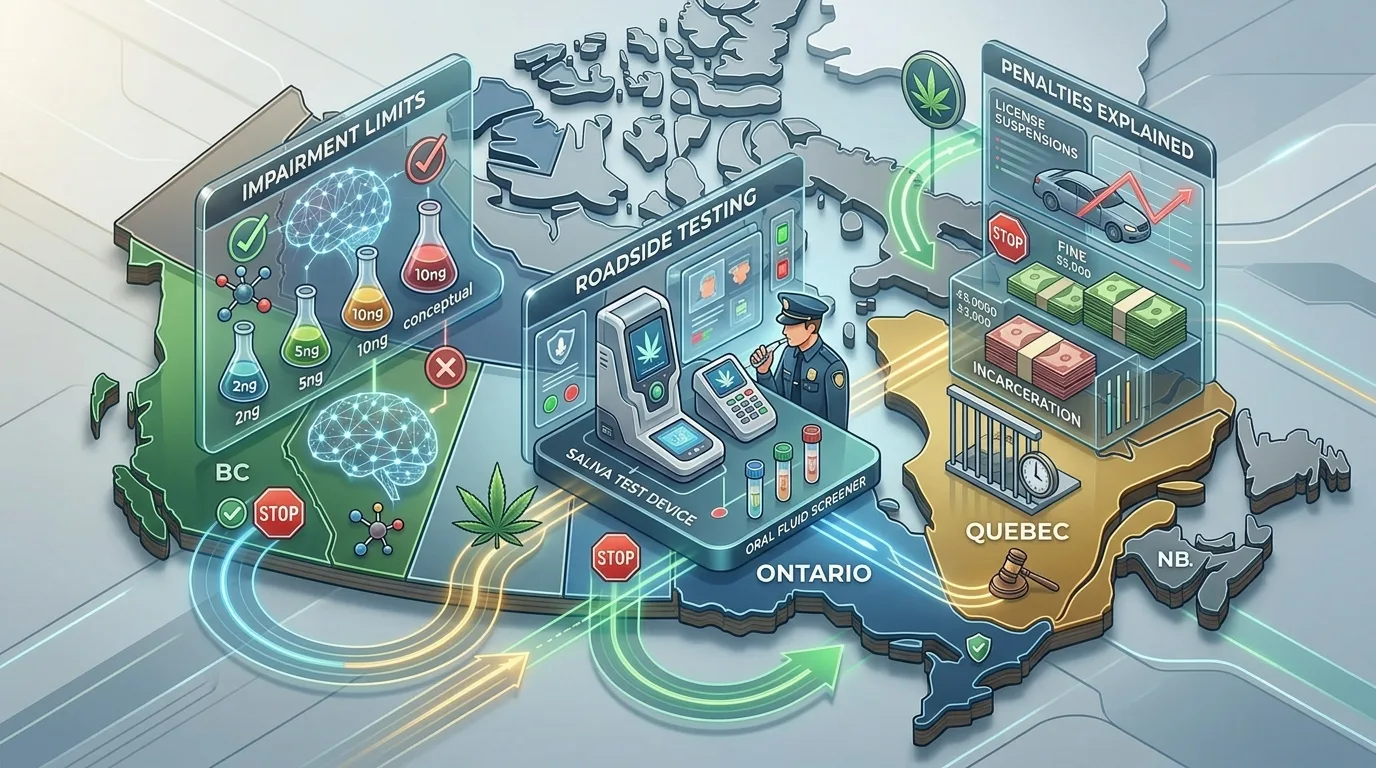
In Canada, adults can legally make cannabis edibles at home for personal use. However, there are responsibilities that come with this freedom. The Cannabis Act allows possession and home production within limits, but sharing or selling homemade edibles is illegal unless you're a licenced producer.
You can give edibles to other adults for free in a private setting, but don't sell them, don't give them to minors, and don't bring them into public spaces where cannabis consumption is prohibited. Keep homemade edibles in clearly labelled, child-resistant containers, especially if you have kids or pets in your home.
When sharing edibles, always disclose what's in them, the approximate dose per serving, and the expected timeline for effects. Never surprise someone with a medicated treat. Informed consent isn't just polite, it's essential for responsible cannabis use.
If you're travelling within Canada, remember that crossing provincial borders with homemade edibles is legal, but international travel with any cannabis product is strictly prohibited. Don't bring edibles across the U.S. border, even if you're going to a state where cannabis is legal. Federal law trumps state law at the border, and you risk serious legal consequences.