
Ask a room of cannabis consumers how to judge good flower, and someone will mention the ash. White ash, the theory goes, means clean, well-grown weed. Dark grey or black ash means something went wrong, usually that the plant wasn't "flushed" before harvest.
It's one of the most widely repeated ideas in cannabis culture. The reality is more complicated. Ash colour does tell you something, but not always what people think, and it's influenced by several factors that have little to do with how the plant was grown.
This article explains what cannabis ash is made of, what actually changes its colour, what the limited research on flushing has fozund, and which signs are more reliable when you're judging flower quality.
Where the White Ash Belief Comes From
The idea is simple. Growers feed cannabis plants nutrients throughout their life. Many believe that if those nutrients aren't flushed out with plain water in the final weeks before harvest, leftover minerals remain in the flower. When the flower is smoked, those minerals are said to cause harsh smoke, a chemical taste and dark ash.
White ash, by contrast, is taken as proof that the plant was flushed properly, dried well and cured carefully. Over time, "it burns white" has become shorthand for quality, and some sellers use it as a selling point.
What Is Ash Actually Made Of?
Ash is what's left after plant material burns. It's a mix of three things:
-
Char and charcoal, which are partly burnt organic material. These are dark.
-
Minerals, such as potassium, calcium and magnesium, which the plant absorbed while growing. These don't burn and are naturally pale.
-
Unburnt residue, if the material didn't burn completely.
The colour of ash depends largely on the balance between these. When plant material burns completely at a high temperature, most of the organic matter is consumed and what's left is mostly pale minerals. When it burns at a lower temperature or incompletely, more dark char remains.
This has been studied for a long time in tobacco, where ash colour was a major quality concern for cigar makers. Research on wildfire ash shows a similar pattern: as burn temperature increases, ash shifts from black to grey to white, according to Cannabis Business Times.
What Actually Changes Ash Colour
Moisture Content
Moisture has a big effect on how hot and how completely flower burns. Buds that are still too moist burn at a lower temperature and leave more dark, partly burnt material. Buds that are very dry can burn too quickly and unevenly. Flower that's been properly dried and cured tends to sit in the range where it burns more steadily and completely.
This is one reason ash colour is often linked with curing, and the connection is real. A careful cure, explained in how weed is cured, evens out moisture through each bud, which helps it burn more cleanly.
How It's Smoked
The same flower can leave different ash depending on how it's consumed. A tightly packed bowl with poor airflow burns cooler than a loosely packed one, and a joint that keeps going out and being relit leaves more char. Rolling papers, wraps and even the lighter used can all affect what you see. The way a bowl is packed is covered in how to pack a bowl.
Plant Composition
Every plant absorbs a different mix of minerals depending on its genetics, growing medium and environment. That natural mineral content affects ash colour regardless of how the plant was finished. Chlorophyll and other plant compounds that haven't broken down during curing can also contribute to darker ash and harsher smoke.
Additives
In tobacco, manufacturers have historically used additives to make ash whiter. That's a useful reminder that ash colour can be influenced artificially and isn't automatically a sign of purity.
What Research Says About Flushing
Research specifically on cannabis flushing is limited, but the studies that exist don't support the idea that flushing produces whiter ash.
In a trial by Rx Green Technologies, Cherry Diesel plants were flushed for 14, 10 or 7 days before harvest, or not flushed at all. Lab testing found no significant difference in THC, terpenes or mineral content between the groups. In a blind tasting by cannabis industry professionals, the length of the flush had no meaningful effect on flavour, smoothness or ash colour, and the unflushed samples were rated slightly higher overall.
A master's thesis on irrigation strategies for cannabis, cited by Cannabis Business Times, similarly found that flushing didn't significantly change the mineral content of the finished flower.
These studies have limitations. Rx Green sells nutrients, the sample sizes were small, and more independent research is needed. But the available evidence suggests that ash colour is driven more by moisture, curing and burn conditions than by whether the plant was flushed.
Better Signs of Quality Flower
Ash colour can hint at how well flower burns, but these signs tell you more:
-
Aroma. A strong, distinct smell usually reflects intact trichomes and a good cure.
-
Texture. Buds should feel dry outside but slightly springy, with stems that snap.
-
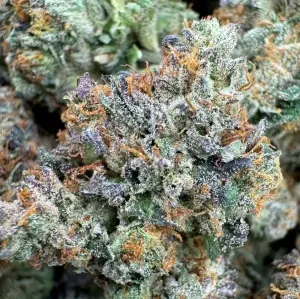
Trichome coverage. Frosty, intact resin glands, explained in what makes a bud frosty.
-
Smoothness. Clean-tasting smoke that doesn't catch in your throat.
Uper Weed is an online cannabis shop in Canada, and every strain in our flower menu lists its grade and THC content.



 %

 %