
Harvesting cannabis is only part of producing good flower. What happens in the weeks after harvest, during drying and curing, has a large effect on how the finished buds smell, taste and smoke.
Two batches of the same strain, grown in the same conditions, can end up quite different on the shelf if one was cured carefully and the other was rushed. The carefully cured batch usually smells stronger and smokes smoother, while the rushed one can taste grassy and feel harsh.
This article explains the difference between drying and curing, how the curing process works step by step, the humidity levels growers aim for, and why a rushed cure makes such a noticeable difference.
Drying vs Curing
Drying and curing are often mentioned together, but they're two separate stages.
Drying
Drying is the first stage after harvest. Freshly cut cannabis is mostly water, and drying removes the bulk of that moisture. Plants or branches are usually hung upside down in a dark room with gentle airflow, or trimmed buds are laid on drying racks.
Growers commonly aim for a temperature of around 15 to 21°C (60 to 70°F) and relative humidity of around 55 to 65%. A widely used guideline is the "60/60 rule", meaning roughly 60°F and 60% humidity. Under these conditions, drying typically takes about 7 to 14 days.
Drying is finished when the outside of the buds feels dry and smaller stems snap rather than bend. At this point, the buds still hold some moisture inside, which is what the curing stage works on.
Curing
Curing is the slower stage that follows. The dried buds are sealed in airtight containers, where the remaining moisture inside each bud gradually spreads out evenly. Over several weeks, compounds that cause harshness, such as chlorophyll and some sugars, continue to break down, while the terpenes that give flower its aroma are preserved.
Drying removes most of the water. Curing refines what's left.
How Weed Is Cured, Step by Step
1. Fill Airtight Jars
Once the buds are dry on the outside, they're placed in airtight containers, most often glass mason jars. Jars are usually filled about three-quarters full, which leaves a little air space and stops the buds from being crushed.
Glass is preferred because it doesn't add odours or flavours and seals well. Plastic containers can work, but some types can affect the smell over time.
2. Monitor the Humidity
The target humidity inside a curing jar is usually around 58 to 65%. Many growers place a small digital hygrometer inside each jar so they can check it without guessing.
-
Above about 70%, the buds are still too moist, and there's a risk of mould. The jar should be opened for longer, or the buds taken out to dry a little more.
-
Between about 58 and 65%, the buds are in the ideal range for curing.
-
Below about 55%, the buds are getting too dry, which can make them brittle and harsh. A two-way humidity pack can help bring the level back up.
In the first day or two of curing, it's normal for the humidity inside the jar to rise as moisture from the centre of the buds moves outward.
3. Burp the Jars
Burping means opening the jars to release moist air and let fresh air in. It's the core of the curing routine.
A common schedule looks like this:
-
First one to two weeks: open each jar once or twice a day for 10 to 15 minutes.
-
After two weeks: open the jars every few days.
-
After about a month: open them occasionally, or simply keep them sealed with a humidity pack.
Each time the jar is opened, growers check the smell. A fresh, pleasant aroma is a good sign. A smell like ammonia or a musty, damp odour suggests the buds are too wet and need more air.
4. Give It Time
Curing isn't something that can be hurried. Most growers consider two weeks the minimum, and many cure for four to eight weeks or longer. Some craft growers cure certain strains for several months, as flavour and smoothness often continue to improve over time.
Throughout the process, jars should be kept in a cool, dark place at a stable temperature, ideally around 15 to 21°C. Heat and light can degrade both terpenes and cannabinoids.
Why a Rushed Cure Makes Weed Taste Harsh
When curing is cut short, the moisture inside the buds hasn't had time to even out, and chlorophyll and other plant compounds haven't fully broken down. The result is flower that often:
-
Tastes grassy or hay-like, rather than having a clear strain aroma.
-
Feels harsh on the throat, sometimes causing more coughing.
-
Burns unevenly, because the inside of the bud is wetter than the outside.
-
Has a weaker smell, as the terpene profile hasn't had time to settle.
Over-drying causes problems too. Buds that are dried too fast or too far lose terpenes and turn brittle, which can also make the smoke harsh. A good cure depends on keeping the process slow and steady from start to finish.
How to Tell If Flower Was Cured Well
-
Strong, distinct aroma when you open the container.
-
Buds that feel dry on the outside but slightly springy when gently squeezed.
-
Stems that snap rather than bend or crumble.
-
Smooth smoke with a clear flavour.
-
Intact trichomes, which suggest the buds were handled gently.
Curing and Cannabis Grades
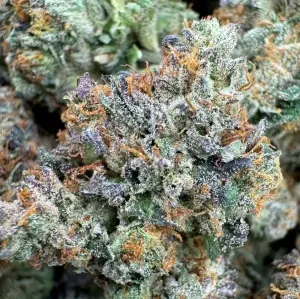
Curing is one of the main differences between standard and top-grade flower. Higher grades usually reflect careful drying, a longer cure and gentle handling, along with strong genetics and growing conditions. That's a large part of why AAAAA craft cannabis tends to smell more distinct and smoke more smoothly than lower grades.
Once you buy flower, storing it in an airtight container in a cool, dark place helps it keep the qualities a good cure built. Humidity packs and storage jars are in cannabis accessories, and you can compare grades across our full flower menu. When you order weed online in Canada from Uper Weed, every listing shows the grade and THC content.



 %
 %