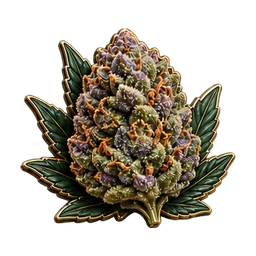
Some cannabis buds look as though they've been dusted with sugar or frost. Up close, that sparkling coating is made of thousands of tiny structures called trichomes, and they're the reason cannabis has its aroma, flavour and effects.
"Frosty" is one of the most common ways people describe good-looking flower, and trichome coverage is one of the first things experienced buyers look at. But frost alone doesn't tell the whole story about quality or potency.
This article explains what trichomes are, why their density matters, what their colour says about a plant's maturity, and how to judge trichome quality when you're looking at flower.
What Are Trichomes?
Trichomes are small, hair-like outgrowths on the surface of the cannabis plant. They're found most densely on the flowers and on the small "sugar leaves" that grow between them, which is why those parts look the frostiest.
Most of the trichomes that matter to consumers are glandular, meaning they produce and store resin. That resin contains the plant's cannabinoids, such as THC and CBD, along with its terpenes, the aromatic compounds behind each strain's smell and taste.
In nature, trichomes are thought to help protect the plant. Their sticky resin and strong aroma can deter insects and grazing animals, and they may offer some protection from UV light and wind.
Types of Trichomes
Cannabis produces several kinds of trichomes. The three glandular types are:
-
Bulbous trichomes. The smallest type, scattered across the plant's surface. They're too small to see without strong magnification.
-
Capitate-sessile trichomes. Slightly larger, with a round head sitting almost directly on the leaf surface.
-
Capitate-stalked trichomes. The largest and most important for consumers. Each has a stalk topped with a round, resin-filled head, and they're what give buds their frosty appearance. These develop mainly during flowering and contain much of the plant's cannabinoid and terpene content.
Cannabis also has non-glandular trichomes, which are plain hairs that don't produce resin.
Why Trichome Density Matters
Trichome density refers to how thickly the resin glands cover the bud. A frosty bud has a dense layer of capitate-stalked trichomes, often covering the flowers and sugar leaves so heavily that the green underneath looks pale or silvery.
Because trichomes hold the resin, dense coverage generally means more of the compounds that shape aroma, flavour and effects. Flower with heavy trichome coverage often smells stronger and feels stickier to the touch.
That said, frost isn't a direct measure of potency. A few things are worth keeping in mind:
-
Genetics set the chemistry. Two equally frosty buds can have different THC levels and terpene profiles, because each plant's genetics determine what its trichomes produce.
-
Some strains look frostier than others. Certain genetics produce larger or more visible trichome heads, which can make buds look especially frosty without necessarily testing higher.
-
Growing and handling matter. Light, temperature and harvest timing affect trichome development, while rough handling, packaging and grinding can knock trichomes off.
The most reliable way to know a bud's potency is the THC and CBD content listed for that batch. Frost is a strong sign of good resin production, but it works best alongside the label rather than in place of it.
What Trichome Colour Tells You
Trichome heads change colour as the plant matures, which is why growers watch them closely to decide when to harvest.
-
Clear. Trichomes start out clear or glassy. At this stage, the plant is still developing and cannabinoid production hasn't peaked.
-
Cloudy or milky. As the plant matures, trichome heads turn cloudy. Many growers consider this the period of peak cannabinoid content.
-
Amber. Over time, some trichomes turn amber. This reflects THC gradually breaking down into other compounds such as CBN. Some growers harvest when a portion of trichomes have turned amber, and people often associate amber-heavy flower with a heavier feel, although effects vary.
Most growers harvest when the majority of trichomes are cloudy, with a varying proportion of amber depending on the effect they're aiming for. In finished flower, a mix of mostly cloudy heads with some amber is a common sign of a well-timed harvest.
How to Spot Trichome Quality
You can learn a lot about flower just by looking closely. A jeweller's loupe or a small pocket magnifier (around 30x to 60x) makes trichomes much easier to see, but even the naked eye can pick up the basics.
-
Even coverage. Look for trichomes spread across the whole bud and its sugar leaves, not just on a few spots.
-
Intact heads. Under magnification, healthy capitate-stalked trichomes have round, bulb-like heads. Flattened or missing heads usually mean the flower has been handled roughly.
-
Cloudy heads with some amber. This points to a mature, well-timed harvest.
-
Stickiness and aroma. Resin-rich flower tends to feel slightly sticky and gives off a strong smell when gently squeezed or broken apart.
Frost vs Mould
It's important not to confuse trichomes with mould. Trichomes look like tiny crystals or mushroom-shaped glands under magnification and sparkle in the light. Powdery mildew looks like a flat, dusty white or grey film, often on the leaves, while other moulds can look fuzzy, web-like or discoloured and may smell musty. Flower that looks fuzzy or smells damp shouldn't be used.
How to Protect Trichomes
Trichomes are fragile and break off easily, so a few habits help preserve them:
-
Handle buds gently and only as much as you need to.
-
Grind just before use rather than storing ground flower.
-
Store flower in an airtight container in a cool, dark place, since heat and light degrade the resin.
-
Use a grinder with a kief catcher. The fine powder that collects in the bottom chamber is loose trichomes, and it can be sprinkled over a bowl or saved.
Trichomes Beyond Flower
Many cannabis products are made by collecting trichomes directly. Kief is loose trichome heads, hash is trichomes pressed together, and rosin is the resin squeezed out of flower or hash with heat and pressure. Pressing at home is covered in whether a rosin press is worth it.
Finding Frosty Flower
Every strain in our cannabis flower menu lists its type and THC content, so you can compare frosty-looking buds with what's actually inside them. Uper Weed is an online cannabis dispensary in Canada, shipping discreetly to adults in every province and territory.





 %
 %