If you've ever examined a cannabis bud up close,really close, under a magnifying glass or macro lens,you've noticed those tiny, crystalline structures coating the surface like frost on a winter morning. Those aren't just for show. Those are trichomes, and they're the reason cannabis gets you high, smells the way it does, and costs what it costs. Everything from hash production to visual quality assessment hinges on understanding these microscopic glands. This isn't trivia. It's the core biology that explains why some buds are sticky, why kief exists, why rough handling degrades potency, and why concentrates can reach 90% THC when flower tops out around 30%. Trichomes are where the chemistry happens.
Think of trichomes as the plant's chemical factories. They synthesize cannabinoids (THC, CBD, CBG), terpenes (the aroma molecules), and flavonoids (compounds affecting colour and taste). When you smell citrus in a strain or feel that heavy indica sedation, you're experiencing trichome output. When growers talk about "frost" or "sugar," they're describing trichome density. And when you break open a nug and your fingers come away sticky with resin, you've just destroyed thousands of trichomes,which is exactly why hash makers handle buds so carefully.
The Anatomy of a Trichome: Three Types, One Purpose
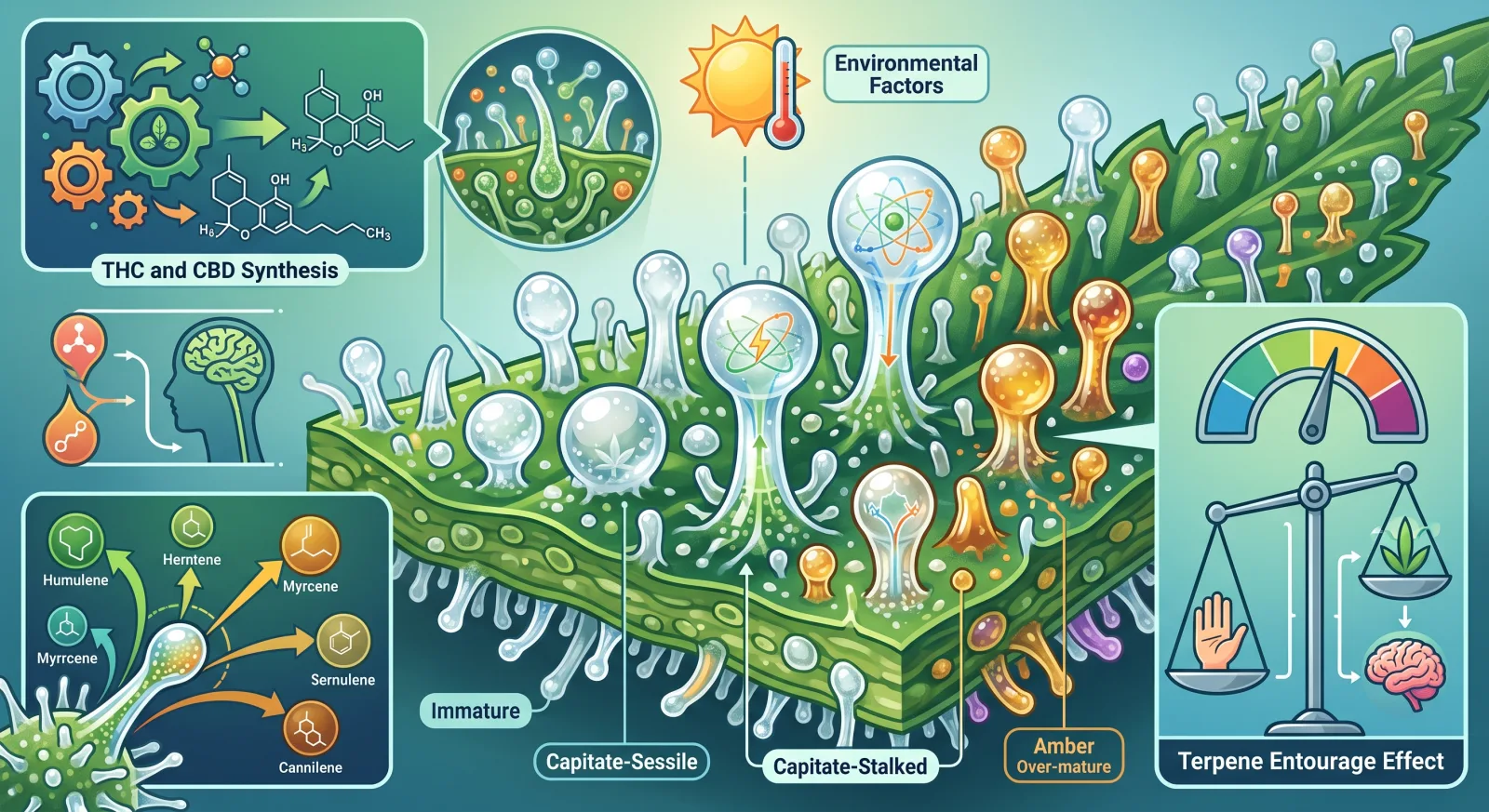
Cannabis produces three main types of trichomes, though only one matters for potency. Bulbous trichomes are the smallest, measuring 10-15 micrometers. They're barely visible even under magnification and don't contain significant cannabinoid concentrations. Capitate sessile trichomes are slightly larger (25-100 micrometers) and more common, forming a fuzzy layer across leaves and stems. They produce some cannabinoids but not enough to matter commercially.
The third type,capitate-stalked trichomes,is where the action is. These mushroom-shaped glands range from 50 to 500 micrometers tall. The "head" is a bulbous sac filled with resinous oil containing concentrated cannabinoids and terpenes. The "stalk" anchors the head to the plant surface. When growers and budtenders talk about trichomes, they're almost always referring to capitate-stalked glands. These are what give premium cannabis its frosty appearance and sticky texture.
The head's membrane is thin and fragile. Inside, metabolic pathways convert precursor molecules into THC, CBD, and dozens of terpenes. This biosynthesis continues as the plant matures, which is why harvest timing matters so much. Early harvest yields more clear trichomes with less THC. Late harvest produces amber trichomes as THC degrades into CBN, a less psychoactive cannabinoid. The sweet spot,milky white trichomes,represents peak THC concentration.
Why Handling Knocks Them Off (And Why That Matters)
Here's the physics problem: trichomes are brittle. The connection point between stalk and plant surface is mechanically weak. Any friction, impact, or pressure breaks that bond. This isn't a flaw,it's evolutionary design. In nature, trichomes likely evolved as a defence mechanism. The sticky resin deters insects and herbivores, while the brittleness means the glands break off and stick to anything that touches them, transferring the plant's chemical defences onto the threat.
For commercial cannabis, this brittleness is a double-edged sword. Rough trimming, aggressive handling during packaging, or shipping vibrations all cause trichome loss. Those tiny crystals you see at the bottom of your bag? That's not "bonus kief",it's structural damage. Each fallen trichome represents lost potency on the bud it came from. This is why premium growers hand-trim with extreme care, why popcorn buds often test lower in THC, and why shake weed (the loose material at the bag's bottom) delivers a harsher, less aromatic experience despite containing broken trichomes.
The same principle explains why hash makers work in cold environments. Freezing cannabis makes trichomes even more brittle, so they snap off cleanly when the plant material is agitated. That's the entire basis of dry sift and bubble hash production,mechanical separation of trichome heads from plant tissue. No solvents, no chemistry, just physics and a screen.
The Resin Transfer Problem
Once trichomes break, their contents oxidize. Cannabinoids degrade, terpenes evaporate, and potency drops. This is why storage matters. UV light accelerates degradation. Heat volatilizes terpenes. Air exposure oxidizes THC into CBN. Every time you open your jar and jostle the buds, you're knocking off trichomes. Every time you grind flower, you're rupturing thousands of glands. By the time ground cannabis hits a bowl or paper, a meaningful percentage of its original trichome content has been compromised.
This isn't fearmongering,it's material science. And it's why concentrates exist. If you're going to lose trichomes anyway through handling, why not collect them deliberately? Why not press them into rosin, or freeze-separate them into hash, or extract them with solvents to create shatter? Concentrates are just trichome preservation taken to its logical extreme.
Kief, Hash, and Pressing: All One Phenomenon
Once you understand trichome brittleness, three seemingly different products collapse into a single concept. Kief is loose trichome heads collected via a grinder's screen or sifting screen. Hash is those same trichome heads pressed together with heat and pressure until the resin binds them into a solid. Rosin is the oil expressed when you apply enough heat and pressure to rupture trichome heads and squeeze out their contents.
They're not three separate products. They're three points on a processing continuum, all starting with the same raw material: isolated trichomes. Bubble hash uses ice water and agitation to freeze and separate trichomes. Dry sift uses screens and gentle tumbling. Rosin presses use heated plates and hydraulic force. But the input is always the same,detached capitate-stalked trichomes.
Why Hash Is Stronger Than Flower
A premium cannabis flower might test at 25% THC. That means 25% of the bud's dry weight is THC. But that bud is mostly plant material,cellulose, chlorophyll, water, trace minerals. The trichomes themselves contain 60-80% cannabinoids by weight. When you isolate trichomes into hash, you're removing everything that isn't resinous gland heads. Suddenly you're consuming pure trichome output.
This is why hash smoking techniques differ from flower. You're not burning plant fibre,you're vapourizing concentrated resin. The experience is cleaner, the flavour is more intense, and the potency is higher because you've stripped away the diluting biomass. Traditional pressed hash from regions like Morocco or Afghanistan might reach 40-60% THC. Modern rosin can hit 70-80%. Distillate and isolates push 90%+. That progression isn't magic,it's just sequential removal of everything that isn't cannabinoids.
Why Popcorn Buds Cost Less
Here's where trichome biology intersects with market economics. Larger buds typically develop more trichomes because they have more surface area and receive more light during flowering. Popcorn buds,the small, lower-canopy flowers,grow in shadier conditions with less light intensity. Reduced light means reduced trichome production. Lower trichome density means lower potency and less aroma.
But there's a second factor: handling damage. Small buds tumble around more during trimming and packaging, experiencing more friction events. Each tumble knocks off more trichomes. By the time popcorn buds reach the customer, they've often lost a higher percentage of their original trichome content than large, carefully handled colas. The price difference isn't arbitrary,it reflects measurable potency degradation caused by mechanical trichome loss.
Harvest Timing and Trichome Maturity
Trichome colour is the cannabis grower's clock. Clear trichomes indicate immaturity,the biosynthetic pathways haven't finished converting CBGA (the cannabinoid precursor) into THC or CBD. Milky white trichomes signal peak THC concentration. Amber trichomes mean degradation has begun, with THC oxidizing into CBN. Different ratios produce different effects.
Most growers target 70-90% milky trichomes with 10-30% amber for indica-dominant strains, seeking that sedative, body-heavy effect. Sativa-focused cultivators may harvest earlier, at 90%+ milky trichomes, to preserve the more cerebral, energetic high associated with pure THC before CBN enters the equation. This isn't subjective preference,it's biochemistry you can see under a jeweler's loupe.
The transition from clear to milky to amber happens quickly. A plant might be perfect on Monday and overripe by Friday. This is why commercial growers use magnification to monitor trichome colour daily during the final two weeks of flowering. Harvest timing, more than genetics or nutrients, determines the final cannabinoid profile. Miss the window, and even the frostiest strain produces mediocre effects.
What Sticky Means (And Doesn't Mean)
Consumers often equate stickiness with quality. "Good weed is sticky" is common wisdom. But stickiness is a side effect of trichome density, not a guarantee of potency. What makes buds sticky is the resin inside intact trichomes. When you handle fresh cannabis, you compress trichome heads without breaking them, causing some resin to seep through the membrane. That oil coats your fingers.
However, overly sticky weed can signal a problem: improper curing. If buds weren't dried and cured correctly, residual moisture makes them feel sticky for the wrong reasons. You're feeling water, not resin. Properly cured cannabis should be slightly tacky but not damp. The stickiness should come from oil, not moisture. Breaking open a bud should release a pungent aroma,that's terpenes volatilizing from ruptured trichomes. If it smells like hay or grass, the terpenes have degraded, even if trichomes are still visually present.
The Nose-Knows Principle
Terpenes are volatile. They evaporate at room temperature. This means aroma fades over time as trichomes release their terpene content into the air. A properly stored bud maintains its smell for months. Improperly stored cannabis loses its nose within weeks. When you assess cannabis quality, aroma intensity tells you about trichome preservation. Weak smell equals terpene loss equals handling damage or poor storage equals reduced entourage effect.
The entourage effect,the theory that cannabinoids and terpenes work synergistically,depends on intact trichomes. If terpenes have evaporated because trichomes were ruptured during shipping, you're consuming THC without its chemical partners. The high might be less nuanced, less satisfying, even if lab tests show 25% THC. Numbers don't capture trichome integrity.
Concentrates as Trichome Preservation
Every concentrate method is fundamentally a trichome preservation strategy. Solvent-based extractions (BHO, CO2 oil, ethanol extraction) dissolve cannabinoids and terpenes out of trichome heads, then evaporate the solvent to leave pure concentrate. Solventless methods (rosin, hash) mechanically separate or compress trichomes without chemical intervention.
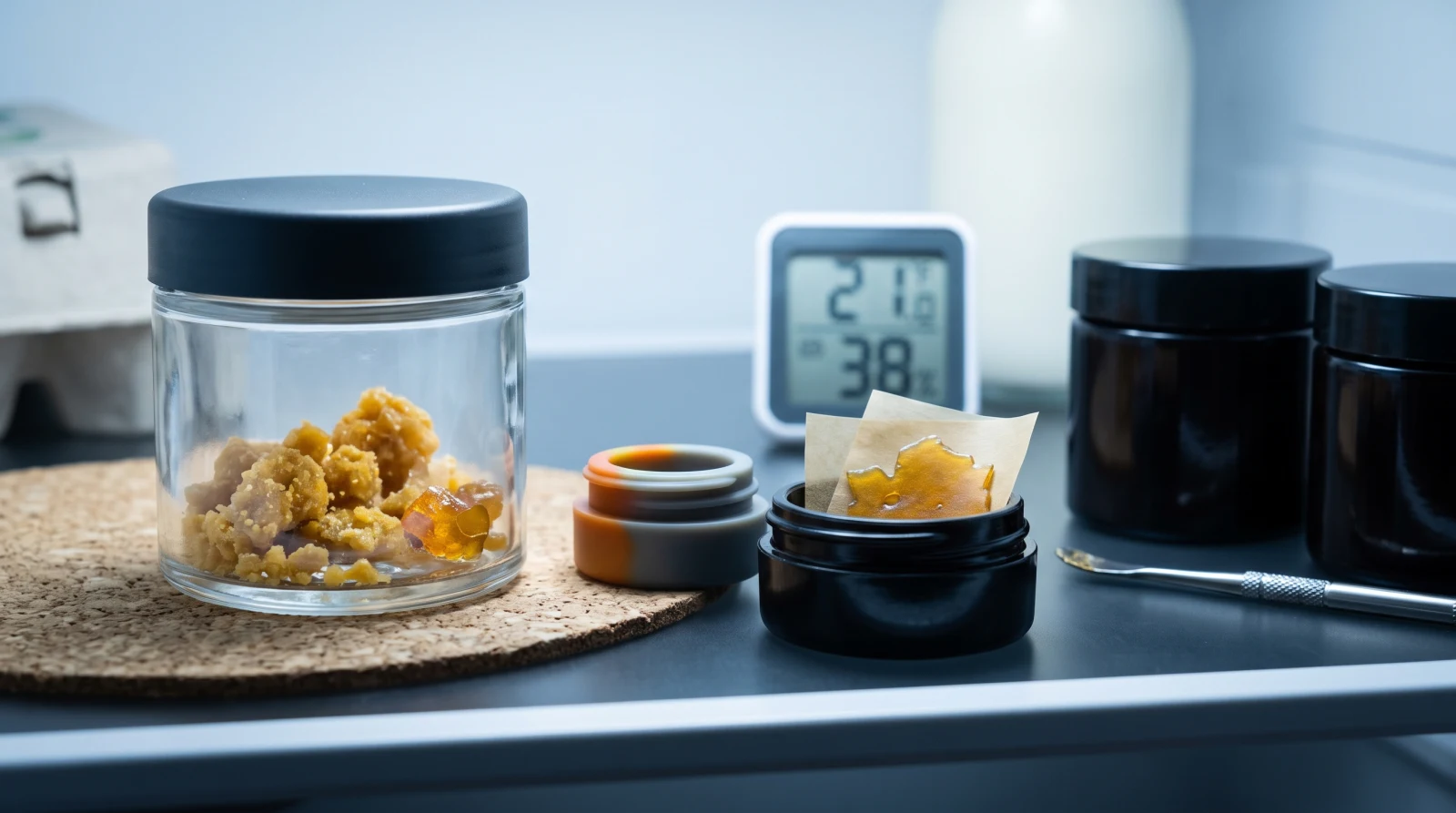
Why bother? Because flower is fragile. Trichomes degrade during storage. Transporting flower risks trichome loss. Concentrates bypass the problem by stabilizing the active compounds. Shatter, stored properly, maintains potency for years. Flower degrades noticeably within months. Rosin captured fresh preserves terpene profiles that would evaporate from flower. Live resin, made from flash-frozen cannabis, locks in trichome output at its absolute peak.
This is why concentrates command premium prices. You're not paying for THC alone,you're paying for trichome preservation technology. A gram of shatter represents dozens of grams of flower, with all the fragile trichome content compressed into a stable, durable form. When you dab rosin, you're consuming trichome heads that were ruptured seconds ago, not weeks ago during trimming.
Practical Implications for Consumers
Understanding trichomes changes how you buy, store, and consume cannabis. Visual inspection becomes meaningful. Those frost-covered buds aren't just pretty,they're mechanically superior delivery systems for cannabinoids. But visible trichomes only matter if they're intact. Shake at the bag's bottom isn't a value add,it's structural failure. The small crystals you see are trichomes that should still be on the buds.
Storage practices matter more than most consumers realize. Airtight containers prevent terpene evaporation. Opaque jars block UV light that degrades THC. Cool temperatures slow oxidation. Avoiding unnecessary handling preserves trichome integrity. Each time you dig through your stash to pick out "the good nug," you're knocking trichomes off everything you touch. Better to pre-portion into separate containers and minimize handling events.
Why Grinders Have Kief Catchers
A three-piece grinder (grinding chamber, screen, collection chamber) is a miniature dry-sift operation. As you grind flower, agitation and friction detach trichome heads. They fall through the screen, too small to pass through the holes that allow ground flower particles. Over time, kief accumulates,pure trichome heads waiting to be pressed into hash or sprinkled onto bowls. That collection isn't incidental. It's deliberate engineering based on trichome size and brittleness.
Some consumers see kief as bonus product. It's not. It's potency that belonged to the flower you ground. Your grinder didn't create cannabinoids,it just separated them from the biomass. Using a grinder means accepting mechanical trichome loss in exchange for consistent particle size. Whether that trade-off makes sense depends on your consumption method. Vapourizers benefit from even grinding. Joints and blunts arguably lose more in trichome damage than they gain in burn consistency.
The Microscopic Quality Metric
Professional cannabis grading now includes trichome microscopy. Inspectors count trichome density per square millimeter, assess stalk breakage percentages, and document colour ratios. These metrics predict potency more accurately than visual frost assessment alone. Two buds might look equally frosty, but one has 20% more intact capitate-stalked trichomes. That difference translates directly to THC content.
This level of analysis isn't accessible to most consumers, but the principle applies. When choosing between strains or batches, ask yourself: Do the trichomes look intact or damaged? Is the bud structure tight (protecting trichomes) or loose (exposing them to friction)? Does the container have heavy shake accumulation (indicating rough handling)? These visual cues predict potency better than genetics or THC percentage claims alone.
Yes, but isolated trichomes are essentially kief or hash depending on whether they're loose or pressed. Consuming pure trichomes delivers concentrated cannabinoids and terpenes without the plant material. The experience is more potent and terpene-forward than smoking whole flower, but you need a method that prevents the fine powder from being inhaled directly or burning too quickly.
No. Cannabis is an annual plant. Once harvested, the plant dies. Trichomes develop during the flowering stage as part of the plant's reproductive cycle. If you're asking whether damaged trichomes on a living plant regenerate, the answer is also no,once a trichome is knocked off, that specific gland is permanently lost, though the plant continues developing new trichomes on new growth until harvest.
Estimates vary by strain and growing conditions, but a single high-quality gram of cannabis can contain hundreds of thousands to over a million trichomes. Most are microscopic, and only the capitate-stalked variety contributes significantly to potency. Trichome density correlates with THC percentage,denser coverage generally means higher cannabinoid concentration.
Kief is loose trichome heads that haven't been compressed. Hash is those same trichomes pressed with heat and pressure until the resin inside binds them into a solid mass. The compression process ruptures some trichome heads, releasing oils that act as glue. The colour difference comes from oxidation,pressed hash exposes more surface area to air, darkening the resin over time.
All cannabis plants produce the same three trichome types, but density and chemical output vary dramatically by genetics. Some strains naturally develop more capitate-stalked trichomes or produce higher concentrations of specific cannabinoids. This genetic variation is why THC percentages range from 10% to 30%+ across strains, even when grown under identical conditions.
Yes, through several methods: increasing light intensity during flowering triggers more trichome development, lowering temperatures during the final two weeks encourages resin production, and controlled stress techniques like UV-B exposure can boost trichome density as a plant defence response. However, genetics set the upper limit,you can maximize a strain's potential but not exceed its genetic capacity.
Conclusion: The Gland That Explains Everything
Trichomes aren't decorative. They're functional anatomy,the only part of the cannabis plant that matters for psychoactivity and aroma. Understanding their structure and fragility explains why handling degrades potency, why concentrates exist, why storage techniques matter, and why premium flower costs more than shake. Every decision in cannabis production, from harvest timing to packaging materials, ultimately serves one purpose: preserving trichome integrity from plant to consumer.
The next time you examine a bud, you're not looking at "frost" or "crystals." You're looking at thousands of chemical factories, each synthesizing the compounds that define the cannabis experience. Treat them with care. Store them properly. Minimize handling. And when you see that pile of kief at your grinder's bottom or shake at your bag's base, recognize it for what it is: lost potential, trichomes that could still be attached to flower if the supply chain had been gentler.
This single biological fact,that cannabinoids and terpenes live in fragile glands that break off easily,ripples through the entire cannabis industry. It's why hash traditions developed independently across cultures. It's why modern extraction technology exists. It's why mail-order operations invest in careful packaging. And it's why informed consumers can assess quality at a glance. Everything else is just detail. Trichomes are the core story.