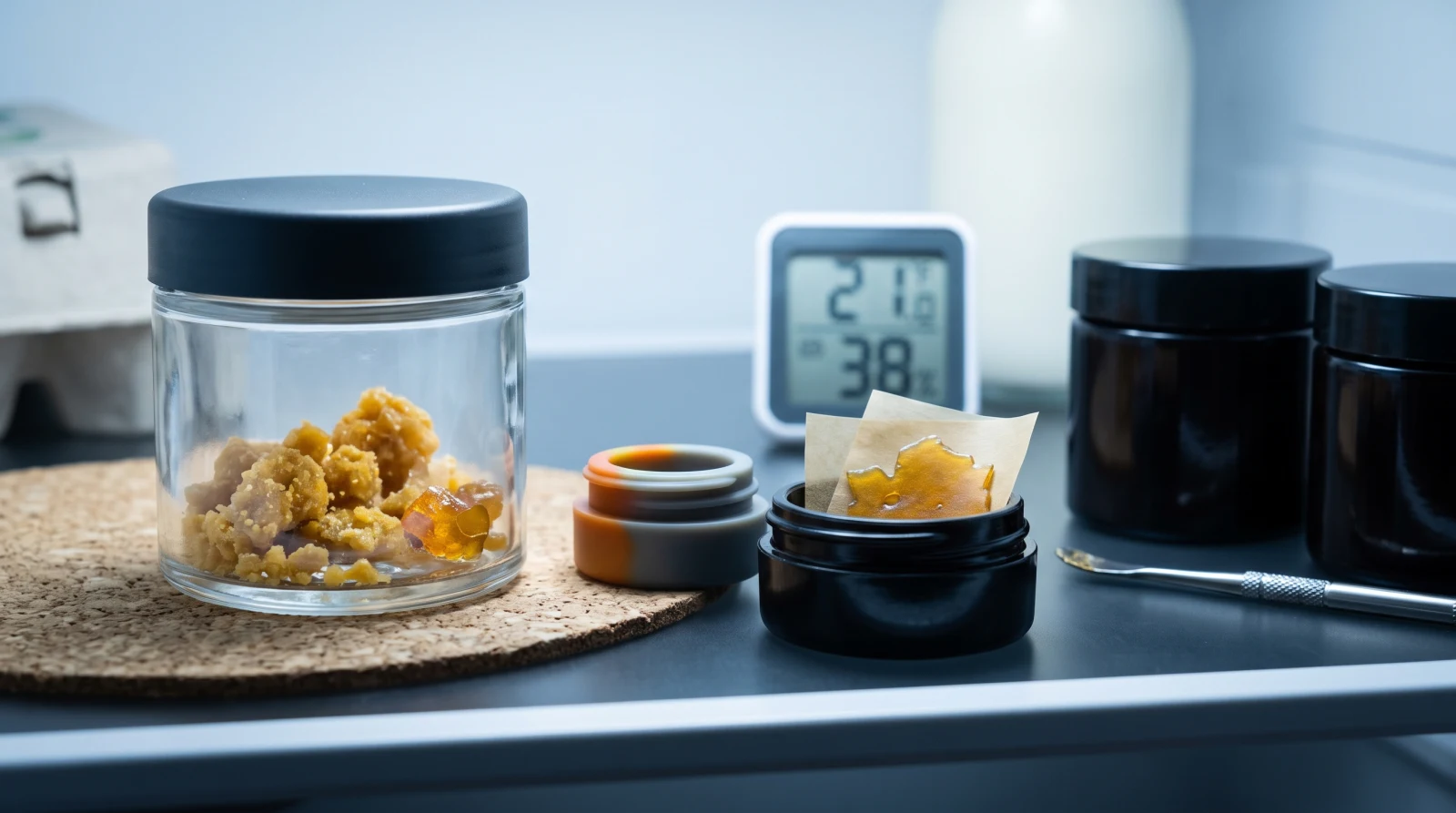
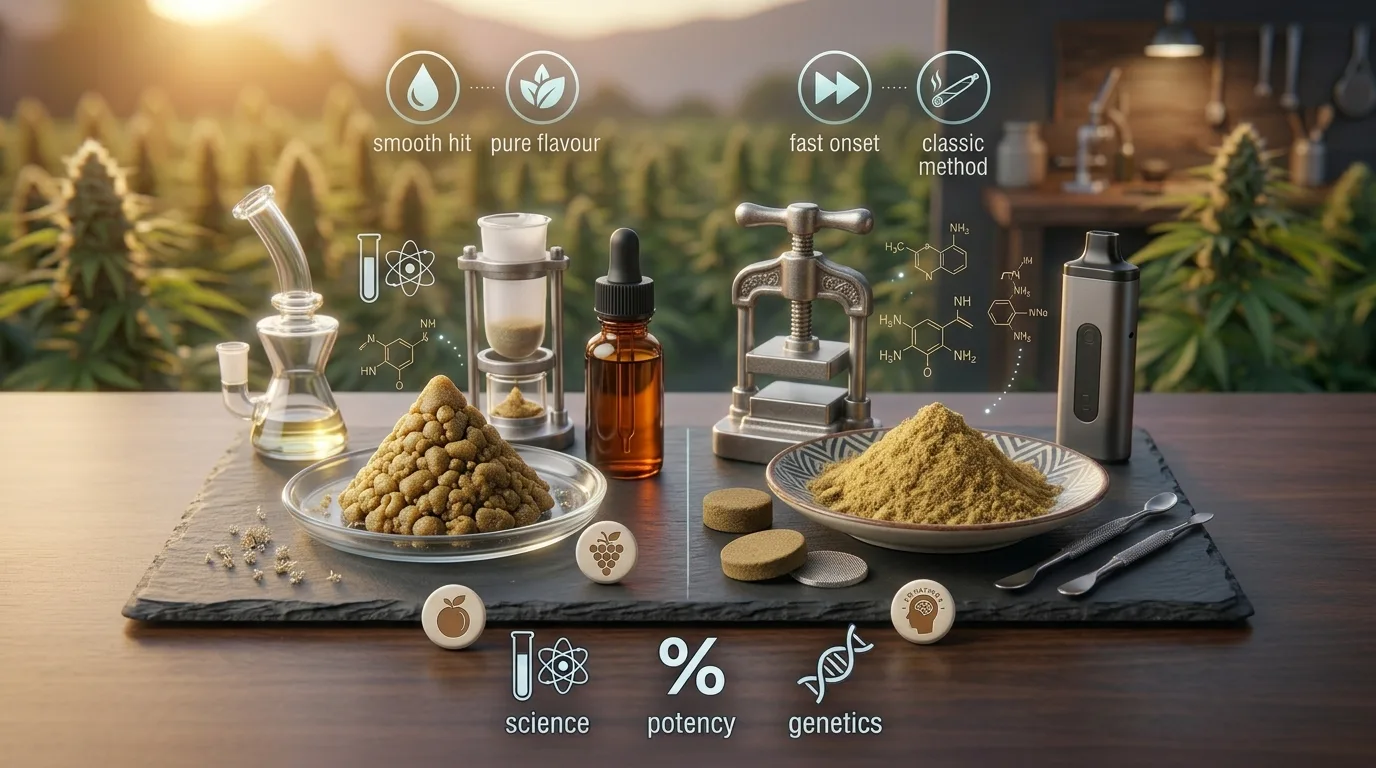
When you're standing at the counter deciding between bubble hash and dry sift, you're not choosing between solvent-based and solventless,you're choosing between two forms of pure, mechanical extraction. Both use only physical agitation to separate trichome heads from plant material. No butane, no ethanol, no CO2. Just ice water and mesh bags in one case, vibration and screens in the other. The practical difference comes down to texture, melt quality, and what you're actually smoking when you light it up.
The quickest way to understand the distinction is through a side-by-side comparison. Here's what separates these two solventless concentrates:
| Factor | Bubble Hash | Dry Sift |
|---|---|---|
| Extraction Method | Ice water agitation + micron bag filtration | Mechanical screening through layered mesh |
| Texture (Fresh) | Wet, sandy, paste-like | Dry powder, kief-like consistency |
| Melt Quality | Full-melt potential (6-star at finest grades) | Rarely full-melt; usually half-melt or lower |
| Contaminants | Minimal plant matter in top grades | More plant material in final product |
| Processing Time | Labour-intensive, requires drying/curing | Faster, can be consumed immediately |
| Equipment Cost | Moderate (bags, buckets, ice) | Low to high (screens to electric sifters) |
| Best Use Case | Dabbing, vapourizing, pressing into rosin | Bowl topping, pressing, traditional smoking |
| Flavour Profile | Clean, preserves terpenes well | Can retain more plant taste |
| THC Content | 50-80% (top grades) | 40-70% (varies widely) |
The table tells you the structural differences, but understanding why those differences matter requires looking at how each concentrate is made and what happens when you actually consume it. Let's break down the science behind each extraction method and what it means for your experience.
The Water Way: How Bubble Hash Captures Trichomes
Bubble hash gets its name from the way high-quality batches bubble and melt when heated,not from the extraction process itself. The method relies on a simple principle: trichome heads become brittle in freezing temperatures and break away from plant material when agitated. Ice water provides both the cold and the medium for separation.
The process starts with cannabis flower submerged in ice water inside a bucket or washing machine. As the mixture agitates, trichome heads snap off and sink through progressively finer micron bags. Each bag catches a different grade of material. The largest micron bags (220-190μm) capture plant debris and low-quality resin. The middle bags (160-73μm) collect the premium trichome heads. The finest bags (45-25μm) catch ultra-small resin glands that produce less desirable "melt."
What makes bubble hash stand out is its potential for full-melt quality. Full-melt means the concentrate vapourizes completely when dabbed, leaving minimal residue. This happens when you isolate the trichome heads so thoroughly that you're smoking almost pure resin glands with virtually no plant material. The best bubble hash,called 6-star,achieves this. It looks like wet sand when fresh and hardens into a glassy, amber product after proper drying.
The Micron Grades That Matter
Not all bubble hash grades perform equally. The 73-120 micron range typically produces the highest quality because this is where intact, mature trichome heads land. Material from 160 micron bags often contains some stalk fragments. Anything below 45 microns tends to be immature resin glands that don't melt as cleanly. Commercial producers focus extraction efforts on these sweet-spot microns to maximize both yield and quality.
The water-based extraction also preserves terpenes exceptionally well. Because the process never exposes cannabis to heat or solvents, volatile aromatic compounds remain intact. When you open a jar of quality bubble hash, you're hit with the same nose as the original flower,sometimes even more concentrated because you've stripped away everything except the resin.
The Drying Challenge
Fresh bubble hash contains significant moisture and requires careful drying to prevent mold and preserve quality. Producers typically microplane the wet material across parchment paper, then air-dry it in cool, dark conditions for several days. Some freeze-dry the hash to speed the process and maintain terpene content. Improperly dried bubble hash develops off-flavours and loses potency as cannabinoids degrade.
This drying requirement is bubble hash's main weakness compared to dry sift. You can't consume it immediately after extraction, and the curing process demands patience and proper storage conditions. For home extractors, this means a week or more between washing day and the first dab.
The Dry Method: How Screens Separate Resin
Dry sift takes the opposite approach,no water, no ice, just gravity and vibration. Cannabis flower or trim sits on top of a fine mesh screen. As you shake or agitate the material, trichome heads fall through the screen while larger plant material stays on top. The collected powder beneath the screen is your dry sift hash.
The quality depends entirely on your screen micron count and how carefully you sift. A single-screen setup produces kief,the stuff that collects in your grinder's bottom chamber. Multi-screen setups refine the product by passing material through progressively finer meshes. A three-screen system might use 150 micron, 100 micron, and 70 micron screens stacked vertically. The bottom screen catches the finest trichomes with the least contamination.
Dry sift rarely achieves full-melt status because the mechanical screening can't separate trichome heads from plant material as precisely as water filtration. Even the finest dry sift contains micro-fragments of leaf, stalk, and trichome stems. When you dab it, you'll see residue,the plant matter that doesn't vapourize cleanly. This is called half-melt or cooking-grade hash.
The Static Problem
One challenge dry sift producers face is static electricity. Trichome heads carry a slight electric charge that makes them cling to screens and each other. In dry, low-humidity environments, static increases, reducing yield and making collection difficult. Experienced sifters work in rooms with 50-60% relative humidity and use anti-static techniques like grounding their screens to improve separation.
The advantage of dry sift is speed and simplicity. You can process flower and smoke the result within an hour. No drying period, no freeze-drying equipment, no mold concerns. For extractors who want quick results or lack the setup for water extraction, dry sift offers an accessible entry point. If you're exploring different traditional hash varieties, understanding mechanical extraction helps you appreciate how different regions developed their signature products.
Why Dry Sift Works Better for Some Strains
Certain cannabis genetics respond better to dry sift than bubble hash. Strains with brittle, easily-detached trichomes,often those with Afghan or Pakistani heritage,produce generous dry sift yields. Sticky, resinous strains that work beautifully for bubble hash can gum up screens during dry sifting. The plant material's moisture content matters too. Slightly dry flower sifts more easily than fresh, sticky buds.
Melt Quality: Why It's the Make-or-Break Factor
When concentrate enthusiasts talk about melt, they're describing how cleanly the hash vapourizes. This distinction matters more than any other factor when choosing between bubble hash and dry sift, because it determines how you can consume the product and what experience you'll have.
Full-melt hash vapourizes completely, leaving only a small oil slick on your dab tool or banger. You can dab it at low temperatures and taste every terpene without harsh smoke. Half-melt leaves carbonized residue,partially vapourized plant matter that turns black and produces smoke. It still gets you high, but the experience is rougher on your throat and loses flavour clarity.
Bubble hash's water filtration gives it the edge in melt quality. The finest grades,those 73-120 micron pulls from a fresh-frozen wash,can reach 6-star full-melt status. This means at least 95% of the material is pure trichome heads. You're essentially dabbing the same resin glands you'd vapourize from flower, just concentrated and isolated.
Dry sift tops out around 4-star quality in most cases. Even expertly sifted material contains 10-20% plant contamination. This doesn't make it inferior for all purposes. Half-melt hash excels when sprinkled on top of flower bowls or rolled into joints. The combustion masks the imperfections that would be obvious in a low-temp dab.
The Star Rating System Explained
Hash quality follows an informal 1-6 star scale based on melt and purity. Six-star is the holy grail,pure heads that melt completely. Five-star melts almost completely with minimal residue. Four-star is premium half-melt. Three-star and below contains significant plant matter and works best mixed with flower. Most commercial dry sift falls in the 3-4 star range. Premium bubble hash hits 5-6 stars in skilled hands.
Understanding melt quality helps you choose the right product for your consumption method. If you're primarily a dabber, bubble hash's superior melt justifies its higher price point. If you top bowls or roll hash-infused joints, dry sift's half-melt properties work perfectly at a lower cost.
Flavour and Terpene Preservation
Both extraction methods preserve terpenes better than solvent-based concentrates, but bubble hash has a slight advantage. The cold-water process never exposes cannabis to heat, keeping volatile monoterpenes intact. These are the most fragile aromatic compounds,the ones that give fresh flower its distinctive nose and evaporate quickly at room temperature.
Dry sift preserves terpenes well, but the mechanical agitation and friction during screening can generate minor heat. In high-volume commercial operations using electric sifting machines, this heat becomes more significant. The terpene profile of dry sift typically shows less of the delicate top notes (like citrus and pine) and more of the heavier sesquiterpenes (earthy, woody notes). The difference is subtle unless you're comparing them side by side.
Fresh-frozen bubble hash preserves the most terpenes of any extraction method. When producers harvest plants, immediately freeze them, and wash the frozen material within 24-48 hours, they capture the complete terpene profile as it existed on the living plant. This is called "live" bubble hash, and it commands premium prices for good reason. The flavour intensity rivals live resin while maintaining the solventless purity that hash enthusiasts prefer.
Storage and Degradation
Both hash types degrade over time, but at different rates. Bubble hash, once properly dried, remains stable for months in cool, dark storage. The lack of plant material means fewer lipids and chlorophyll to break down. Dry sift's higher plant content makes it more susceptible to degradation. The micro-fragments of leaf matter contain chlorophyll that oxidizes, turning the hash darker and developing hay-like flavours over 3-6 months.
Proper storage extends shelf life for both. Keep hash in airtight glass containers in a cool, dark place. Some enthusiasts vacuum-seal their bubble hash and freeze it for long-term storage. This maintains terpene content and prevents cannabinoid degradation for over a year. For guidance on maximizing your cannabis storage practices, check out our comprehensive guide to storing weed which applies to both flower and concentrates.
Production Difficulty and Equipment Requirements
Making bubble hash at home requires more equipment and effort than dry sift, but it's entirely achievable for motivated enthusiasts. The basic bubble hash kit costs $100-200 and includes a set of micron filter bags, a 5-gallon bucket, and a paddle or washing machine insert. You'll need ice,lots of it,and patience for the drying process.
The washing itself takes 30-60 minutes of active agitation followed by draining each bag and collecting the hash. Then comes the long drying period. Even with ideal conditions, expect 5-7 days before your bubble hash is ready to smoke. Commercial producers use freeze-dryers that complete drying in 24 hours, but these machines cost $3,000-5,000.
Dry sift requires minimal investment. A basic screen costs $20-50. Serious sifters invest in multi-screen stacks ($200-500) or electric tumbler machines ($500-2,000). The actual sifting process takes 15-45 minutes depending on material volume. No waiting, no drying,you collect the powder and consume it immediately.
Skill Curve and Common Mistakes
Both methods have learning curves, but bubble hash punishes mistakes more severely. Wash too aggressively and you'll contaminate your top grades with plant material. Dry the hash improperly and mold destroys your batch. Timing matters too,ice-cold water keeps trichomes brittle, but wash too long and you risk degrading resin glands.
Dry sift's main pitfall is oversifting. Aggressive or prolonged screening breaks up plant material into particles small enough to pass through the mesh. This contaminates your final product with chlorophyll and reduces quality. The best sifters use gentle, patient technique,barely agitating the material and taking only the trichomes that fall naturally.
When to Choose Bubble Hash
Choose bubble hash when quality matters more than convenience. If you're a concentrate connoisseur who dabs daily and appreciates nuanced flavour profiles, bubble hash's full-melt potential and superior terpene preservation justify the premium. It's the choice for special occasions, when you want to experience cannabis at its most refined.
Bubble hash also makes sense if you're pressing rosin. The highest-grade bubble hash produces exceptional rosin yields because the resin melts so cleanly under heat and pressure. Many commercial rosin producers start with bubble hash rather than flower because it concentrates the extractable material and eliminates plant waxes that would otherwise end up in the final product.
Medical users who require precise, clean medicine often prefer bubble hash. The water filtration removes virtually all plant allergens and irritants. Patients with respiratory sensitivities can vapourize bubble hash at low temperatures without the harshness that comes from combusting plant material. Understanding the differences between cannabis varieties helps when selecting starting material,our indica versus sativa guide explains how terpene profiles vary across genetics.
Price Considerations
Premium bubble hash costs $40-80 per gram in Canadian markets, with 6-star fresh-frozen commanding even higher prices. This reflects the labour-intensive process, low yields (typically 3-8% return from starting flower), and exceptional quality. You're paying for purity and craftsmanship.
When to Choose Dry Sift
Opt for dry sift when you want versatile, affordable hash that enhances flower rather than replacing it. Dry sift shines when sprinkled generously on bowl packs, twisted into joints, or added to blunts. The half-melt quality that makes it suboptimal for dabbing works perfectly in combustion scenarios.
Dry sift also wins if you value immediate results. Whether you're a home processor working with trim or a consumer who wants hash without the wait, dry sift delivers instant gratification. Harvest your plants, dry the trim, sift it, and smoke it the same day. No complex extraction process, no week-long drying period.
Budget-conscious consumers appreciate dry sift's lower price point. Quality dry sift costs $15-30 per gram,roughly half the price of comparable bubble hash. You sacrifice some purity and melt quality, but you're still getting solventless, mechanically extracted concentrate that's exponentially cleaner than conventional street hash.
Regional Traditions
Dry sift connects to centuries of hash-making tradition. Moroccan farmers have sifted cannabis through silk screens for generations, creating the blond and red hash varieties that built international markets. Afghan charas makers dry-sift before hand-pressing. Understanding these traditional hash-making methods adds appreciation for dry sift's historical significance and continued relevance in modern cannabis culture.
The Hybrid Approach: Best of Both Methods
Experienced hash makers sometimes combine techniques to maximize quality and efficiency. One approach involves dry sifting material first to collect easy trichomes, then washing the sifted material to capture remaining resin. This "waste not" method increases total yield while maintaining quality standards.
Another hybrid technique involves washing fresh-frozen material for premium bubble hash, then dry sifting the dried plant material afterward. The water wash captures the best trichomes when they're most brittle and terpene-rich. The subsequent dry sift picks up secondary trichomes that weren't captured in the wash. This secondary material makes excellent cooking hash or gets pressed for mid-grade rosin.
Some producers also dry sift their dried bubble hash to create an ultra-refined product. After the hash fully cures, they sift it through fine screens to remove any remaining plant fragments that made it through the water filtration. This extra step produces exceptional purity, though it reduces yield.
Pressing Both Types Into Rosin
Both bubble hash and dry sift serve as excellent starting material for rosin pressing. Rosin is the solventless extract you get when applying heat and pressure to cannabis material,it drips out as a golden oil. Hash rosin (made from bubble hash or dry sift) typically shows higher quality than flower rosin because you're starting with concentrated resin rather than plant material.
Bubble hash produces the highest-quality rosin. The 73-120 micron grades melt so cleanly that pressed rosin contains minimal fats and lipids. It's pure cannabinoids and terpenes in a viscous oil that rivals any extract on the market. Yields run 60-80%,meaning 1 gram of bubble hash produces 0.6-0.8 grams of rosin.
Dry sift also presses well, though yields and purity don't quite match bubble hash. Expect 50-70% returns with slightly darker rosin that may contain more residual plant waxes. The flavour profile still outperforms flower rosin significantly. For extractors who already have dry sift equipment, pressing it represents an easy upgrade in concentrate quality without investing in water filtration systems.
Premium Hash Products
Looking for top-quality hash? Browse our selection of traditional and modern hash varieties, from Moroccan classics to contemporary pressed concentrates.
Shop HashNot necessarily. Both concentrates can contain similar THC levels (50-80% for premium grades), but bubble hash's purity means you're consuming more cannabinoids per hit with less plant material. The high itself depends more on the starting strain's terpene and cannabinoid profile than the extraction method. Full-melt bubble hash does deliver THC more efficiently when dabbed because it vapourizes cleanly, while dry sift loses some potency to combustion byproducts when smoked.
Yes, and many producers do this to maximize yield. The most common approach is washing fresh-frozen material first to capture premium bubble hash, then dry sifting the same material after it's dried. The water wash gets the best trichomes while they're brittle and fresh. The subsequent dry sift collects secondary resin that wasn't captured in the wash. Some extractors reverse this,dry sifting first, then washing,but this generally produces lower-quality bubble hash because the best trichomes were already removed.
Bubble hash commands higher prices because of lower yields, more labour, and superior quality. Water extraction typically returns 3-8% of starting material weight, while dry sift can yield 10-15%. Bubble hash also requires expensive equipment (bags, freeze dryers), longer processing time (washing plus 5-7 days drying), and more skill to avoid mold and contamination. The full-melt potential of top-grade bubble hash justifies the premium for concentrate enthusiasts who value dabbing quality.
Bubble hash typically has a sandy, granular texture when dried, sometimes appearing shiny or glassy in premium grades. It's often lighter in colour,blonde to light brown. Dry sift looks powdery like fine kief, usually darker (tan to brown), and has a more matte appearance. The bubble test works too: drop a small piece into water. Bubble hash will fizz and bubble due to residual moisture and air pockets from the water extraction. Dry sift usually sinks without bubbling. The most reliable test is dabbing,bubble hash melts much cleaner than dry sift.
Yes, but it's not always optimal. Bubble hash excels when vapourized or dabbed at low temperatures (450-550°F) because this showcases its full-melt properties and terpene content. It also works in bowls or joints, though this wastes its quality potential. Dry sift is more versatile for traditional smoking,it layers well with flower, stays in bowls better due to its powder consistency, and its half-melt properties don't matter as much during combustion. If you're rolling a hash joint, dry sift is actually easier to work with than sticky bubble hash.