Ask anyone who's tried both smoking and eating cannabis, and they'll tell you: edibles hit different. Not just in duration or onset time, but in sheer intensity. A 10mg edible can floor someone who regularly smokes half a gram without blinking. This isn't placebo, tolerance weirdness, or bad luck. It's pure biochemistry. When you eat cannabis instead of inhaling it, your liver transforms THC into a different compound entirely,one that's significantly more potent and crosses the blood-brain barrier with frightening efficiency.
The short answer to why edibles are stronger boils down to first-pass metabolism and a molecule called 11-hydroxy-THC. When you swallow THC, it travels through your digestive system to your liver, where enzymes convert delta-9-THC (the cannabinoid in the plant) into 11-hydroxy-THC,a metabolite that's roughly three to seven times more psychoactive than what you'd get from smoking. This biochemical conversion is why the same milligram dose can produce wildly different experiences depending on your consumption method. Understanding this process isn't just academic curiosity. It's the difference between a pleasant evening and eight hours on the couch questioning your life choices.
What Happens When You Eat THC: The Digestive Journey
Unlike smoking or vaping, where cannabinoids enter your bloodstream almost instantly through lung tissue, eating cannabis forces THC through your entire digestive system. This journey matters because every stop along the way changes how the compound behaves in your body.
When you consume an edible,whether it's a gummy, brownie, or infused drink,the THC sits in your stomach alongside whatever else you've eaten. Fats, proteins, stomach acid, and digestive enzymes all interact with the cannabinoid. If you've eaten a heavy meal, absorption slows. If your stomach is empty, things move faster, but not necessarily more efficiently. This is why people report such inconsistent onset times with edibles.
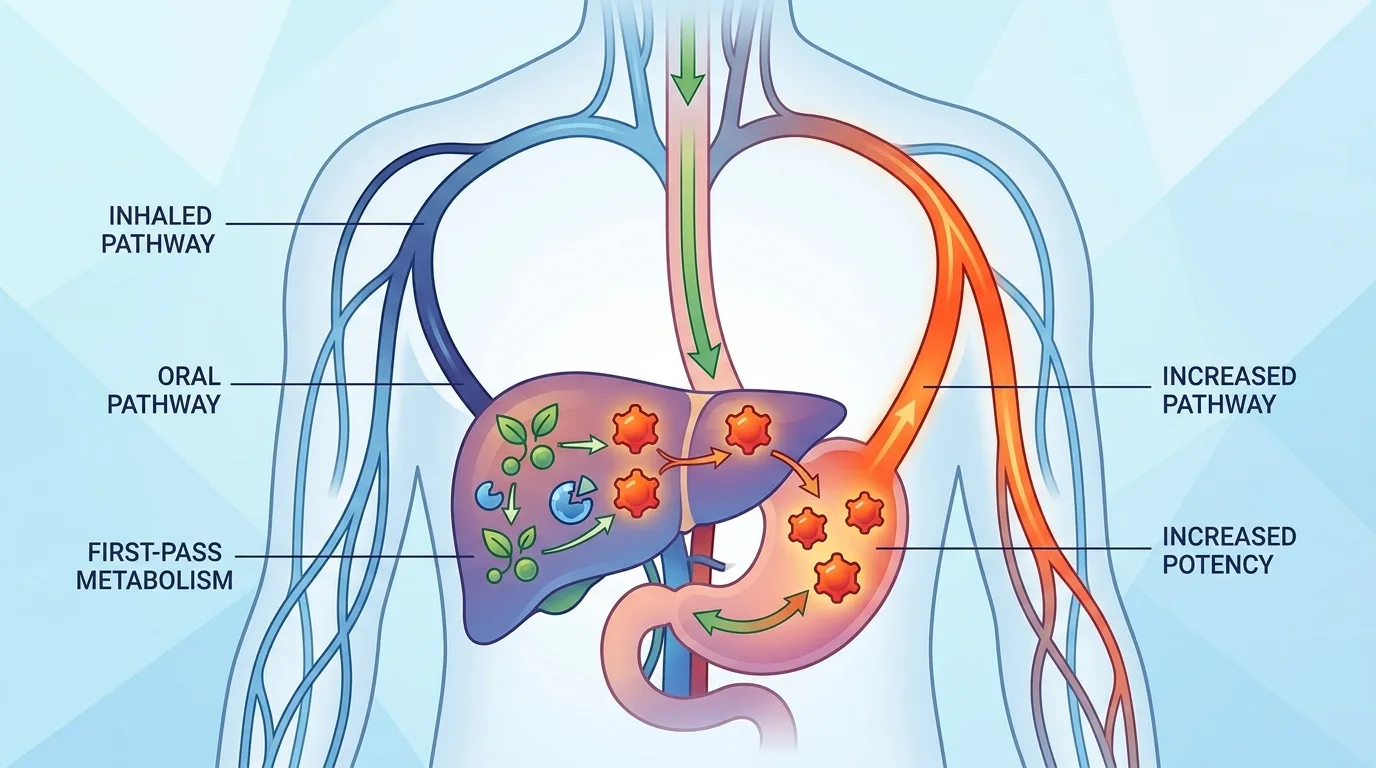
From your stomach, THC moves into the small intestine, where most nutrient absorption happens. The intestinal lining pulls cannabinoids through specialized cells and shuttles them directly to the hepatic portal vein,the blood highway that runs straight to your liver. This is the critical difference. When you smoke cannabis, THC enters the lungs, crosses into the bloodstream, and reaches your brain within minutes, bypassing the liver almost entirely on the first pass. When you eat it, the liver gets first dibs. And your liver is a biochemical powerhouse that doesn't just pass THC along,it transforms it.
The Liver's Role as Cannabinoid Transformer
Your liver exists to process everything you ingest,nutrients, toxins, medications, and yes, cannabinoids. It contains a family of enzymes called cytochrome P450, specifically the CYP2C9 and CYP3A4 variants, which specialize in metabolizing THC. These enzymes grab delta-9-THC molecules and oxidize them, adding a hydroxyl group to create 11-hydroxy-THC.
This isn't a minor chemical tweak. The addition of that hydroxyl group changes how the molecule interacts with your brain's cannabinoid receptors. 11-hydroxy-THC is more polar than delta-9-THC, meaning it crosses the blood-brain barrier more easily and binds to CB1 receptors with greater affinity. Studies suggest this metabolite is anywhere from three to seven times more psychoactive than delta-9-THC, though individual variation makes exact comparisons difficult.
Not all of the THC you swallow gets converted. Some passes through unchanged. Some gets converted to other metabolites. But enough becomes 11-hydroxy-THC to create a profoundly different experience than smoking. This is first-pass metabolism,the process where ingested substances get metabolized by the liver before entering general circulation. It's why oral medications often require higher doses than intravenous ones, and why edibles pack such an unexpectedly powerful punch.
11-Hydroxy-THC: The Metabolite That Changes Everything
The molecule 11-hydroxy-THC is the star of the edibles show, and most consumers have never heard of it. When you smoke cannabis, you're getting delta-9-THC almost exclusively. Your body does eventually metabolize smoked THC into 11-hydroxy-THC, but in much smaller quantities and after the delta-9 has already done most of its work. With edibles, 11-hydroxy-THC is produced in significant concentrations right from the start, flooding your system before you even feel the effects.
Research into 11-hydroxy-THC is surprisingly limited given how common edibles have become, but the studies that exist paint a clear picture. A 1973 pharmacokinetic study published in Clinical Pharmacology & Therapeutics found that oral THC administration resulted in higher plasma concentrations of 11-hydroxy-THC compared to inhalation. Participants reported more intense psychoactive effects that correlated with 11-hydroxy-THC levels, not delta-9-THC levels.
The difference in subjective experience is consistent across user reports. Edibles tend to produce more body-centreed effects,sedation, physical relaxation, and what experienced users describe as a "heavier" high. The cerebral stimulation from smoking is there, but it's wrapped in a weighted blanket of physical calm. This makes sense given 11-hydroxy-THC's increased affinity for CB1 receptors, which are concentrated in the brain and central nervous system but also distributed throughout the body.
Why the High Lasts Longer
Beyond intensity, edibles are notorious for duration. A smoked high typically peaks within 30 minutes and fades within two to three hours. An edible high can last six to eight hours, sometimes longer. This extended duration is also a product of liver metabolism.
When your liver converts delta-9-THC into 11-hydroxy-THC, it does so gradually, over the course of hours as your digestive system continues processing the edible. You're not getting one sharp spike of THC followed by a rapid decline,you're getting a sustained release as your liver works through the cannabinoids in your system. The 11-hydroxy-THC itself is also metabolized more slowly than delta-9-THC, lingering in your bloodstream and continuing to activate cannabinoid receptors long after a smoked dose would have cleared.
This pharmacokinetic profile,slow onset, prolonged plateau, gradual comedown,is why edibles are both beloved by medical patients seeking all-day relief and feared by recreational users who've accidentally taken too much. The experience doesn't peak and crash. It builds, sustains, and only slowly releases you.
Individual Variation: Why Edibles Affect People Differently
If you've ever sat in a room where one person is comfortably coasting on a 10mg gummy while another person took the same dose and is struggling, you've witnessed the wild variability of edible responses. This isn't about tolerance alone. It's about genetic differences in liver enzyme activity.
The CYP2C9 and CYP3A4 enzymes responsible for metabolizing THC don't work at the same rate in everyone. Genetic polymorphisms,variations in the genes that code for these enzymes,can make some people rapid metabolizers and others slow metabolizers. Rapid metabolizers convert THC to 11-hydroxy-THC quickly and efficiently, experiencing strong, fast-onset effects. Slow metabolizers may feel almost nothing from the same dose, or experience delayed, unpredictable onset.
Body weight, metabolism, diet, and even gut microbiome composition all influence edible absorption and processing. If you've eaten a high-fat meal recently, THC absorption improves because cannabinoids are fat-soluble. If you have a particularly active or sluggish digestive system, onset timing shifts. This biological lottery is why dosing edibles is so much harder than dosing smoked cannabis, where lung absorption is relatively consistent across individuals.
There's also a subset of people,estimates range from 5% to 15% of the population,who report feeling little to nothing from edibles regardless of dose. The mechanisms aren't fully understood, but likely involve either extremely low enzyme activity or absorption issues in the gut. For these individuals, edibles simply don't work the way they do for most people, no matter how much they take. If you've tried multiple edibles from reputable sources at reasonable doses and felt nothing, you might be in this group.
Tolerance and Cross-Tolerance
Regular cannabis users often assume their smoking tolerance will translate to edibles. It doesn't, at least not in a one-to-one way. Because smoked and eaten cannabis produce different ratios of delta-9-THC to 11-hydroxy-THC, tolerance to one doesn't fully protect you from the other.
A daily smoker might have significant tolerance to delta-9-THC but relatively fresh CB1 receptors when it comes to 11-hydroxy-THC. This is why even seasoned users can get unexpectedly wrecked by edibles if they assume their smoking tolerance makes them immune. There is some cross-tolerance,your receptors are downregulated either way,but the metabolite difference keeps edibles in their own league.
For those looking to build edible tolerance safely, consistency matters more than heroic doses. Taking the same moderate dose regularly allows your body to adapt to both the metabolite profile and the extended duration without overwhelming your system. For guidance on safe starting points, our beginner edible dosing guide breaks down conservative approaches for new users.
Bioavailability and Absorption: The Efficiency Problem
One counterintuitive fact about edibles: despite being stronger, they're actually less efficient at delivering THC to your bloodstream. When you smoke cannabis, bioavailability (the percentage of THC that reaches your bloodstream) ranges from 10% to 35%, depending on inhalation technique. With edibles, bioavailability drops to 4% to 12%.
This means that if you eat 10mg of THC, only 0.4mg to 1.2mg actually makes it into your system. The rest is lost to incomplete absorption, breakdown in the stomach, or excretion. So how are edibles stronger if most of the THC never even enters your bloodstream? Because the fraction that does make it through gets converted into 11-hydroxy-THC, which is so much more potent that it compensates for the efficiency loss.
This is why milligram-for-milligram dosing is misleading when comparing methods. A 10mg edible might deliver less total cannabinoid than a 10mg smoked dose, but what it delivers hits harder and lasts longer. It's not about quantity,it's about what your body does with it.
The Role of Fats and Carrier Oils
Because THC is fat-soluble, the presence of dietary fats dramatically improves edible absorption. This is why most commercial edibles use oils or butters as carriers, and why eating an edible with a meal containing healthy fats (avocado, nuts, full-fat dairy) increases bioavailability.
Some manufacturers have moved toward nanoemulsion technology or water-soluble THC formulations to improve absorption and speed onset, effectively bypassing some of the digestive unpredictability. These products can kick in faster,sometimes within 15 to 30 minutes,but they still undergo first-pass metabolism. The 11-hydroxy-THC conversion still happens. The metabolite-driven intensity remains. The technology just makes the timing more predictable.
Practical Implications: Dosing, Timing, and Safety
Understanding why edibles are stronger doesn't just satisfy curiosity,it should fundamentally change how you approach them. The delayed onset, extended duration, and metabolite conversion create a consumption profile that demands patience and respect.
The cardinal rule with edibles is start low and go slow. For true beginners, 2.5mg to 5mg of THC is a reasonable starting dose. Experienced smokers might start at 10mg. Wait a full two hours before considering a second dose, because onset can be deceptive. What feels like nothing at the 60-minute mark can become overwhelming at the 90-minute mark as liver metabolism ramps up.
If you do take too much, remember that while uncomfortable, a cannabis overdose is not medically dangerous. Find a calm environment, stay hydrated, and wait it out. The experience will pass. Some users find that CBD can help moderate an overly intense THC experience, though evidence is anecdotal. Time is the only real antidote.
For consumers interested in potent, precisely dosed edibles, products like Galaxy Gummies 6000mg THC offer high-concentration options for experienced users, while lower-dose alternatives provide more conservative entry points. The key is matching the product to your experience level and metabolic response.
Medical vs Recreational Considerations
The metabolic differences that make edibles stronger also make them ideal for certain medical applications. Patients seeking long-lasting pain relief, sleep support, or anxiety management often prefer edibles precisely because of the sustained 11-hydroxy-THC release. The body-focused effects align well with physical symptom management.
Recreational users, on the other hand, need to account for the fact that edibles aren't "social" in the way smoking can be. The delayed, prolonged experience doesn't lend itself to precise control or quick course correction. Planning around edibles means committing to the duration and accepting that you can't simply stop when you've had enough,the train has already left the station.
Comparing Consumption Methods: Why Bioavailability Isn't Everything
The science of first-pass metabolism highlights why consumption method matters more than raw THC content. A 20% THC flower smoked in a joint delivers a fundamentally different cannabinoid profile than 20mg eaten in a gummy, even though the total THC is comparable.
Smoking and vaping deliver delta-9-THC rapidly with minimal 11-hydroxy-THC conversion. Tinctures and sublingual oils sit somewhere in between,some THC absorbs directly into the bloodstream through mucous membranes (avoiding first-pass metabolism), while the rest gets swallowed and processed like an edible. This creates a hybrid effect profile: faster onset than pure edibles, but some of the metabolite-driven intensity.
Topicals avoid systemic metabolism entirely, making them useless for psychoactive effects but valuable for localized relief. Understanding these distinctions allows consumers to choose methods that match their desired outcomes rather than assuming all cannabis products work the same way.
For those exploring different consumption formats, our guide on indica versus sativa effects explains how strain type interacts with consumption method to shape the overall experience, while our article on terpenes and their effects covers the aromatic compounds that modulate THC's impact regardless of how you consume it.
The Future of Edible Technology
As cannabis science advances, manufacturers are developing formulations designed to control onset and duration more precisely. Extended-release edibles aim to provide steady dosing over 12 to 24 hours for medical users. Fast-acting edibles using encapsulation technology promise effects within 15 minutes. Some companies are even exploring formulations that minimize 11-hydroxy-THC conversion, creating edibles that feel more like smoking.
Whether these innovations catch on depends partly on consumer preference. Many users appreciate the unique character of traditional edibles precisely because of the metabolite difference. The 11-hydroxy-THC experience isn't a bug,it's a feature. Trying to engineer it away might eliminate the very qualities that make edibles valuable for certain applications.
Why Understanding Metabolism Matters for Consumers
The science of why edibles are stronger isn't just biochemical trivia. It's practical knowledge that prevents bad experiences and empowers better decision-making. When you understand that your liver is actively creating a more potent compound from the THC you ingest, several things become clear:
First, dose equivalency between smoking and eating is impossible to calculate precisely because you're comparing different primary compounds. A "10mg edible equals one joint" comparison is meaningless,they're not delivering the same molecules.
Second, onset variation isn't randomness; it's the natural result of digestive variability and individual enzyme differences. Patience isn't optional with edibles,it's biochemically necessary.
Third, edible intensity isn't about "getting ripped off" when a small dose hits hard. You're experiencing the multiplied potency of 11-hydroxy-THC, which means less can genuinely be more.
For consumers exploring edible options, our comprehensive guide on edible onset timing provides detailed information on what to expect at different points in the experience, helping you plan consumption around your schedule and environment.
When you eat THC, your liver converts it into 11-hydroxy-THC, a metabolite that's three to seven times more psychoactive than the delta-9-THC you get from smoking. This chemical transformation happens during first-pass metabolism and is responsible for the increased intensity and body-focused effects associated with edibles.
11-hydroxy-THC is metabolized more slowly than delta-9-THC, contributing to the extended duration of edible highs. While smoked cannabis effects typically fade within two to three hours, edibles can produce effects lasting six to eight hours or longer because your liver continues producing 11-hydroxy-THC as it processes the ingested cannabinoids over time.
Most people do, but genetic variations in liver enzymes like CYP2C9 and CYP3A4 cause significant differences in how efficiently THC is converted to 11-hydroxy-THC. Some people are rapid metabolizers who experience strong effects quickly, while others are slow metabolizers who may feel minimal effects. An estimated 5-15% of people report feeling little to nothing from edibles regardless of dose, likely due to absorption or enzyme activity issues.
Taking edibles on an empty stomach doesn't reduce the 11-hydroxy-THC conversion,your liver still performs first-pass metabolism. However, it can affect absorption speed and efficiency. An empty stomach may lead to faster onset but potentially lower bioavailability, while eating edibles with dietary fats improves absorption and can actually increase how much THC reaches your liver for conversion.
Sublingual absorption allows some THC to enter your bloodstream directly through the mucous membranes in your mouth, bypassing first-pass liver metabolism. This portion behaves more like smoked THC. However, any tincture you swallow will undergo the same liver conversion to 11-hydroxy-THC as traditional edibles, creating a hybrid effect profile with faster onset but some metabolite-driven intensity.
Only partially. While regular cannabis use does create some cross-tolerance because CB1 receptors become downregulated regardless of consumption method, the different ratio of delta-9-THC to 11-hydroxy-THC means smoking tolerance doesn't fully translate to edibles. Heavy smokers can still experience unexpectedly intense effects from edibles because their receptors may be less adapted to the 11-hydroxy-THC metabolite.
Conclusion: Respect the Metabolite
Edibles are stronger because your liver is a biochemical factory that doesn't just process THC,it transforms it into something more potent. The conversion of delta-9-THC to 11-hydroxy-THC during first-pass metabolism is the fundamental reason why eating cannabis produces effects that are more intense, longer-lasting, and more body-focused than smoking. This isn't marketing hype or subjective perception. It's documented pharmacology.
Understanding this metabolic pathway arms consumers with the knowledge they need to approach edibles safely and effectively. The delayed onset isn't a product defect,it's the time your digestive system needs to deliver THC to your liver for conversion. The unpredictable intensity isn't quality control failure,it's individual variation in enzyme activity. The extended duration isn't overindulgence,it's sustained metabolite release.
Whether you're a medical patient seeking long-lasting symptom relief or a recreational user exploring different consumption methods, recognizing the biochemical reality of edibles changes how you dose, when you consume, and what you expect. Start with conservative doses, wait the full onset period, and respect that you're introducing a uniquely potent metabolite into your system. Your liver is doing exactly what evolution designed it to do,transforming ingested compounds into forms your body can use. In the case of THC, that transformation happens to create one of the most intense cannabinoid experiences available.
Shop Lab-Tested Edibles
Explore our selection of precisely dosed cannabis edibles, all third-party tested and delivered discreetly across Canada. Find the right potency for your experience level.
Browse EdiblesFor those ready to explore edibles with a solid understanding of the science behind them, choosing products from reputable sources with consistent dosing and clear labelling makes all the difference. The metabolite may be powerful, but with knowledge and caution, it's also remarkably controllable.