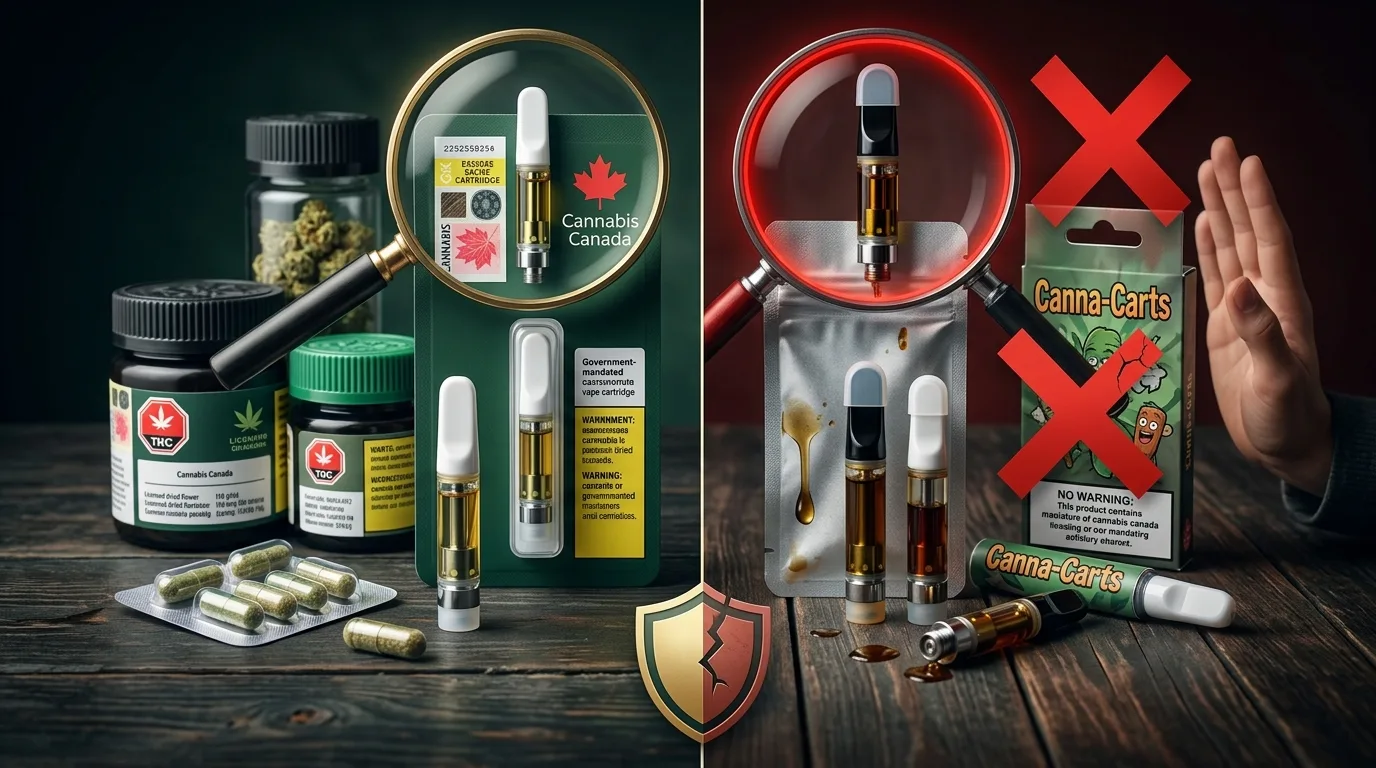
The vape cart sitting in your hand might not contain what the label claims. In Canada's thriving cannabis market, counterfeit THC cartridges have become a persistent problem that affects both recreational users and medical patients. While Health Canada regulates the legal market strictly, the grey and black markets continue to produce convincing fakes that can contain anything from diluted distillate to potentially harmful cutting agents. The consequence isn't just wasted money, it's your health on the line.
This guide will teach you the specific visual tells, packaging inconsistencies, and documentation red flags that separate legitimate vape cartridges from counterfeits. We'll walk through what a real certificate of analysis looks like, how oil viscosity reveals product quality, and why missing batch numbers should send you looking elsewhere. By the end, you'll know exactly what questions to ask your supplier and what details to examine before you make a purchase.
The Real Scale of the Counterfeit Vape Problem in Canada
Counterfeit vape cartridges aren't a niche issue limited to street dealers anymore. They've infiltrated delivery services, unlicensed dispensaries, and even some seemingly professional online storefronts. The profit margins on fake carts are substantial, a cartridge that costs $2 to produce can sell for $30 to $50 when packaged to mimic premium brands. That economic incentive drives a steady supply of fakes into the Canadian market.
Health Canada has issued multiple warnings about unregulated vaping products, particularly those purchased outside the legal provincial systems. Labouratory testing by various news organizations and consumer advocacy groups has revealed fake cartridges containing vitamin E acetate, MCT oil, pesticides, and heavy metals, the same contaminants linked to serious lung injuries in the United States between 2019 and 2020. While Canada's outbreak was less severe, the underlying risk remains identical when you purchase unverified products.
The challenge is that many counterfeit operations have become sophisticated. They use identical packaging, holographic stickers, and QR codes that lead to convincing but fake verification websites. The cartridge hardware itself often comes from the same Chinese manufacturers that supply legitimate brands, making visual inspection alone insufficient. You need to know the specific details that counterfeiters consistently miss or cannot replicate at scale.
Visual Inspection: The First Line of Defence Against Fake Carts
Packaging Quality and Printing Details
Legitimate cannabis companies invest heavily in packaging because it's both regulatory requirement and brand protection. Examine the box or packaging tube carefully under good lighting. The printing should be crisp with no blurred edges, misaligned colours, or pixelation in logos or text. Run your finger across printed areas, authentic packaging uses quality inks that don't smudge or flake off with moderate pressure.
Check for spelling errors and grammatical mistakes on all printed surfaces. Professional cannabis companies employ designers and editors, counterfeiters often don't. Look at the legal warnings and health statements required by provincial regulations. These should be present, correctly worded, and placed in standardized locations. Missing or poorly translated regulatory text is an immediate red flag.
Holographic seals and tamper-evident stickers should be high quality. They should reflect light consistently, show clear colour shifts when tilted, and have precise die-cutting with no ragged edges. Cheap holographic stickers from counterfeiters often show rainbow patterns that look generic rather than displaying specific security features or brand logos. The adhesive quality matters too, authentic seals should be difficult to remove cleanly.
The Cartridge Hardware Itself
Remove the cartridge from its packaging and examine the hardware closely. The mouthpiece should be securely attached with no gaps where it meets the glass chamber. Legitimate cartridges use proper threading or press-fit connections that don't wiggle or feel loose. The chamber should be perfectly clear borosilicate glass without bubbles, cloudiness, or visible seams where two pieces were joined poorly.
Look at the bottom connector, the metal piece that screws onto your battery. It should have clean threading, consistent metal finish, and centreed airflow holes if visible. The branding should be etched or printed clearly on the hardware itself, not just the packaging. Many authentic manufacturers laser-etch their logo or name directly on the metal components, something counterfeiters often skip to reduce costs.
Check for manufacturing marks or model numbers on the cartridge hardware. Premium manufacturers use specific ceramic coil designs, glass suppliers, and metal alloys that they mark with batch codes or model identifiers. These tiny details take time and precision to replicate accurately. If the hardware looks generic and unmarked beyond a simple brand sticker, question whether it's authentic.
The Oil Movement Test
Turn the cartridge upside down and watch how the oil moves. This simple test reveals a tremendous amount about what's actually inside. Genuine cannabis distillate and live resin are viscous, they should move very slowly or not at all at room temperature. If you invert the cartridge and a bubble shoots to the top within seconds, the oil has been cut with thinning agents to stretch the actual cannabis content.
Authentic thick oil might take several minutes to show any movement when inverted, or remain completely stationary. The consistency should look uniform throughout the chamber with no separation or layering. If you see different coloured bands or sections within the oil, it indicates improper mixing of components or degradation, both signs of low-quality production standards.
Documentation Red Flags: What Legitimate Suppliers Must Provide
Batch Numbers and Traceability
Every legitimate cannabis product in Canada should have a unique batch or lot number printed somewhere on the packaging. This alphanumeric code links the specific unit you're holding to production records, testing results, and inventory tracking systems. It's not decorative, it's the foundation of product traceability that regulators and serious suppliers maintain.
The batch number should be printed with the manufacturing date or packaging date nearby. These dates tell you how old the product is and allow you to verify the information against lab reports. If a cartridge package has no batch number at all, or shows a generic number that looks hand-written or added with a separate sticker, treat it as suspect. Legitimate manufacturers print this information during the packaging process, not after.
Ask your supplier if they can tell you which production batch your cartridge came from. A trustworthy vendor should be able to reference their inventory system and confirm the batch details. If they can't or won't provide this basic information, you're dealing with someone who either doesn't track their supply chain or knows the products aren't properly documented.
Certificates of Analysis (COA) and Lab Testing
A certificate of analysis is a third-party labouratory report that confirms what's in the cartridge and what's not. It should show cannabinoid percentages (THC, CBD, CBN, etc.), terpene profiles, and most importantly, contamination testing for pesticides, heavy metals, residual solvents, and microbial content. Any supplier selling authentic, safely-produced cartridges should be able to provide these reports on request.
The COA should be from an accredited cannabis testing labouratory, not an in-house test or unverifiable document. Look for the lab's name, address, accreditation numbers, and contact information printed on the report. The batch number on the COA must match the batch number on your cartridge packaging exactly. Different numbers mean the report doesn't actually apply to the product in your hand.
Check the testing date on the COA. It should reasonably correspond to the production date of your cartridge, typically within days or weeks depending on the manufacturer's testing schedule. A COA from six months before the manufacturing date makes no sense. Neither does a generic report with no specific batch information, some counterfeiters will show you a single old COA and claim it represents all their inventory, which is meaningless for verification purposes.
Legitimate suppliers will make these lab reports available on their website or provide them via email within a reasonable timeframe. If you're told the COAs are "proprietary" or "not available to customers," that's a warning sign. Transparency in testing is a mark of quality operations. Understanding how to read these reports helps you make informed decisions about what you're purchasing, similar to learning how to interpret cannabis lab results line by line.
The Hardware Source and Manufacturing Origin
Most vape cartridge hardware originates from a small number of manufacturers in China and increasingly in North America. Legitimate cannabis companies purchase certified, lead-free, food-grade cartridges from reputable suppliers like CCELL, AVD, or Ispire. These manufacturers maintain quality control standards and provide documentation about materials used in their products. Counterfeiters buy the cheapest generic hardware available, often from unknown sources with no material safety guarantees.
The difference matters because cheap cartridge metals can leach heavy metals like lead and cadmium into the oil when heated. The coil materials and wicking components vary dramatically in quality. Authentic CCELL cartridges, for example, use proprietary ceramic formulations designed specifically for cannabis oil viscosity. Generic knock-offs might look similar externally but use inferior ceramics that burn at inconsistent temperatures or contaminate the vapour.
Some counterfeit operations go further, they purchase authentic branded hardware and refill it with substandard oil. This makes detection harder because the cartridge itself is genuine, only the contents are fake. This practice is why documentation and supplier reputation become crucial. You can't rely on hardware authenticity alone when the actual product inside has been swapped or tampered with after the original brand released it.
What Uper Weed's Listings Show and How to Verify Them
When you browse vape cartridge listings on our platform, you'll notice several consistent elements that reflect our sourcing standards. Every product page includes batch information when available, manufacturing details, and strain or formulation specifics. We work directly with established extract producers who maintain testing protocols and provide us with documentation for the inventory we carry.
Take our Drizzle Factory 2g THC Vape Cartridges, for instance. These cartridges come with identifiable packaging, consistent hardware from known manufacturers, and oil that exhibits the proper viscosity you'd expect from quality distillate. The batch numbers are printed on both the box and the cartridge base, allowing you to cross-reference if you request lab documentation.
We encourage customers to ask for certificates of analysis before or after purchase. This isn't an inconvenience, it's part of maintaining trust and transparency in a market that desperately needs both. If you receive a cartridge and want to verify its testing results, contact us with the batch number. We maintain relationships with our suppliers specifically so we can trace products back through the supply chain and provide the documentation that proves authenticity.
The disposable vape pens we stock, including options like Drizzle Factory 2G Switch Vape Pen, come from producers who understand that quality control isn't optional. These aren't generic import products with mystery oil. The formulations use cannabis-derived terpenes, proper distillate concentrations, and hardware designed for the specific oil viscosity. When you compare these to counterfeits side by side, the differences in vapour quality, flavour accuracy, and effect consistency become immediately obvious.
This transparency extends to how we communicate about product origins. If a supplier can't provide the documentation we require, we don't carry their products regardless of pricing. This standard filters out the exact kind of questionable inventory that floods less selective operations. It costs us some potential profit margin, but it protects you from the health risks and wasted money that fake cartridges represent.
The Price Reality Check and Risk Assessment
Authentic vape cartridges cost what they cost because of the processes involved in making them safely. Quality cannabis extraction requires expensive equipment, skilled technicians, proper facilities, input material costs, testing fees, and compliant packaging. When you see 1-gram cartridges selling for $15 or 2-gram cartridges for $25, the math doesn't work unless corners are being cut somewhere in that production chain.
This doesn't mean the most expensive option is automatically authentic, price alone proves nothing. But unusually low prices should trigger additional scrutiny. Ask yourself whether the vendor could actually source, test, package, and deliver a legitimate product at that price point while staying in business. If the answer seems questionable, your instinct is probably correct.
Compare the risk assessment of buying a suspected fake versus paying slightly more for verified authentic products. A counterfeit cartridge might cost you $30 upfront, but if it contains harmful cutting agents or causes respiratory irritation, your actual cost includes medical issues, lost time, and the need to purchase a replacement anyway. The real economy favours buying right the first time from suppliers who can prove their products are what they claim to be.
Consider too that calculating the real cost of vaping over time requires factoring in product longevity and actual potency. Fake cartridges often burn faster because the oil is thinner or the hardware is inferior. They may deliver less actual THC per draw despite claimed percentages. When properly measured, cheap fakes can cost more per dose of actual cannabinoids than moderately priced authentic cartridges.
Questions to Ask Your Supplier Before Buying
Legitimate vendors welcome questions because they have good answers. Before purchasing vape cartridges, especially from a new supplier, ask these specific questions and evaluate how they respond:
Can you provide the certificate of analysis for this specific batch? Note whether they can quickly reference testing documents or whether they deflect the question. A supplier with proper inventory systems can match batch numbers to lab reports efficiently.
Who manufactured the cartridge hardware and what materials are certified? They should know whether it's CCELL, AVD, or another reputable manufacturer. If they don't know or can't tell you, that's concerning. Hardware sourcing directly affects your safety when the device heats oil to vapourization temperatures.
What extraction method was used and who produced the oil? Quality suppliers can tell you whether the distillate came from CO2 extraction, hydrocarbon extraction, or another method. They should know the extract producer's name and location. Vague answers like "from a local producer" or "high-quality source" don't provide meaningful information.
How do you store inventory before shipping? Proper storage matters. Cannabis cartridges should be kept in temperature-controlled environments away from direct light. Oil can degrade or separate if stored improperly. A vendor who considers this question odd probably hasn't thought about inventory handling standards.
What is your return or exchange policy if I believe I received a counterfeit? Their response tells you how confident they are in their supply chain. Suppliers selling authentic products typically offer reasonable return windows because they know their inventory will pass scrutiny. Those selling fakes will make returns extremely difficult or impossible.
What to Do If You've Already Purchased a Suspected Fake
If you're reading this after buying a cartridge that now seems suspicious, don't panic but do take it seriously. First, stop using the product immediately until you can verify its contents. Inhaling unknown substances carries real health risks that aren't worth the money you've already spent.
Contact the supplier and request documentation for the specific batch you received. Be direct about your concerns. Their response will tell you whether you're dealing with a legitimate operation that had a supplier issue or a vendor deliberately moving counterfeit products. Legitimate businesses will investigate your concern and typically offer a refund or replacement if they can't verify the product's authenticity.
If the supplier refuses to provide information or becomes hostile when questioned, document everything including photos of the packaging, the cartridge itself, and your communications. File a complaint with local consumer protection agencies if appropriate. While the unregulated cannabis market has limited official recourse, creating a paper trail can help protect other consumers and build cases if regulatory bodies investigate the supplier later.
For future purchases, shift to suppliers who proactively provide the verification information you need without requiring aggressive questioning. The cannabis market includes plenty of vendors who maintain proper standards and welcome informed customers. You're not locked into buying from operations that make you work hard to verify basic product authenticity.
Building Your Own Verification Checklist
Create a mental or physical checklist that you run through before completing any vape cartridge purchase. This systematic approach takes minutes but dramatically reduces your fake product exposure:
Packaging verification: Crisp printing, no spelling errors, proper regulatory warnings, high-quality holographic seals, and tamper-evident features intact.
Hardware inspection: Secure mouthpiece connection, clear glass chamber without defects, clean threading on battery connector, manufacturer marks or model numbers visible.
Oil assessment: Proper viscosity when inverted (minimal to no movement), uniform colour throughout, no separation or layering, appropriate fill level without excessive headspace.
Documentation check: Batch number present and legible, manufacturing or packaging date included, ability to access certificate of analysis on request, lab report matches batch number exactly.
Supplier transparency: Willing to answer questions about sourcing, provides clear return policy, maintains inventory tracking system, can reference testing documentation quickly.
Price reasonableness: Cost aligns with legitimate production expenses, not suspiciously cheaper than market averages, supplier can explain value proposition without vague claims.
This checklist works whether you're buying from a delivery service, an unlicensed dispensary, or online mail-order platforms. The specific standards remain consistent because they're rooted in production realities rather than marketing claims. A supplier meeting all these criteria is exponentially more likely to sell authentic products than one failing multiple checks.
The Broader Context: Why Mail Order Requires Extra Diligence
Mail-order cannabis occupies a unique position in Canada's regulatory landscape. While provincial systems maintain tight controls on licenced retail, the delivery and online sectors operate with varying degrees of oversight depending on jurisdiction. This creates opportunities for both excellent service from quality vendors and exploitation by those selling inferior products.
The advantage of mail order is selection and convenience. The disadvantage is that you can't physically inspect products before purchase in the same way you might at a storefront dispensary. This makes supplier reputation and documentation even more critical. You're essentially trusting the vendor's quality control and sourcing standards sight unseen until the package arrives.
Choose mail-order suppliers who compensate for this trust gap with transparency. Detailed product descriptions, clear photographs showing actual inventory rather than stock images, accessible customer service, and most importantly, willingness to provide testing documentation all signal a vendor who recognizes their responsibility in this model. Operations that hide behind vague product listings and generic marketing copy are much higher risk.
The ordering process itself can reveal vendor standards. Professional operations maintain proper inventory management, ship products in appropriate packaging that prevents damage and maintains discretion, and provide tracking with realistic delivery timelines. If the entire transaction feels informal or rushed, consider whether the product quality matches that operational style.
Understanding how different cannabis products vary in risk is important too. While this guide focuses on vape cartridges, similar verification principles apply to concentrates like shatter and wax. Whether you're purchasing shatter versus wax or comparing vape formats, the underlying need for transparent sourcing and proper testing documentation remains constant across product categories.
Frequently Asked Questions About Fake Vape Carts
Check for packaging quality issues like blurry printing or spelling errors, examine the hardware for loose connections or unmarked components, and perform the oil movement test by inverting the cartridge. Authentic distillate should barely move or not move at all. Also verify that a batch number is clearly printed on the packaging and matches any available lab reports.
Fake cartridges can be genuinely dangerous. Labouratory testing has found counterfeits containing vitamin E acetate, pesticides, heavy metals, and unknown cutting agents that have been linked to serious lung injuries. Beyond immediate health risks, cheap hardware can leach contaminants when heated. This isn't just about getting less THC, it's about inhaling potentially harmful substances.
Yes, legitimate suppliers should be able to provide certificates of analysis from accredited third-party labouratories. These reports show cannabinoid content, terpene profiles, and testing for contaminants. The COA should match your specific product batch number. If a vendor refuses to provide this documentation or claims it's unavailable, consider that a red flag about their sourcing practices.
Price differences reflect production quality, testing standards, hardware costs, and source material. Authentic cartridges use quality extraction processes, certified hardware, proper testing, and compliant packaging, all of which have real costs. Suspiciously cheap cartridges typically cut corners somewhere in this chain, often using diluted oil, untested contents, or inferior hardware that poses safety risks.
Stop using it immediately and contact the supplier to request batch documentation and lab test results. Their response will indicate whether you're dealing with a legitimate vendor who had a supply chain issue or someone knowingly selling counterfeits. If they can't or won't verify the product's authenticity, seek a refund and switch to suppliers who maintain transparent sourcing and testing standards.
Not necessarily. Price alone doesn't guarantee authenticity since counterfeiters sometimes charge premium prices to appear legitimate. However, unusually low prices almost always indicate corner-cutting somewhere in production. Use price as one factor among many, authentic products cost what they cost because of extraction processes, testing, and quality hardware that counterfeiters skip to maximize profit margins.
Building Trust Through Transparency in Cannabis Vaping
The counterfeit vape cartridge problem won't disappear overnight, but informed consumers dramatically reduce demand for fake products by making verification a standard practice. When enough buyers start asking for batch numbers and lab reports as routine rather than exception, suppliers who can't provide documentation lose market access. This market pressure drives better standards across the industry more effectively than any single regulatory intervention.
Your purchasing decisions create incentives. Every time you buy from a supplier who provides proper documentation, you reward transparency and quality control. Every time you walk away from a deal that seems too good to be true or a vendor who won't answer basic questions, you remove profit from operations that threaten consumer safety. This isn't activism, it's rational self-interest that happens to benefit the broader community.
The verification techniques covered in this guide take only minutes to apply but provide protection worth far more than the time investment. Check packaging quality, inspect hardware, test oil viscosity, demand batch numbers, and request certificates of analysis. Suppliers who meet these standards consistently are the ones worth your repeat business and referrals to others in your community.