If you're standing in a cannabis shop staring at packages of gummies marked "10mg THC per piece" and wondering how much to take for your first time, you're asking the right question at the right moment. The honest answer that most budtenders won't lead with: start with 2.5 milligrams of THC, wait a full two hours, and never take more during that waiting period no matter how impatient you feel. This conservative beginner edible dose might sound overly cautious, but it's the approach that prevents the anxiety-filled experiences that turn first-timers away from edibles permanently.
Cannabis edibles metabolize completely differently than smoking or vaping. When you ingest THC, your liver converts delta-9-THC into 11-hydroxy-THC, a compound that crosses the blood-brain barrier more efficiently and produces effects that feel significantly stronger and last much longer. This isn't speculation or marketing, it's basic pharmacokinetics that explains why a 10mg edible can feel more intense than smoking a half-gram joint. Understanding this metabolic difference is essential before you take your first bite.
Why 2.5mg Is the Safest Starting Point for First-Time Edible Users
The 2.5mg recommendation isn't arbitrary. Health Canada's guidance on low-risk cannabis use suggests that new consumers begin with doses at or below 2.5mg THC and wait at least two hours before considering additional consumption. This threshold represents the point where most adults without tolerance will experience mild, manageable effects without the disorienting intensity that characterizes overconsumption.
Clinical research on edible cannabis consistently shows that individual responses vary dramatically based on body weight, metabolism, prior cannabis exposure, and even what you've eaten that day. A 2.5mg dose allows you to establish your personal baseline. For some people, this amount produces a gentle relaxation and mood lift. For others particularly those with faster metabolisms or higher body mass it might be barely perceptible. That's exactly the point: you're gathering data about how your body processes edibles, not trying to achieve maximum effects on day one.
The conservative approach also accounts for delayed onset. Unlike inhaled cannabis, which reaches peak effects within minutes, edibles can take anywhere from 45 minutes to three hours to fully manifest. Factors that influence onset time include whether you've eaten recently, your digestive speed, the type of edible (fat content matters), and your individual metabolism. Starting low gives you room to adjust upward on future occasions without risk of taking too much while still waiting for the first dose to kick in.
The Pharmacology Behind Edible Cannabis Absorption
When you consume an edible, THC must pass through your digestive system and liver before entering your bloodstream. This first-pass metabolism through the liver is what creates 11-hydroxy-THC, the metabolite responsible for the distinct character of edible highs. This process takes time, which explains the delayed onset, but it also means the effects last considerably longer, typically four to eight hours compared to one to three hours from smoking.
Your liver's metabolic rate determines how quickly you convert THC and how much 11-hydroxy-THC you produce. Some people are rapid metabolizers who feel effects within 30 minutes; others are slow metabolizers who might wait two hours or more. There's no reliable way to predict your category without experimentation, which is why the conservative starting dose matters. You're not just testing the product, you're testing your own biology.
The Two-Hour Rule: Why Patience Prevents Problems
The single most common mistake with cannabis edibles is redosing too early. You take a gummy, wait 45 minutes, feel nothing, and decide to take another one or two more. Then 30 minutes later, all three doses hit simultaneously, and you spend the next six hours far more intoxicated than you intended. This scenario is so universal among first-time edible users that it's become a cautionary cliché, yet it happens constantly because impatience overrides good judgment.
The two-hour waiting period isn't a suggestion, it's a harm-reduction protocol. Even if you feel absolutely nothing after 90 minutes, wait the full two hours before making any decision about additional consumption. Many edibles, particularly those with higher fat content like chocolates or baked goods, can take this long to reach peak blood concentration. The experience of feeling "nothing, nothing, nothing, OH NO EVERYTHING" is entirely preventable with disciplined waiting.
What to Do While You Wait
Waiting two hours doesn't mean sitting still and monitoring every sensation. The best approach is to consume your 2.5mg dose and then engage in normal, comfortable activities. Watch a familiar show, listen to music, do light household tasks, or spend time with trusted friends. Avoid driving, operating machinery, or putting yourself in situations where you need to be at full cognitive capacity. You're waiting to see what happens, not testing your limits.
Keep track of the time you consumed the edible. Set a timer on your phone for two hours if necessary. Have water and light snacks available. Many first-time users report dry mouth and mild hunger as effects begin, and addressing these physical sensations can make the experience more comfortable. Creating a calm, familiar environment before consuming reduces anxiety that might otherwise be misinterpreted as negative effects from the cannabis itself.
Dosage Chart: Finding Your Ideal Edible Dose Over Time
Once you've tried 2.5mg and understand how your body responds, you can gradually adjust your dose upward if desired. The key word is gradually. Increase by 2.5mg increments at most, and always maintain the two-hour waiting period. This methodical approach builds your understanding of dose-response relationships in your own body, which is far more valuable than rushing to find a "perfect" dose based on someone else's recommendation.
| Dose Range | Experience Level | Typical Effects |
|---|---|---|
| 1-2.5mg | Complete beginner or microdose | Mild relaxation, barely perceptible for some users, potential anxiety relief |
| 2.5-5mg | Recommended first-time dose | Noticeable relaxation, mild euphoria, functional cognition maintained |
| 5-10mg | Experienced beginner | Stronger euphoria, altered perception, may affect coordination |
| 10-20mg | Regular user with tolerance | Significant impairment, strong psychoactive effects, not for beginners |
| 20mg+ | High tolerance or medical use | Very strong effects, potential anxiety/paranoia for inexperienced users |
This chart represents general guidelines, not prescriptions. Your ideal dose depends on your individual physiology, your goals for the experience, and your comfort level with altered states. Many regular edible consumers settle on doses between 5-10mg for recreational use, while others find 2.5mg perfectly adequate for relaxation and sleep support. Neither approach is "better" in absolute terms, what matters is what works safely and effectively for you.
How to Split Edibles for Precise Beginner Dosing
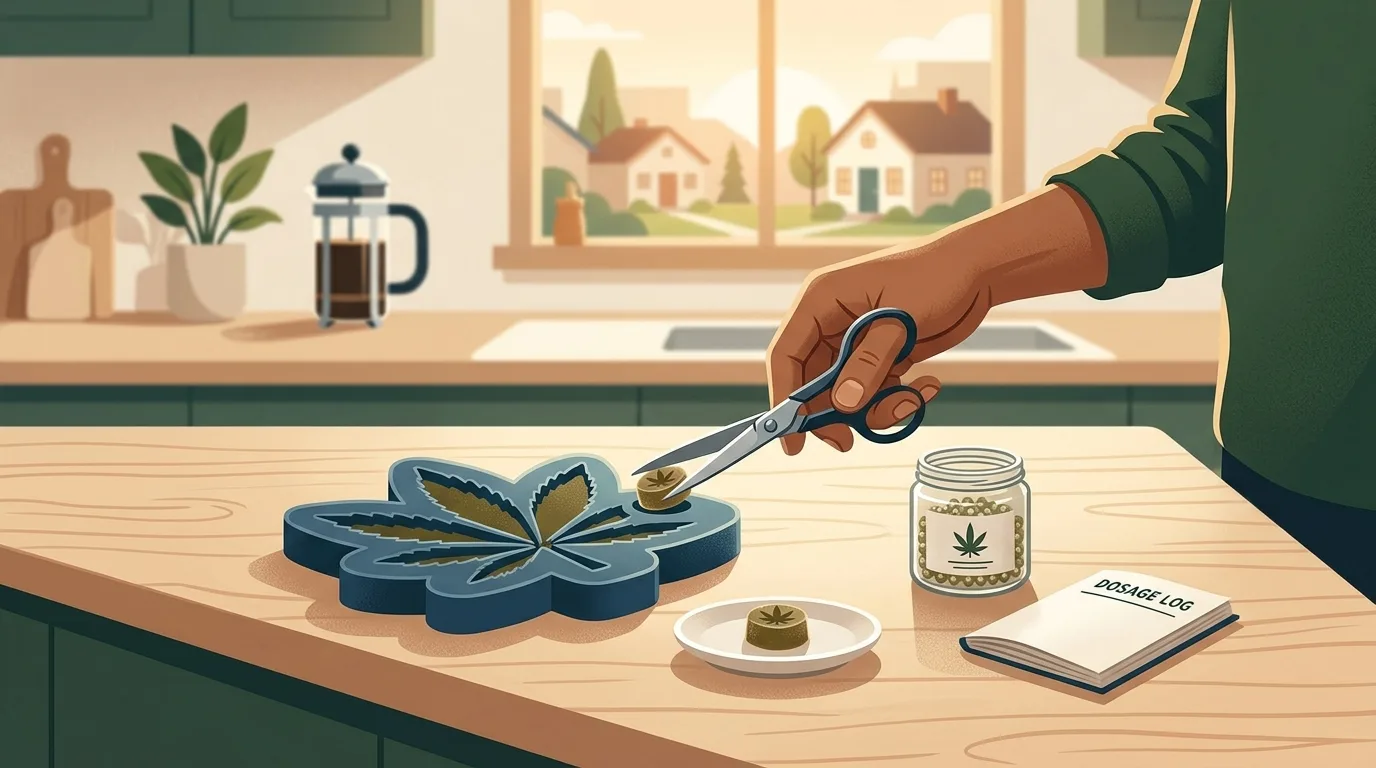
Many commercially available edibles come in 10mg pieces, which is four times the recommended beginner dose. You'll need to divide them. For gummies, use a clean knife or kitchen scissors to cut a 10mg piece into quarters. Each quarter will contain approximately 2.5mg. For chocolates or baked goods, cutting precise quarters is more difficult, but you can approximate by dividing into the smallest reasonable portions.
Some manufacturers now produce 2.5mg and 5mg individual pieces specifically for new users and microdosers. If you're purchasing edibles specifically for a first experience, look for these lower-dose options. They eliminate the need for splitting and provide more accurate dosing, which matters significantly when you're trying to establish your baseline response. Browse low-dose edible options that make beginner dosing straightforward without requiring kitchen math.
What to Expect from Your First Edible Experience at 2.5mg
At a 2.5mg dose, most first-time users report subtle effects that develop gradually. You might notice a gentle shift in mood, a slight feeling of physical relaxation, or a mild alteration in sensory perception. Colours might seem slightly more vivid, music might feel more engaging, or you might find yourself more easily amused by simple things. These are normal, manageable effects that indicate the edible is working without overwhelming your system.
Some people feel very little or nothing at all from 2.5mg, especially if they have prior experience with inhaled cannabis or naturally higher tolerance thresholds. This is not a failure, it's valuable information. It tells you that your next attempt can safely involve 5mg. The conservative approach accepts that your first dose might be subthreshold in exchange for the certainty that it won't be overwhelming. That trade-off heavily favours safety over immediate gratification.
Physical Sensations and Mental Effects
Common physical effects at beginner doses include dry mouth, slightly increased heart rate, mild changes in coordination, and sometimes increased appetite. Mental effects typically include relaxation, mild euphoria, altered time perception, and enhanced appreciation for sensory experiences. None of these should feel alarming or out of control at a 2.5mg dose. If you experience anxiety or discomfort, remember that the effects are temporary and will fully resolve within several hours.
Understanding what terpenes are and how they influence effects can help you choose edibles that align with your desired experience. Products made from indica-dominant strains often promote relaxation and sleep, while sativa-derived edibles may provide more energizing effects. However, individual responses vary, and at very low doses these differences may be subtle or imperceptible.
Common Beginner Mistakes and How to Avoid Them
Beyond taking too much too soon, several other mistakes trip up first-time edible users. Taking edibles on a completely empty stomach can lead to faster, more intense absorption that might feel uncomfortable. Conversely, eating a very heavy meal immediately before consuming an edible can delay onset significantly and create unpredictable timing. The middle path works best: consume your edible after a light snack or small meal, which provides enough food content to support digestion without drastically slowing absorption.
Another frequent error is consuming edibles in unfamiliar or stressful environments. Your first experience should happen somewhere you feel completely safe and comfortable, ideally at home with no obligations for the rest of the day. Avoid trying edibles before social events, work situations, or activities that require your full attention. Cannabis can increase anxiety in uncomfortable settings even at low doses, and creating the right environment dramatically improves your chances of a positive experience.
Mixing Edibles with Alcohol or Other Substances
Never combine cannabis edibles with alcohol or other intoxicants during your first experience. Cannabis and alcohol interact synergistically, meaning their combined effects are greater than the sum of their individual effects. This potentiation can lead to severe nausea, dizziness, and disorientation that wouldn't occur with either substance alone. Wait until you thoroughly understand how your body responds to edibles before considering any combination use, and even then approach with extreme caution.
Similarly, avoid mixing edibles with pharmaceutical medications without consulting your healthcare provider. Cannabis can interact with certain medications, particularly those metabolized by the same liver enzymes that process THC. This includes some common blood thinners, antidepressants, and anti-anxiety medications. Disclosure to your doctor about cannabis use allows for safer medication management and better health outcomes.
What to Do If You've Taken Too Much
Despite following conservative guidelines, you might still find yourself uncomfortable if you're particularly sensitive to THC or if you misjudged your starting dose. First, understand that cannabis edibles cannot cause fatal overdose. You will not stop breathing, your heart will not stop, and the effects will fully resolve within several hours regardless of how uncomfortable you feel. This knowledge alone often reduces panic that makes overconsumption experiences worse.
If you feel anxious or paranoid, move to a quiet, comfortable space. Lie down if possible, breathe slowly and deeply, and remind yourself that what you're experiencing is temporary. Drinking water, eating light snacks, and engaging with calming activities like gentle music or familiar television shows can help ground you. Some people find that black pepper or CBD helps reduce THC-related anxiety, though evidence for these interventions is mostly anecdotal rather than clinical.
When to Seek Medical Attention
True medical emergencies from cannabis edibles are extremely rare, but certain symptoms warrant professional evaluation. If you experience severe chest pain, difficulty breathing, loss of consciousness, or symptoms that seem unrelated to cannabis intoxication, seek medical care. Be honest with healthcare providers about what you consumed, complete information allows them to provide appropriate care without judgment.
Most edible overconsumption experiences resolve with time, patience, and reassurance. The vast majority of people who take too much simply need to wait it out in a safe environment. The conservative dosing approach prevents these situations almost entirely, which is why starting at 2.5mg and respecting the two-hour waiting period remains the gold standard for beginner edible use.
Building Tolerance and Adjusting Your Dose Over Time
If you use edibles regularly, you'll gradually develop tolerance, meaning you'll need higher doses to achieve the same effects. This is a normal physiological adaptation to repeated cannabis exposure. Many people find that their ideal dose increases from 2.5mg to 5mg or 10mg over weeks or months of consistent use. The rate of tolerance development varies considerably between individuals based on frequency of use, dose levels, and genetic factors.
Managing tolerance requires intentional strategy. If you notice diminishing effects from your usual dose, you have two options: increase the dose incrementally or take a tolerance break. A tolerance break involves abstaining from cannabis entirely for one to four weeks, which allows your endocannabinoid system to reset. Many regular users find that even a short break significantly reduces their tolerance, allowing them to return to lower, more cost-effective doses.
The relationship between dose and effect isn't linear. Doubling your dose doesn't simply double the effects, it can create qualitatively different experiences with increased likelihood of discomfort. This non-linear dose-response relationship means that finding your sweet spot requires careful experimentation rather than aggressive dose escalation. Patience with this process leads to better long-term outcomes than rushing to find higher doses that produce stronger effects.
Choosing the Right Edible Product for Your First Experience
Not all edibles are created equal for beginner use. Gummies offer the most precise dosing because each piece contains a specific, labelled amount of THC and they're easy to divide into smaller portions. Chocolates, baked goods, and beverages require more careful attention to serving sizes, and homemade edibles can be inconsistently dosed unless prepared with meticulous attention to cannabutter or oil concentration.
Look for products from licenced producers that provide clear labelling of THC content per piece and per package. Avoid products with vague descriptions like "strong" or "extra potent" without specific milligram amounts. Quality manufacturers also provide information about strain origins, terpene profiles, and recommended serving sizes. This transparency allows you to make informed decisions and dose accurately, which matters enormously when you're establishing your baseline tolerance.
For Canadian consumers, exploring how mail order cannabis works can provide access to a wider selection of precisely-dosed edibles than local dispensaries might stock. Reputable mail order services offer detailed product information, lab testing results, and customer support that can help guide beginner purchases toward appropriate options.
Full-Spectrum vs. THC Isolate Edibles
Some edibles contain full-spectrum cannabis extracts that preserve terpenes, minor cannabinoids, and other plant compounds alongside THC. Others use pure THC isolate mixed with flavouring and other ingredients. Full-spectrum products may produce more nuanced effects due to the entourage effect, where multiple cannabis compounds interact synergistically. However, they also introduce more variables into your first experience, making it harder to isolate what's causing specific sensations.
For absolute beginners, THC isolate edibles offer simpler, more predictable experiences because THC is the only cannabis compound influencing your response. Once you understand how your body processes THC alone, you can experiment with full-spectrum options to see if you prefer the additional complexity they provide. Neither approach is objectively superior, they serve different purposes at different stages of your edible journey.
Start Your Edible Journey Safely
Browse our selection of precisely-dosed, beginner-friendly edibles with clear labelling and detailed product information to help you find the perfect starting point.
Shop Low-Dose EdiblesThe Long-Term Benefits of Conservative Dosing
Starting conservatively doesn't just prevent bad experiences, it establishes a foundation for sustainable, enjoyable long-term cannabis use. People who rush into high doses often develop negative associations with edibles that persist even after their tolerance increases. Those who take time to understand their individual response build confidence and knowledge that allows them to use edibles effectively for relaxation, sleep support, pain management, or recreational enjoyment.
The conservative approach also keeps your tolerance lower, which has financial and practical benefits. Lower tolerance means you need less product to achieve desired effects, reducing costs significantly over time. It also means you maintain access to the full range of edible effects, from gentle microdoses for daytime use to moderate doses for evening relaxation, without requiring very high doses that might not be practical or available.
Understanding why indica vs sativa labels don't tell the whole story helps you make more sophisticated choices as you gain experience with edibles. Rather than relying on simplistic categories, you'll learn to pay attention to specific cannabinoid ratios, terpene profiles, and your own dose-response patterns. This nuanced understanding comes from patient, methodical experimentation that starts with conservative dosing and builds gradually over time.
Wait a full two hours minimum before considering additional consumption. Many edibles take 90 minutes to two hours to reach peak effects, and taking more before this window closes is the most common cause of overconsumption. If you feel nothing after two full hours, you can try an additional 2.5mg, but it's often better to wait until your next session and start with a higher initial dose.
Yes, regular edible use leads to tolerance development, meaning you'll need higher doses over time to achieve the same effects. The rate varies based on frequency and dose, but most regular users notice increased tolerance within weeks to months. Taking occasional tolerance breaks of one to four weeks can reset your endocannabinoid system and reduce tolerance significantly.
When you ingest THC, your liver converts it to 11-hydroxy-THC, a metabolite that crosses the blood-brain barrier more efficiently than delta-9-THC from smoking. This metabolic conversion produces stronger, longer-lasting effects. Additionally, when you smoke, much of the THC is lost to combustion and exhalation, while edibles deliver more of the consumed THC to your bloodstream over time.
Move to a safe, comfortable space, lie down, and breathe slowly. Remember that cannabis cannot cause fatal overdose and the effects will fully resolve within several hours. Drink water, eat light snacks if you're hungry, and engage with calming activities. If you experience severe symptoms unrelated to typical cannabis intoxication like chest pain or difficulty breathing, seek medical attention.
For many people, yes, 2.5mg produces noticeable but mild effects including relaxation, mood enhancement, and subtle sensory changes. However, individual responses vary widely. Some people with faster metabolisms or higher body mass might feel very little from 2.5mg. This is exactly why starting low is valuable, it tells you whether your next attempt can safely involve 5mg without risking overconsumption.
Edible effects generally last four to eight hours, with peak effects occurring two to four hours after consumption. At a low 2.5mg dose, some people report shorter duration or less pronounced peaks. Factors affecting duration include your metabolism, what you've eaten, the type of edible, and your individual physiology. Plan for at least six hours of altered state to be safe, even at low doses.
Conclusion: Starting Smart Means Better Experiences Long-Term
The path to enjoyable, sustainable edible use starts with a beginner edible dose of 2.5mg and strict adherence to the two-hour waiting rule. This conservative approach might seem overly cautious in a culture that often celebrates cannabis excess, but it's grounded in pharmacology, harm reduction, and the experiences of thousands of users who learned the hard way that patience prevents problems. Your first edible experience sets the tone for your relationship with this form of cannabis consumption, and starting smart creates a foundation for positive experiences that last.
Remember that finding your ideal dose is a personal journey that unfolds over multiple sessions, not a single event. Increase gradually in 2.5mg increments, maintain the two-hour waiting period, and pay attention to how different doses affect you physically and mentally. This methodical approach might take longer to reach your sweet spot, but it prevents the negative experiences that turn people away from edibles entirely.