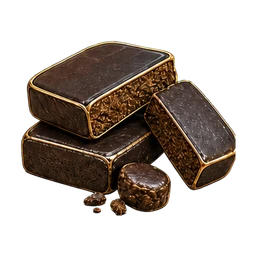

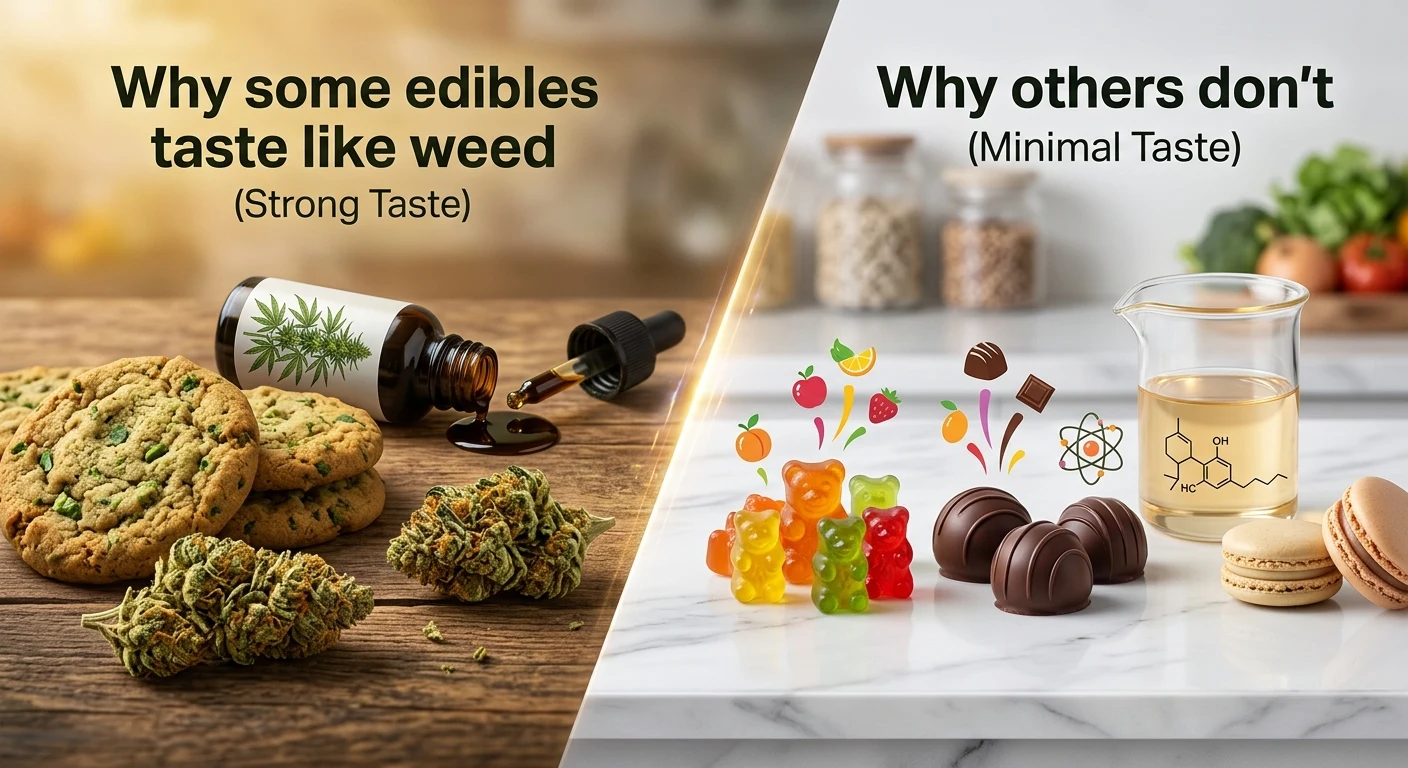
Raw cannabis doesn't do much if you eat it. Stir ground flower straight into butter and you'll get an expensive, grassy-tasting spread with very little effect.
The missing step is decarboxylation, or "decarbing". It's what turns the THCA in raw flower into THC your body can use, and it's the step most homemade edibles get wrong: too cool and the conversion is incomplete, too hot and you burn off flavour and potency.
Here's exactly how to decarb weed in a home oven, what temperature and time to use, what to do about the smell, and the one mistake that wastes the most flower.
The short answer: Spread coarsely ground flower on a lined baking tray and heat it at 105–120°C (220–250°F) for 25–60 minutes. The lower the temperature, the longer it takes. A good default is 115°C (240°F) for 40 minutes. Don't go hotter to save time: above roughly 150°C (300°F), you lose terpenes and THC much faster. Use an oven thermometer, cover the tray to keep in aroma, and expect a strong smell.
What Decarbing Actually Does
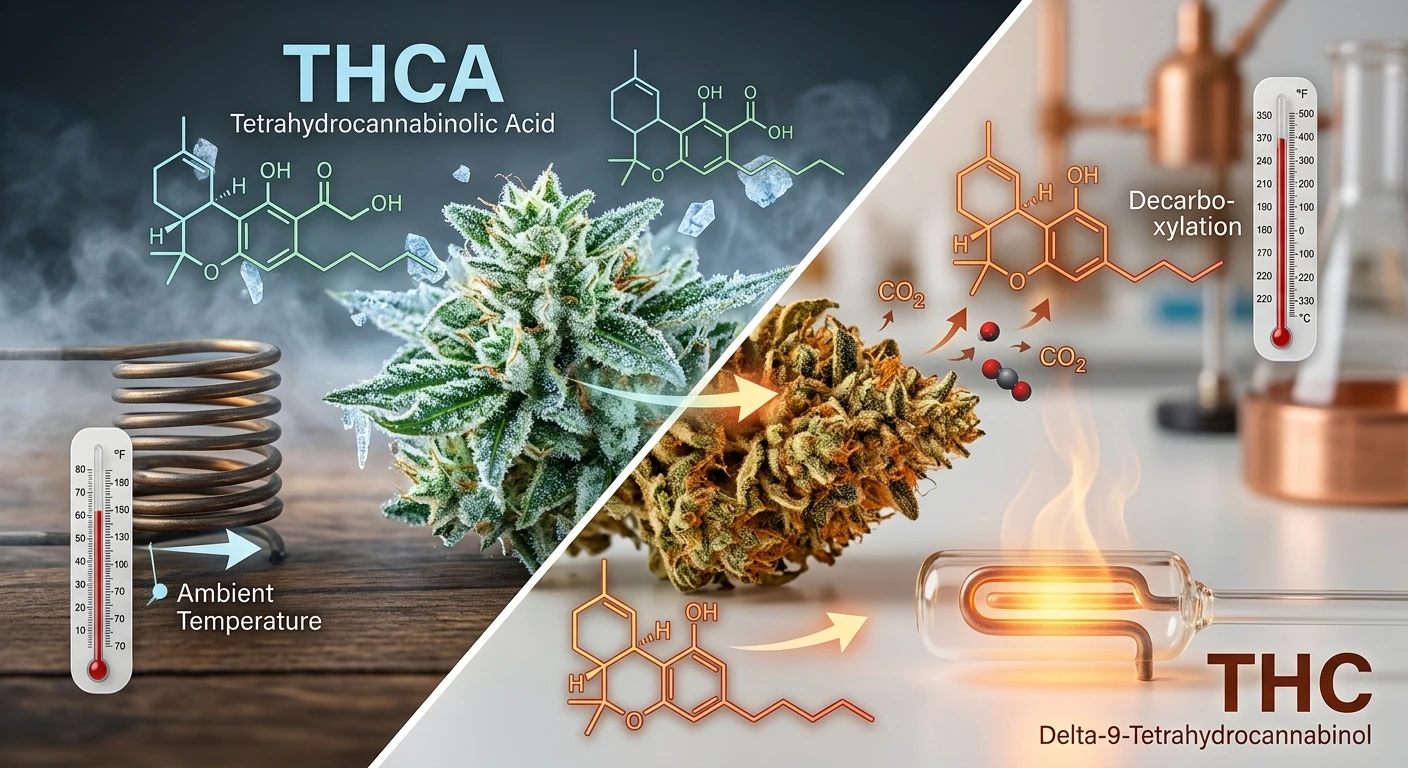
Cannabis plants don't make much THC directly. They make THCA, an acid form that isn't intoxicating. Heat knocks a carboxyl group off the molecule, releasing carbon dioxide and leaving THC behind. CBDA becomes CBD the same way.
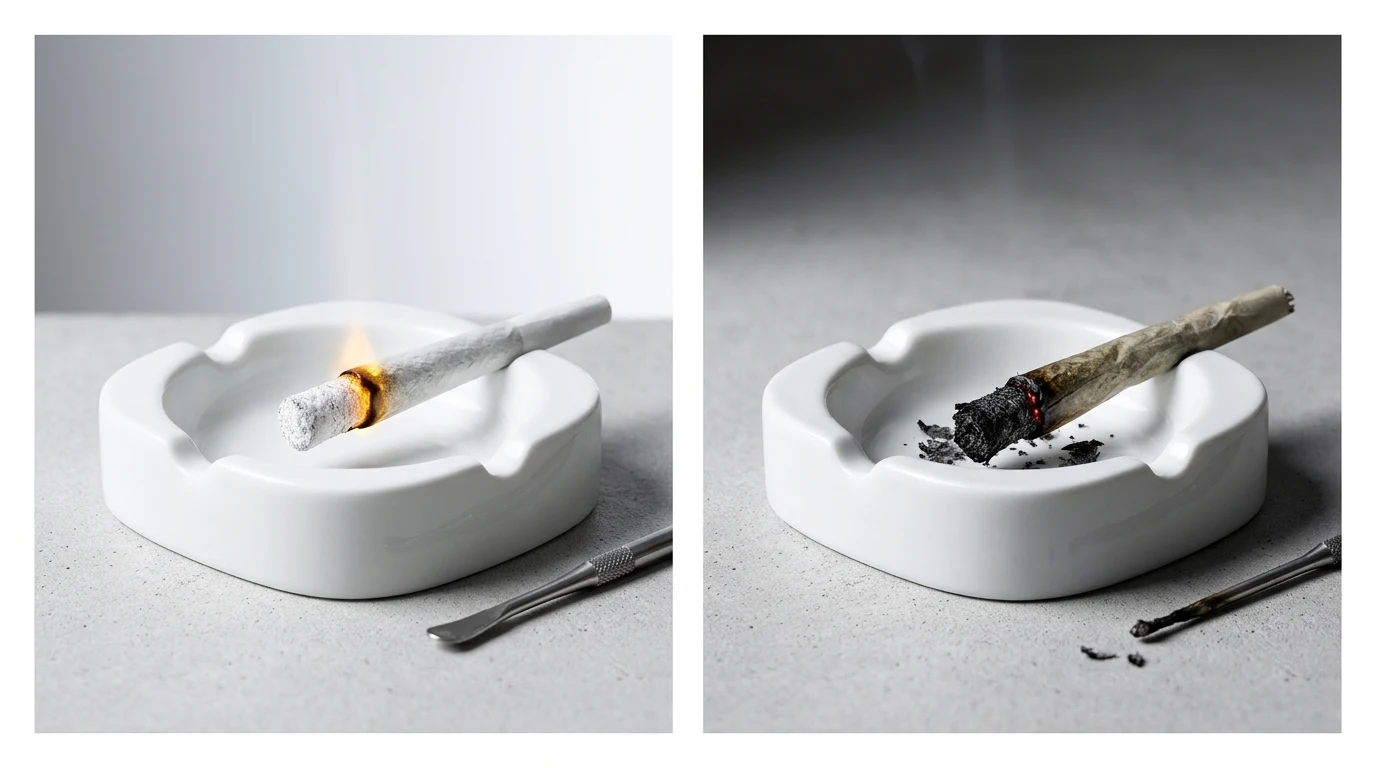
When you smoke or vape, the flame or coil does this instantly. When you cook, nothing gets hot enough for long enough unless you decarb first. That's why decarbing is the first step of every cannabutter, oil, or tincture recipe.
Two things happen at once in the oven, and that's the balancing act:
-
Conversion speeds up as temperature rises. Lab studies put the fastest practical THCA-to-THC conversion in dried flower at roughly 110–120°C.
-
Losses speed up too. Terpenes, the compounds behind aroma and flavour, start escaping well below their boiling points. Overheated THC also slowly breaks down into CBN, which is less intoxicating and more sedating.
The goal isn't the hottest or the longest bake. It's full conversion with as little loss as possible.
How to Decarb Weed in the Oven, Step by Step
You'll need: Flower, a baking tray or oven-safe glass dish, parchment paper, aluminium foil or a lid, and an oven thermometer.
-
Check your oven's real temperature. Put an oven thermometer on the middle rack and preheat to your target, such as 115°C (240°F). Home ovens often run 10 to 20 degrees off what the dial says, and that error matters more here than in almost any recipe.
-
Break up the flower coarsely. Pull buds apart by hand or give them a quick, rough grind to roughly rice-sized pieces. Don't powder it.
-
Spread it in a thin, even layer on parchment, with no clumps. An even layer heats evenly.
-
Cover it. Fold foil tightly over the tray or use a lidded oven-safe dish. This traps terpenes and cuts the smell.
-
Bake on the middle rack for the time that matches your temperature (see the table below). At 115°C, that's about 40 minutes.
-
Check the colour, not just the clock. Properly decarbed flower turns from green to a light golden-brown and feels dry and crumbly. Dark brown means it went too far.
-
Let it cool with the cover on. Keeping it covered while it cools may let some of the vaporised terpenes settle back onto the flower instead of escaping.
Use it within a day or two, or store it airtight in a cool, dark place.
Decarb Time and Temperature Chart
| Oven temperature | Time | Result |
|---|---|---|
| 105°C (220°F) | 50–60 min | Slowest; best terpene retention |
| 110°C (230°F) | 45–50 min | Gentle and reliable |
| 115°C (240°F) | 35–40 min | The best all-round default |
| 120°C (250°F) | 25–30 min | Faster; more aroma lost |
| 150°C+ (300°F+) | Not recommended | Rapid terpene loss; THC starts degrading to CBN |
These times are for 7 to 14 g of flower spread in a thin layer. Larger or deeper batches need a few extra minutes. CBD-rich flower converts more slowly than THC flower, so add 15 to 20 minutes, or go up to 120°C.
The Smell Warning
Decarbing smells strong. Within about 20 minutes, the whole home will know, and in an apartment, so might the hallway. The smell is the terpenes leaving your flower, so a strong smell also means you're losing flavour.
Ways to cut it down:
-
Seal it. Foil crimped tightly around the tray, a lidded glass dish, or an oven-safe bag can trap much of the aroma.
-
Use a sealed mason jar. Put the flower in a jar with the lid screwed on loosely and lay it on its side on a towel-lined tray. It contains the smell well. Let the jar cool fully before opening, and never move a hot jar to a cold surface.
-
Ventilate. Run the range hood and open a window before you start, not once the smell has built.
-
Pick your timing. If you share walls, choose a time when neighbours are less likely to be home, and give housemates a heads-up.
No method is completely odourless. If smell is a dealbreaker where you live, buying ready-made edibles is the simpler option.
The Mistake That Burns Off Your Terpenes
Turning the oven up to save time. It's the most common decarb mistake, and the most expensive.
People see that 120°C takes 30 minutes and assume 160°C will take 15. It will convert faster. But terpenes don't wait for their boiling points to escape. Myrcene boils at about 167°C and limonene at about 176°C, yet both evaporate steadily at much lower temperatures, and the rate climbs sharply as heat rises.
Research shows how fragile they are. In one 2024 study, about 42% of the terpenes were lost during a 30-minute microwave-assisted decarb at 120°C. The same study cites earlier work where the most volatile terpenes fell by about half after just 5 minutes in boiling water. Push the oven hotter and leave the flower uncovered, and you're left with flower that's converted but flat: less flavour, and edibles that taste burnt.
Overheating also costs potency. Past about 150°C, THC breaks down into CBN faster, so a hot, long bake can leave you with a sleepier, weaker result than you planned.
The fix: Stay at 105–120°C, cover the tray, and accept that slower is better.
Other Decarb Mistakes
-
Trusting the oven dial. A 20-degree error turns a careful decarb into a scorching one. Use a thermometer.
-
Grinding to powder. Fine powder over-toasts at the edges and makes cannabutter gritty and green-tasting. A coarse break-up is enough.
-
Uneven layers. Clumps under-convert in the middle while the edges overcook. Spread it thin.
-
Skipping decarb because the recipe simmers for hours. Butter on a stovetop rarely gets hot enough for long enough to convert fully. Decarb first, then infuse low.
-
Decarbing already-active products. Hash for edibles needs decarbing, but most distillate and vape oil has already been heated during processing. Check before you cook it again.
What to Do With Decarbed Weed
Decarbed flower is ready to infuse. The most common next step is butter or oil, which you can then use in almost any recipe. Our step-by-step guide on how to make cannabutter picks up exactly where this one ends, with infusion temperatures, straining, and how to work out the strength of each serving.
You can also stir decarbed flower into oil for capsules or make a quick tincture. Whatever you make, label it clearly and store it where children and pets can't reach it.
Start With Good Flower
Decarbing can't add potency or flavour that isn't already there, so fresh, well-cured flower makes noticeably better edibles. Every product in our flower menu lists grade and THC, and our hash works well for stronger infusions.
With discreet weed delivery Canada to adults of legal age in every province and territory, Uper Weed makes it easy to stock up. Rather skip the kitchen? Browse ready-made edibles instead.
Frequently Asked Questions
Between 105 and 120°C (220 to 250°F). A good default is 115°C (240°F) for about 40 minutes. Avoid going above roughly 150°C (300°F), where terpenes and THC degrade much faster.
About 25 to 60 minutes, depending on temperature: roughly 50 to 60 minutes at 105°C, 35 to 40 minutes at 115°C, and 25 to 30 minutes at 120°C. CBD-rich flower may need longer.
It turns from green to a light golden-brown, feels dry, and crumbles easily. Dark brown flower or a burnt smell can mean it went too hot or too long.
Decarboxylation converts much of the THCA in raw flower into THC. Without this step, edibles made from raw flower may be less potent than expected.
You can't remove the smell completely, but you can reduce it. Cover the flower in an oven-safe dish or foil, ventilate before you start, and be aware that sealed containers must be suitable for oven use and heated safely.
Yes. High heat can cause terpenes to evaporate, reducing flavour, and can accelerate THC degradation into other compounds, including CBN.
Microwaves heat unevenly and are difficult to control, so a properly monitored oven is generally more consistent. Slow cookers and stovetop infusions may not reliably complete decarboxylation, which is why decarbing is usually done before infusion.
It can be infused into butter or oil. Read our <a href=
The Short Version
To decarb weed, break it up coarsely, spread it thin, cover it, and bake at 105–120°C (220–250°F) for 25–60 minutes. Around 115°C (240°F) for 35–40 minutes is a commonly used middle-ground setting, but results vary with the oven and the flower.
Use an oven thermometer, choose an oven-safe cover, and resist the urge to turn the heat up. Higher temperatures can strip away aroma and accelerate cannabinoid degradation. Once the flower is cooled, label it clearly and store it securely away from children and pets.



 %
 %